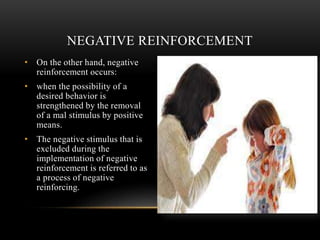
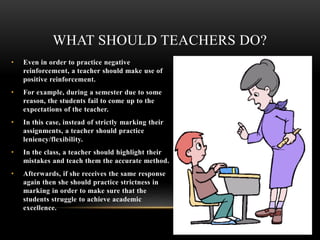
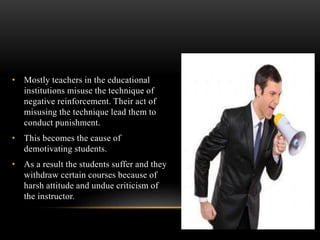
Positive and negative reinforcement can motivate student learning. Positive reinforcement uses rewards to increase desired behaviors, like praising students for good work. It involves three phases - targeting issues, private discussions of problems, and irregular rewards. Negative reinforcement strengthens behaviors by removing undesired stimuli, like being lenient at first and then stricter if mistakes continue. Both techniques can motivate students if used properly, but punishment should be avoided. Maintaining a balance of positive and negative reinforcement without harsh criticism best encourages academic excellence.