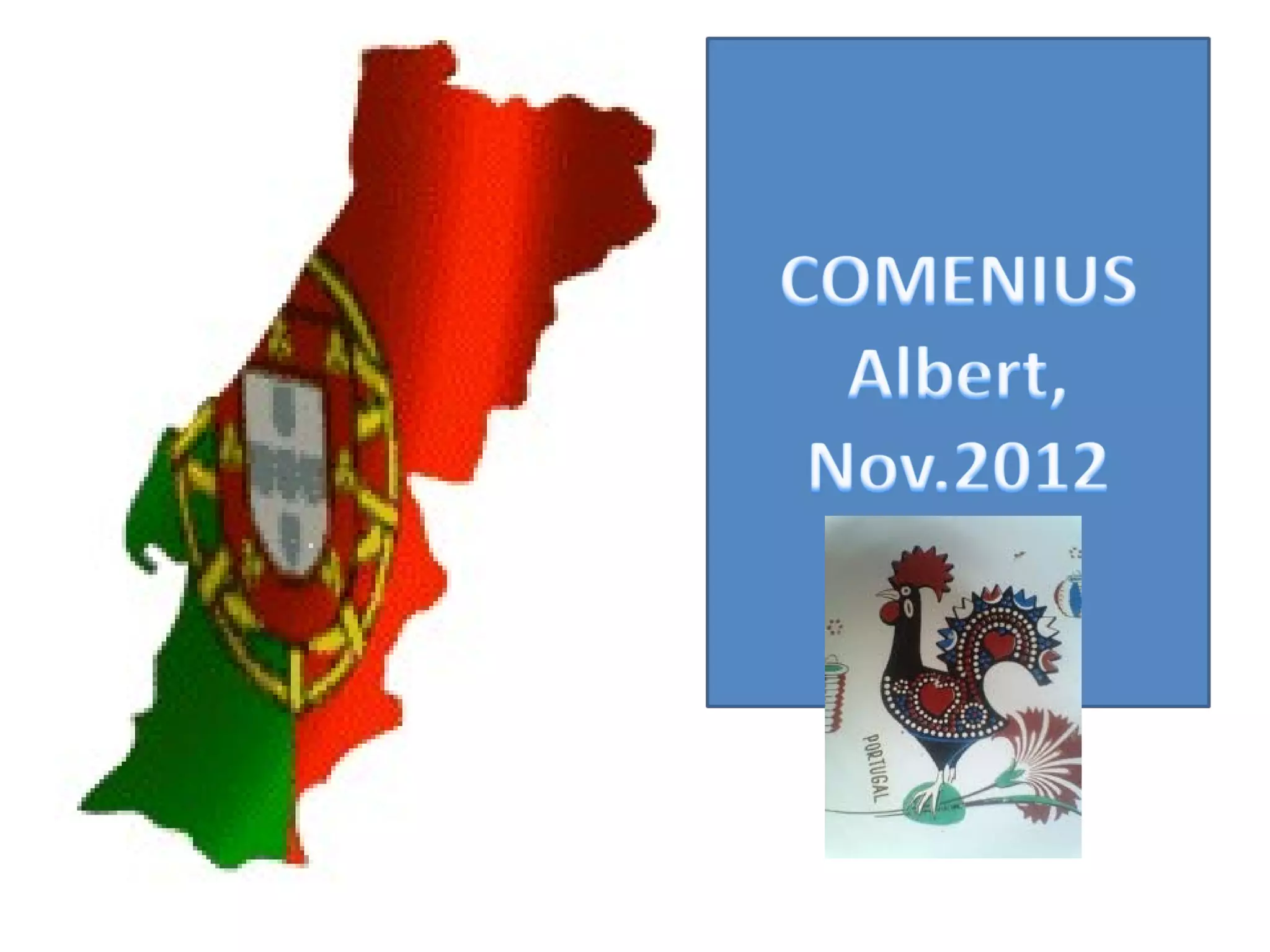
• Portugal is a small south Europe´s country, marked
in red in the map. The country is divided in
regions: Norte, Centro, Beiras, Lisboa e Vale do
Tejo, Alentejo and Algarve. Each region has a
capital of district´s city but the country´s capital is
Lisbon.
Portuguese costumes
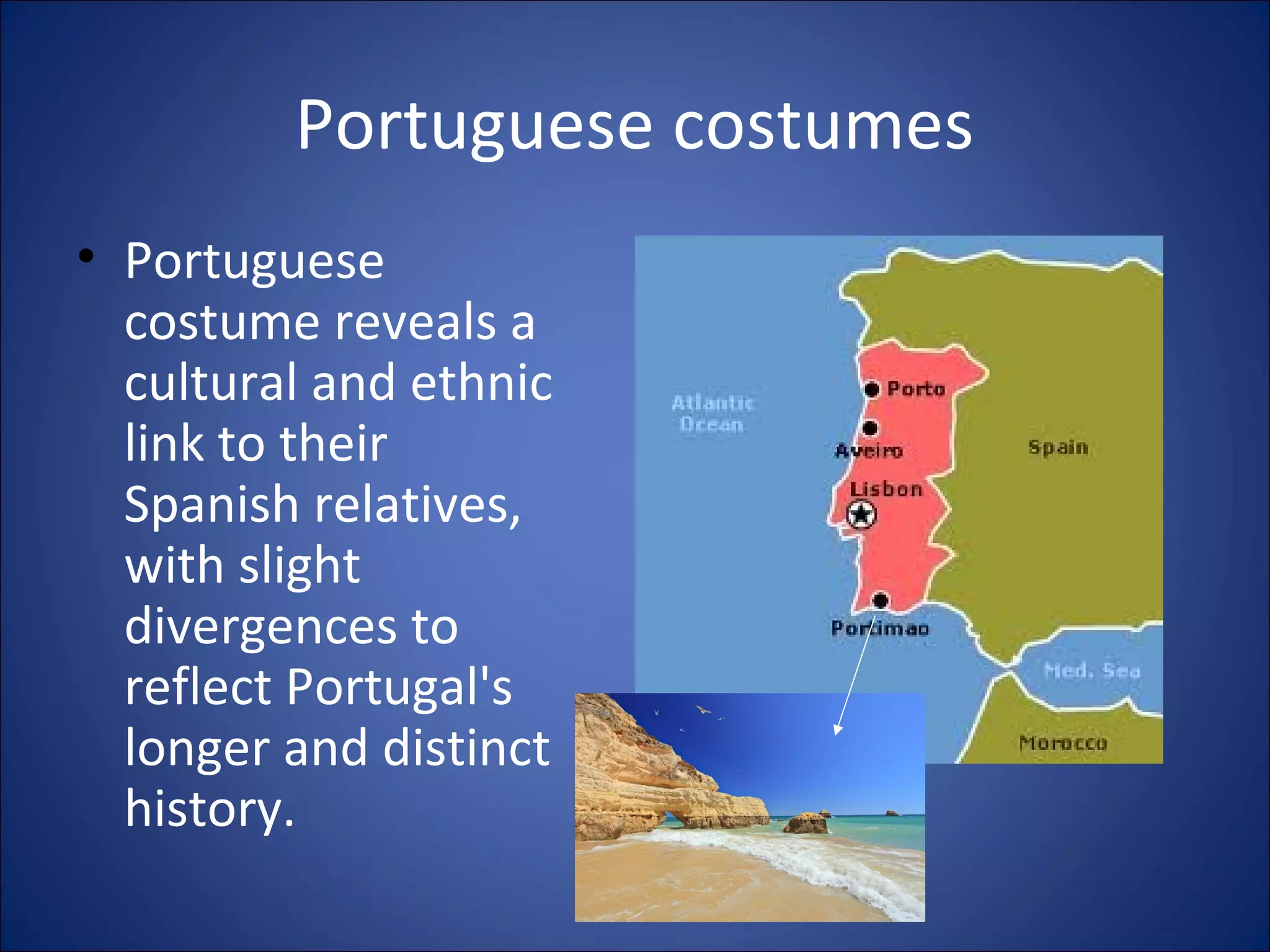
• Portuguese
costume reveals a
cultural and ethnic
link to their
Spanish relatives,
with slight
divergences to
reflect Portugal's
longer and distinct
history.
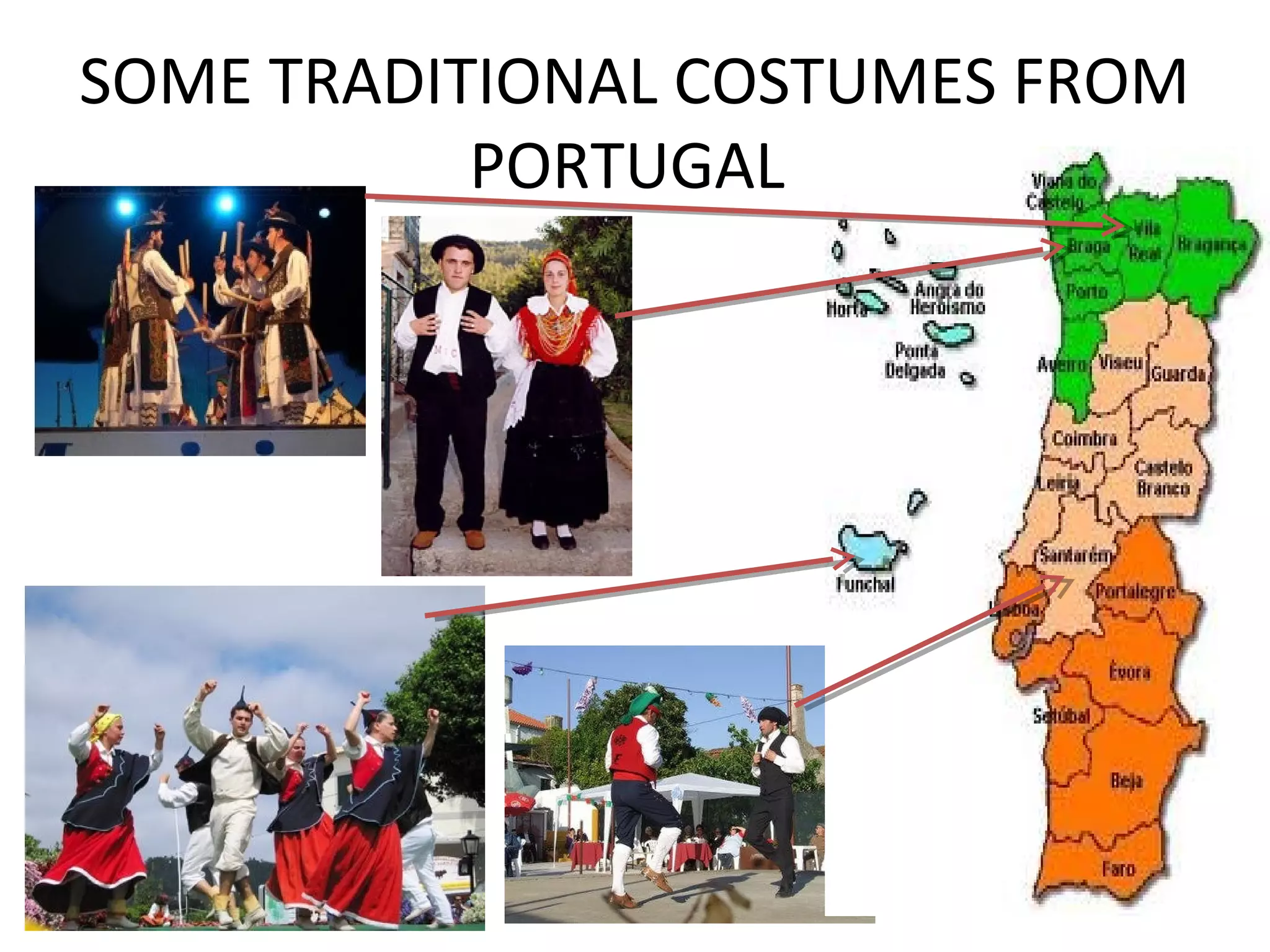
• Each region of Portugal has its own
style of dance and songs .
• Some of the best examples of the
regional dances are the vira, chula,
corridinho, tirana and fandango,
where couples perform a lively
dance usually to a fast beat of
hand-clapping, guitars and
accordions.
• During many of these traditional
dances, people dress up in a
variety of ways ranging from
working clothes to colourful
costumes.
SOME TRADITIONAL COSTUMES FROM
PORTUGAL
This song, we call fado, is closely linked to the
academic traditions of the University of
Coimbra and is exclusively sung by men
Fandango RibatejanoFandango Ribatejano
• The choreography is
quite simple: on its
more frequent setting
two male dancers face
each other, dancing
and tap-dancing one at
each time, showing
which one has the most
lightness and
repertoire of feet
changes in the tap-
dancing.
Traditional Dance Algarve
“Corridinho”
Traditional Dance Algarve
“Corridinho”
Modern Fado – World Patrimony
MARIZA
Presentation of folk costumes - Portugal

Presentation of folk costumes - Portugal

  • 2.
    • Portugal isa small south Europe´s country, marked in red in the map. The country is divided in regions: Norte, Centro, Beiras, Lisboa e Vale do Tejo, Alentejo and Algarve. Each region has a capital of district´s city but the country´s capital is Lisbon.
  • 3.
    Portuguese costumes • Portuguese costumereveals a cultural and ethnic link to their Spanish relatives, with slight divergences to reflect Portugal's longer and distinct history.
  • 4.
    • Each regionof Portugal has its own style of dance and songs . • Some of the best examples of the regional dances are the vira, chula, corridinho, tirana and fandango, where couples perform a lively dance usually to a fast beat of hand-clapping, guitars and accordions. • During many of these traditional dances, people dress up in a variety of ways ranging from working clothes to colourful costumes.
  • 5.
  • 7.
    This song, wecall fado, is closely linked to the academic traditions of the University of Coimbra and is exclusively sung by men
  • 8.
    Fandango RibatejanoFandango Ribatejano •The choreography is quite simple: on its more frequent setting two male dancers face each other, dancing and tap-dancing one at each time, showing which one has the most lightness and repertoire of feet changes in the tap- dancing.
  • 9.
  • 10.
    Modern Fado –World Patrimony MARIZA