Principles of ManagementPlanning
SYSTEMS APPROACH
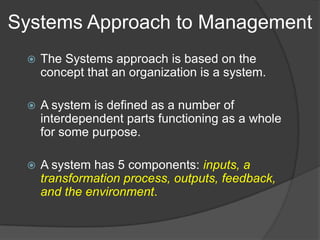
Systems Approach to ManagementThe Systems approach is based on the concept that an organization is a system.
A system is defined as a number of interdependent parts functioning as a whole for some purpose.
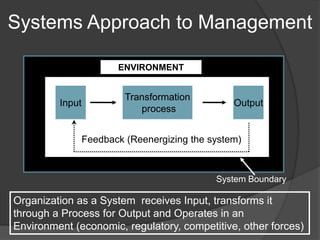
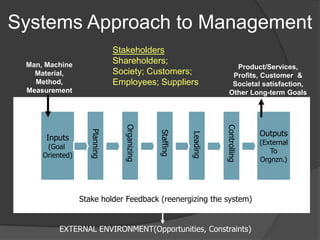
A system has 5 components:inputs, a transformation process, outputs, feedback, and the environment.ENVIRONMENTTransformation processInputOutputFeedback (Reenergizing the system)System BoundarySystems Approach to ManagementOrganization as a System  receives Input, transforms it through a Process for Output and Operates in an Environment (economic, regulatory, competitive, other forces)
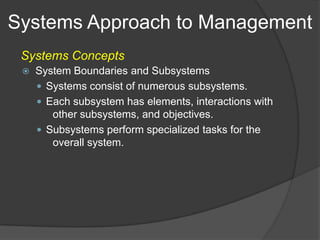
Systems Approach to ManagementSystems ConceptsSystem Boundariesand Subsystems
Systems consist of numerous subsystems.
Each subsystem has elements, interactions with 	other subsystems, and objectives.
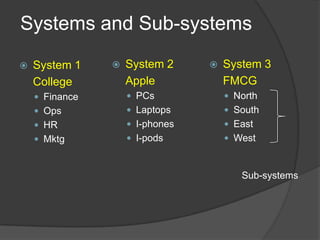
Subsystems perform specialized tasks for the 	overall system.Systems and Sub-systemsSystem 2	ApplePCs
Laptops
I-phones
I-pods
System 3	FMCGNorth
South
East
WestSystem 1	CollegeFinanceOpsHRMktgSub-systems
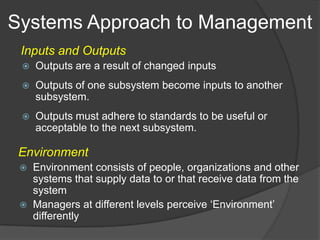
Systems Approach to ManagementInputs and Outputs Outputs are a result of changed inputs
Outputs of one subsystem become inputs to another subsystem.
Outputs must adhere to standards to be useful or acceptable to the next subsystem.EnvironmentEnvironment consists of people, organizations and other systems that supply data to or that receive data from the system
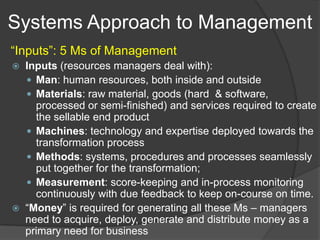
Managers at different levels perceive ‘Environment’ differentlySystems Approach to Management“Inputs”: 5 Ms of ManagementInputs(resources managers deal with):
Man: human resources, both inside and outside
Materials: raw material, goods (hard  & software, processed or semi-finished) and services required to create the sellable end product
Machines: technology and expertise deployed towards the transformation process
Methods: systems, procedures and processes seamlessly put together for the transformation;

1st Session