EEnngglliisshh lliittEErraattuurrEE 
PPooeettrryy:: 
LLiimmeerriicckk 
ss
LLiimmeerriicckk EExxaammppllee 
The limerick packs laughs anatomical 
Into space that is quite economical 
But the good ones I've seen 
So seldom are clean 
And the clean ones so seldom are comical
TThhee LLiimmeerriicckk 
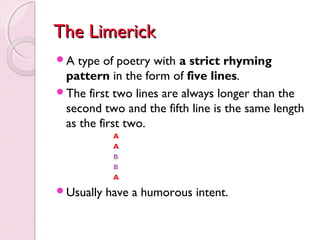
A type of poetry with a strict rhyming 
pattern in the form of five lines. 
The first two lines are always longer than the 
second two and the fifth line is the same length 
as the first two. 
A 
A 
B 
B 
A 
Usually have a humorous intent.
LLiimmeerriicckk FFoorrmmaatt 
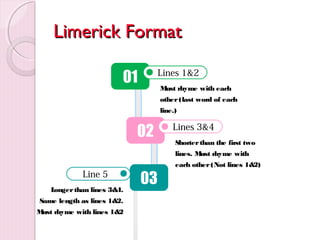
01 Lines 1&2 
02 Lines 3&4 
Line 5 03 
Must rhyme with each 
other (last word of each 
line.) 
Shorter than the first two 
lines. Must rhyme with 
each other (Not lines 1&2) 
Longer than lines 3&4. 
Same length as lines 1&2. 
Must rhyme with lines 1&2
AA lliimmeerriicckk aabboouutt tthhee ffoorrmmaatt ooff aa 
lliimmeerriicckk!! 
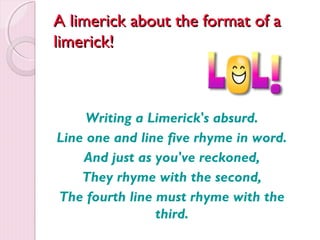
Writing a Limerick's absurd. 
Line one and line five rhyme in word. 
And just as you've reckoned, 
They rhyme with the second, 
The fourth line must rhyme with the 
third.
LLiimmeerriicckk RRhhyytthhmm 
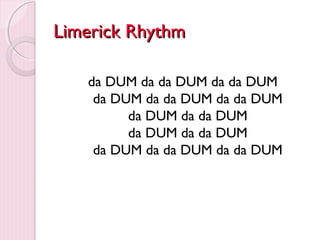
da DUM da da DUM da da DUM 
da DUM da da DUM 
da DUM da da DUM 
da DUM da da DUM da da DUM
The rhythm doesn’t have to match 
exactly, but it needs to be close enough 
so that it sounds the same when you 
read it. For example: 
◦ There WAS a young FELLow named HALL. 
Who FELL in the SPRING in the FALL. 
Would have BEEN a sad THING, 
Had he DIED in the SPRING, 
But he DIDn’t, he DIED in the FALL.
HHiissttoorryy 
Limericks started in the early years of the 
18th century England. 
This style of poetry was made popular 
(popularized) in the 19th century by poet and 
writer, Edward Lear. 
The Limerick became popular 
from Edward Lear’s first book: 
A Book of Nonsense (1845)
EEddwwaarrdd LLeeaarr ((1122 MMaayy 11881122 –– 2299 JJaannuuaarryy 
11888888)) 
English artist, illustrator, author 
and poet, known mostly for his 
literary nonsense in poetry 
(especially his limericks). 
He is mostly known for the use 
of invented words in his poems.
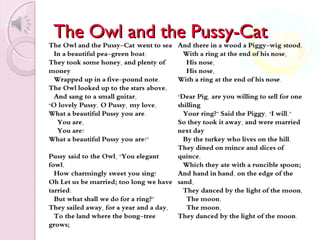
TThhee OOwwll aanndd tthhee PPuussssyy--CCaatt
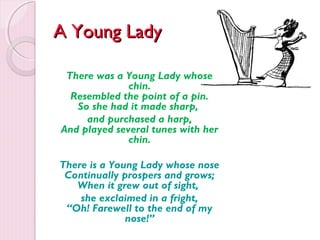
AA YYoouunngg LLaaddyy 
There was a Young Lady whose 
chin. 
Resembled the point of a pin. 
So she had it made sharp, 
and purchased a harp, 
And played several tunes with her 
chin. 
There is a Young Lady whose nose 
Continually prospers and grows; 
When it grew out of sight, 
she exclaimed in a fright, 
“Oh! Farewell to the end of my 
nose!”
There was an Old Man on some rocks. 
Who shut his Wife up in a box. 
When she said, "Let me out," 
He exclaimed, "Without doubt 
You will pass all your life in that box."
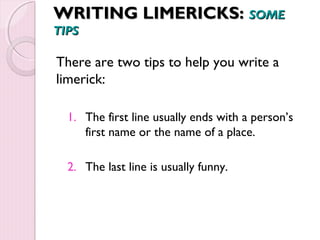
WWRRIITTIINNGG LLIIMMEERRIICCKKSS:: SSOOMMEE 
TTIIPPSS 
There are two tips to help you write a 
limerick: 
1. The first line usually ends with a person’s 
first name or the name of a place. 
2. The last line is usually funny.
TTiipp 11 
The first line is usually the name of a 
person or place. 
Pick the name of a place or person – like 
“New York” or “Stan” – and write a line 
like this: 
 There once was a girl from New York 
OR 
 There once was a farmer named Stan
Then think of some rhyming words like: 
“cork,” “fork,” “pork,” “stork,” 
or 
“man,” “can,” “ban,” 
and find enough words to complete your 
limerick.
TTiipp 22 
Once you’ve found some rhyming words, 
start thinking about a funny ending for 
your poem. 
Try to write lines 1, 2, and 5 first! 
Then write lines 3 and 4 after.
FFoorr EExxaammppllee:: 
I wrote this first: 
There once was a farmer named Stan. 
Who was an unusual man. 
Da da DUM da da 
Da da DUM da da 
I didn’t write this I just 
thought it in my mind. 
Then I wrote the last line: 
For Stan only had the one hand.
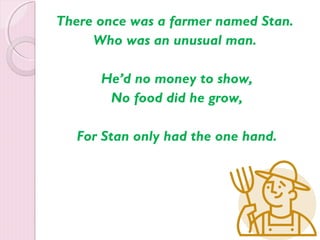
There once was a farmer named Stan. 
Who was an unusual man. 
He’d no money to show, 
No food did he grow, 
For Stan only had the one hand.
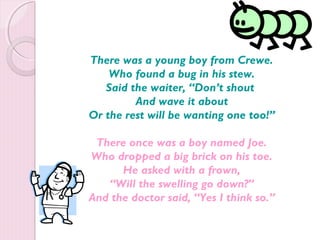
There was a young boy from Crewe. 
Who found a bug in his stew. 
Said the waiter, “Don’t shout 
And wave it about 
Or the rest will be wanting one too!” 
There once was a boy named Joe. 
Who dropped a big brick on his toe. 
He asked with a frown, 
“Will the swelling go down?” 
And the doctor said, “Yes I think so.”
TTaasskk 11 
Try to write your own limerick. 
Use the two tips to help you. 
Choose a name or a place first. 
Think of rhyming words. 
Write lines 1, 2 & 5. 
Then write lines 3 & 4.
AAnnttii LLiimmeerriicckkss 
The limerick can be mocked (parodied). 
These parodies are called ‘anti-limericks’. 
There was a young man of Japan 
Whose limericks never would scan. 
When asked why this was, 
He replied "It's because 
I always try to fit as many syllables into the 
last line as ever I possibly can."
Comedian John Clarke has also parodied 
limericks: 
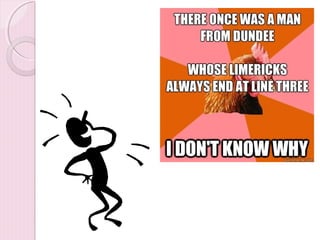
There was an old man with a beard. 
A funny old man with a beard. 
He had a big beard, 
A great big old beard, 
That amusing old man with a beard.
TTaasskk 22 
Try to write an Anti Limerick! 
This is easier because you can change the 
form and rhythm.

Poetry: Limericks

  • 1.
  • 2.
    LLiimmeerriicckk EExxaammppllee Thelimerick packs laughs anatomical Into space that is quite economical But the good ones I've seen So seldom are clean And the clean ones so seldom are comical
  • 3.
    TThhee LLiimmeerriicckk Atype of poetry with a strict rhyming pattern in the form of five lines. The first two lines are always longer than the second two and the fifth line is the same length as the first two. A A B B A Usually have a humorous intent.
  • 4.
    LLiimmeerriicckk FFoorrmmaatt 01Lines 1&2 02 Lines 3&4 Line 5 03 Must rhyme with each other (last word of each line.) Shorter than the first two lines. Must rhyme with each other (Not lines 1&2) Longer than lines 3&4. Same length as lines 1&2. Must rhyme with lines 1&2
  • 5.
    AA lliimmeerriicckk aabboouutttthhee ffoorrmmaatt ooff aa lliimmeerriicckk!! Writing a Limerick's absurd. Line one and line five rhyme in word. And just as you've reckoned, They rhyme with the second, The fourth line must rhyme with the third.
  • 6.
    LLiimmeerriicckk RRhhyytthhmm daDUM da da DUM da da DUM da DUM da da DUM da da DUM da DUM da da DUM da DUM da da DUM da DUM da da DUM da da DUM
  • 7.
    The rhythm doesn’thave to match exactly, but it needs to be close enough so that it sounds the same when you read it. For example: ◦ There WAS a young FELLow named HALL. Who FELL in the SPRING in the FALL. Would have BEEN a sad THING, Had he DIED in the SPRING, But he DIDn’t, he DIED in the FALL.
  • 8.
    HHiissttoorryy Limericks startedin the early years of the 18th century England. This style of poetry was made popular (popularized) in the 19th century by poet and writer, Edward Lear. The Limerick became popular from Edward Lear’s first book: A Book of Nonsense (1845)
  • 9.
    EEddwwaarrdd LLeeaarr ((1122MMaayy 11881122 –– 2299 JJaannuuaarryy 11888888)) English artist, illustrator, author and poet, known mostly for his literary nonsense in poetry (especially his limericks). He is mostly known for the use of invented words in his poems.
  • 10.
    TThhee OOwwll aannddtthhee PPuussssyy--CCaatt
  • 11.
    AA YYoouunngg LLaaddyy There was a Young Lady whose chin. Resembled the point of a pin. So she had it made sharp, and purchased a harp, And played several tunes with her chin. There is a Young Lady whose nose Continually prospers and grows; When it grew out of sight, she exclaimed in a fright, “Oh! Farewell to the end of my nose!”
  • 12.
    There was anOld Man on some rocks. Who shut his Wife up in a box. When she said, "Let me out," He exclaimed, "Without doubt You will pass all your life in that box."
  • 13.
    WWRRIITTIINNGG LLIIMMEERRIICCKKSS:: SSOOMMEE TTIIPPSS There are two tips to help you write a limerick: 1. The first line usually ends with a person’s first name or the name of a place. 2. The last line is usually funny.
  • 14.
    TTiipp 11 Thefirst line is usually the name of a person or place. Pick the name of a place or person – like “New York” or “Stan” – and write a line like this:  There once was a girl from New York OR  There once was a farmer named Stan
  • 15.
    Then think ofsome rhyming words like: “cork,” “fork,” “pork,” “stork,” or “man,” “can,” “ban,” and find enough words to complete your limerick.
  • 16.
    TTiipp 22 Onceyou’ve found some rhyming words, start thinking about a funny ending for your poem. Try to write lines 1, 2, and 5 first! Then write lines 3 and 4 after.
  • 17.
    FFoorr EExxaammppllee:: Iwrote this first: There once was a farmer named Stan. Who was an unusual man. Da da DUM da da Da da DUM da da I didn’t write this I just thought it in my mind. Then I wrote the last line: For Stan only had the one hand.
  • 18.
    There once wasa farmer named Stan. Who was an unusual man. He’d no money to show, No food did he grow, For Stan only had the one hand.
  • 19.
    There was ayoung boy from Crewe. Who found a bug in his stew. Said the waiter, “Don’t shout And wave it about Or the rest will be wanting one too!” There once was a boy named Joe. Who dropped a big brick on his toe. He asked with a frown, “Will the swelling go down?” And the doctor said, “Yes I think so.”
  • 20.
    TTaasskk 11 Tryto write your own limerick. Use the two tips to help you. Choose a name or a place first. Think of rhyming words. Write lines 1, 2 & 5. Then write lines 3 & 4.
  • 21.
    AAnnttii LLiimmeerriicckkss Thelimerick can be mocked (parodied). These parodies are called ‘anti-limericks’. There was a young man of Japan Whose limericks never would scan. When asked why this was, He replied "It's because I always try to fit as many syllables into the last line as ever I possibly can."
  • 23.
    Comedian John Clarkehas also parodied limericks: There was an old man with a beard. A funny old man with a beard. He had a big beard, A great big old beard, That amusing old man with a beard.
  • 24.
    TTaasskk 22 Tryto write an Anti Limerick! This is easier because you can change the form and rhythm.

Editor's Notes

  • #5 模板来自于 http://docer.wps.cn