Chapter 5

Finding and Critiquing Evidence:
  Research Literature Reviews


    Copyright © 2008 Wolters Kluwer Health | Lippincott Williams & Wilkins
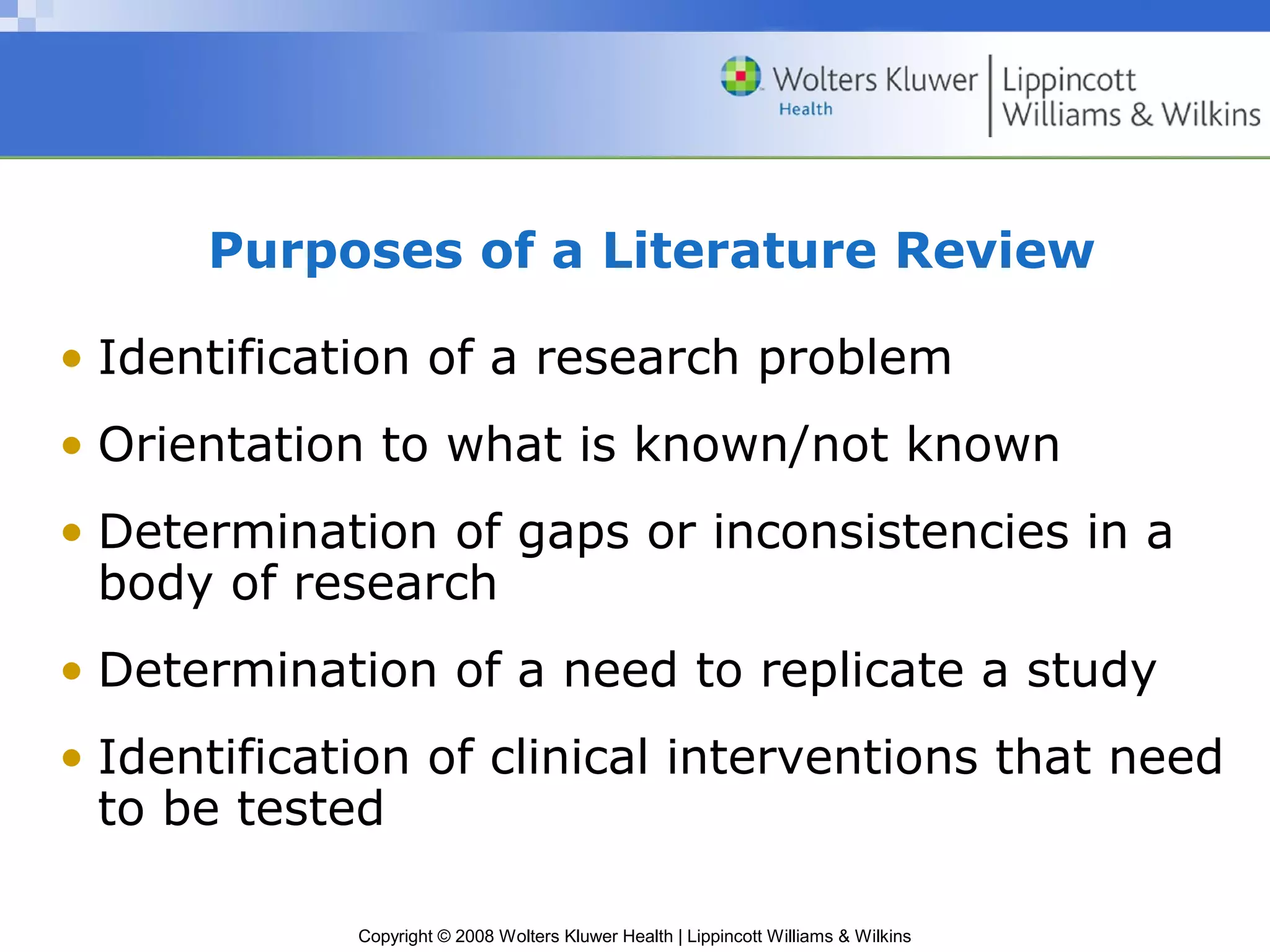
Purposes of a Literature Review

• Identification of a research problem
• Orientation to what is known/not known
• Determination of gaps or inconsistencies in a
  body of research
• Determination of a need to replicate a study
• Identification of clinical interventions that need
  to be tested

             Copyright © 2008 Wolters Kluwer Health | Lippincott Williams & Wilkins
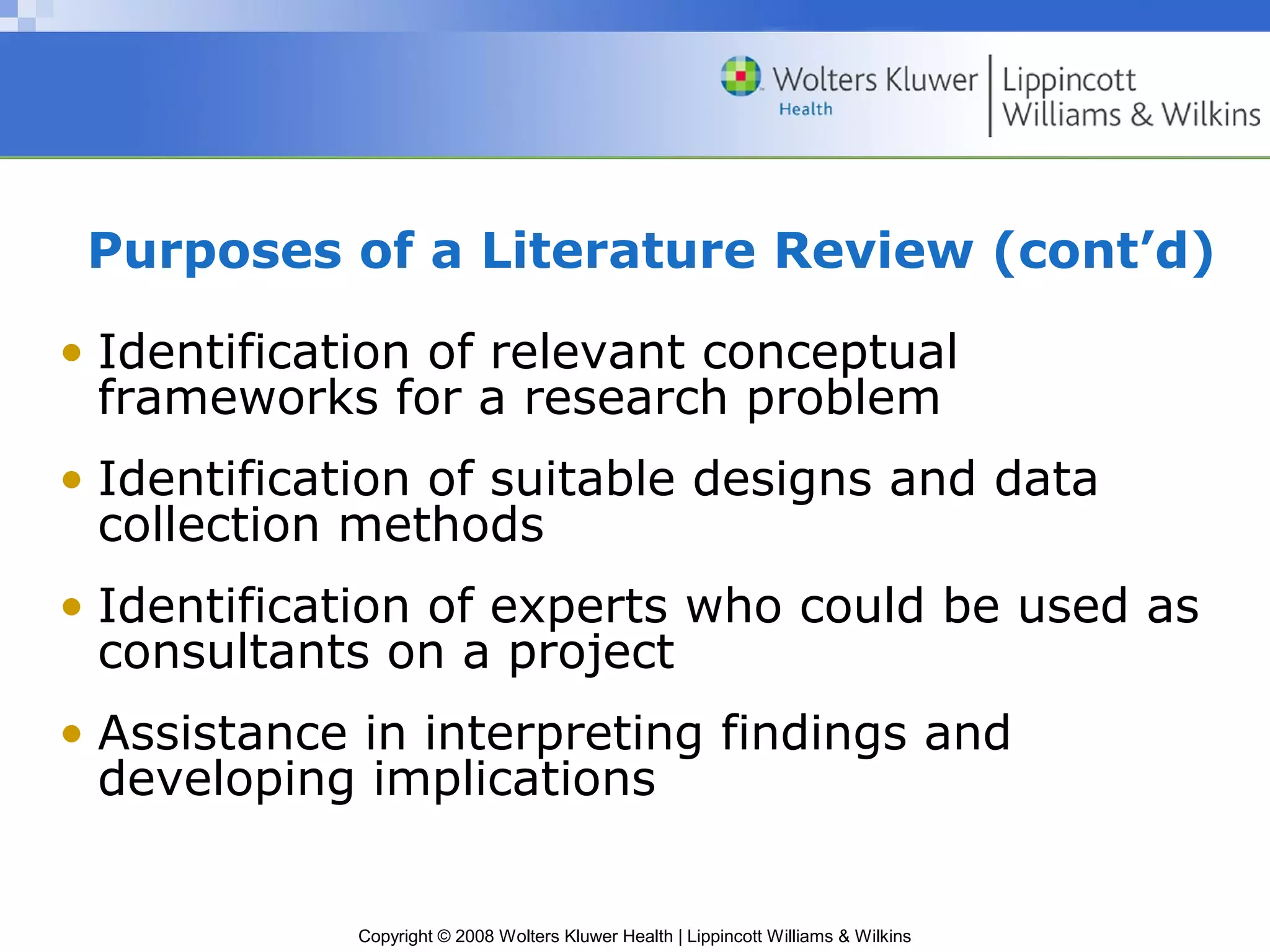
Purposes of a Literature Review (cont’d)

• Identification of relevant conceptual
  frameworks for a research problem
• Identification of suitable designs and data
  collection methods
• Identification of experts who could be used as
  consultants on a project
• Assistance in interpreting findings and
  developing implications


            Copyright © 2008 Wolters Kluwer Health | Lippincott Williams & Wilkins
Sources of Information in a Research
           Literature Review

• Principal reliance on primary sources
  (research reports written by researchers
  who conducted the study)
• Less reliance on secondary sources
  (summaries of studies by others)
• Peripheral use of anecdotal reports,
  opinion articles, case reports
           Copyright © 2008 Wolters Kluwer Health | Lippincott Williams & Wilkins
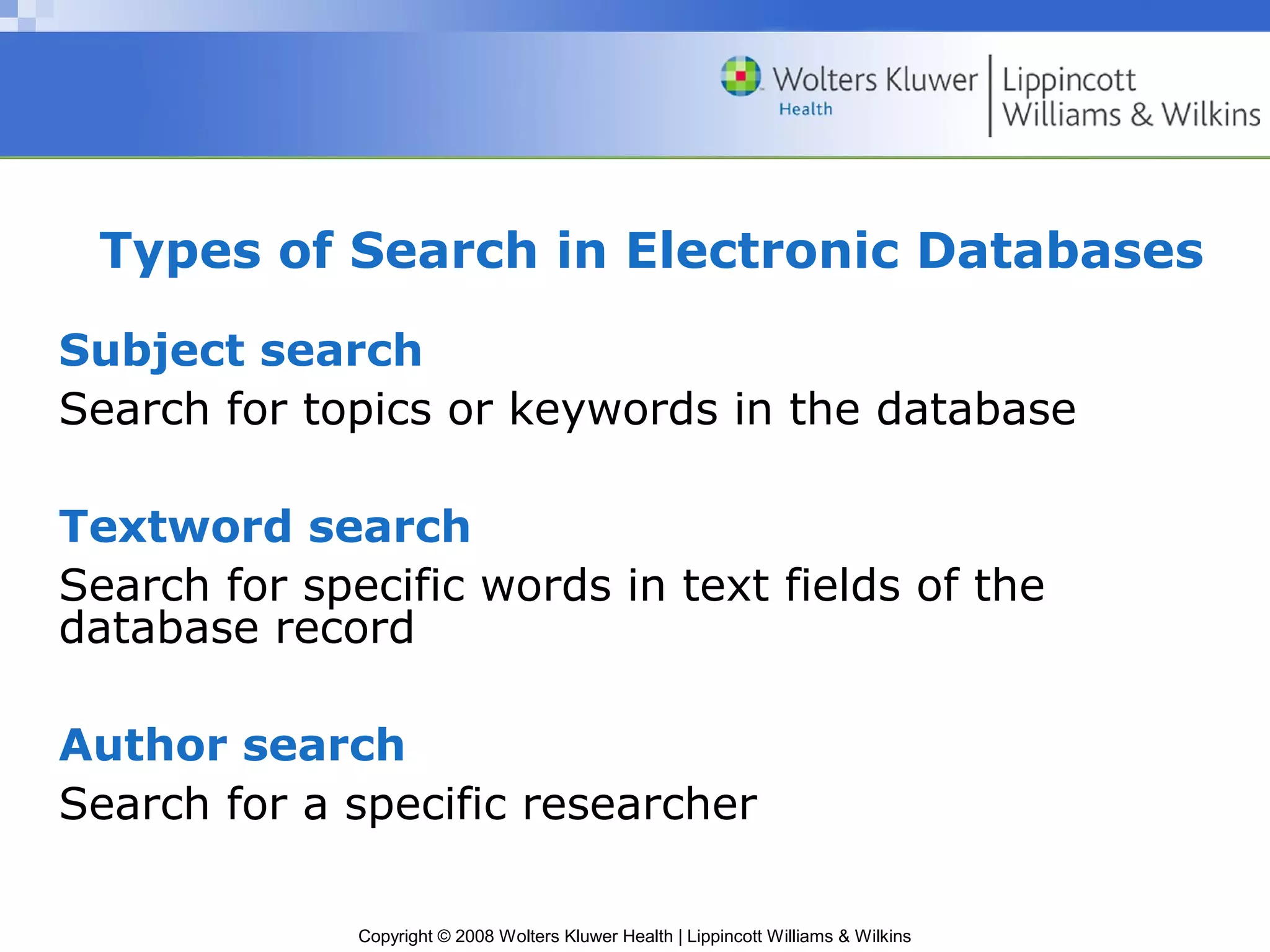
Types of Search in Electronic Databases
Subject search
Search for topics or keywords in the database

Textword search
Search for specific words in text fields of the
database record

Author search
Search for a specific researcher

              Copyright © 2008 Wolters Kluwer Health | Lippincott Williams & Wilkins
Key Electronic Databases for Nurse
              Researchers

• CINAHL (Cumulative Index to Nursing
  and Allied Health Literature)
• MEDLINE® (Medical Literature on-Line)
• The Institute for Scientific
  Information’s (ISI) Web of Knowledge


          Copyright © 2008 Wolters Kluwer Health | Lippincott Williams & Wilkins
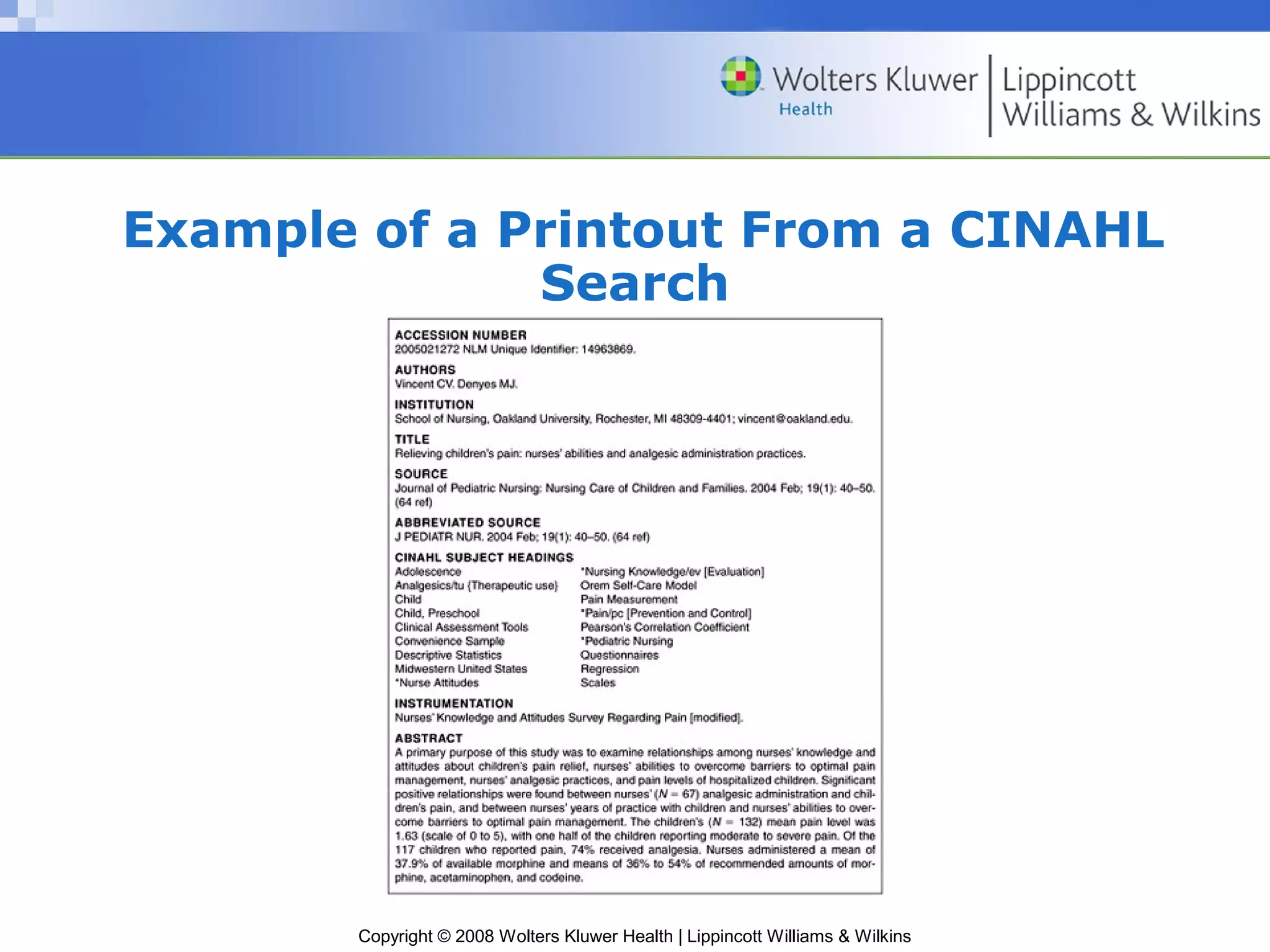
Example of a Printout From a CINAHL
              Search


       Copyright © 2008 Wolters Kluwer Health | Lippincott Williams & Wilkins
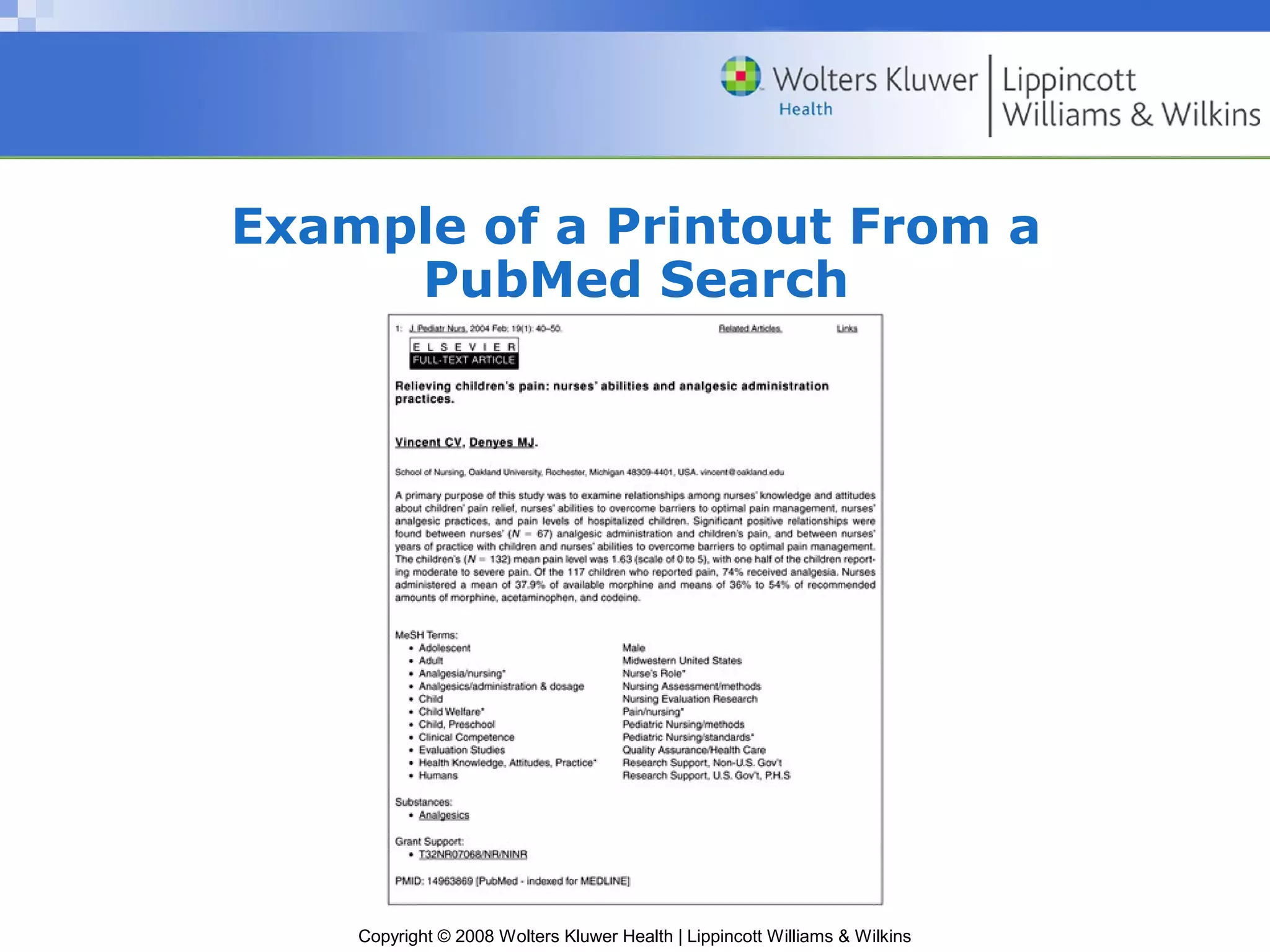
Example of a Printout From a
     PubMed Search


    Copyright © 2008 Wolters Kluwer Health | Lippincott Williams & Wilkins
Abstracting and Recording Information

• Coding the studies
• Literature review protocols
• Literature review matrixes


          Copyright © 2008 Wolters Kluwer Health | Lippincott Williams & Wilkins
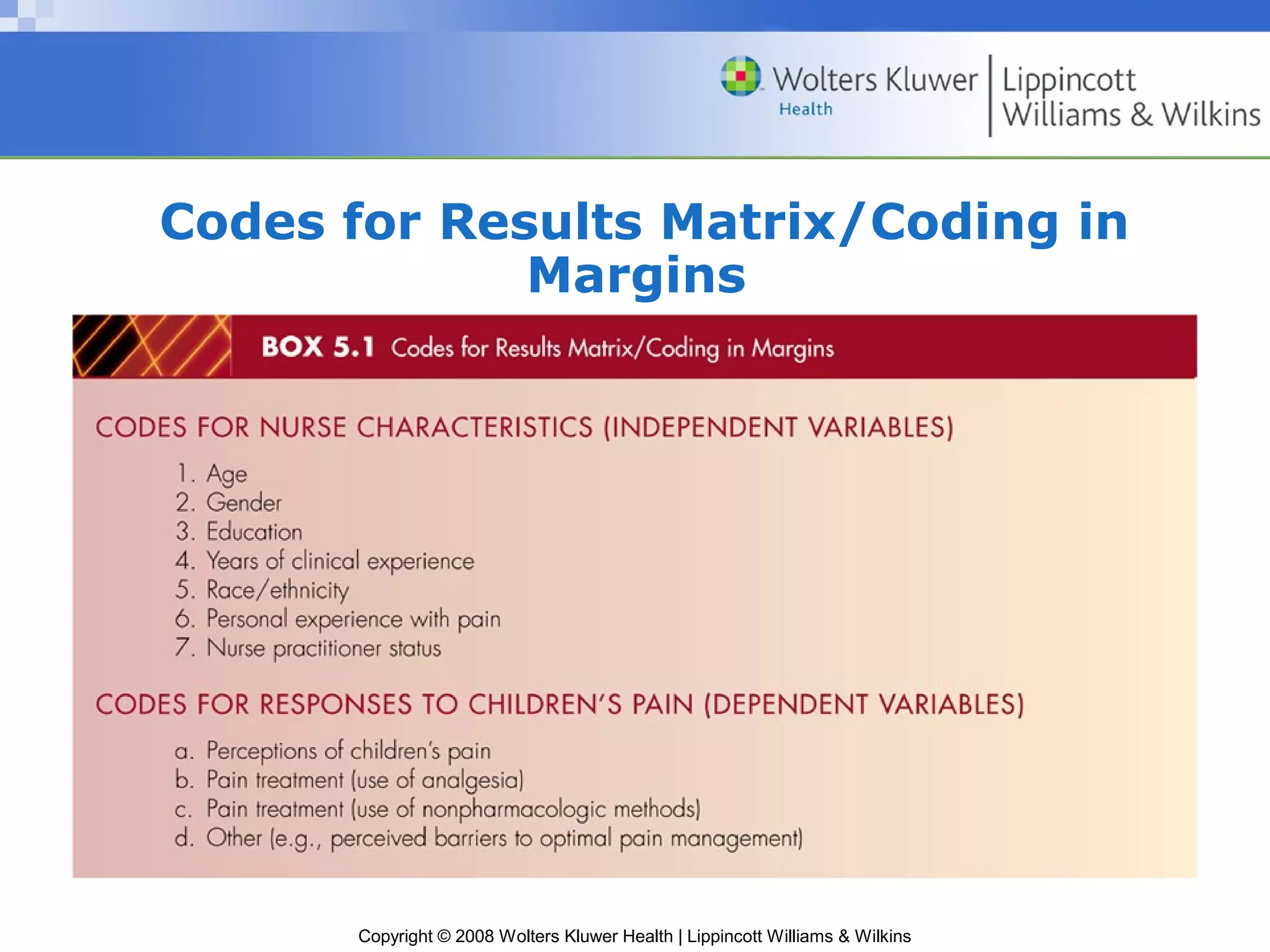
Codes for Results Matrix/Coding in
             Margins


      Copyright © 2008 Wolters Kluwer Health | Lippincott Williams & Wilkins
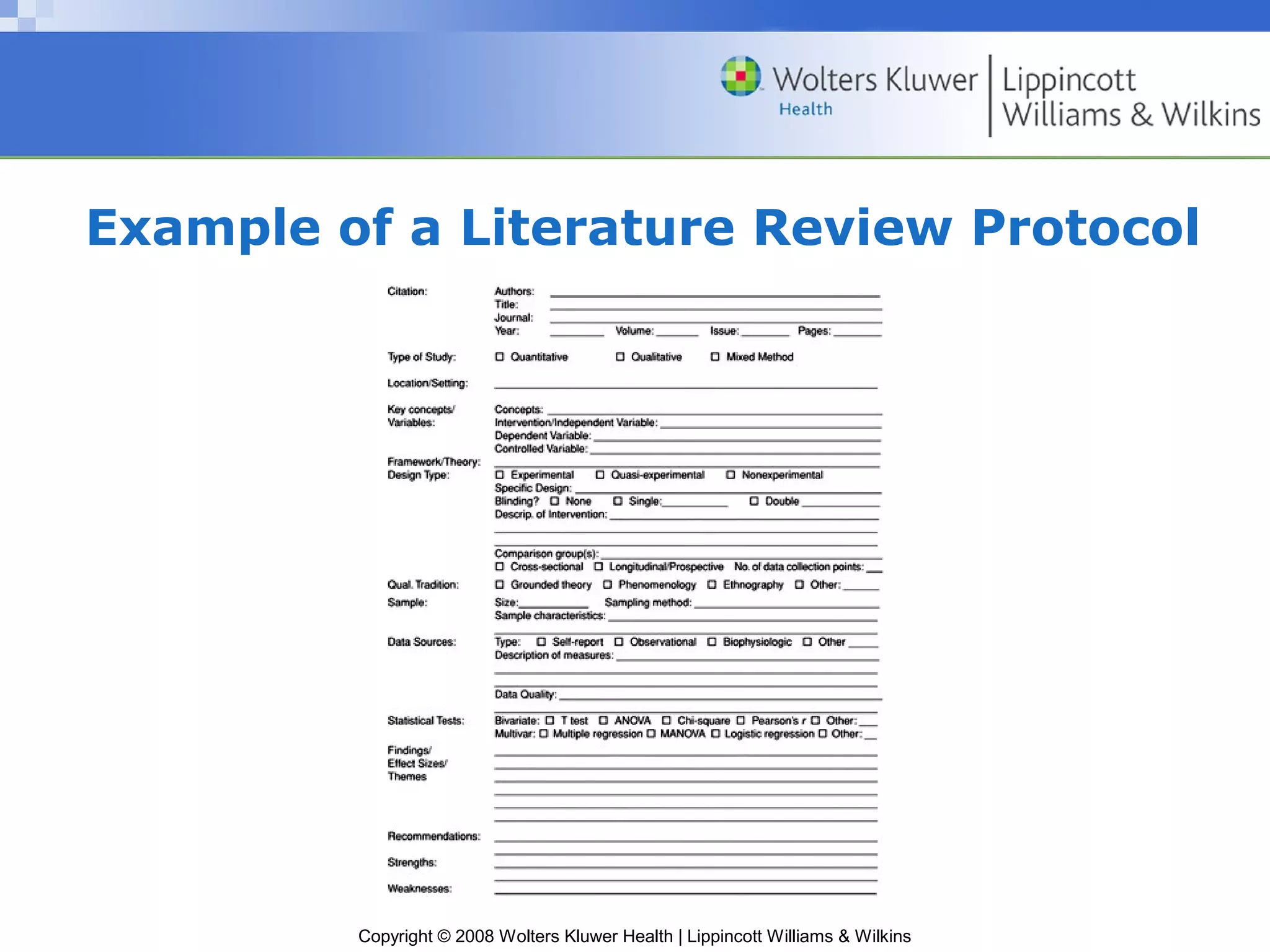
Example of a Literature Review Protocol


         Copyright © 2008 Wolters Kluwer Health | Lippincott Williams & Wilkins
Critiquing Studies and Evaluating the
                Evidence

• Research critiques of individual studies
• Evaluating a body of research


           Copyright © 2008 Wolters Kluwer Health | Lippincott Williams & Wilkins
Analyzing and Synthesizing Information

Theme Analysis:
• Substantive themes
• Theoretical themes
• Methodologic themes
• Generalizability/transferabilty themes
• Historical themes
• “Researcher” themes
            Copyright © 2008 Wolters Kluwer Health | Lippincott Williams & Wilkins
Preparing a Written Literature Review

• Organizing the review
• Writing a literature review
  1. Content
  2. Style


             Copyright © 2008 Wolters Kluwer Health | Lippincott Williams & Wilkins
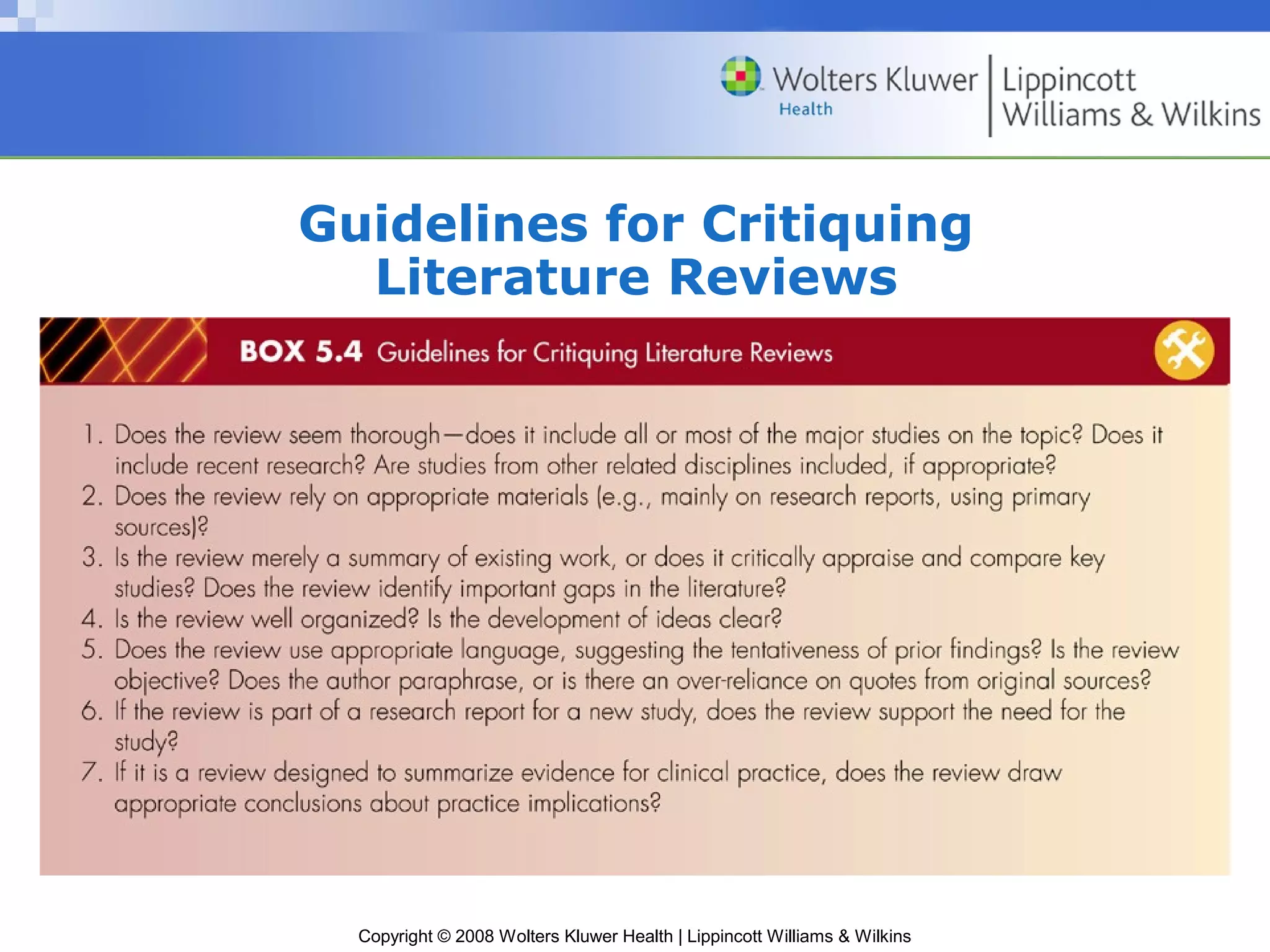
Guidelines for Critiquing
  Literature Reviews


  Copyright © 2008 Wolters Kluwer Health | Lippincott Williams & Wilkins

Po bech05

  • 1.
    Chapter 5 Finding andCritiquing Evidence: Research Literature Reviews Copyright © 2008 Wolters Kluwer Health | Lippincott Williams & Wilkins
  • 2.
    Purposes of aLiterature Review • Identification of a research problem • Orientation to what is known/not known • Determination of gaps or inconsistencies in a body of research • Determination of a need to replicate a study • Identification of clinical interventions that need to be tested Copyright © 2008 Wolters Kluwer Health | Lippincott Williams & Wilkins
  • 3.
    Purposes of aLiterature Review (cont’d) • Identification of relevant conceptual frameworks for a research problem • Identification of suitable designs and data collection methods • Identification of experts who could be used as consultants on a project • Assistance in interpreting findings and developing implications Copyright © 2008 Wolters Kluwer Health | Lippincott Williams & Wilkins
  • 4.
    Sources of Informationin a Research Literature Review • Principal reliance on primary sources (research reports written by researchers who conducted the study) • Less reliance on secondary sources (summaries of studies by others) • Peripheral use of anecdotal reports, opinion articles, case reports Copyright © 2008 Wolters Kluwer Health | Lippincott Williams & Wilkins
  • 5.
    Types of Searchin Electronic Databases Subject search Search for topics or keywords in the database Textword search Search for specific words in text fields of the database record Author search Search for a specific researcher Copyright © 2008 Wolters Kluwer Health | Lippincott Williams & Wilkins
  • 6.
    Key Electronic Databasesfor Nurse Researchers • CINAHL (Cumulative Index to Nursing and Allied Health Literature) • MEDLINE® (Medical Literature on-Line) • The Institute for Scientific Information’s (ISI) Web of Knowledge Copyright © 2008 Wolters Kluwer Health | Lippincott Williams & Wilkins
  • 7.
    Example of aPrintout From a CINAHL Search Copyright © 2008 Wolters Kluwer Health | Lippincott Williams & Wilkins
  • 8.
    Example of aPrintout From a PubMed Search Copyright © 2008 Wolters Kluwer Health | Lippincott Williams & Wilkins
  • 9.
    Abstracting and RecordingInformation • Coding the studies • Literature review protocols • Literature review matrixes Copyright © 2008 Wolters Kluwer Health | Lippincott Williams & Wilkins
  • 10.
    Codes for ResultsMatrix/Coding in Margins Copyright © 2008 Wolters Kluwer Health | Lippincott Williams & Wilkins
  • 11.
    Example of aLiterature Review Protocol Copyright © 2008 Wolters Kluwer Health | Lippincott Williams & Wilkins
  • 12.
    Critiquing Studies andEvaluating the Evidence • Research critiques of individual studies • Evaluating a body of research Copyright © 2008 Wolters Kluwer Health | Lippincott Williams & Wilkins
  • 13.
    Analyzing and SynthesizingInformation Theme Analysis: • Substantive themes • Theoretical themes • Methodologic themes • Generalizability/transferabilty themes • Historical themes • “Researcher” themes Copyright © 2008 Wolters Kluwer Health | Lippincott Williams & Wilkins
  • 14.
    Preparing a WrittenLiterature Review • Organizing the review • Writing a literature review 1. Content 2. Style Copyright © 2008 Wolters Kluwer Health | Lippincott Williams & Wilkins
  • 15.
    Guidelines for Critiquing Literature Reviews Copyright © 2008 Wolters Kluwer Health | Lippincott Williams & Wilkins