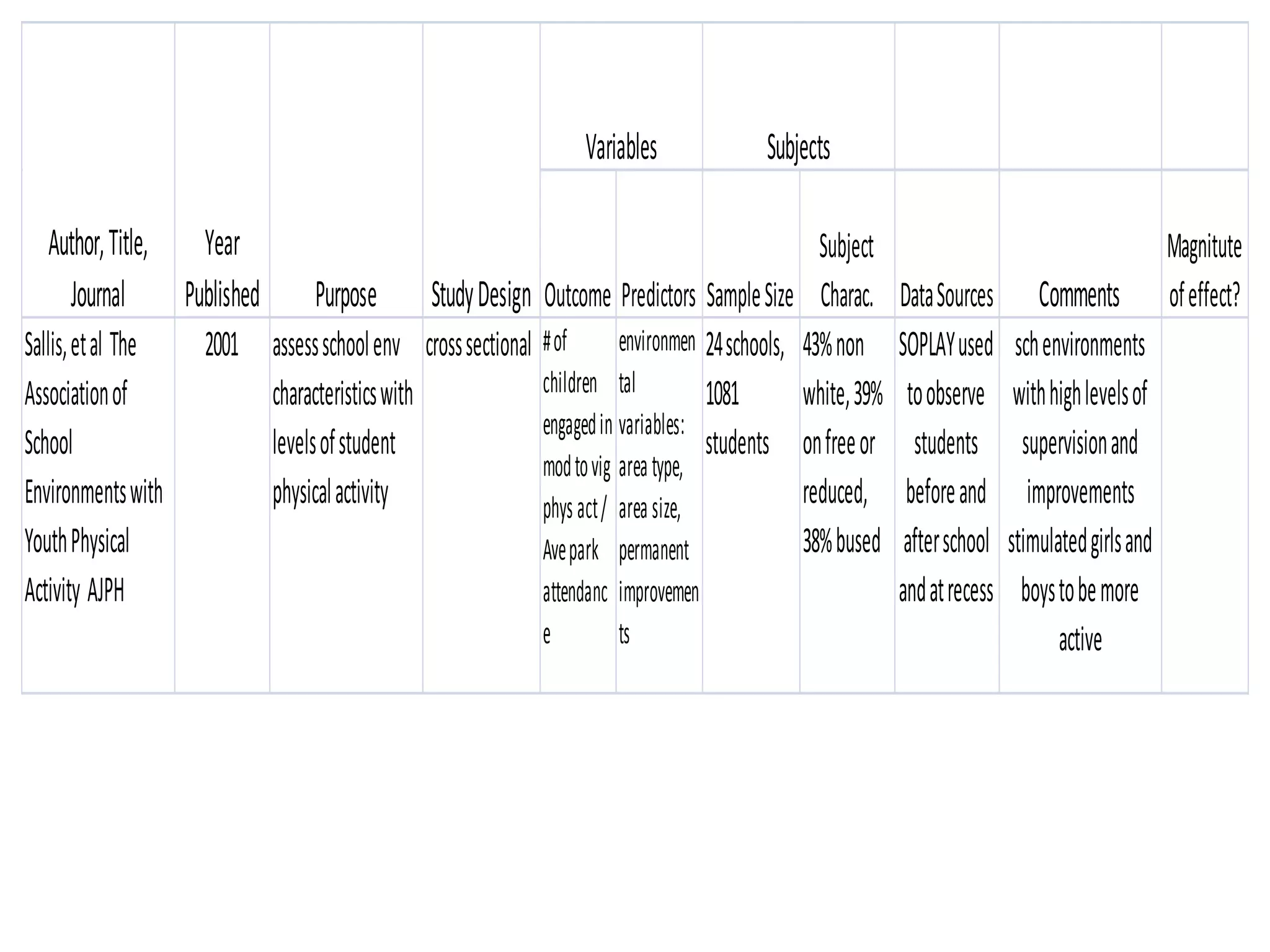
The study by Sallis et al from 2001 used a cross-sectional study design to assess the association between school environmental characteristics and levels of student physical activity among 1081 children from 24 schools. The study observed students before and after school and at recess using the SOPLAY method to measure moderate to vigorous physical activity, and examined how area type, area size, permanent improvements, and average park attendance related to physical activity levels. The results showed that school environments with high levels of supervision and improvements stimulated girls and boys to be more physically active.