Pneumatic Regulator: Key
Functions and Applications
Guide to Understanding Pneumatic Regulators in Industrial Systems
Introduction to Pneumatic Regulators
What is a Pneumatic
Regulator?
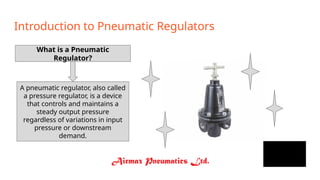
A pneumatic regulator, also called
a pressure regulator, is a device
that controls and maintains a
steady output pressure
regardless of variations in input
pressure or downstream
demand.
Purpose of a Pneumatic Regulator
Essential in pneumatic systems to
regulate air pressure accurately,
ensuring that machinery
operates efficiently and safely.
Importance in Industry
By stabilizing air pressure,
pneumatic regulators improve
system performance, reduce
wear and tear on components,
and enhance overall system
safety.
How Does a Pneumatic Regulator Work?
Basic Working Principle
A pneumatic regulator uses a valve
mechanism controlled by a
diaphragm or piston to adjust and
maintain air pressure. When input
pressure rises, the valve closes to
reduce output pressure, and when
input pressure falls, the valve opens
to increase it.
Components of a Pneumatic
Regulator
Valve Mechanism
Diaphragm or Piston
Spring
Types of Pneumatic Regulators
Pressure-Reducing Regulators
Maintain a constant output pressure,
regardless of fluctuating input
pressures or downstream changes.
Commonly used in systems where a
steady pressure is critical for
operation.
Back-Pressure Regulators
Control pressure at the inlet by
releasing air as needed to maintain set
pressure levels
Often used to relieve excess pressure
in systems where precise inlet pressure
control is required
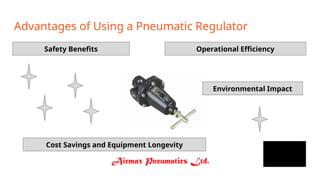
Advantages of Using a Pneumatic Regulator
Safety Benefits Operational Efficiency
Cost Savings and Equipment Longevity
Environmental Impact
THANK YOU
Plot no. 133, "HYDINT HOUSE", B/h. Cozy Hotel, Narol
Road, Ahmedabad – 382 405. (Gujarat) – INDIA
www.airmaxindia.com

Pneumatic Regulator_ Key Functions and Applications

  • 1.
    Pneumatic Regulator: Key Functionsand Applications Guide to Understanding Pneumatic Regulators in Industrial Systems
  • 2.
    Introduction to PneumaticRegulators What is a Pneumatic Regulator? A pneumatic regulator, also called a pressure regulator, is a device that controls and maintains a steady output pressure regardless of variations in input pressure or downstream demand.
  • 3.
    Purpose of aPneumatic Regulator Essential in pneumatic systems to regulate air pressure accurately, ensuring that machinery operates efficiently and safely. Importance in Industry By stabilizing air pressure, pneumatic regulators improve system performance, reduce wear and tear on components, and enhance overall system safety.
  • 4.
    How Does aPneumatic Regulator Work? Basic Working Principle A pneumatic regulator uses a valve mechanism controlled by a diaphragm or piston to adjust and maintain air pressure. When input pressure rises, the valve closes to reduce output pressure, and when input pressure falls, the valve opens to increase it. Components of a Pneumatic Regulator Valve Mechanism Diaphragm or Piston Spring
  • 5.
    Types of PneumaticRegulators Pressure-Reducing Regulators Maintain a constant output pressure, regardless of fluctuating input pressures or downstream changes. Commonly used in systems where a steady pressure is critical for operation. Back-Pressure Regulators Control pressure at the inlet by releasing air as needed to maintain set pressure levels Often used to relieve excess pressure in systems where precise inlet pressure control is required
  • 6.
    Advantages of Usinga Pneumatic Regulator Safety Benefits Operational Efficiency Cost Savings and Equipment Longevity Environmental Impact
  • 7.
    THANK YOU Plot no.133, "HYDINT HOUSE", B/h. Cozy Hotel, Narol Road, Ahmedabad – 382 405. (Gujarat) – INDIA www.airmaxindia.com