B Y R A H U L S I N G H
PROJECT MANAGEMENT
(SIMPLE TO COMPLEX )
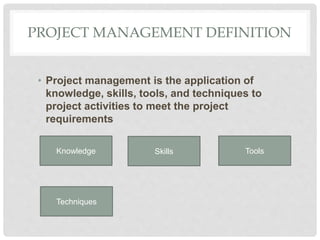
PROJECT MANAGEMENT DEFINITION
• Project management is the application of
knowledge, skills, tools, and techniques to
project activities to meet the project
requirements
Knowledge
Techniques
Skills Tools
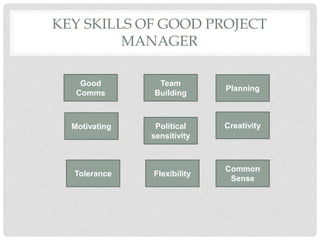
KEY SKILLS OF GOOD PROJECT
MANAGER
Good
Comms
Tolerance
Motivating
Flexibility
Common
Sense
Political
sensitivity
Creativity
Team
Building
Planning
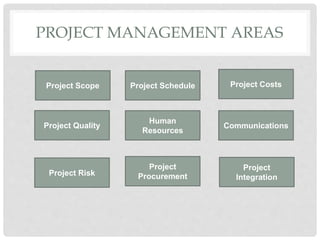
PROJECT MANAGEMENT AREAS
Project Scope
Project Quality
Project Risk
Project
Procurement
Human
Resources
Project
Integration
Communications
Project Schedule Project Costs
PROJECT PROFILING
• Project profiling is a process that summarizes what
is known about the attributes of a project and places
the project into a category with other projects that
have similar characteristics.
• Example :
A company can have various kinds of Projects from
construction to software development
Project manager having experience with construction
should not be given projects of software
developments and vice versa
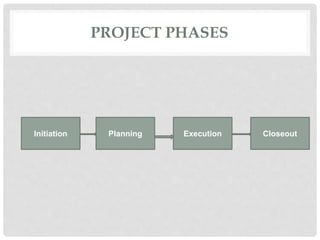
PROJECT PHASES
Initiation Planning Execution Closeout
UNDERSTANDING AND
MEETING CLIENT EXPECTATIONS
• Always Include client in the Project fro start to end
this is a key for a success client will decide the
project success and failure attribute
• Educate the Client from the Beginning about the
Project , efforts , progress , constraints ,
achievement
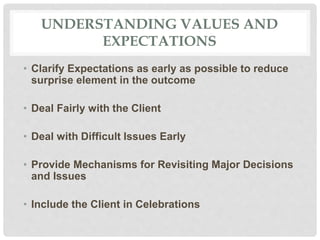
UNDERSTANDING VALUES AND
EXPECTATIONS
• Clarify Expectations as early as possible to reduce
surprise element in the outcome
• Deal Fairly with the Client
• Deal with Difficult Issues Early
• Provide Mechanisms for Revisiting Major Decisions
and Issues
• Include the Client in Celebrations
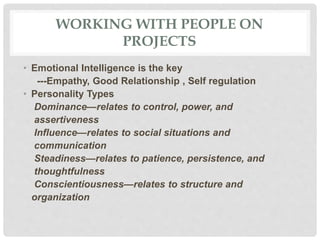
WORKING WITH PEOPLE ON
PROJECTS
• Emotional Intelligence is the key
---Empathy, Good Relationship , Self regulation
• Personality Types
Dominance—relates to control, power, and
assertiveness
Influence—relates to social situations and
communication
Steadiness—relates to patience, persistence, and
thoughtfulness
Conscientiousness—relates to structure and
organization
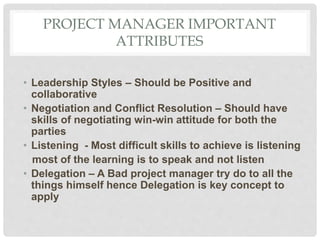
PROJECT MANAGER IMPORTANT
ATTRIBUTES
• Leadership Styles – Should be Positive and
collaborative
• Negotiation and Conflict Resolution – Should have
skills of negotiating win-win attitude for both the
parties
• Listening - Most difficult skills to achieve is listening
most of the learning is to speak and not listen
• Delegation – A Bad project manager try do to all the
things himself hence Delegation is key concept to
apply
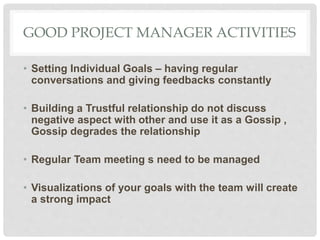
GOOD PROJECT MANAGER ACTIVITIES
• Setting Individual Goals – having regular
conversations and giving feedbacks constantly
• Building a Trustful relationship do not discuss
negative aspect with other and use it as a Gossip ,
Gossip degrades the relationship
• Regular Team meeting s need to be managed
• Visualizations of your goals with the team will create
a strong impact
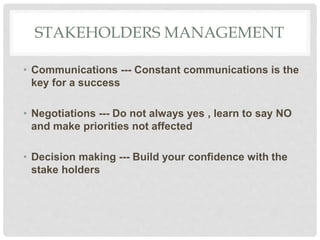
STAKEHOLDERS MANAGEMENT
• Communications --- Constant communications is the
key for a success
• Negotiations --- Do not always yes , learn to say NO
and make priorities not affected
• Decision making --- Build your confidence with the
stake holders
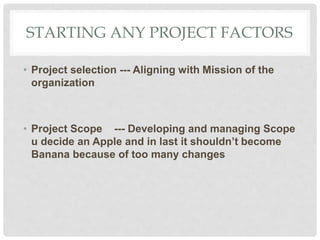
STARTING ANY PROJECT FACTORS
• Project selection --- Aligning with Mission of the
organization
• Project Scope --- Developing and managing Scope
u decide an Apple and in last it shouldn’t become
Banana because of too many changes
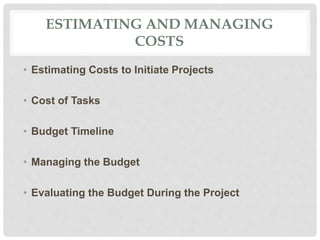
ESTIMATING AND MANAGING
COSTS
• Estimating Costs to Initiate Projects
• Cost of Tasks
• Budget Timeline
• Managing the Budget
• Evaluating the Budget During the Project
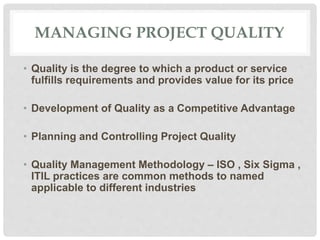
MANAGING PROJECT QUALITY
• Quality is the degree to which a product or service
fulfills requirements and provides value for its price
• Development of Quality as a Competitive Advantage
• Planning and Controlling Project Quality
• Quality Management Methodology – ISO , Six Sigma ,
ITIL practices are common methods to named
applicable to different industries
MANAGING PROJECT RISK
• Risk Identification - assessing risk from quantitative
and qualitative purpose
• Risk Evaluation - what impact it can have for the
projects
• Once Risk has been identified and evaluated , a
Project manager can go for Risk Avoidance , Risk
sharing, Risk reduction, Risk transfer
PROJECT EXECUTION
• Monitoring Project execution by daily , weekly ,
monthly updates
• Creating Contingency plan for any issue faced
during execution
• Appreciating every effort deliver during the
execution
PROJECT CLOSURE
• Feedback of Product or service delivered
• Comparison for Initial scope to product delivery
• Provide the agreement of warranty
• Discuss lesson learnt with all the affected parties

PMP Project management simple to complex | Rahul Singh

  • 1.
    B Y RA H U L S I N G H PROJECT MANAGEMENT (SIMPLE TO COMPLEX )
  • 2.
    PROJECT MANAGEMENT DEFINITION •Project management is the application of knowledge, skills, tools, and techniques to project activities to meet the project requirements Knowledge Techniques Skills Tools
  • 3.
    KEY SKILLS OFGOOD PROJECT MANAGER Good Comms Tolerance Motivating Flexibility Common Sense Political sensitivity Creativity Team Building Planning
  • 4.
    PROJECT MANAGEMENT AREAS ProjectScope Project Quality Project Risk Project Procurement Human Resources Project Integration Communications Project Schedule Project Costs
  • 5.
    PROJECT PROFILING • Projectprofiling is a process that summarizes what is known about the attributes of a project and places the project into a category with other projects that have similar characteristics. • Example : A company can have various kinds of Projects from construction to software development Project manager having experience with construction should not be given projects of software developments and vice versa
  • 6.
  • 7.
    UNDERSTANDING AND MEETING CLIENTEXPECTATIONS • Always Include client in the Project fro start to end this is a key for a success client will decide the project success and failure attribute • Educate the Client from the Beginning about the Project , efforts , progress , constraints , achievement
  • 8.
    UNDERSTANDING VALUES AND EXPECTATIONS •Clarify Expectations as early as possible to reduce surprise element in the outcome • Deal Fairly with the Client • Deal with Difficult Issues Early • Provide Mechanisms for Revisiting Major Decisions and Issues • Include the Client in Celebrations
  • 9.
    WORKING WITH PEOPLEON PROJECTS • Emotional Intelligence is the key ---Empathy, Good Relationship , Self regulation • Personality Types Dominance—relates to control, power, and assertiveness Influence—relates to social situations and communication Steadiness—relates to patience, persistence, and thoughtfulness Conscientiousness—relates to structure and organization
  • 10.
    PROJECT MANAGER IMPORTANT ATTRIBUTES •Leadership Styles – Should be Positive and collaborative • Negotiation and Conflict Resolution – Should have skills of negotiating win-win attitude for both the parties • Listening - Most difficult skills to achieve is listening most of the learning is to speak and not listen • Delegation – A Bad project manager try do to all the things himself hence Delegation is key concept to apply
  • 11.
    GOOD PROJECT MANAGERACTIVITIES • Setting Individual Goals – having regular conversations and giving feedbacks constantly • Building a Trustful relationship do not discuss negative aspect with other and use it as a Gossip , Gossip degrades the relationship • Regular Team meeting s need to be managed • Visualizations of your goals with the team will create a strong impact
  • 12.
    STAKEHOLDERS MANAGEMENT • Communications--- Constant communications is the key for a success • Negotiations --- Do not always yes , learn to say NO and make priorities not affected • Decision making --- Build your confidence with the stake holders
  • 13.
    STARTING ANY PROJECTFACTORS • Project selection --- Aligning with Mission of the organization • Project Scope --- Developing and managing Scope u decide an Apple and in last it shouldn’t become Banana because of too many changes
  • 14.
    ESTIMATING AND MANAGING COSTS •Estimating Costs to Initiate Projects • Cost of Tasks • Budget Timeline • Managing the Budget • Evaluating the Budget During the Project
  • 15.
    MANAGING PROJECT QUALITY •Quality is the degree to which a product or service fulfills requirements and provides value for its price • Development of Quality as a Competitive Advantage • Planning and Controlling Project Quality • Quality Management Methodology – ISO , Six Sigma , ITIL practices are common methods to named applicable to different industries
  • 16.
    MANAGING PROJECT RISK •Risk Identification - assessing risk from quantitative and qualitative purpose • Risk Evaluation - what impact it can have for the projects • Once Risk has been identified and evaluated , a Project manager can go for Risk Avoidance , Risk sharing, Risk reduction, Risk transfer
  • 17.
    PROJECT EXECUTION • MonitoringProject execution by daily , weekly , monthly updates • Creating Contingency plan for any issue faced during execution • Appreciating every effort deliver during the execution
  • 18.
    PROJECT CLOSURE • Feedbackof Product or service delivered • Comparison for Initial scope to product delivery • Provide the agreement of warranty • Discuss lesson learnt with all the affected parties