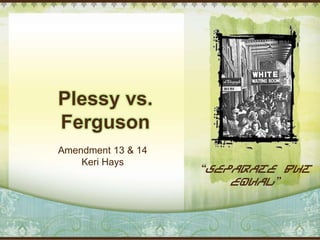
Plessy vs.
Ferguson
Amendment 13 & 14
    Keri Hays
                    “Separate but
                        Equal”
Historical
        Background
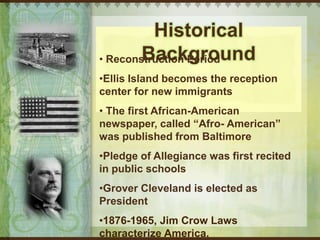
• Reconstruction Period
•Ellis Island becomes the reception
center for new immigrants
• The first African-American
newspaper, called “Afro- American”
was published from Baltimore
•Pledge of Allegiance was first recited
in public schools
•Grover Cleveland is elected as
President
•1876-1965, Jim Crow Laws
characterize America.
Circumstances of the Case
• On June 7, 1892, 30-year-old Homer Plessy was jailed for
  sitting in the "White" car of the East Louisiana Railroad.
• He was considered black, even thought he was white in
  color, and therefore required to sit in the "Colored" car.
• Louisiana passed the Separate Car Act, legally
  segregating train carriers in 1892.
• A black civil rights organization decided to challenge the
  law in the courts.
• Plessy purposely sat in the white section and made it
  clear the he was African-American.
• He was arrested and the case went all the way to the
  United States Supreme Court.
Constitutional
• 13th   Amendment Issues
      -Neither slavery nor involuntary servitude, except as a punishment for
crime whereof the party shall have been duly convicted, shall exist within
the United States, or any place subject to their jurisdiction
      -Segregation was forcing them into involuntary servitude.
      -Amendment was to protect former slaves from laws that would
      hinder them from life, liberty, and the pursuit of happiness.


• 14th Amendment
      -No State shall make or enforce any law which shall abridge the
privileges or immunities of citizens of the United States; nor shall any State
deprive any person of life, liberty, or property, without due process of law;
nor deny to any person within its jurisdiction the equal protection of the
laws.
     -Segregation was hindering the Africa-Americans and not giving them
the same privileges as the whites.
Arguments
          Plessy                       Ferguson

• Segregation was              • Segregation had no
unconstitutional because it      intentions of destroy the
hindered the African-            legal equality of the two
                                 races
American from living a life
                               • 14th Amendment was to
similar to the whites.
                                 enforce the ABSOLUTE
• Segregation stigmatized
                                 equality of the two races
blacks and made them worthy      before the law.
of disgrace                    • It was not Intended to
• “Stamped them with a badge     abolish distinctions based
of Inferiority                   upon color, but to create
•Segregation violated the        equality between the two.
Equal Protection Clause        • Our constitution is color-
                                 blind.
Court Ruling
• Ferguson won the case with a majority of 7
votes

• Separate facilities for blacks and whites were
constitutional as long as they were "equal.”

•The Separate but Equal doctrine quickly spread
to cover many areas of public life such as
restaurants, theaters, restrooms, and public
schools
Impact
•Imaginary wall between blacks and
 whites.
•Many whites who felt threatened
 by emancipation, could maintain
 their delusion of superiority.
•Encouraged racism to continue
 unchecked
•Even though they were supposed
 to be “equal”, facilities for blacks
 were always inferior to those for
 whites
References
Wormser, Richard. “Plessy vs. Ferguson” The Rise and Fall of
Jim Crow. 2002. Accessed October 24, 2012
http://www.pbs.org/wnet/jimcrow/stories_events_plessy.html

No Author. “Plessy v. Ferguson- A Brief Case Summary” Lawnix.
2008-2012. Accessed October 24, 2012
http://www.lawnix.com/cases/plessy-ferguson.html

Cozzens, Lisa. “Plessy v. Ferguson” Watson. 1999. Accessed
October 25, 2012
http://www.watson.org/~lisa/blackhistory/post-
civilwar/plessy.html

Plessy vs ferguson

  • 1.
    Plessy vs. Ferguson Amendment 13& 14 Keri Hays “Separate but Equal”
  • 2.
    Historical Background • Reconstruction Period •Ellis Island becomes the reception center for new immigrants • The first African-American newspaper, called “Afro- American” was published from Baltimore •Pledge of Allegiance was first recited in public schools •Grover Cleveland is elected as President •1876-1965, Jim Crow Laws characterize America.
  • 3.
    Circumstances of theCase • On June 7, 1892, 30-year-old Homer Plessy was jailed for sitting in the "White" car of the East Louisiana Railroad. • He was considered black, even thought he was white in color, and therefore required to sit in the "Colored" car. • Louisiana passed the Separate Car Act, legally segregating train carriers in 1892. • A black civil rights organization decided to challenge the law in the courts. • Plessy purposely sat in the white section and made it clear the he was African-American. • He was arrested and the case went all the way to the United States Supreme Court.
  • 4.
    Constitutional • 13th Amendment Issues -Neither slavery nor involuntary servitude, except as a punishment for crime whereof the party shall have been duly convicted, shall exist within the United States, or any place subject to their jurisdiction -Segregation was forcing them into involuntary servitude. -Amendment was to protect former slaves from laws that would hinder them from life, liberty, and the pursuit of happiness. • 14th Amendment -No State shall make or enforce any law which shall abridge the privileges or immunities of citizens of the United States; nor shall any State deprive any person of life, liberty, or property, without due process of law; nor deny to any person within its jurisdiction the equal protection of the laws. -Segregation was hindering the Africa-Americans and not giving them the same privileges as the whites.
  • 5.
    Arguments Plessy Ferguson • Segregation was • Segregation had no unconstitutional because it intentions of destroy the hindered the African- legal equality of the two races American from living a life • 14th Amendment was to similar to the whites. enforce the ABSOLUTE • Segregation stigmatized equality of the two races blacks and made them worthy before the law. of disgrace • It was not Intended to • “Stamped them with a badge abolish distinctions based of Inferiority upon color, but to create •Segregation violated the equality between the two. Equal Protection Clause • Our constitution is color- blind.
  • 6.
    Court Ruling • Fergusonwon the case with a majority of 7 votes • Separate facilities for blacks and whites were constitutional as long as they were "equal.” •The Separate but Equal doctrine quickly spread to cover many areas of public life such as restaurants, theaters, restrooms, and public schools
  • 7.
    Impact •Imaginary wall betweenblacks and whites. •Many whites who felt threatened by emancipation, could maintain their delusion of superiority. •Encouraged racism to continue unchecked •Even though they were supposed to be “equal”, facilities for blacks were always inferior to those for whites
  • 8.
    References Wormser, Richard. “Plessyvs. Ferguson” The Rise and Fall of Jim Crow. 2002. Accessed October 24, 2012 http://www.pbs.org/wnet/jimcrow/stories_events_plessy.html No Author. “Plessy v. Ferguson- A Brief Case Summary” Lawnix. 2008-2012. Accessed October 24, 2012 http://www.lawnix.com/cases/plessy-ferguson.html Cozzens, Lisa. “Plessy v. Ferguson” Watson. 1999. Accessed October 25, 2012 http://www.watson.org/~lisa/blackhistory/post- civilwar/plessy.html