Plate/Present Poultry and
Game Dishes
Portion Control for Cooked
Poultry and Game
 Meat shrinks about 25% when cooked. A quarter-pound
hamburger (4 oz.) will actually yield a 3 ounce portion
after cooking. An 8 ounce steak will yield about 6 ounces
of cooked meat.
 A chicken breast is generally 3 - 4 ounces.
 A chicken thigh is usually 2 ounces, while a leg is 1 - 2
ounces.
 Chicken wings are high in fat. It takes 2 wings to equal a
1 ounce choice (or exchange) with that.
Portion Control Secrets
It‘s not always what you eat, but how
much you eat - It‘s the size of your servings
that really counts!
Most of us tend to underestimate the
amount of food we eat and tend to
overestimate the recommended portion
sizes for many foods. Almost everyone
underestimates the amount of calories they
consume, and people who weigh more do
so, to a greater degree.
Portion
 A portion is how much food you choose to
eat at one time (breakfast, lunch, dinner,
or snack), whether in a restaurant, from a
package, or in your own kitchen. Portions
can be bigger or smaller than the
recommended food servings. There is no
standard portion size and no single right
or wrong portion size.
Serving
 A serving size is the amount of food listed (and
recommended) on a product‘s Nutrition Facts
(panel of packaged food) or the amount of food
recommended in the Food Guide Pyramid and the
Dietary Guidelines* for Americans. Sometimes, the
portion size and serving size match; sometimes
they do not. A serving is a standard amount used
to help give advice about how much to eat, or to
identify how many calories and nutrients are in a
food.
How to Control Portion Sizes
 Eating smaller portions of food is one of
the easiest ways to cut back on calories—
but it can also be one of the most
challenging, with the current trend of
super-sizing. How do you know a
reasonable portion of food when you see
it? Visualize the objects mentioned below
when eating out, planning a meal, or
grabbing a snack.
Factors to consider in
presenting/plating poultry
dishes
 Types of service wares
 Plating
 Garnishing
 Sauces
 Accompaniments
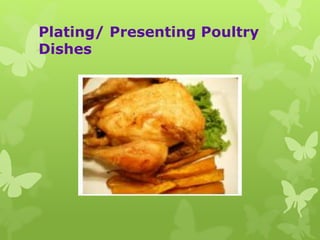
Plating/ Presenting Poultry
Dishes
The way food is presented affects a person‘s
perception of how it will taste. People instinctively reject
bruised apples and browned bananas, and recognize well-
marbled beef and perfectly ripe produce. Prepared dishes
work in the same manner. The perfect dish includes food that
tastes as good as it looks. Much of the artistry of cooking
comes after the food has been cooked and it is time to
transfer it from pot to plate. Here, chefs rise above cooks as
theyarrange the different components on a plate like
interior designers place furniture to create culinary
masterpieces.
The home chef faces similar circumstances on a
nightly basis. Whether you‘re entertaining, preparing
a special meal or jazzing up an old favorite, these
food presentation tips will set your dishes apart from
the crowd.
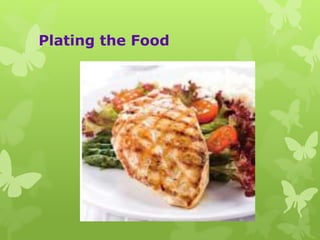
Plating the Food
Plating is the act of arranging the meal on the
individual plate immediately before it‘s served. Presentation
should look natural. It should feel as though everything
that is on the plate is meant to be should feel as though
everything that is on the plate is meant to be exactly where
it is. Try to strike a balance between having enough food on
the plate to convey hospitality without overcrowding the
plate—and potentially offending your guest. Try to leave
one-third of the plate empty, and plate your dish
immediately before you serve it. It goes without saying that
hot food should be hot and cold food should be cold; always
check the temperature of your food before you serve it to a
guest. After you have put the food on the plate, check to
see that the plate is clean. Plate edges should be especially
immaculate. Clean spills or sauces away with a moistened
clean sponge or paper towel.
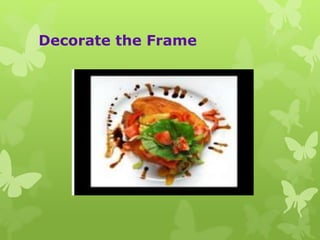
Decorate the Frame
If the food is the masterpiece, then the plate is its frame.
Adapt artistic framing strategies to your cooking for a quick way
to improve your food‘s presentation. Buy beautiful bowls and
plates in a variety of shapes and colors. The same bowl of soup
looks dramatically different in a small Asian ceramic cup and an
oversized, shallow white French consommé bowl.
You can also decorate the rim of a plate, just as you‘d
decorate a frame. Use culinary elements like colorful spices or
confectioner‘s sugar; specialty salts like Hawaiian alaea or
Himalayan pink salt which also lend themselves wonderfully to
this purpose.
For small appetizers, part of the presentation is making the
display platter look beautiful. Make a bed of uncooked soba
noodles or flat rice sticks, shafts of wheat, or large sprigs of
fresh herbs like rosemary and thyme. This is also
a good trick to use if you are preparing a hors d‘oeuvre platter.
If you‘re decorating a plate that will hold hot food, be aware
that by the time you‘re finished garnishing the plate, the food
may not be hot. In some cases, you can garnish the plate before
you plate the food. If this is impossible, work quickly and have
all of your garnishes close by.
Mix Shapes, Colors and
Textures
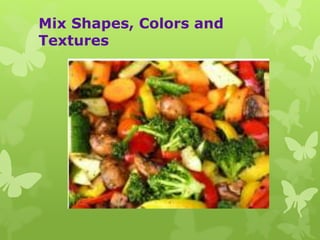
Food is naturally beautiful. Combine foods with different shapes,
colors and textures on the same plate. Grilled filet mignon becomes
even more decadent when it appears on the plate with stark white
mashed potatoes and a bright green steamed vegetable.
In this case, these different elements combine for a dish that
catches the eye. If your plate will contain multiple elements, use an
odd number of dishes rather than an even number for further
interest. Grilled filet mignon with mashed potatoes and steamed
asparagus looks great, but add a stack of sliced tomatoes and the
combination becomes regimented and less remarkable.
Try to integrate a variety of shapes in each dish. Risotto is boring
when paired with rice, as the two are nearly identical in shape, color
and size. Meatballs and Brussels sprouts are different colors but the
same shape. But meatballs and rice make an interesting
combination, as do risotto and Brussels sprouts.
For a restaurant-worthy twist on traditional side-by-side
plating, stack the components of your dish vertically.
Arrange asparagus into a teepee on the plate, with a
dipping sauce in the center; make salads more cylindrical
than vertical. This approach can make any plate instantly
more interesting.
Keep in mind that sometimes the most aesthetically
pleasing plate of food does not include a garnish. For
example, crème brulee features a delicate, crunchy top
layer. While its appearance can certainly be improved with a
small garnish or beautiful brulee dish, the texture and color
of the caramelized sugar is beautiful enough on its own.
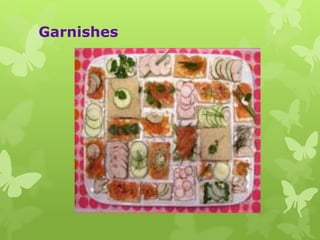
Garnishes
Garnishes can be as simple or intricate as you like. For a
twist on the traditional parsley sprig, use a sprig or two of an
herb or spice that was used in the dish. A ham flavored with
rosemary might feature a sprig of rosemary on each plate.
Spicy pad Thai can include a wedge of lemon or lime and a
dash of paprika sprinkled around the plate.
You can also garnish with small fans of fruits and
vegetables like cucumber, pineapple, avocado, citrus, kiwi or
apple. Slice the fruit or vegetable into thin rounds, leaving ¼‖
of flesh connected on one side to hold the rounds together.
Gently spread out the slices and arrange them neatly in an arc.
Several kitchen tools are available that will help you transform
nearly any fruit into an attractive garnish for a plate.
The key to selecting a garnish is picking a garnish that will
improve the dish. Garnishes add color and continue a theme,
such as a brightly colored orchid on top of passion fruit crème
brulee. They can accent a dish‘s color, like chives on top of a
baked potato, or a dish‘s flavor.
Garnishes can provide complementary flavor, like
peanuts in pad Thai, or contrasting flavor, like a lemon
wedge with seafood. An entrée‘s sauce also makes a
delicious garnish. Swirl it around or atop the plate for visual
and gustatory interest.
The way food looks on the plate is the most commonly
ignored facet of cooking at home. Too often, other
considerations such as time, money, and food allergies
push presentation out of mind. Since most children and
their families eat their main meals at home, attractive food
presentation is just as important at home as it is in a
restaurant. A dish that looks good is more likelyto be eaten.
Even picky kids will forego sugary cereal in favor of Mickey
Mouse-shaped waffles or a plate with over easy egg eyes, a
bacon smile and potato cheeks. You can even trick your
own palate into liking Brussels sprouts, zucchini and other
healthy produce with a beautiful arrangement on a dish.

Plate poultry dishes

  • 1.
  • 2.
    Portion Control forCooked Poultry and Game  Meat shrinks about 25% when cooked. A quarter-pound hamburger (4 oz.) will actually yield a 3 ounce portion after cooking. An 8 ounce steak will yield about 6 ounces of cooked meat.  A chicken breast is generally 3 - 4 ounces.  A chicken thigh is usually 2 ounces, while a leg is 1 - 2 ounces.  Chicken wings are high in fat. It takes 2 wings to equal a 1 ounce choice (or exchange) with that.
  • 3.
    Portion Control Secrets It‘snot always what you eat, but how much you eat - It‘s the size of your servings that really counts! Most of us tend to underestimate the amount of food we eat and tend to overestimate the recommended portion sizes for many foods. Almost everyone underestimates the amount of calories they consume, and people who weigh more do so, to a greater degree.
  • 4.
    Portion  A portionis how much food you choose to eat at one time (breakfast, lunch, dinner, or snack), whether in a restaurant, from a package, or in your own kitchen. Portions can be bigger or smaller than the recommended food servings. There is no standard portion size and no single right or wrong portion size.
  • 5.
    Serving  A servingsize is the amount of food listed (and recommended) on a product‘s Nutrition Facts (panel of packaged food) or the amount of food recommended in the Food Guide Pyramid and the Dietary Guidelines* for Americans. Sometimes, the portion size and serving size match; sometimes they do not. A serving is a standard amount used to help give advice about how much to eat, or to identify how many calories and nutrients are in a food.
  • 6.
    How to ControlPortion Sizes  Eating smaller portions of food is one of the easiest ways to cut back on calories— but it can also be one of the most challenging, with the current trend of super-sizing. How do you know a reasonable portion of food when you see it? Visualize the objects mentioned below when eating out, planning a meal, or grabbing a snack.
  • 7.
    Factors to considerin presenting/plating poultry dishes  Types of service wares  Plating  Garnishing  Sauces  Accompaniments
  • 8.
  • 9.
    The way foodis presented affects a person‘s perception of how it will taste. People instinctively reject bruised apples and browned bananas, and recognize well- marbled beef and perfectly ripe produce. Prepared dishes work in the same manner. The perfect dish includes food that tastes as good as it looks. Much of the artistry of cooking comes after the food has been cooked and it is time to transfer it from pot to plate. Here, chefs rise above cooks as theyarrange the different components on a plate like interior designers place furniture to create culinary masterpieces. The home chef faces similar circumstances on a nightly basis. Whether you‘re entertaining, preparing a special meal or jazzing up an old favorite, these food presentation tips will set your dishes apart from the crowd.
  • 10.
  • 11.
    Plating is theact of arranging the meal on the individual plate immediately before it‘s served. Presentation should look natural. It should feel as though everything that is on the plate is meant to be should feel as though everything that is on the plate is meant to be exactly where it is. Try to strike a balance between having enough food on the plate to convey hospitality without overcrowding the plate—and potentially offending your guest. Try to leave one-third of the plate empty, and plate your dish immediately before you serve it. It goes without saying that hot food should be hot and cold food should be cold; always check the temperature of your food before you serve it to a guest. After you have put the food on the plate, check to see that the plate is clean. Plate edges should be especially immaculate. Clean spills or sauces away with a moistened clean sponge or paper towel.
  • 12.
  • 13.
    If the foodis the masterpiece, then the plate is its frame. Adapt artistic framing strategies to your cooking for a quick way to improve your food‘s presentation. Buy beautiful bowls and plates in a variety of shapes and colors. The same bowl of soup looks dramatically different in a small Asian ceramic cup and an oversized, shallow white French consommé bowl. You can also decorate the rim of a plate, just as you‘d decorate a frame. Use culinary elements like colorful spices or confectioner‘s sugar; specialty salts like Hawaiian alaea or Himalayan pink salt which also lend themselves wonderfully to this purpose. For small appetizers, part of the presentation is making the display platter look beautiful. Make a bed of uncooked soba noodles or flat rice sticks, shafts of wheat, or large sprigs of fresh herbs like rosemary and thyme. This is also a good trick to use if you are preparing a hors d‘oeuvre platter. If you‘re decorating a plate that will hold hot food, be aware that by the time you‘re finished garnishing the plate, the food may not be hot. In some cases, you can garnish the plate before you plate the food. If this is impossible, work quickly and have all of your garnishes close by.
  • 14.
    Mix Shapes, Colorsand Textures
  • 15.
    Food is naturallybeautiful. Combine foods with different shapes, colors and textures on the same plate. Grilled filet mignon becomes even more decadent when it appears on the plate with stark white mashed potatoes and a bright green steamed vegetable. In this case, these different elements combine for a dish that catches the eye. If your plate will contain multiple elements, use an odd number of dishes rather than an even number for further interest. Grilled filet mignon with mashed potatoes and steamed asparagus looks great, but add a stack of sliced tomatoes and the combination becomes regimented and less remarkable. Try to integrate a variety of shapes in each dish. Risotto is boring when paired with rice, as the two are nearly identical in shape, color and size. Meatballs and Brussels sprouts are different colors but the same shape. But meatballs and rice make an interesting combination, as do risotto and Brussels sprouts.
  • 16.
    For a restaurant-worthytwist on traditional side-by-side plating, stack the components of your dish vertically. Arrange asparagus into a teepee on the plate, with a dipping sauce in the center; make salads more cylindrical than vertical. This approach can make any plate instantly more interesting. Keep in mind that sometimes the most aesthetically pleasing plate of food does not include a garnish. For example, crème brulee features a delicate, crunchy top layer. While its appearance can certainly be improved with a small garnish or beautiful brulee dish, the texture and color of the caramelized sugar is beautiful enough on its own.
  • 17.
  • 18.
    Garnishes can beas simple or intricate as you like. For a twist on the traditional parsley sprig, use a sprig or two of an herb or spice that was used in the dish. A ham flavored with rosemary might feature a sprig of rosemary on each plate. Spicy pad Thai can include a wedge of lemon or lime and a dash of paprika sprinkled around the plate. You can also garnish with small fans of fruits and vegetables like cucumber, pineapple, avocado, citrus, kiwi or apple. Slice the fruit or vegetable into thin rounds, leaving ¼‖ of flesh connected on one side to hold the rounds together. Gently spread out the slices and arrange them neatly in an arc. Several kitchen tools are available that will help you transform nearly any fruit into an attractive garnish for a plate. The key to selecting a garnish is picking a garnish that will improve the dish. Garnishes add color and continue a theme, such as a brightly colored orchid on top of passion fruit crème brulee. They can accent a dish‘s color, like chives on top of a baked potato, or a dish‘s flavor.
  • 19.
    Garnishes can providecomplementary flavor, like peanuts in pad Thai, or contrasting flavor, like a lemon wedge with seafood. An entrée‘s sauce also makes a delicious garnish. Swirl it around or atop the plate for visual and gustatory interest. The way food looks on the plate is the most commonly ignored facet of cooking at home. Too often, other considerations such as time, money, and food allergies push presentation out of mind. Since most children and their families eat their main meals at home, attractive food presentation is just as important at home as it is in a restaurant. A dish that looks good is more likelyto be eaten. Even picky kids will forego sugary cereal in favor of Mickey Mouse-shaped waffles or a plate with over easy egg eyes, a bacon smile and potato cheeks. You can even trick your own palate into liking Brussels sprouts, zucchini and other healthy produce with a beautiful arrangement on a dish.