Plating/
Presenting
Poultry Dishes
O The way food is presented affects a
person‘s perception of how it will taste.
O People instinctively reject bruised apples
and browned bananas, and recognize
well-marbled beef and perfectly ripe
produce.
O Prepared dishes work in the same
manner. The perfect dish includes food
that tastes as good as it looks.
O-much of the artistry of cooking
comes after the food has been
cooked and it is time to transfer it
from pot to plate.
O-chefs rise above cooks as they
arrange the different components
on a plate like interior designers
place furniture to create culinary
masterpieces.
OThe home chef faces similar
circumstances on a nightly
basis. Whether you‘re
entertaining, preparing a special
meal or jazzing up an old
favorite, these food presentation
tips will set your dishes apart
from the crowd.
Plating the Food
O Plating is the act of arranging the meal
on the individual plate immediately
before it‘s served.
O One-third of the plate empty, and plate
your dish immediately before you serve it.
O Plate edges should be especially
immaculate. Clean spills or sauces away
with a moistened clean sponge or paper
towel.
Decorate the Frame
O If the food is the masterpiece, then the
plate is its frame. Adapt artistic framing
strategies to your cooking for a quick
way to improve your food‘s presentation.
O Buy beautiful bowls and plates in a
variety of shapes and colors.
O The same bowl of soup looks
dramatically different in a small Asian
ceramic cup and an oversized, shallow
white French consommé bowl.
OYou can also decorate the rim of a
plate, just as you‘d decorate a
frame.
OUse culinary elements like colorful
spices or confectioner‘s sugar;
specialty salts like Hawaiian alaea
or Himalayan pink salt which also
lend themselves wonderfully to this
purpose.
OFor small appetizers, part of the
presentation is making the
display platter look beautiful.
OIf you‘re decorating a plate that
will hold hot food, be aware that
by the time you‘re finished
garnishing the plate, the food
may not be hot.
Mix Shapes, Colors and
Textures
O Food is naturally beautiful. Combine foods
with different shapes, colors and textures
on the same plate.
O different elements combine for a dish that
catches the eye.
O Try to integrate a variety of shapes in each
dish.
O Keep in mind that sometimes the most
aesthetically pleasing plate of food does
not include a garnish.
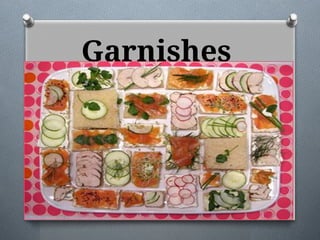
Garnishes
O Garnishes can be as simple or intricate as
you like .
O You can also garnish with small fans of fruits
and vegetables like cucumber, pineapple,
avocado, citrus, kiwi or apple.
O The key to selecting a garnish is picking a
garnish that will improve the dish.
O Garnishes can provide complementary flavor,
like peanuts .
O The way food looks on the plate is the most
commonly ignored facet of cooking at home.

9.Plating Presenting Poultry Dishes.pptx

  • 1.
  • 2.
    O The wayfood is presented affects a person‘s perception of how it will taste. O People instinctively reject bruised apples and browned bananas, and recognize well-marbled beef and perfectly ripe produce. O Prepared dishes work in the same manner. The perfect dish includes food that tastes as good as it looks.
  • 3.
    O-much of theartistry of cooking comes after the food has been cooked and it is time to transfer it from pot to plate. O-chefs rise above cooks as they arrange the different components on a plate like interior designers place furniture to create culinary masterpieces.
  • 4.
    OThe home cheffaces similar circumstances on a nightly basis. Whether you‘re entertaining, preparing a special meal or jazzing up an old favorite, these food presentation tips will set your dishes apart from the crowd.
  • 5.
    Plating the Food OPlating is the act of arranging the meal on the individual plate immediately before it‘s served. O One-third of the plate empty, and plate your dish immediately before you serve it. O Plate edges should be especially immaculate. Clean spills or sauces away with a moistened clean sponge or paper towel.
  • 6.
  • 7.
    O If thefood is the masterpiece, then the plate is its frame. Adapt artistic framing strategies to your cooking for a quick way to improve your food‘s presentation. O Buy beautiful bowls and plates in a variety of shapes and colors. O The same bowl of soup looks dramatically different in a small Asian ceramic cup and an oversized, shallow white French consommé bowl.
  • 8.
    OYou can alsodecorate the rim of a plate, just as you‘d decorate a frame. OUse culinary elements like colorful spices or confectioner‘s sugar; specialty salts like Hawaiian alaea or Himalayan pink salt which also lend themselves wonderfully to this purpose.
  • 9.
    OFor small appetizers,part of the presentation is making the display platter look beautiful. OIf you‘re decorating a plate that will hold hot food, be aware that by the time you‘re finished garnishing the plate, the food may not be hot.
  • 10.
    Mix Shapes, Colorsand Textures
  • 11.
    O Food isnaturally beautiful. Combine foods with different shapes, colors and textures on the same plate. O different elements combine for a dish that catches the eye. O Try to integrate a variety of shapes in each dish. O Keep in mind that sometimes the most aesthetically pleasing plate of food does not include a garnish.
  • 12.
  • 13.
    O Garnishes canbe as simple or intricate as you like . O You can also garnish with small fans of fruits and vegetables like cucumber, pineapple, avocado, citrus, kiwi or apple. O The key to selecting a garnish is picking a garnish that will improve the dish. O Garnishes can provide complementary flavor, like peanuts . O The way food looks on the plate is the most commonly ignored facet of cooking at home.