PREPARE CEREALS AND
STARCH
Cereals
- are usually starchy pods or
grains.
- are the most important group of
food crops in the world named
after the Roman goddess of
harvest, Ceres.
- Rice, wheat and corn are the
three most cultivated cereals in
the world.
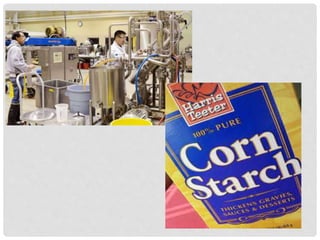
Starch
- is the second most abundant organic
substance on earth.
- It is found in all forms of leafy green
plants, located in the roots, fruits or
grains.
- is the source of up to 80% of calories
worldwide. Besides this significant role,
starches have been used in food
manufacture, cosmetics,
pharmaceuticals, textiles, paper,
construction materials, and other
industries.
TOOLS AND EQUIPMENT
1.Mixing bowl
2.Wire Whip
3.Sifter
4.Wooden spoon
5.Slotted spoon
6.Blending fork
7.Rubber scraper
8.Strainer
9.Tongs
10. Measuring cups
11. Measuring spoons
12.Sauce pans and pots
13. Kettles and rice cooker
14. Pressure cooker
15. Double boiler
16.Steamer
17. Colander
18. Canister
19. Butcher knife
20. Channel knife
SOURCES OF STARCH
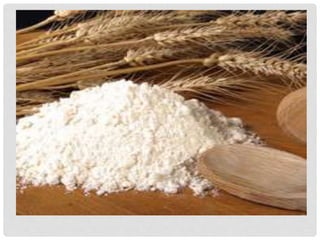
1. cereal grains, including corn, wheat, rice,
grain, sorghum, and oats;
2. legumes; and
3. roots or tubers, including potato, sweet
potato, arrowroot, and the tropical
cassava plant (marketed as tapioca)
COMMON SOURCE OF
MANUFACTURED FOOD STARCH
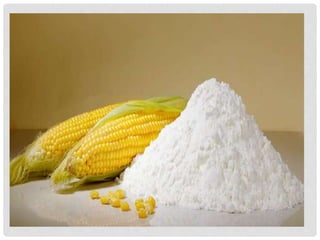
1. corn
2. potato
3. Tapioca (cassava)
STARCHES ARE NAMED AFTER ITS
PLANT SOURCES
1. corn starch from corn
2 . rice starch from rice
3. tapioca from cassava
CLASSIFICATION OF STARCH
1. Native or Natural Starch refers to the
starches as originally derived from its plant
source.
2. Modified Starches are starches that have
been altered physically or chemically, to modify
one or more of its key chemicals and/or
physical property.
3. Purified starch may be separated from
grains and tubers by a process called wet
milling.
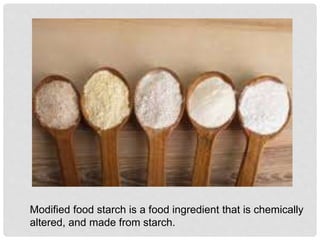
Modified food starch is a food ingredient that is chemically
altered, and made from starch.
THE STARCH MOLECULE
Starch is polysaccharide made up of hundreds or even
thousands of glucose molecules joined together.
2 TYPES:
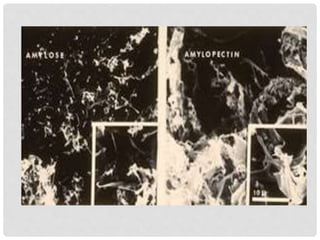
1. Amylose is a long chain-like molecule,
sometimes called the linear fraction, and is
produced by linking together 500 to 2, 000
glucose molecules.
The amylose fraction of starch contributes gelling
characteristics to cooked and cooled starch
mixtures. A gel is rigid to a certain degree and holds
a shape when molded.
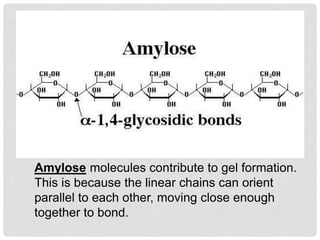
Amylose molecules contribute to gel formation.
This is because the linear chains can orient
parallel to each other, moving close enough
together to bond.
2. Amylopectin has a highly branched, bushy type
of structure, very different from the long, string-like
molecules of amylose.
In both, amylose and amylopectin, however, the
basic building unit is glucose. Cohesion or
thickening properties are contributed by
amylopectin when a starch mixture is cooked in
the presence of water, but this fraction does not
produce a gel.
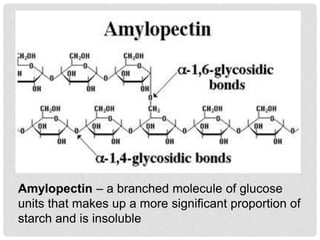
Amylopectin – a branched molecule of glucose
units that makes up a more significant proportion of
starch and is insoluble
STARCH PROPERTIES AND
REACTIONS
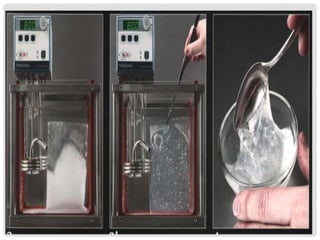
1. Gelatinization. The sum of changes that occur in the first
stages of heating starch granules in a moist environment
which includes swelling of granules as water is absorbed
and disruption of the organized granule structure.
Changes in Gelatinization of Starch
• hydration and swelling to several times original size
• increase in clarity
• marked, rapid increase in consistency and attainment of peak
• with heat removal, retro gradation of mixture to a paste-like mass of
gel.
2. Viscosity. The resistance to flow; increase in
thickness or consistency. When the newly gelatinized
starch is stirred, more swollen granules break and
more starch molecules spill causing increase in
viscosity or thickness.
3. Retrogadation is the process in which starch
molecules, particularly the amylose fraction, re-
associate or bond together in an ordered structure
after disruption by gelatinization; ultimately a
crystalline order appears.
4. Syneresis. Oozing of liquid from gel when
cut and allowed to stand (e.g. jelly or baked
custard). The oozing of liquid from a rigid gel;
sometimes called weeping.
This reaction occurs in all kinds of gels:
puddings
jellies
custards
gelatin
agar
5. Dextrinization. It is the process of forming
dextrin. Dextrins – are partially hydrolyzed starches
that are prepared by dry roasting. In home kitchens,
dextrinization is achieved by toasting flour for
polvoron, rice flour for kare-kare sauce, and bread
slices for breakfast.
6. Hydrolysis Starches undergo hydrolysis during
cooking or processing and during storage of food
where a chemical reaction in which a molecular
linkage is broken and a molecule of water is
utilized.
a. Prolonged heating of starches with acid will promote hydrolysis. This
can happen when cooking an acidic food, such as: Pineapple pie
resulting in reduced viscosity or firmness of the pie filling.
FUNCTIONAL PROPERTIES OF
STARCHES
Starch plays various roles in food, a typical multi-tasker
1. Thickeners in gravies, sauces and pudding. It absorbs
water and become a gel when cooked.
2. Colloidal stabilizers
3. Moisture retainer
4. Gel forming agents
5. Binders
6. Package
7. Flavor carriers– its ability to trap oils and fats, which
absorb flavoring substances more efficiently.
PREPARING PASTA
Pasta- Is general name for a simple
dough mixture made from hard wheat,
flour and water.
TECHNICAL TERMS
Al dente- Refers to the desired texture of
cooked pasta in Italian cooking. It literally
means “to the tooth”
Fettuccine- A type of pasta popular in
Roman cuisine. It is a flat thick noodle
made of egg and flour.
Linguine- A type of pasta that is long, thin
and flat.
TECHNICAL TERMS
Rigatoni – a type of pasta that is shaped
like short, wide tubes.
Ziti – Medium sized tubular pasta
Rotini – A type of helix or corkscrew-
shaped pasta.

Prepare cereals and starch

  • 1.
  • 2.
    Cereals - are usuallystarchy pods or grains. - are the most important group of food crops in the world named after the Roman goddess of harvest, Ceres. - Rice, wheat and corn are the three most cultivated cereals in the world.
  • 3.
    Starch - is thesecond most abundant organic substance on earth. - It is found in all forms of leafy green plants, located in the roots, fruits or grains. - is the source of up to 80% of calories worldwide. Besides this significant role, starches have been used in food manufacture, cosmetics, pharmaceuticals, textiles, paper, construction materials, and other industries.
  • 4.
    TOOLS AND EQUIPMENT 1.Mixingbowl 2.Wire Whip 3.Sifter 4.Wooden spoon 5.Slotted spoon 6.Blending fork 7.Rubber scraper 8.Strainer 9.Tongs 10. Measuring cups
  • 5.
    11. Measuring spoons 12.Saucepans and pots 13. Kettles and rice cooker 14. Pressure cooker 15. Double boiler 16.Steamer 17. Colander 18. Canister 19. Butcher knife 20. Channel knife
  • 6.
    SOURCES OF STARCH 1.cereal grains, including corn, wheat, rice, grain, sorghum, and oats; 2. legumes; and 3. roots or tubers, including potato, sweet potato, arrowroot, and the tropical cassava plant (marketed as tapioca)
  • 7.
    COMMON SOURCE OF MANUFACTUREDFOOD STARCH 1. corn 2. potato 3. Tapioca (cassava)
  • 8.
    STARCHES ARE NAMEDAFTER ITS PLANT SOURCES 1. corn starch from corn 2 . rice starch from rice 3. tapioca from cassava
  • 9.
    CLASSIFICATION OF STARCH 1.Native or Natural Starch refers to the starches as originally derived from its plant source. 2. Modified Starches are starches that have been altered physically or chemically, to modify one or more of its key chemicals and/or physical property. 3. Purified starch may be separated from grains and tubers by a process called wet milling.
  • 12.
    Modified food starchis a food ingredient that is chemically altered, and made from starch.
  • 14.
    THE STARCH MOLECULE Starchis polysaccharide made up of hundreds or even thousands of glucose molecules joined together. 2 TYPES: 1. Amylose is a long chain-like molecule, sometimes called the linear fraction, and is produced by linking together 500 to 2, 000 glucose molecules. The amylose fraction of starch contributes gelling characteristics to cooked and cooled starch mixtures. A gel is rigid to a certain degree and holds a shape when molded.
  • 15.
    Amylose molecules contributeto gel formation. This is because the linear chains can orient parallel to each other, moving close enough together to bond.
  • 16.
    2. Amylopectin hasa highly branched, bushy type of structure, very different from the long, string-like molecules of amylose. In both, amylose and amylopectin, however, the basic building unit is glucose. Cohesion or thickening properties are contributed by amylopectin when a starch mixture is cooked in the presence of water, but this fraction does not produce a gel.
  • 17.
    Amylopectin – abranched molecule of glucose units that makes up a more significant proportion of starch and is insoluble
  • 19.
    STARCH PROPERTIES AND REACTIONS 1.Gelatinization. The sum of changes that occur in the first stages of heating starch granules in a moist environment which includes swelling of granules as water is absorbed and disruption of the organized granule structure. Changes in Gelatinization of Starch • hydration and swelling to several times original size • increase in clarity • marked, rapid increase in consistency and attainment of peak • with heat removal, retro gradation of mixture to a paste-like mass of gel.
  • 21.
    2. Viscosity. Theresistance to flow; increase in thickness or consistency. When the newly gelatinized starch is stirred, more swollen granules break and more starch molecules spill causing increase in viscosity or thickness. 3. Retrogadation is the process in which starch molecules, particularly the amylose fraction, re- associate or bond together in an ordered structure after disruption by gelatinization; ultimately a crystalline order appears.
  • 24.
    4. Syneresis. Oozingof liquid from gel when cut and allowed to stand (e.g. jelly or baked custard). The oozing of liquid from a rigid gel; sometimes called weeping. This reaction occurs in all kinds of gels: puddings jellies custards gelatin agar
  • 25.
    5. Dextrinization. Itis the process of forming dextrin. Dextrins – are partially hydrolyzed starches that are prepared by dry roasting. In home kitchens, dextrinization is achieved by toasting flour for polvoron, rice flour for kare-kare sauce, and bread slices for breakfast. 6. Hydrolysis Starches undergo hydrolysis during cooking or processing and during storage of food where a chemical reaction in which a molecular linkage is broken and a molecule of water is utilized. a. Prolonged heating of starches with acid will promote hydrolysis. This can happen when cooking an acidic food, such as: Pineapple pie resulting in reduced viscosity or firmness of the pie filling.
  • 27.
    FUNCTIONAL PROPERTIES OF STARCHES Starchplays various roles in food, a typical multi-tasker 1. Thickeners in gravies, sauces and pudding. It absorbs water and become a gel when cooked. 2. Colloidal stabilizers 3. Moisture retainer 4. Gel forming agents 5. Binders 6. Package 7. Flavor carriers– its ability to trap oils and fats, which absorb flavoring substances more efficiently.
  • 28.
    PREPARING PASTA Pasta- Isgeneral name for a simple dough mixture made from hard wheat, flour and water.
  • 29.
    TECHNICAL TERMS Al dente-Refers to the desired texture of cooked pasta in Italian cooking. It literally means “to the tooth” Fettuccine- A type of pasta popular in Roman cuisine. It is a flat thick noodle made of egg and flour. Linguine- A type of pasta that is long, thin and flat.
  • 30.
    TECHNICAL TERMS Rigatoni –a type of pasta that is shaped like short, wide tubes. Ziti – Medium sized tubular pasta Rotini – A type of helix or corkscrew- shaped pasta.