PLASMA STERILIZER
BY, KRISHNA MAZMUDAR
BIOMEDICAL ENGINEER
PLASMA STERILIZATION
• Applications of plasmas for sterilization in medical,
food processing, ventilating, and air conditioning
industries
WHAT IS STERILIZATION?
• Sterilization is any process or procedure designed to
entirely eliminate microorganisms from a material
or medium
CURRENT STERILIZATION MEANS HEAT
• Types DRY and MOIST heat
• Medium is exposed to moist heat (steam) generated by an autoclave, or dry heat in a
heater
• Pressures 103 kPa
• Temperatures 120°C - 140°C
• Steam transfers sufficient heat to microorganisms to inflict demise
• Exposure time 30 minutes
• Can cause permanent damage, and alter material properties significantly
PLASMA STERILIZATION IN SUMMARY
• A plasma is a quasi-neutral collection of electrons, positive ions, and neutrals
capable of collective behavior Positive ions free radicals
• Plasma sterilization operates synergistically via three mechanisms
1. Free radicals interactions
2. UV/VUV radioactive effects
3. Volatilization
PLASMA STERILIZATION MECHANICS IR
VOLATILIZATION
• IR is able to vaporize microbiological matter, causing physical destruction of spores.
• Charged particles react with cellular chemical bonds of microbiological layer to form
gaseous compounds ? volatile compounds.
DISADVANTAGES OF PLASMA
STERILIZATION
• Weak penetrating power of the plasma species. Complications arise in
1. Presence of organic residue
2. Packaging material
3. Complex geometries
4. Bulk sterilization of many devices
5. Solutions Introduce preferentially targeting
6. V/VUV radiation of proper wavelength
METHODS OF PLASMA STERILIZATION
• Dielectric Discharge Barrier (DBD)
• Inductively Coupled Plasmas (ICP)
• Atmospheric Pressure Plasma Jet (AAPJ)
• Microwave (MW) Plasmas
DIELECTRIC DISCHARGE BARRIER (DBD)
• High AC voltage (1.2 kV), atmospheric pressure,
200-300 W
• Dielectric layers allow for plasma discharge to reach
material surface
INDUCTIVELY COUPLED PLASMAS (ICP)
• Plasma generated via coils oppositely faced, 13.56
MHz RF source
• Magnetic flux perpendicular to substrate. E field
envelopes volume of chamber
• Roughing pump needed
ATMOSPHERIC PRESSURE PLASMA JET
(AAPJ)
• RF coupled capacitive discharge ? neutral, cold
effluent with high concentrations of reactive species
and UV/VUV radiation.
• Atmospheric pressure
• Oxygen formed by interactions at the exit
MICROWAVE (MW) PLASMAS
• Gas enters through an inlet
• Interacts with incoming microwaves from a
waveguide
• kW magnetron power supply
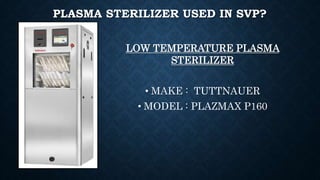
PLASMA STERILIZER USED IN SVP?
LOW TEMPERATURE PLASMA
STERILIZER
• MAKE : TUTTNAUER
• MODEL : PLAZMAX P160
FEATURE SUMMARY
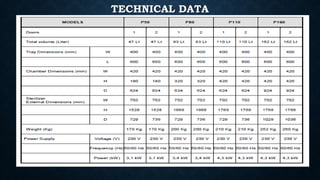
• Chamber volume from 47 to 162 liters
• Low temperature process of less than 55 °C
• No hazardous or odorous emissions
• No utilities needed except electricity
• Sophisticated Bacsoft control system, with 7” multi-color touch screen display (also on
back side of two door configurations)
• Automatic sterilizer refilling
• Equipment tracking application software for an easy follow-up of endoscopes history
• Diagnostic In/Out test (enables technician to check each component separately)
• Built-in thermal printer
• Aluminum chamber and door
• Foot activated Kick Switch allows hands-free door operation
• Stainless steel and polypropylene piping
• Process Challenge Device kit (PCD) integrated
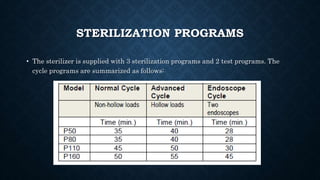
STERILIZATION PROGRAMS
• The sterilizer is supplied with 3 sterilization programs and 2 test programs. The
cycle programs are summarized as follows:
TEST CYCLE PROGRAMS
1. PROGRAM: PENETRATION TEST
• This program is intended to test the efficiency of air removal from the chamber.
• Test parameters:
• Sterilization temperature 50 ºC to 55 ºC
• Cycle time 25min
• Sterilizing agent H2O2 (Class 5.1 UN Number: UN2014)
2. PROGRAM: "AIR LEAKAGE TEST” (VACUUM TEST)
• This program is intended to test air leakage from the chamber through the door seal or
any other seals. The program also tests the vacuum pump performance.
PROCESS CHALLENGE DEVICE (PCD)
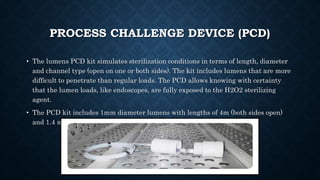
• The lumens PCD kit simulates sterilization conditions in terms of length, diameter
and channel type (open on one or both sides). The kit includes lumens that are more
difficult to penetrate than regular loads. The PCD allows knowing with certainty
that the lumen loads, like endoscopes, are fully exposed to the H2O2 sterilizing
agent.
• The PCD kit includes 1mm diameter lumens with lengths of 4m (both sides open)
and 1.4 m (one side open).
TECHNICAL DATA
PLASMA STERILIZER PPT.pptx

PLASMA STERILIZER PPT.pptx

  • 1.
    PLASMA STERILIZER BY, KRISHNAMAZMUDAR BIOMEDICAL ENGINEER
  • 2.
    PLASMA STERILIZATION • Applicationsof plasmas for sterilization in medical, food processing, ventilating, and air conditioning industries
  • 4.
    WHAT IS STERILIZATION? •Sterilization is any process or procedure designed to entirely eliminate microorganisms from a material or medium
  • 5.
    CURRENT STERILIZATION MEANSHEAT • Types DRY and MOIST heat • Medium is exposed to moist heat (steam) generated by an autoclave, or dry heat in a heater • Pressures 103 kPa • Temperatures 120°C - 140°C • Steam transfers sufficient heat to microorganisms to inflict demise • Exposure time 30 minutes • Can cause permanent damage, and alter material properties significantly
  • 6.
    PLASMA STERILIZATION INSUMMARY • A plasma is a quasi-neutral collection of electrons, positive ions, and neutrals capable of collective behavior Positive ions free radicals • Plasma sterilization operates synergistically via three mechanisms 1. Free radicals interactions 2. UV/VUV radioactive effects 3. Volatilization
  • 7.
    PLASMA STERILIZATION MECHANICSIR VOLATILIZATION • IR is able to vaporize microbiological matter, causing physical destruction of spores. • Charged particles react with cellular chemical bonds of microbiological layer to form gaseous compounds ? volatile compounds.
  • 8.
    DISADVANTAGES OF PLASMA STERILIZATION •Weak penetrating power of the plasma species. Complications arise in 1. Presence of organic residue 2. Packaging material 3. Complex geometries 4. Bulk sterilization of many devices 5. Solutions Introduce preferentially targeting 6. V/VUV radiation of proper wavelength
  • 9.
    METHODS OF PLASMASTERILIZATION • Dielectric Discharge Barrier (DBD) • Inductively Coupled Plasmas (ICP) • Atmospheric Pressure Plasma Jet (AAPJ) • Microwave (MW) Plasmas
  • 10.
    DIELECTRIC DISCHARGE BARRIER(DBD) • High AC voltage (1.2 kV), atmospheric pressure, 200-300 W • Dielectric layers allow for plasma discharge to reach material surface
  • 11.
    INDUCTIVELY COUPLED PLASMAS(ICP) • Plasma generated via coils oppositely faced, 13.56 MHz RF source • Magnetic flux perpendicular to substrate. E field envelopes volume of chamber • Roughing pump needed
  • 12.
    ATMOSPHERIC PRESSURE PLASMAJET (AAPJ) • RF coupled capacitive discharge ? neutral, cold effluent with high concentrations of reactive species and UV/VUV radiation. • Atmospheric pressure • Oxygen formed by interactions at the exit
  • 13.
    MICROWAVE (MW) PLASMAS •Gas enters through an inlet • Interacts with incoming microwaves from a waveguide • kW magnetron power supply
  • 14.
    PLASMA STERILIZER USEDIN SVP? LOW TEMPERATURE PLASMA STERILIZER • MAKE : TUTTNAUER • MODEL : PLAZMAX P160
  • 15.
    FEATURE SUMMARY • Chambervolume from 47 to 162 liters • Low temperature process of less than 55 °C • No hazardous or odorous emissions • No utilities needed except electricity • Sophisticated Bacsoft control system, with 7” multi-color touch screen display (also on back side of two door configurations) • Automatic sterilizer refilling • Equipment tracking application software for an easy follow-up of endoscopes history • Diagnostic In/Out test (enables technician to check each component separately) • Built-in thermal printer • Aluminum chamber and door • Foot activated Kick Switch allows hands-free door operation • Stainless steel and polypropylene piping • Process Challenge Device kit (PCD) integrated
  • 16.
    STERILIZATION PROGRAMS • Thesterilizer is supplied with 3 sterilization programs and 2 test programs. The cycle programs are summarized as follows:
  • 17.
    TEST CYCLE PROGRAMS 1.PROGRAM: PENETRATION TEST • This program is intended to test the efficiency of air removal from the chamber. • Test parameters: • Sterilization temperature 50 ºC to 55 ºC • Cycle time 25min • Sterilizing agent H2O2 (Class 5.1 UN Number: UN2014) 2. PROGRAM: "AIR LEAKAGE TEST” (VACUUM TEST) • This program is intended to test air leakage from the chamber through the door seal or any other seals. The program also tests the vacuum pump performance.
  • 18.
    PROCESS CHALLENGE DEVICE(PCD) • The lumens PCD kit simulates sterilization conditions in terms of length, diameter and channel type (open on one or both sides). The kit includes lumens that are more difficult to penetrate than regular loads. The PCD allows knowing with certainty that the lumen loads, like endoscopes, are fully exposed to the H2O2 sterilizing agent. • The PCD kit includes 1mm diameter lumens with lengths of 4m (both sides open) and 1.4 m (one side open).
  • 19.