


OBJECTIVES
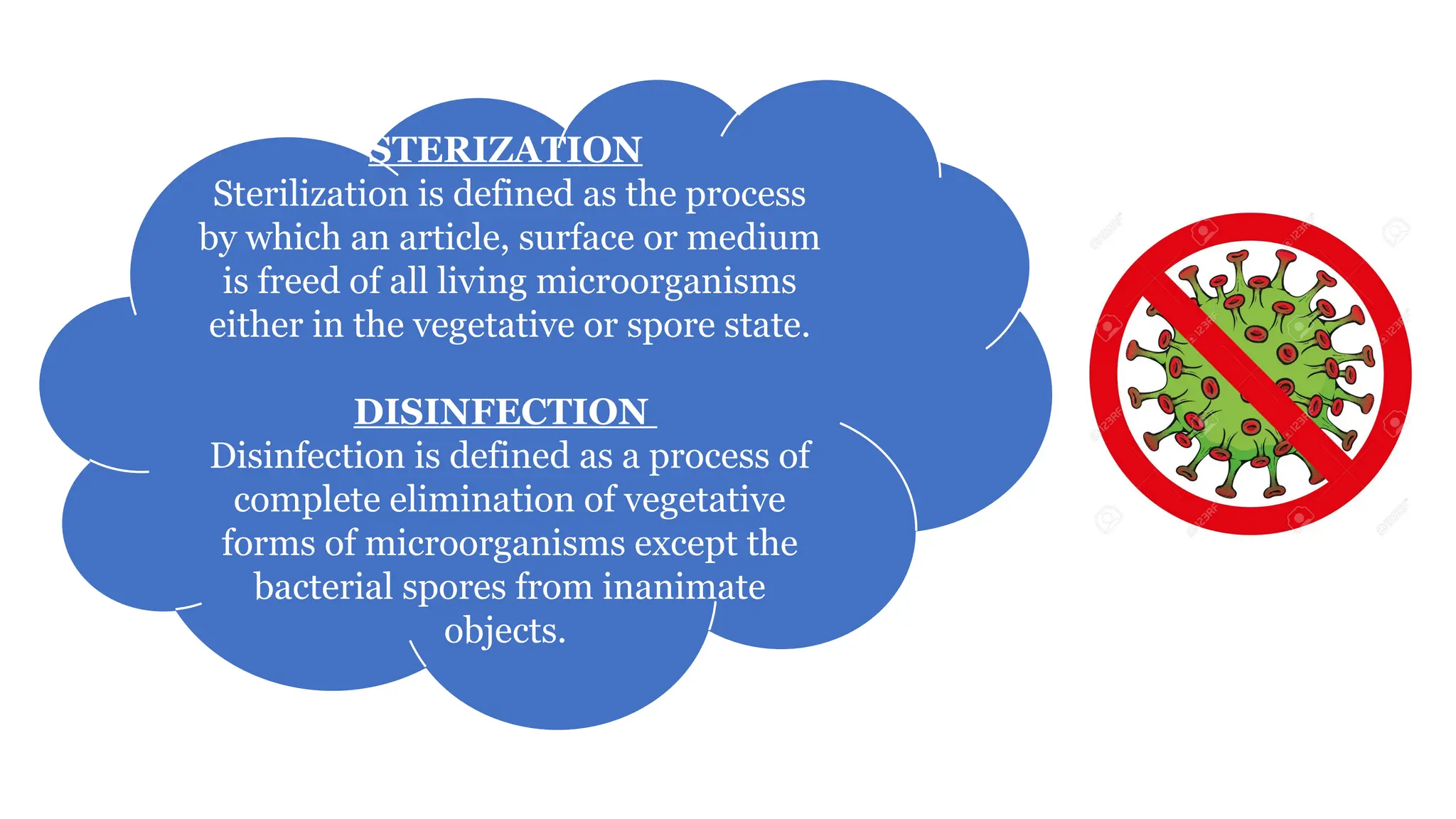
STERIZATION
Sterilization is defined as the process
by which an article, surface or medium
is freed of all living microorganisms
either in the vegetative or spore state.
DISINFECTION
Disinfection is defined as a process of
complete elimination of vegetative
forms of microorganisms except the
bacterial spores from inanimate
objects.
AUTOCLAVE
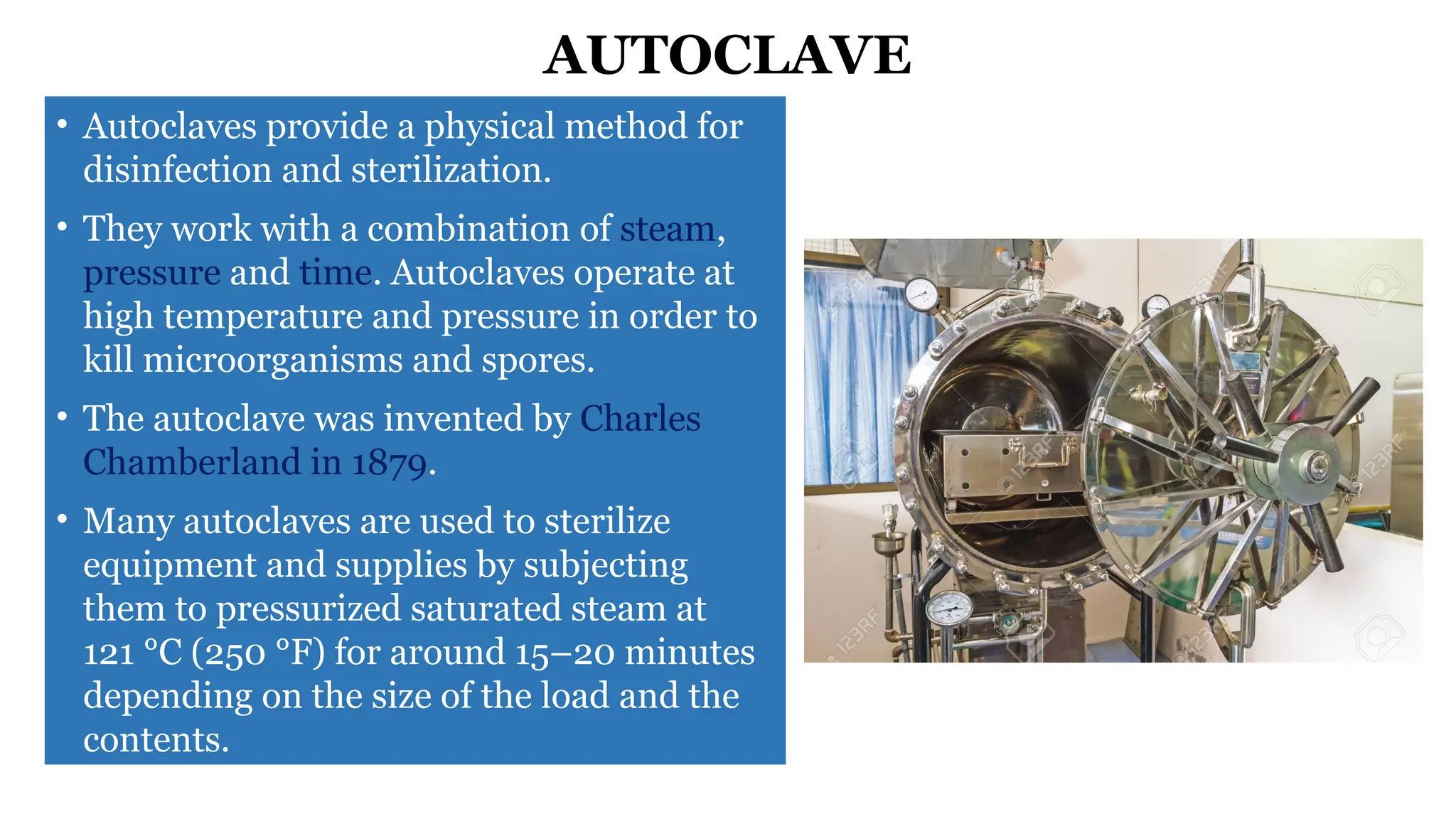
• Autoclaves provide a physical method for
disinfection and sterilization.
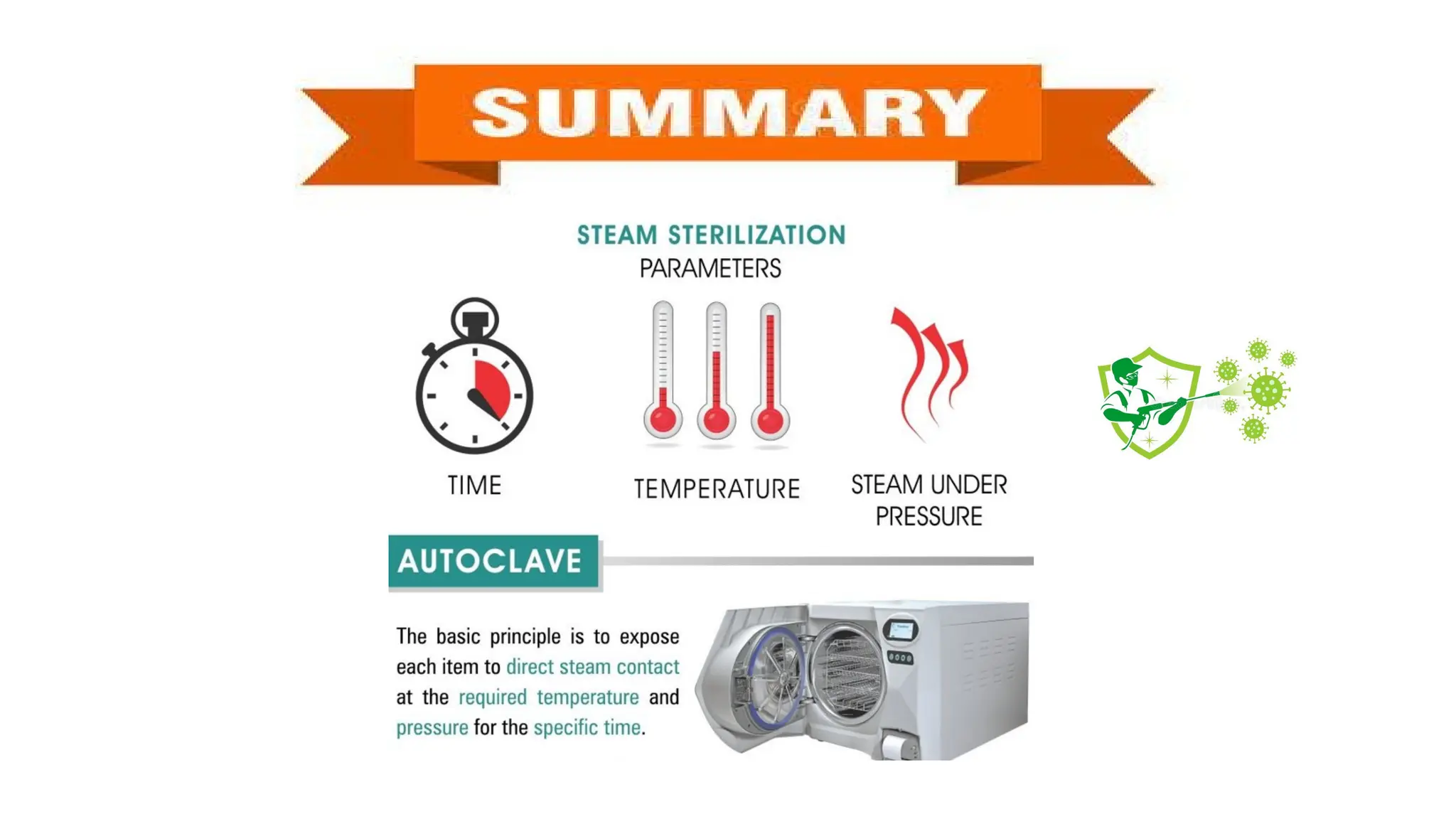
• They work with a combination of steam,
pressure and time. Autoclaves operate at
high temperature and pressure in order to
kill microorganisms and spores.
• The autoclave was invented by Charles
Chamberland in 1879.
• Many autoclaves are used to sterilize
equipment and supplies by subjecting
them to pressurized saturated steam at
121 °C (250 °F) for around 15–20 minutes
depending on the size of the load and the
contents.
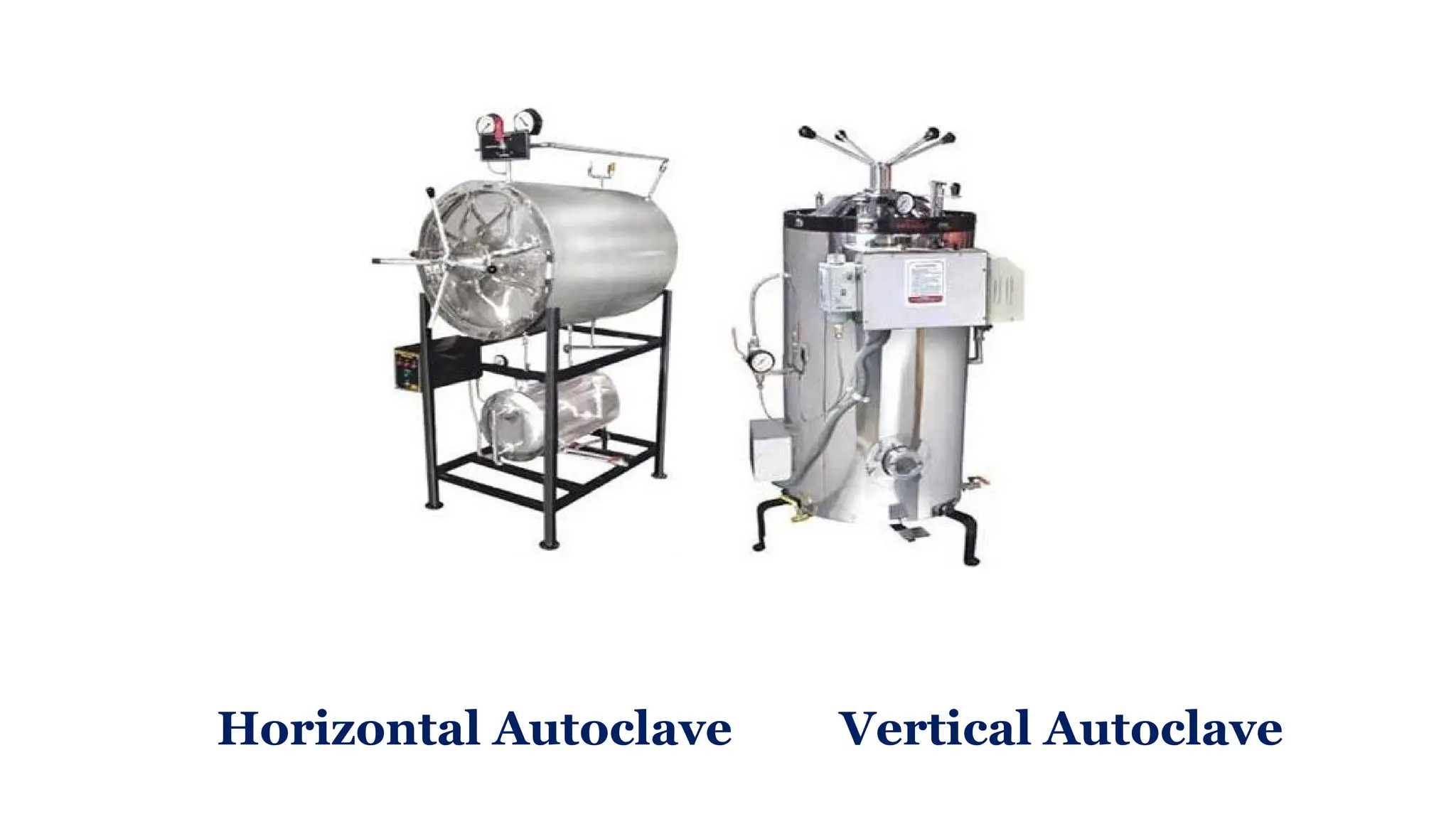
Horizontal Autoclave Vertical Autoclave
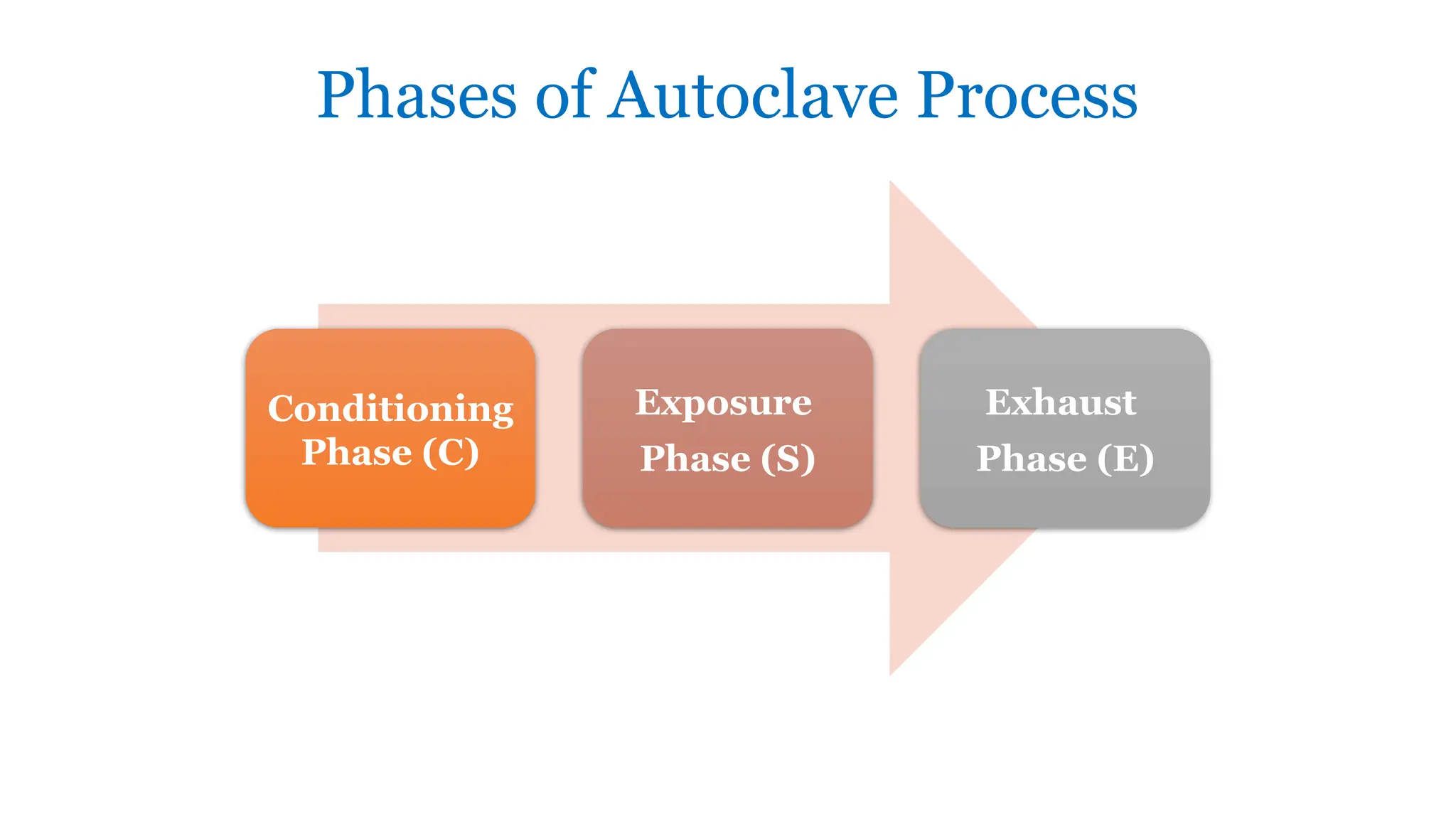
Phases of Autoclave Process
Conditioning
Phase (C)
Exposure
Phase (S)
Exhaust
Phase (E)
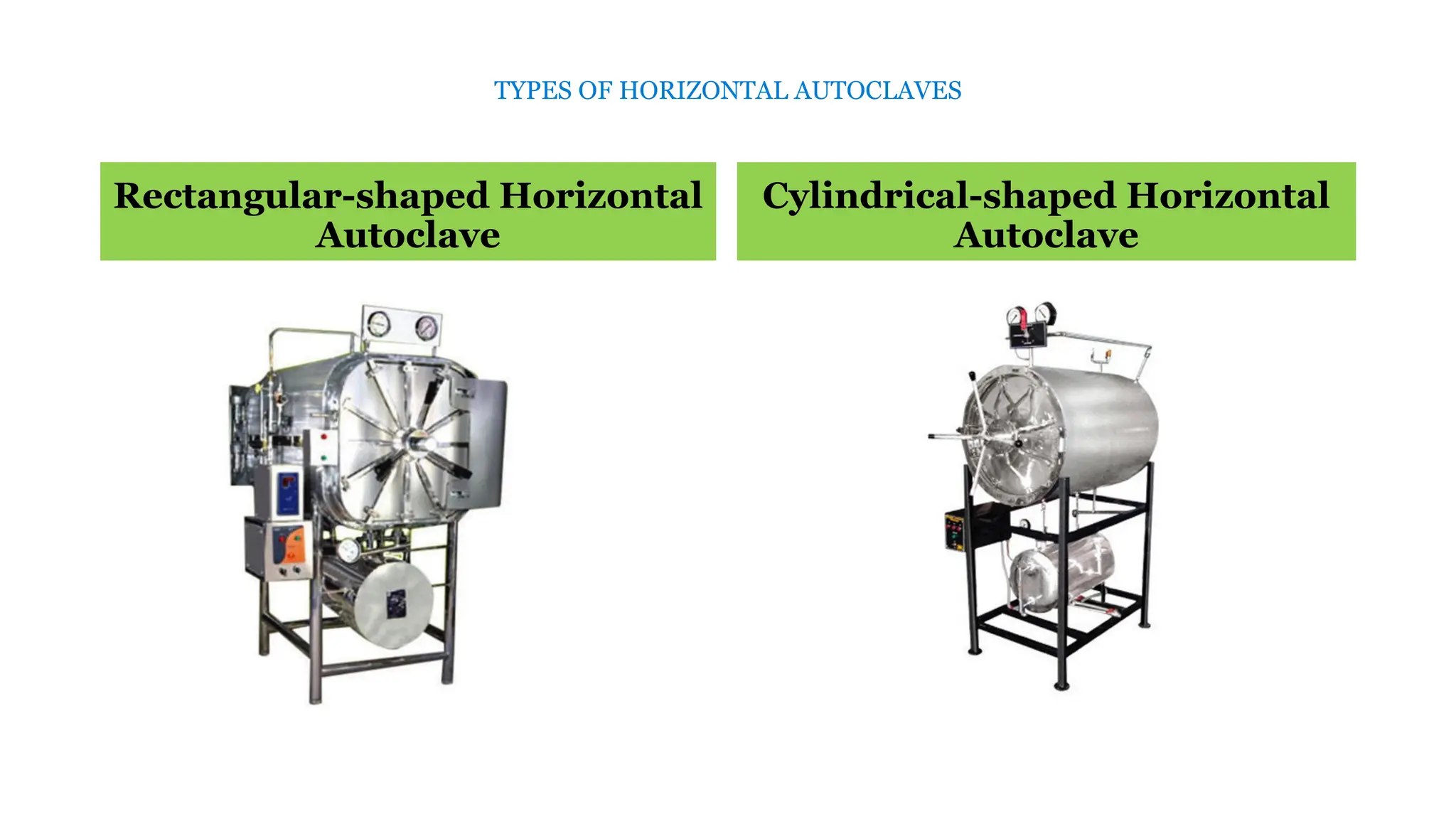
TYPES OF HORIZONTAL AUTOCLAVES
Rectangular-shaped Horizontal
Autoclave
Cylindrical-shaped Horizontal
Autoclave
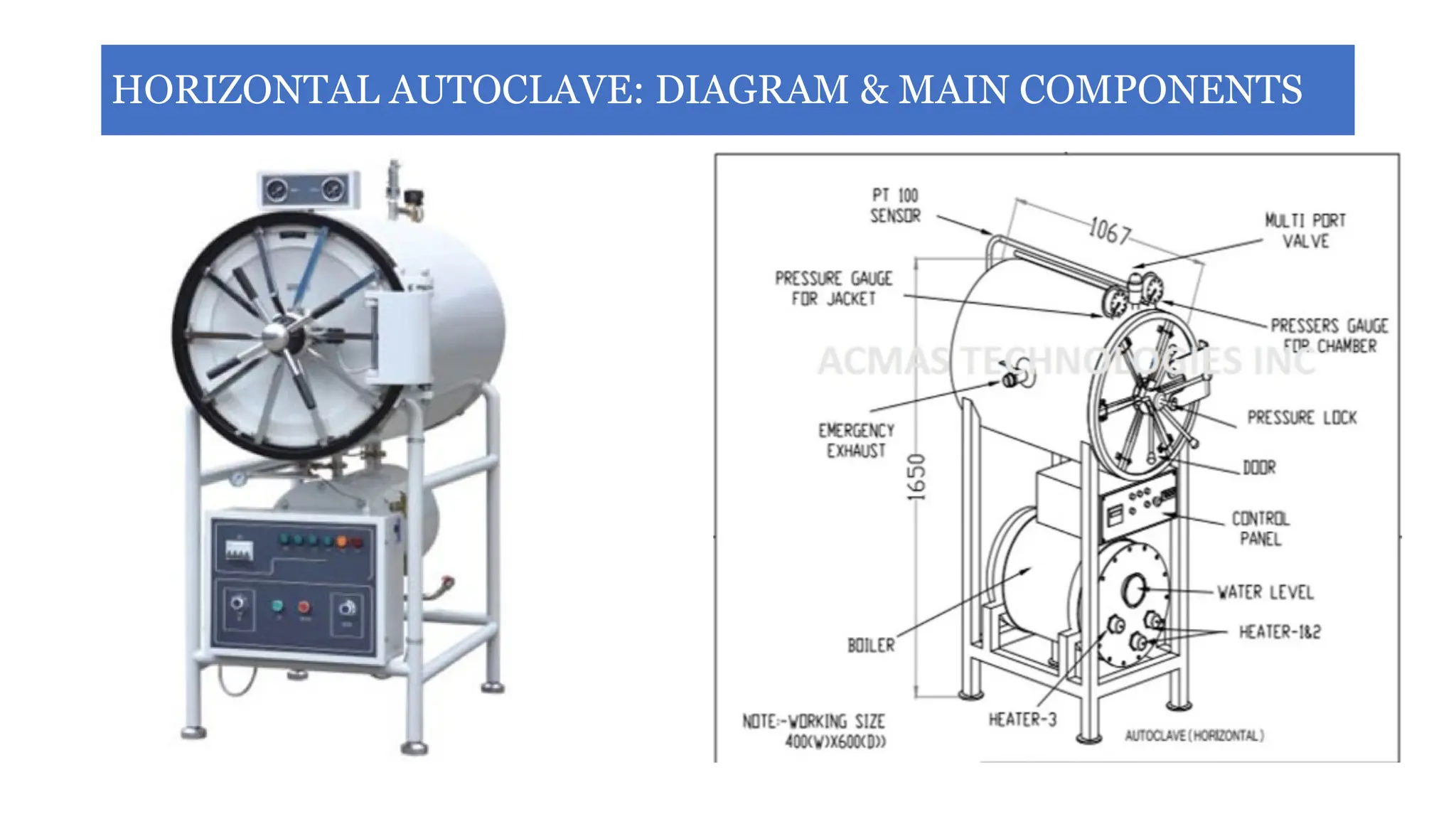
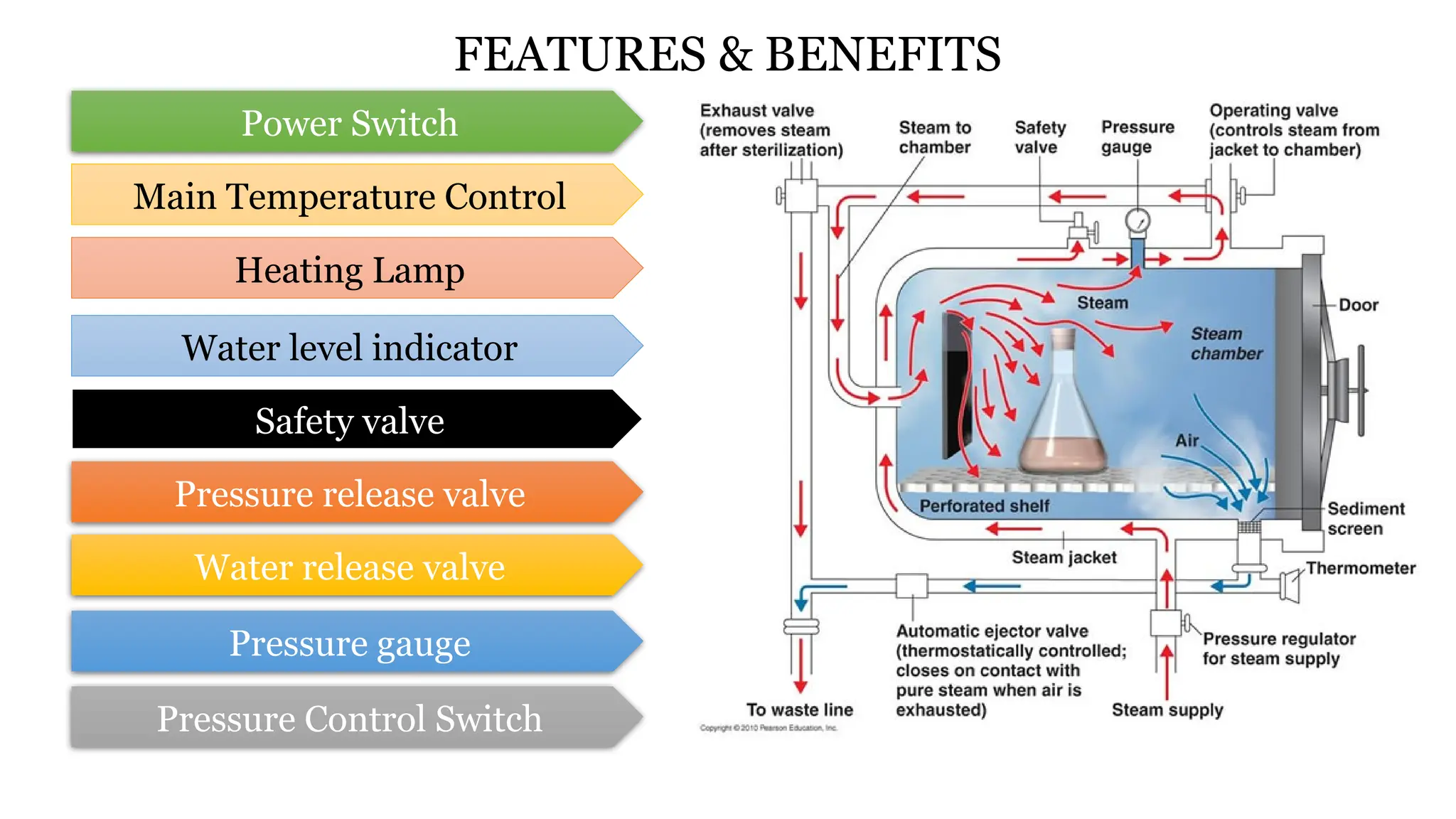
HORIZONTAL AUTOCLAVE: DIAGRAM & MAIN COMPONENTS
FEATURES & BENEFITS
Main Temperature Control
Water level indicator
Safety valve
Pressure release valve
Water release valve
Pressure gauge
Pressure Control Switch
Heating Lamp
Power Switch
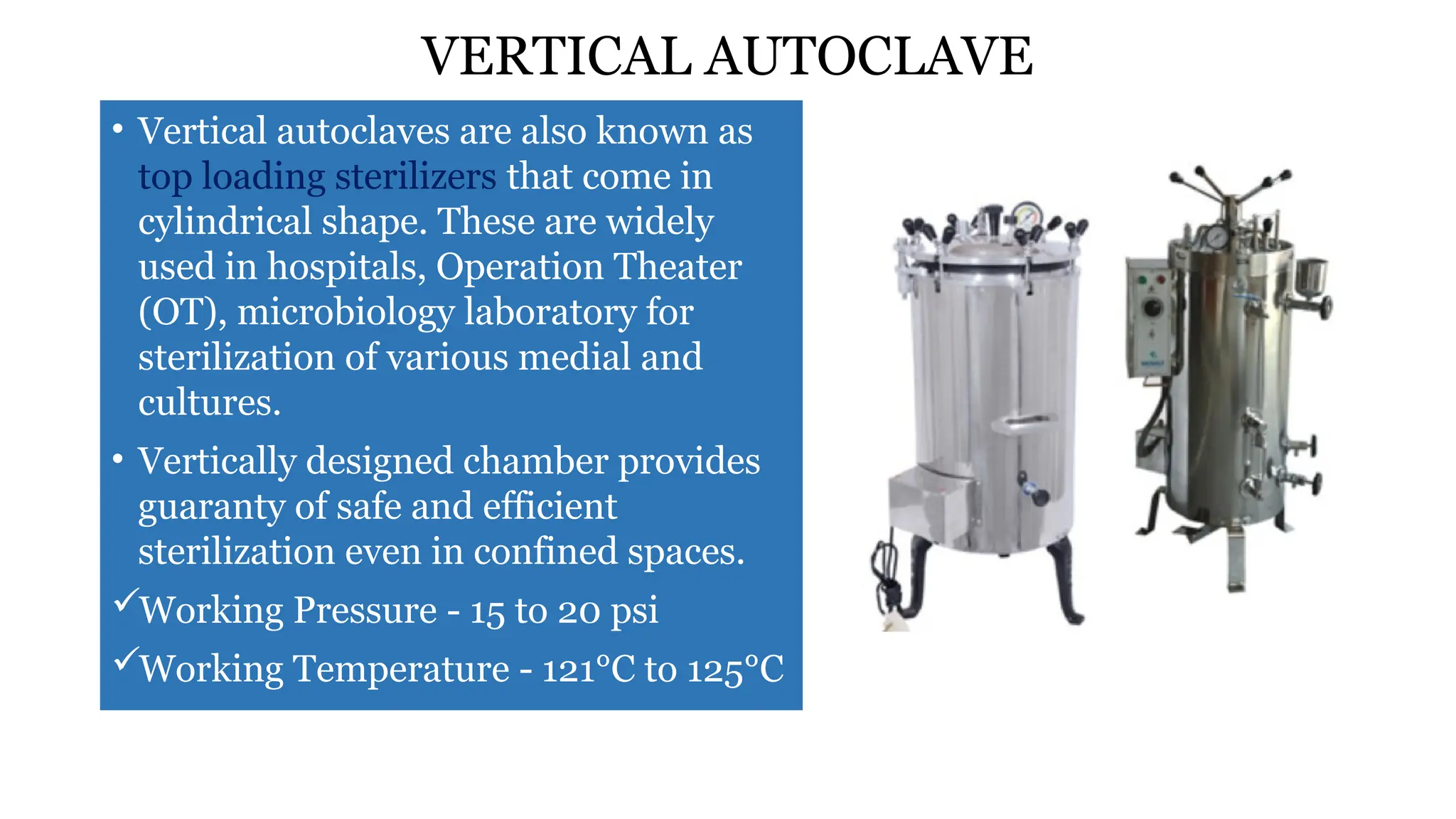
VERTICAL AUTOCLAVE
• Vertical autoclaves are also known as
top loading sterilizers that come in
cylindrical shape. These are widely
used in hospitals, Operation Theater
(OT), microbiology laboratory for
sterilization of various medial and
cultures.
• Vertically designed chamber provides
guaranty of safe and efficient
sterilization even in confined spaces.
Working Pressure - 15 to 20 psi
Working Temperature - 121°C to 125°C
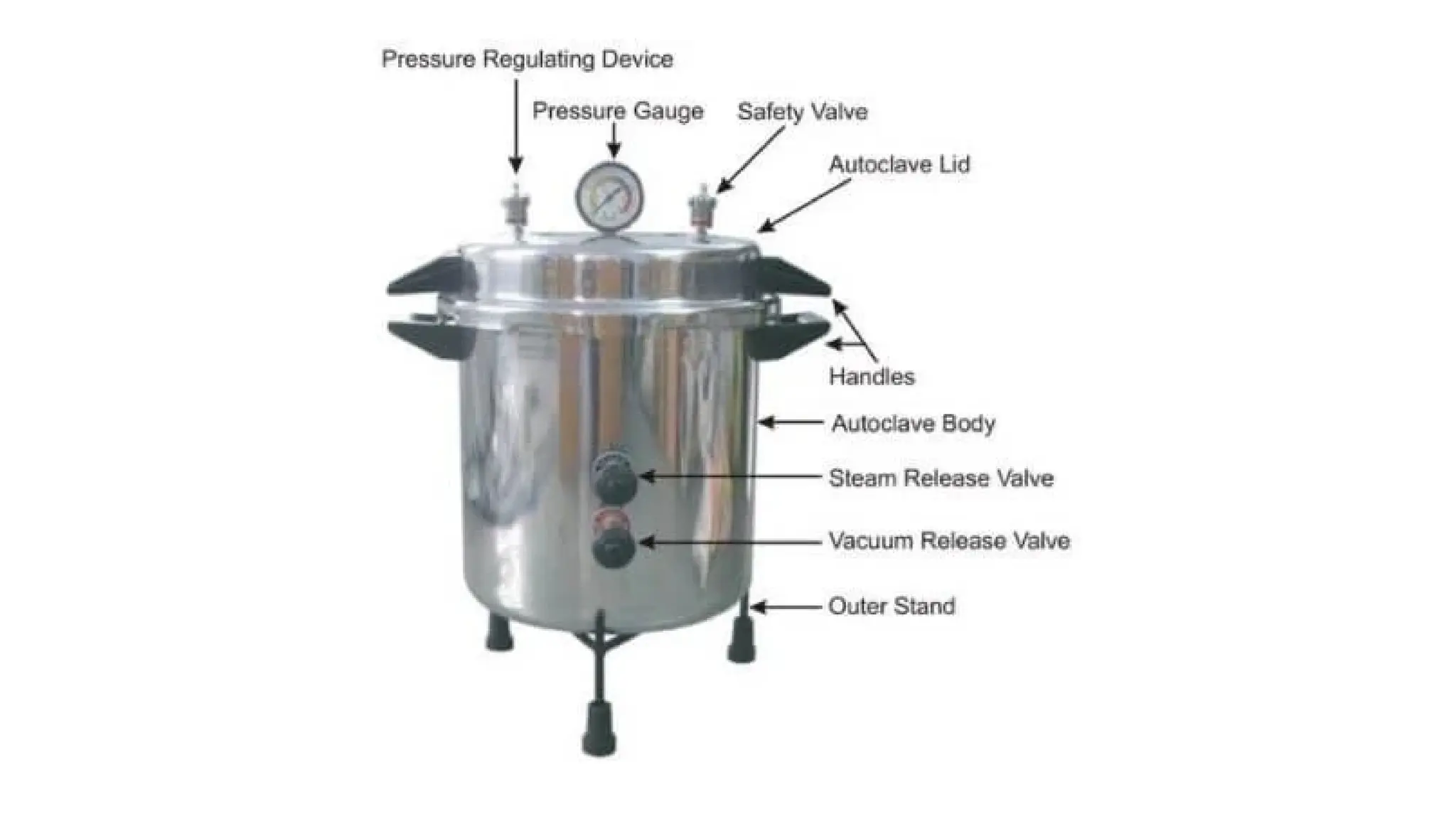
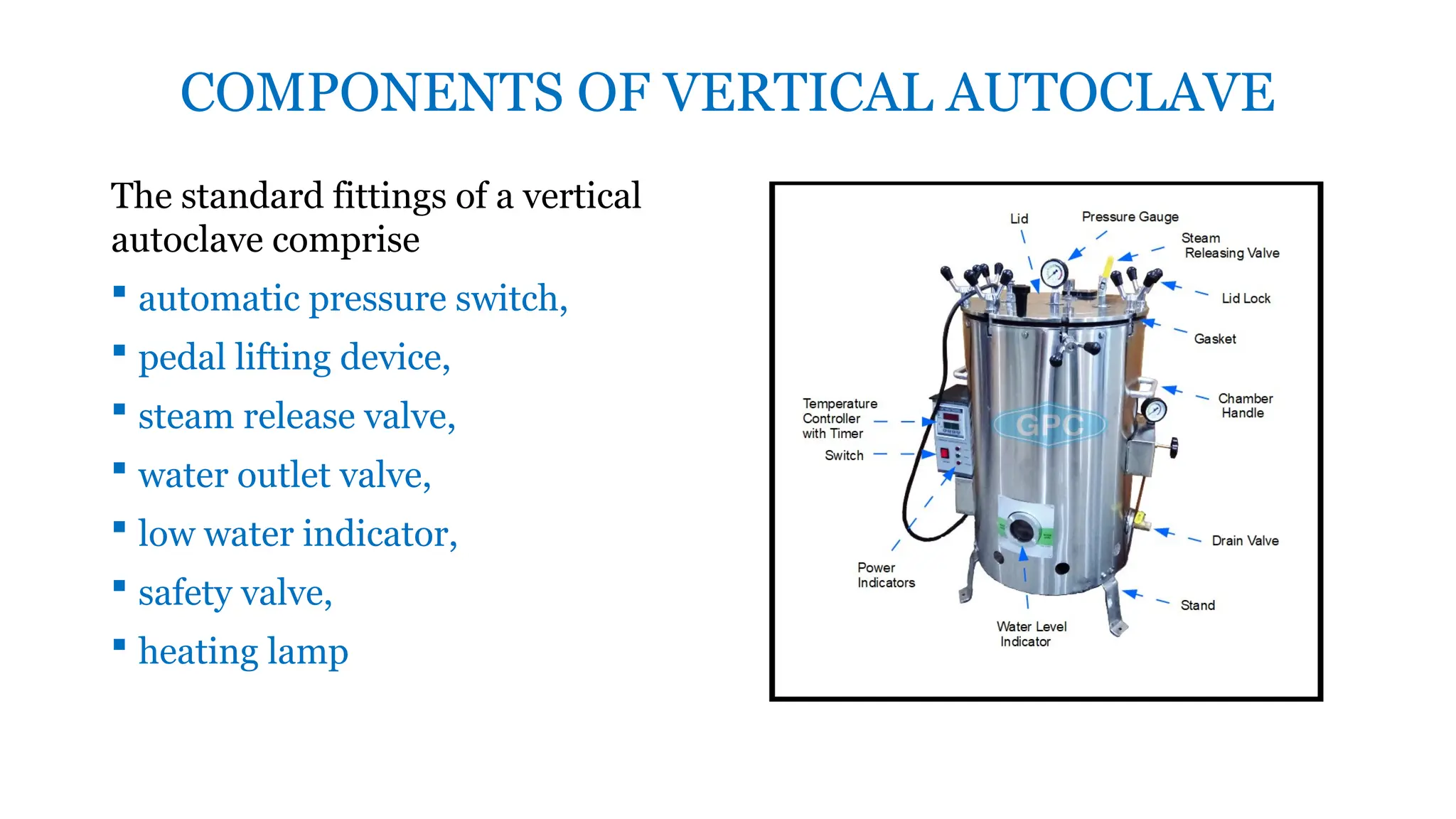
COMPONENTS OF VERTICAL AUTOCLAVE
The standard fittings of a vertical
autoclave comprise
 automatic pressure switch,
 pedal lifting device,
 steam release valve,
 water outlet valve,
 low water indicator,
 safety valve,
 heating lamp
PRECAUTION
Autoclaves should not be used to
sterilize water-proof or water-
resistant substances.
The items to be autoclaved should
always be placed in a secondary
container.
Only autoclavable bags are to be
used to autoclave packaged waste.
To ensure sufficient penetration, articles
should be wrapped in something .
The items placed inside the chamber
should not touch the sides or top of
the chamber.
Attempts to open the lid when the
autoclave is working should never be
made.
Liquid components should never
be autoclaved in sealed containers.
The liquid inside the containers
should only be filled 2/3rd
of the
total volume .
Besides, never autoclave flammable,
reactive, corrosive, toxic or
radioactive materials, household
bleach, or paraffin-embedded tissue.
FLASH STERILIZATION
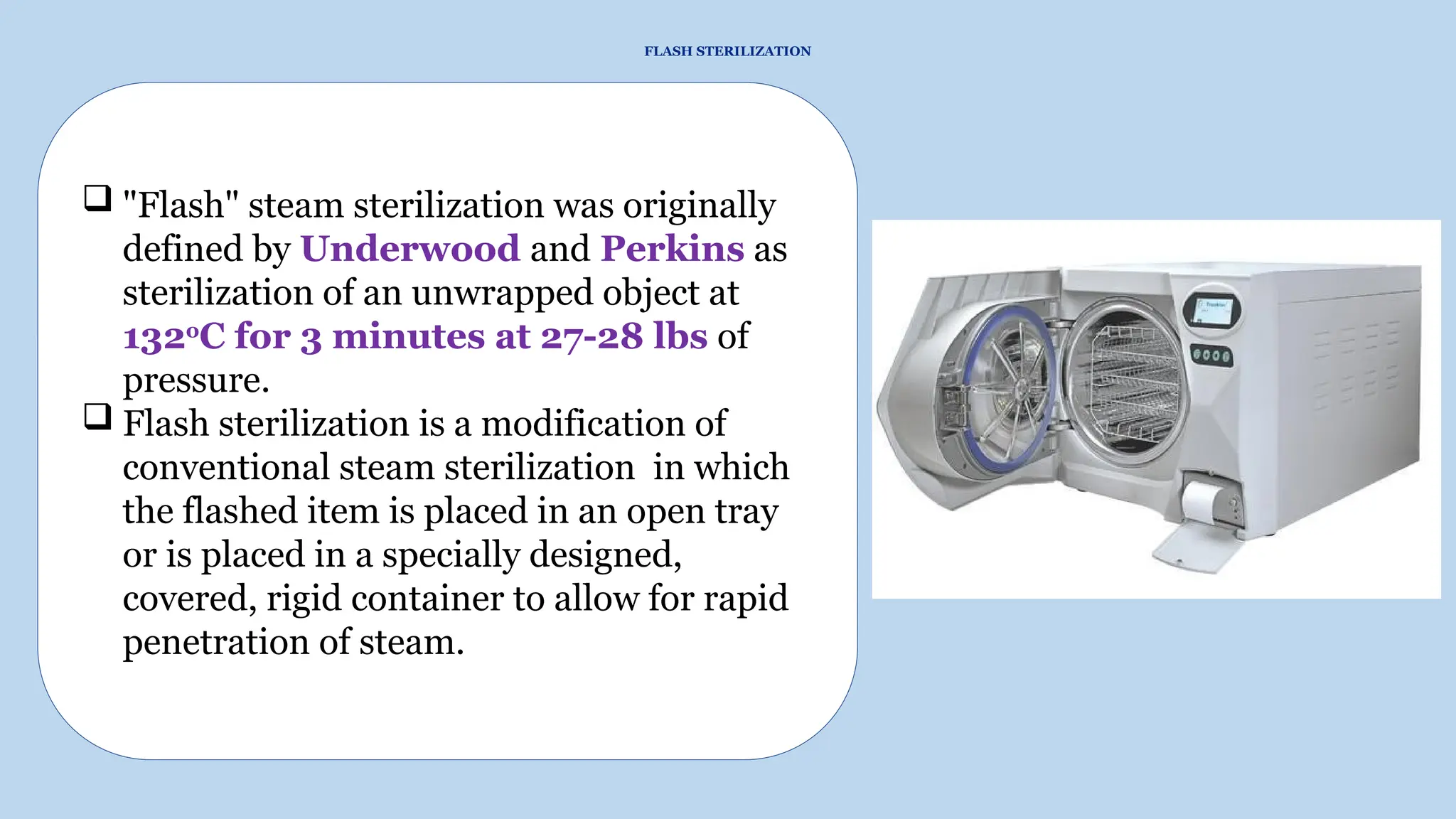
 "Flash" steam sterilization was originally
defined by Underwood and Perkins as
sterilization of an unwrapped object at
132o
C for 3 minutes at 27-28 lbs of
pressure.
 Flash sterilization is a modification of
conventional steam sterilization in which
the flashed item is placed in an open tray
or is placed in a specially designed,
covered, rigid container to allow for rapid
penetration of steam.
ETO STERILIZER
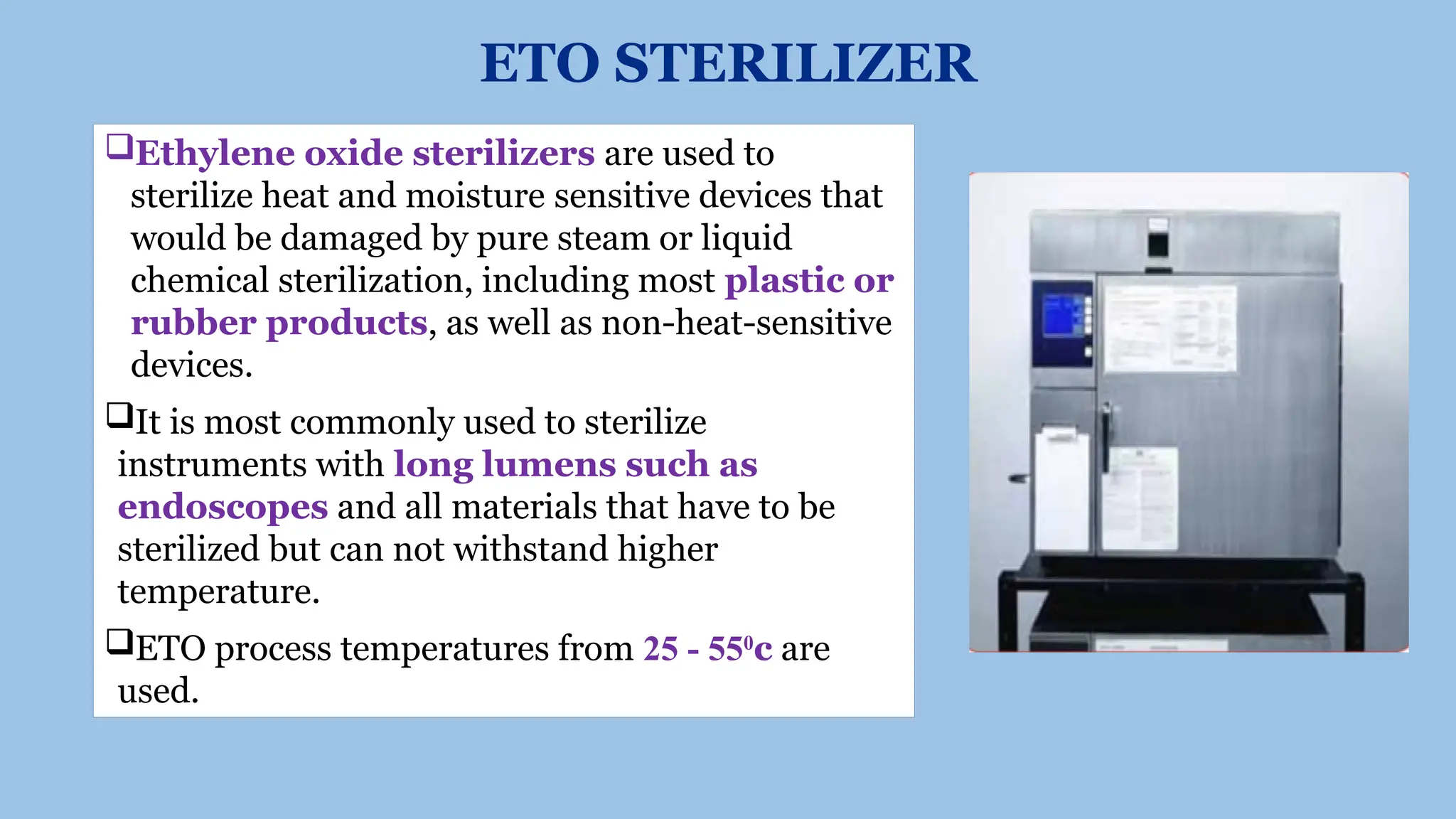
Ethylene oxide sterilizers are used to
sterilize heat and moisture sensitive devices that
would be damaged by pure steam or liquid
chemical sterilization, including most plastic or
rubber products, as well as non-heat-sensitive
devices.
It is most commonly used to sterilize
instruments with long lumens such as
endoscopes and all materials that have to be
sterilized but can not withstand higher
temperature.
ETO process temperatures from 25 - 550
c are
used.
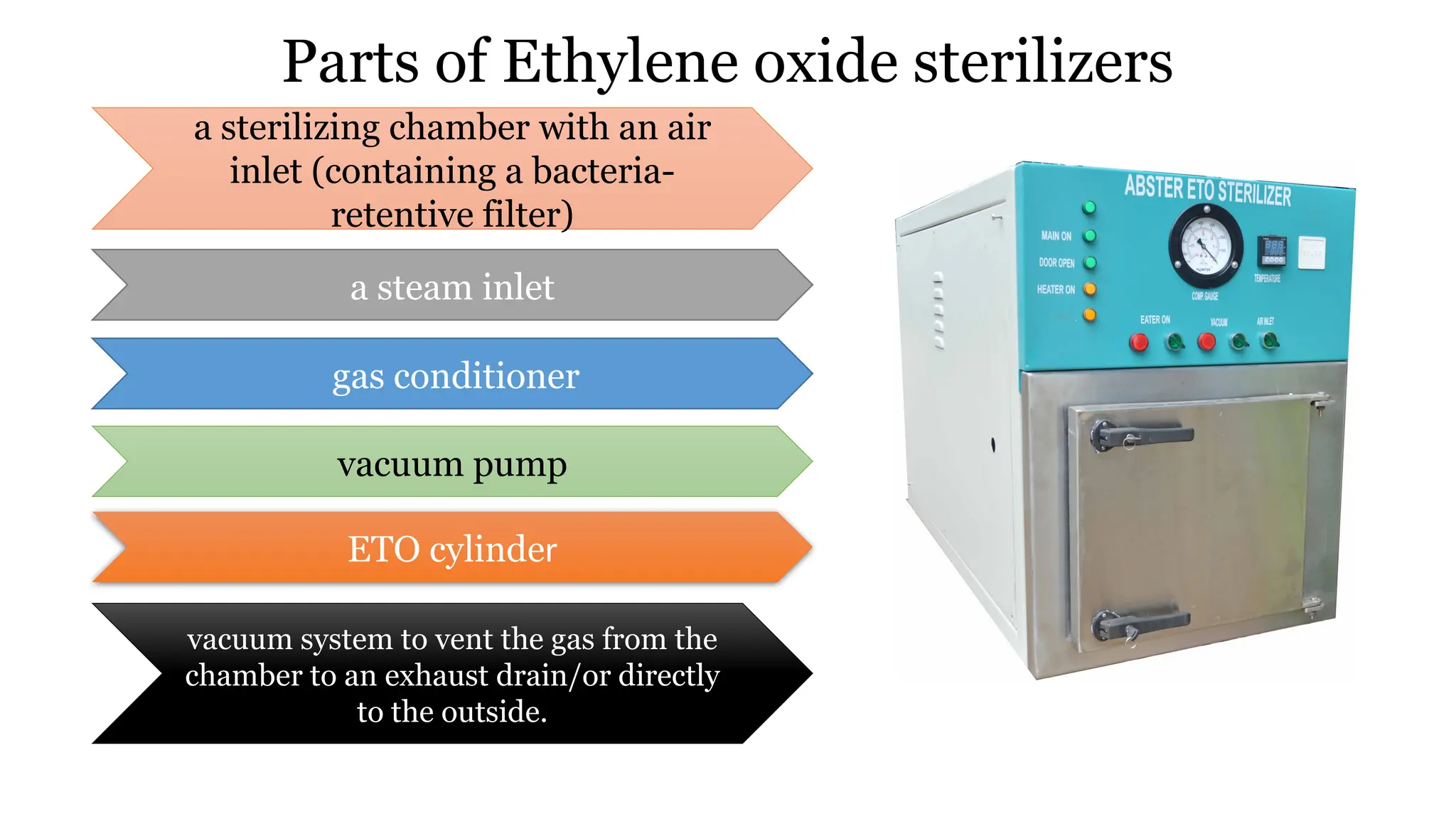
Parts of Ethylene oxide sterilizers
a sterilizing chamber with an air
inlet (containing a bacteria-
retentive filter)
a steam inlet
gas conditioner
vacuum pump
ETO cylinder
vacuum system to vent the gas from the
chamber to an exhaust drain/or directly
to the outside.
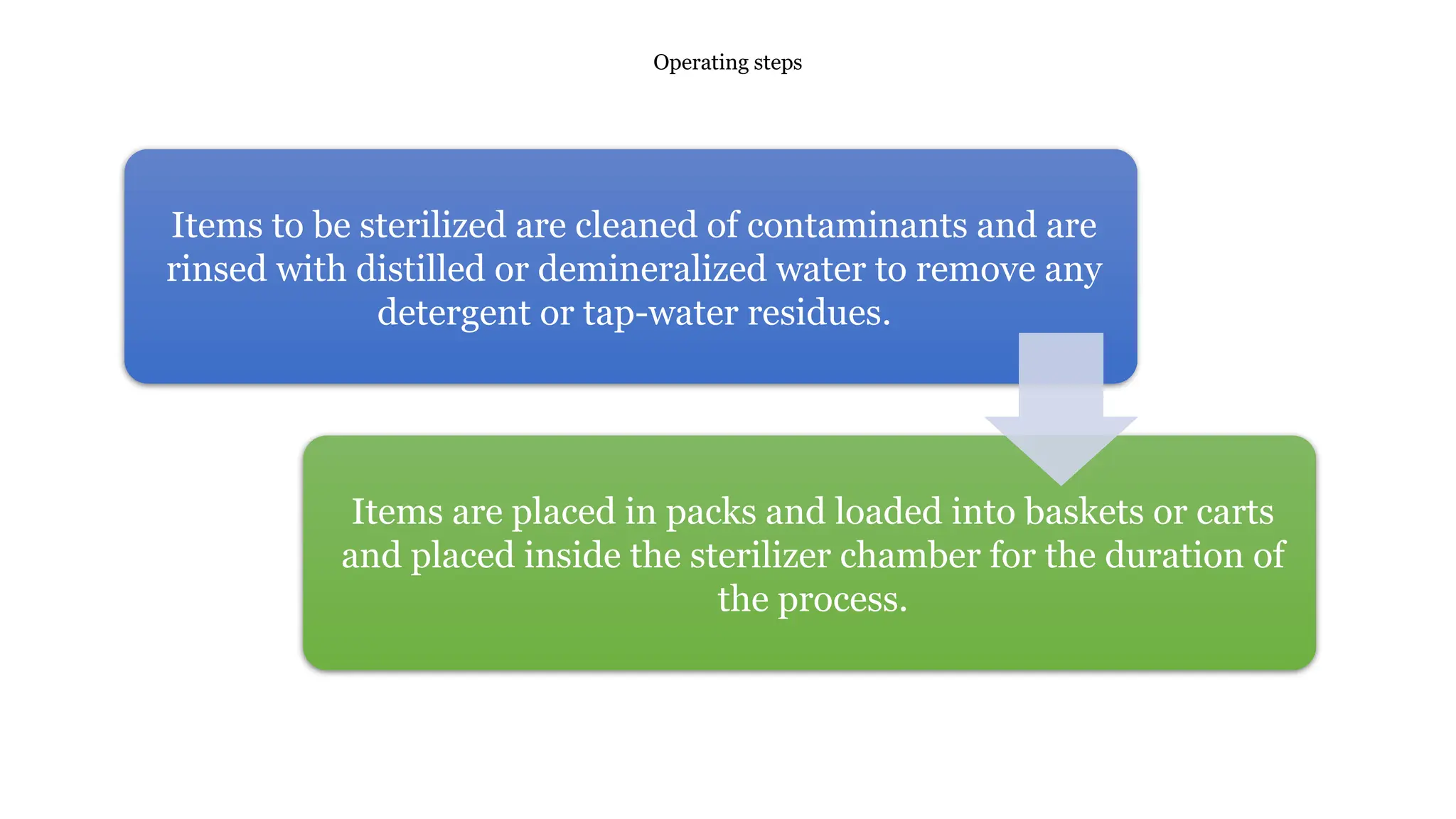
Operating steps
Items to be sterilized are cleaned of contaminants and are
rinsed with distilled or demineralized water to remove any
detergent or tap-water residues.
Items are placed in packs and loaded into baskets or carts
and placed inside the sterilizer chamber for the duration of
the process.
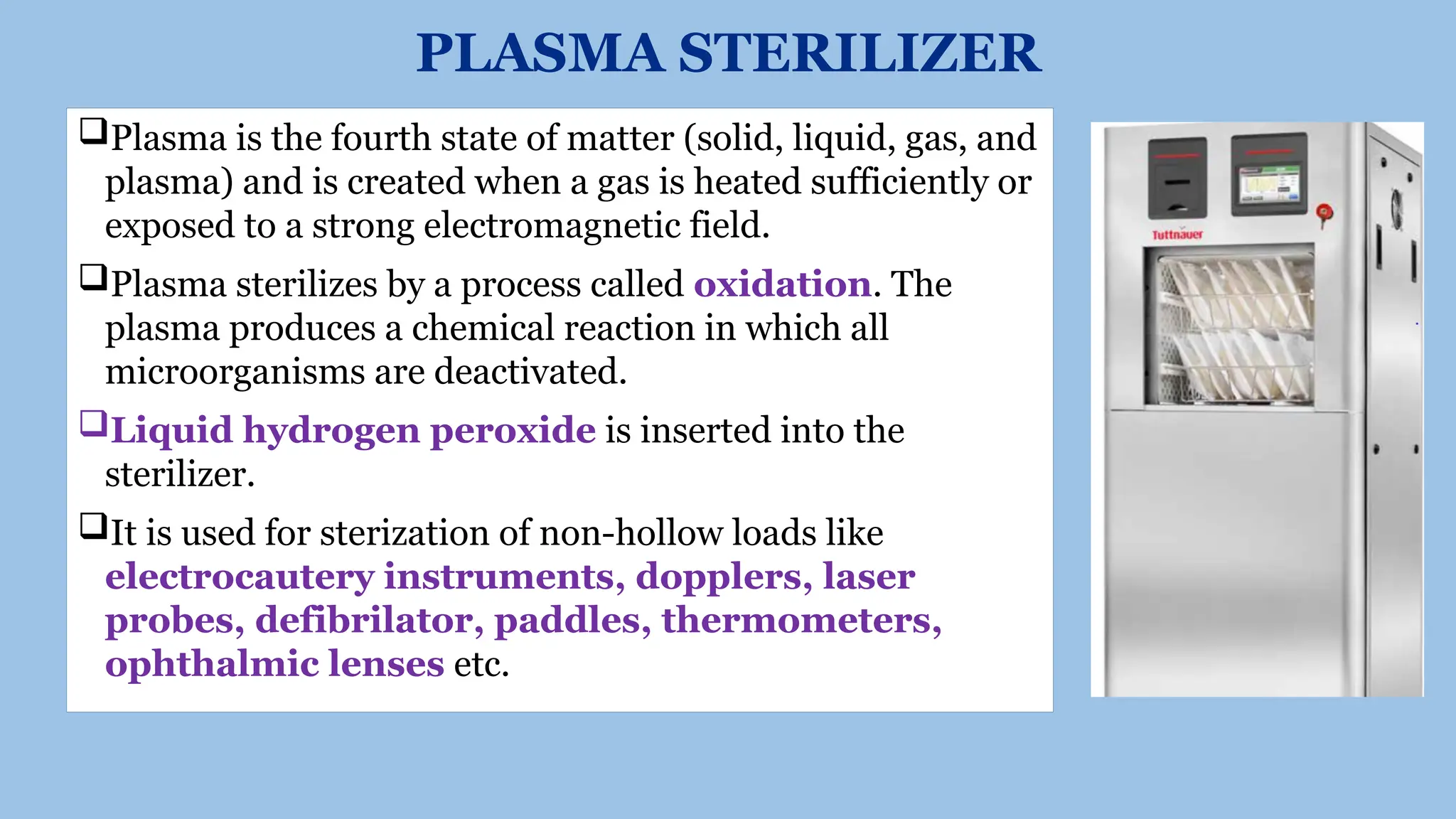
PLASMA STERILIZER
Plasma is the fourth state of matter (solid, liquid, gas, and
plasma) and is created when a gas is heated sufficiently or
exposed to a strong electromagnetic field.
Plasma sterilizes by a process called oxidation. The
plasma produces a chemical reaction in which all
microorganisms are deactivated.
Liquid hydrogen peroxide is inserted into the
sterilizer.
It is used for sterization of non-hollow loads like
electrocautery instruments, dopplers, laser
probes, defibrilator, paddles, thermometers,
ophthalmic lenses etc.
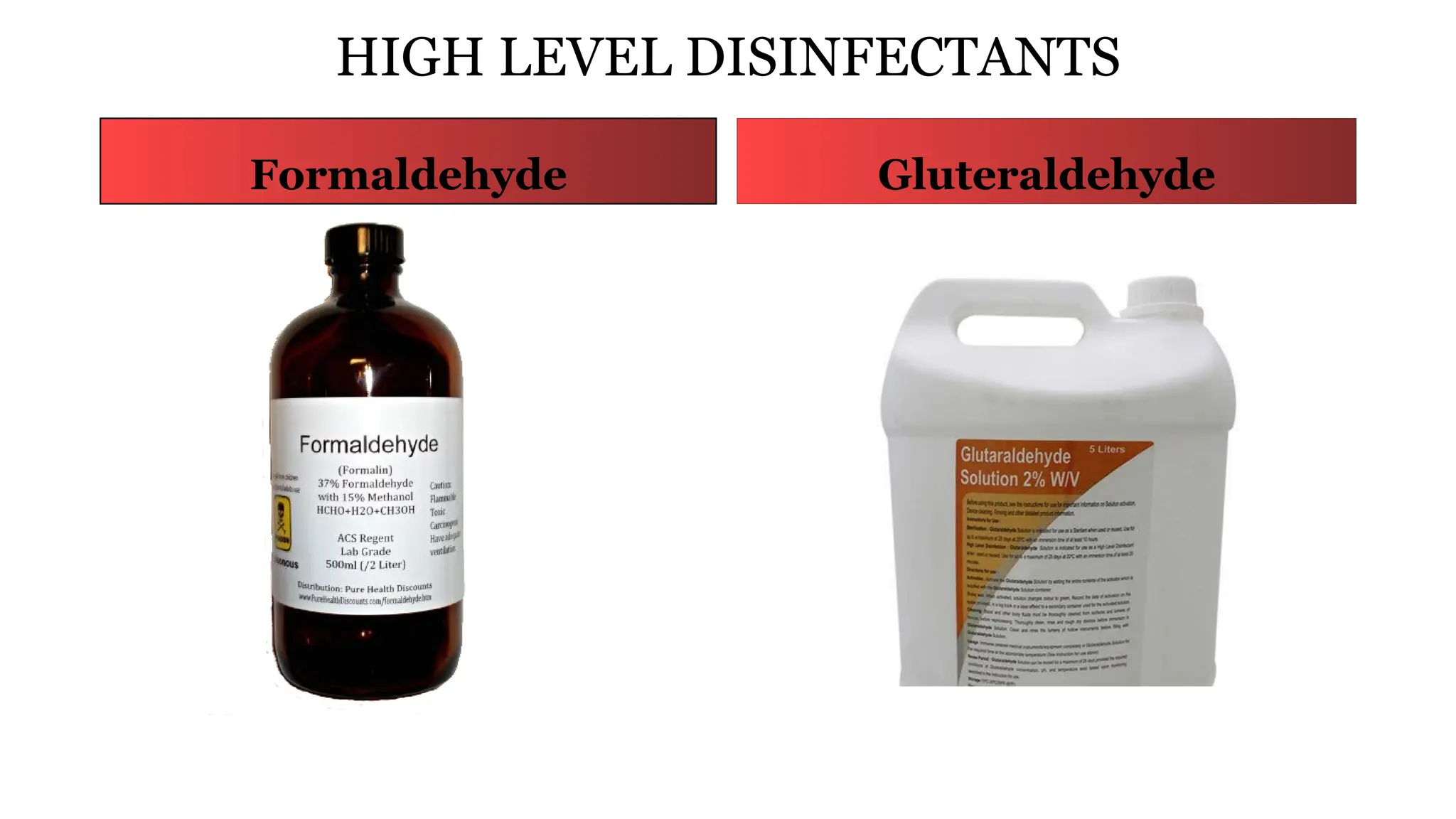
HIGH LEVEL DISINFECTANTS
Formaldehyde Gluteraldehyde
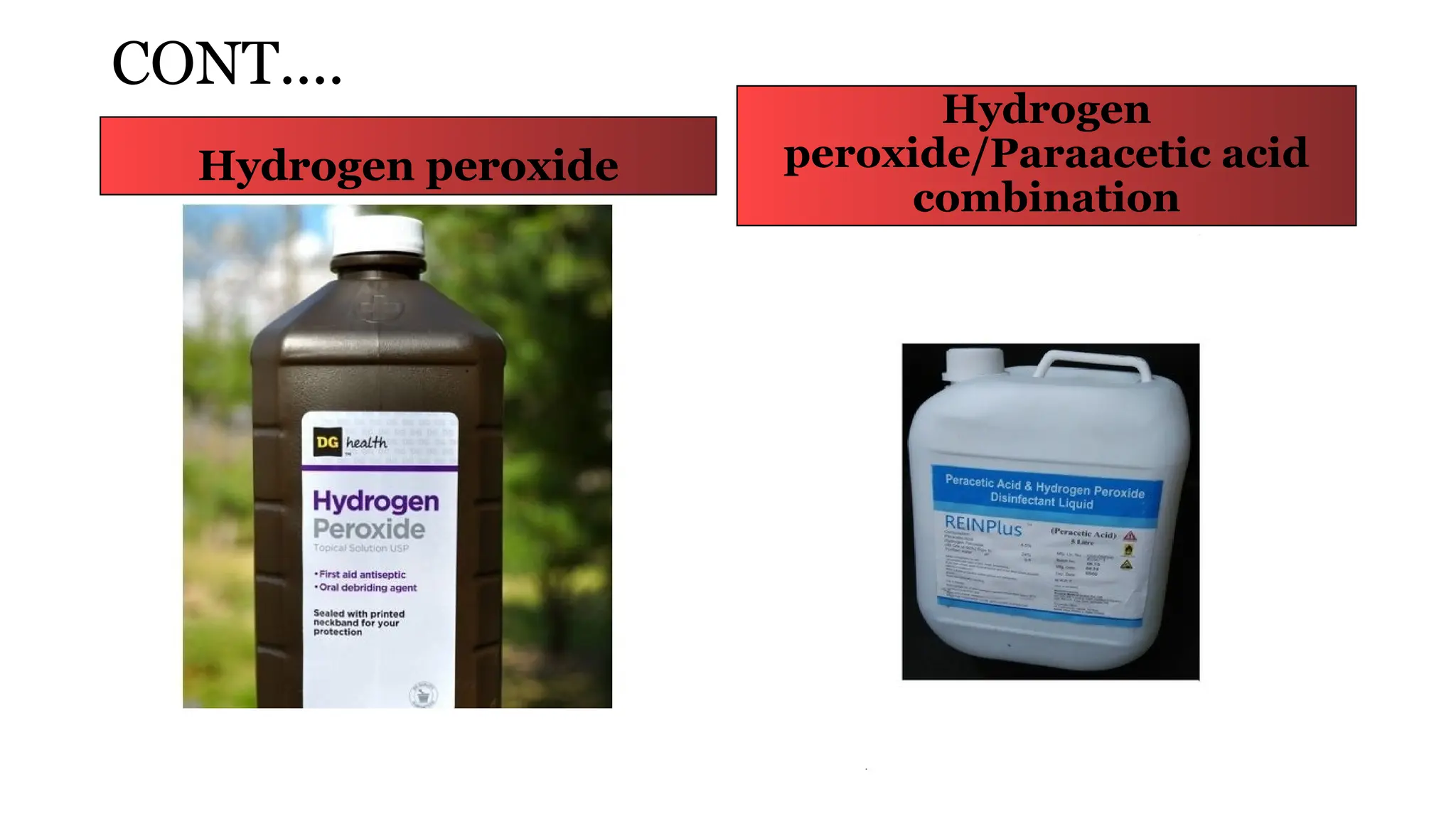
CONT....
Hydrogen peroxide
Hydrogen
peroxide/Paraacetic acid
combination
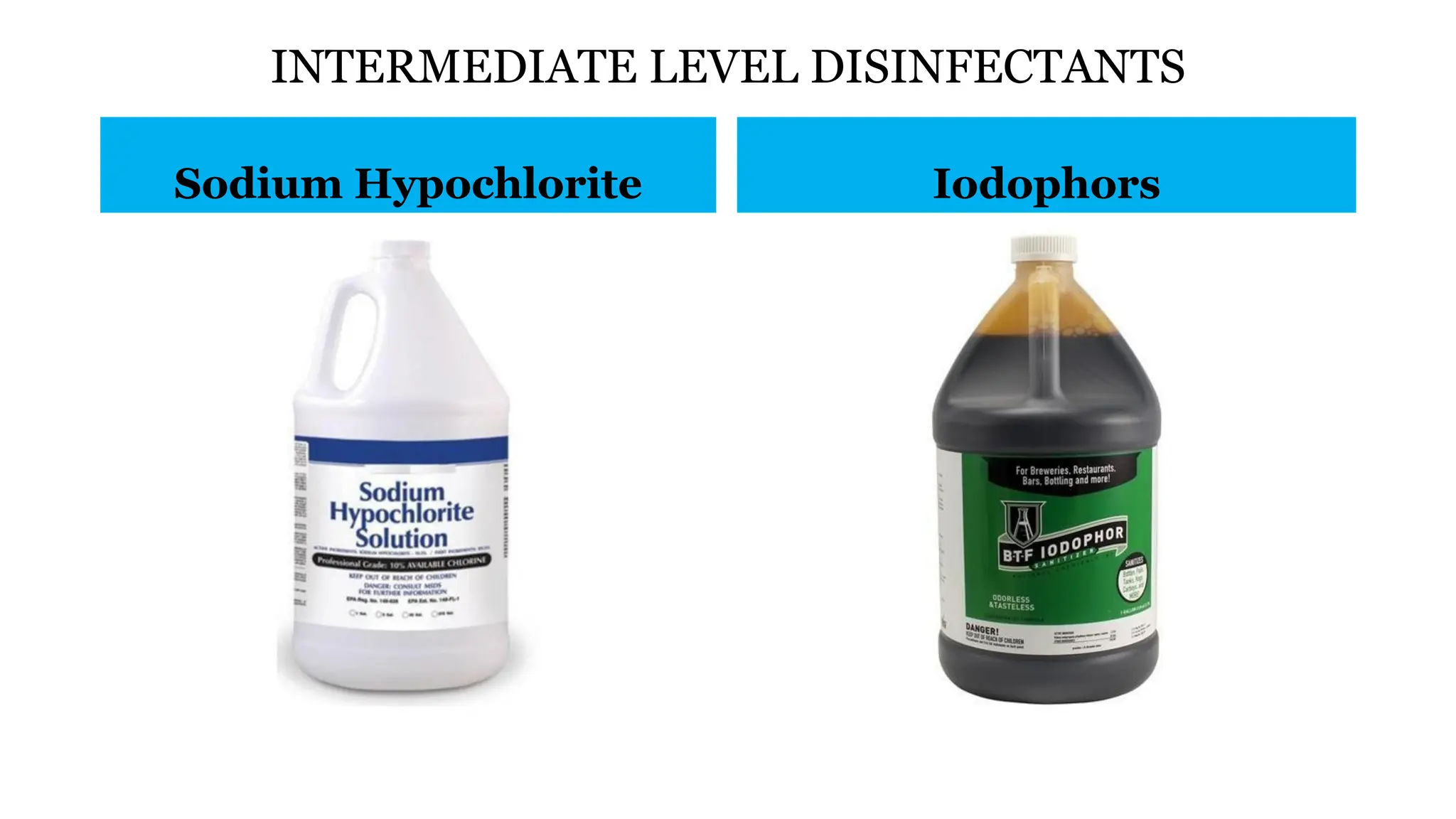
INTERMEDIATE LEVEL DISINFECTANTS
Sodium Hypochlorite Iodophors
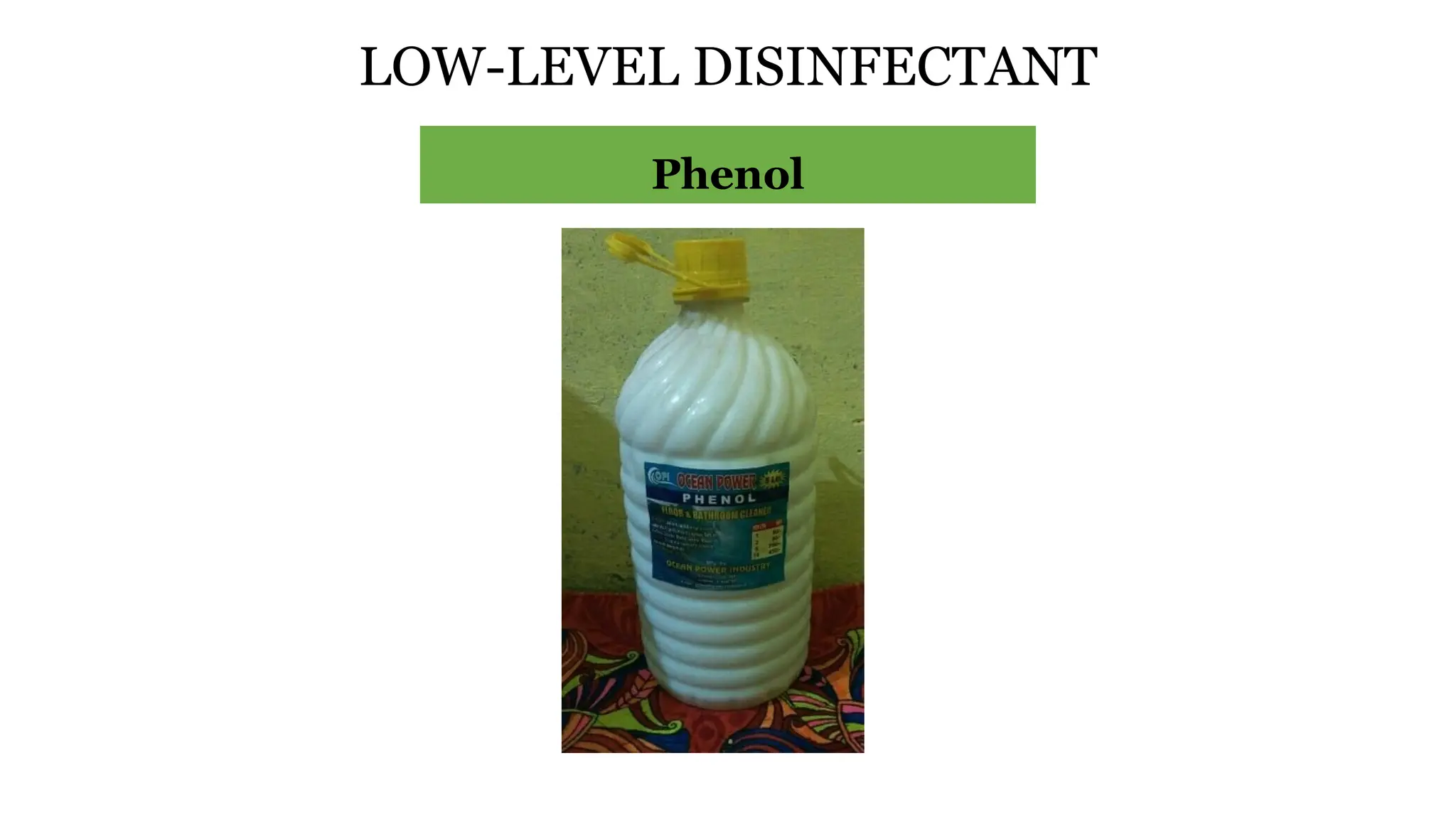
LOW-LEVEL DISINFECTANT
Phenol
BIBLIOGRAPHY
 Vertical Autoclave 22, 35, 50, 95 and 175 Liters Manufacturers Suppliers India.
https://www.stericox.com/autoclave/vertical-autoclave.
 Vertical Autoclave Manufacturers in India, Vertical Steam Sterilizers India.
http://www.bionicsscientific.com/autoclave-sterilizer/vertical-type-autoclave-steam-sterilizer
 https://www.cdc.gov/hicpac/Disinfection_Sterilization/dS_includes/
13_02ds_FlashSterilization
 https://www.who.int/medical_devices/innovation/hospt_equip_31.pdf
 Low Temperature Hydrogen Peroxide Plasma Sterilization | Tuttnauer.
https://tuttnauer.com/blog/low-temperature-hydrogen-peroxide-plasma-sterilization.
 SHINTANI, HIDEHARU, et al. “Gas Plasma Sterilization of Microorganisms and Mechanisms
of Action.” Experimental and Therapeutic Medicine, vol. 1, no. 5, 2010, pp. 731–38. PubMed
Central, doi:10.3892/etm.2010.136
 https://microbenotes.com/autoclave/
 https://en.wikipedia.org/wiki/Autoclave
STERILIZATION INSTRUMENTS COMPLETE DETAILED PRESENTATION

STERILIZATION INSTRUMENTS COMPLETE DETAILED PRESENTATION

  • 2.
  • 3.
    STERIZATION Sterilization is definedas the process by which an article, surface or medium is freed of all living microorganisms either in the vegetative or spore state. DISINFECTION Disinfection is defined as a process of complete elimination of vegetative forms of microorganisms except the bacterial spores from inanimate objects.
  • 4.
    AUTOCLAVE • Autoclaves providea physical method for disinfection and sterilization. • They work with a combination of steam, pressure and time. Autoclaves operate at high temperature and pressure in order to kill microorganisms and spores. • The autoclave was invented by Charles Chamberland in 1879. • Many autoclaves are used to sterilize equipment and supplies by subjecting them to pressurized saturated steam at 121 °C (250 °F) for around 15–20 minutes depending on the size of the load and the contents.
  • 5.
  • 6.
    Phases of AutoclaveProcess Conditioning Phase (C) Exposure Phase (S) Exhaust Phase (E)
  • 8.
    TYPES OF HORIZONTALAUTOCLAVES Rectangular-shaped Horizontal Autoclave Cylindrical-shaped Horizontal Autoclave
  • 9.
  • 10.
    FEATURES & BENEFITS MainTemperature Control Water level indicator Safety valve Pressure release valve Water release valve Pressure gauge Pressure Control Switch Heating Lamp Power Switch
  • 11.
    VERTICAL AUTOCLAVE • Verticalautoclaves are also known as top loading sterilizers that come in cylindrical shape. These are widely used in hospitals, Operation Theater (OT), microbiology laboratory for sterilization of various medial and cultures. • Vertically designed chamber provides guaranty of safe and efficient sterilization even in confined spaces. Working Pressure - 15 to 20 psi Working Temperature - 121°C to 125°C
  • 12.
    COMPONENTS OF VERTICALAUTOCLAVE The standard fittings of a vertical autoclave comprise  automatic pressure switch,  pedal lifting device,  steam release valve,  water outlet valve,  low water indicator,  safety valve,  heating lamp
  • 13.
    PRECAUTION Autoclaves should notbe used to sterilize water-proof or water- resistant substances. The items to be autoclaved should always be placed in a secondary container. Only autoclavable bags are to be used to autoclave packaged waste. To ensure sufficient penetration, articles should be wrapped in something . The items placed inside the chamber should not touch the sides or top of the chamber. Attempts to open the lid when the autoclave is working should never be made. Liquid components should never be autoclaved in sealed containers. The liquid inside the containers should only be filled 2/3rd of the total volume . Besides, never autoclave flammable, reactive, corrosive, toxic or radioactive materials, household bleach, or paraffin-embedded tissue.
  • 14.
    FLASH STERILIZATION  "Flash"steam sterilization was originally defined by Underwood and Perkins as sterilization of an unwrapped object at 132o C for 3 minutes at 27-28 lbs of pressure.  Flash sterilization is a modification of conventional steam sterilization in which the flashed item is placed in an open tray or is placed in a specially designed, covered, rigid container to allow for rapid penetration of steam.
  • 15.
    ETO STERILIZER Ethylene oxidesterilizers are used to sterilize heat and moisture sensitive devices that would be damaged by pure steam or liquid chemical sterilization, including most plastic or rubber products, as well as non-heat-sensitive devices. It is most commonly used to sterilize instruments with long lumens such as endoscopes and all materials that have to be sterilized but can not withstand higher temperature. ETO process temperatures from 25 - 550 c are used.
  • 16.
    Parts of Ethyleneoxide sterilizers a sterilizing chamber with an air inlet (containing a bacteria- retentive filter) a steam inlet gas conditioner vacuum pump ETO cylinder vacuum system to vent the gas from the chamber to an exhaust drain/or directly to the outside.
  • 17.
    Operating steps Items tobe sterilized are cleaned of contaminants and are rinsed with distilled or demineralized water to remove any detergent or tap-water residues. Items are placed in packs and loaded into baskets or carts and placed inside the sterilizer chamber for the duration of the process.
  • 18.
    PLASMA STERILIZER Plasma isthe fourth state of matter (solid, liquid, gas, and plasma) and is created when a gas is heated sufficiently or exposed to a strong electromagnetic field. Plasma sterilizes by a process called oxidation. The plasma produces a chemical reaction in which all microorganisms are deactivated. Liquid hydrogen peroxide is inserted into the sterilizer. It is used for sterization of non-hollow loads like electrocautery instruments, dopplers, laser probes, defibrilator, paddles, thermometers, ophthalmic lenses etc.
  • 20.
  • 21.
  • 22.
  • 23.
  • 25.
    BIBLIOGRAPHY  Vertical Autoclave22, 35, 50, 95 and 175 Liters Manufacturers Suppliers India. https://www.stericox.com/autoclave/vertical-autoclave.  Vertical Autoclave Manufacturers in India, Vertical Steam Sterilizers India. http://www.bionicsscientific.com/autoclave-sterilizer/vertical-type-autoclave-steam-sterilizer  https://www.cdc.gov/hicpac/Disinfection_Sterilization/dS_includes/ 13_02ds_FlashSterilization  https://www.who.int/medical_devices/innovation/hospt_equip_31.pdf  Low Temperature Hydrogen Peroxide Plasma Sterilization | Tuttnauer. https://tuttnauer.com/blog/low-temperature-hydrogen-peroxide-plasma-sterilization.  SHINTANI, HIDEHARU, et al. “Gas Plasma Sterilization of Microorganisms and Mechanisms of Action.” Experimental and Therapeutic Medicine, vol. 1, no. 5, 2010, pp. 731–38. PubMed Central, doi:10.3892/etm.2010.136  https://microbenotes.com/autoclave/  https://en.wikipedia.org/wiki/Autoclave