


PLANNING STEPS
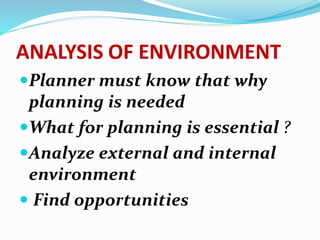
ANALYSIS OF ENVIRONMENT
Planner must know that why
planning is needed
What for planning is essential ?
Analyze external and internal
environment
 Find opportunities
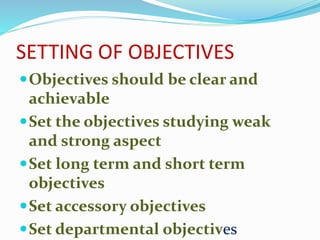
SETTING OF OBJECTIVES
Objectives should be clear and
achievable
Set the objectives studying weak
and strong aspect
Set long term and short term
objectives
Set accessory objectives
Set departmental objectives
enjoy
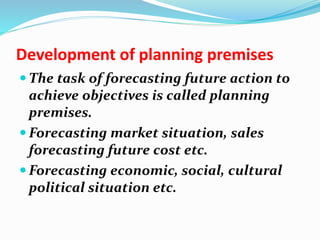
Development of planning premises
 The task of forecasting future action to
achieve objectives is called planning
premises.
 Forecasting market situation, sales
forecasting future cost etc.
 Forecasting economic, social, cultural
political situation etc.
Identification of alternatives
Many alternatives to achieve
organizational goal
Harnessing several alternatives
Use wisdom, imagination,
experiences
Take advises from specialist, books
,journal etc
Evaluation of alternatives
Analyze the time
Analyze the advantages
Match with objective of
organization
Analyze the cost
Use scientific and practical
technique for evaluation.
Selecting the best alternatives
Past experiences
Market condition
Business situation
Effect of the selected alternatives
Formulating supportive plan
Prepare different plan for
different action
Supportive plan must co related
to major plan
Separate policy, rules budget
should prepare
Implementation of plans
Paper work is implemented
practically
Inform all the staff and concern
stakeholder about plan
Give advises and suggestion to
worker
Gather money machine men for
production and operation
Reviewing the planning
Find the effectiveness of plan
and analyze weakness
Do correction for weakness .
Planning is the future course of
action may not match in future
NEED FOR PLANNING
 FOCUS ON GOAL
 MINIMIZE UNCERTAIAINITIES
 MAINTAIN EFFECTIVE CONTROL
 INNOVATION AND CREATIVENESS
 ORGANIZATIONAL EFFECTIVENESS
 ECONOMIC IN OPERATION
 FACILITATES COORDINATION
 HELPS TO FACE TO FACE BUSINESS COMPLEXITY

Planning steps

  • 1.
  • 2.
    ANALYSIS OF ENVIRONMENT Plannermust know that why planning is needed What for planning is essential ? Analyze external and internal environment  Find opportunities
  • 3.
    SETTING OF OBJECTIVES Objectivesshould be clear and achievable Set the objectives studying weak and strong aspect Set long term and short term objectives Set accessory objectives Set departmental objectives
  • 4.
  • 5.
    Development of planningpremises  The task of forecasting future action to achieve objectives is called planning premises.  Forecasting market situation, sales forecasting future cost etc.  Forecasting economic, social, cultural political situation etc.
  • 6.
    Identification of alternatives Manyalternatives to achieve organizational goal Harnessing several alternatives Use wisdom, imagination, experiences Take advises from specialist, books ,journal etc
  • 7.
    Evaluation of alternatives Analyzethe time Analyze the advantages Match with objective of organization Analyze the cost Use scientific and practical technique for evaluation.
  • 8.
    Selecting the bestalternatives Past experiences Market condition Business situation Effect of the selected alternatives
  • 9.
    Formulating supportive plan Preparedifferent plan for different action Supportive plan must co related to major plan Separate policy, rules budget should prepare
  • 10.
    Implementation of plans Paperwork is implemented practically Inform all the staff and concern stakeholder about plan Give advises and suggestion to worker Gather money machine men for production and operation
  • 11.
    Reviewing the planning Findthe effectiveness of plan and analyze weakness Do correction for weakness . Planning is the future course of action may not match in future
  • 13.
    NEED FOR PLANNING FOCUS ON GOAL  MINIMIZE UNCERTAIAINITIES  MAINTAIN EFFECTIVE CONTROL  INNOVATION AND CREATIVENESS  ORGANIZATIONAL EFFECTIVENESS  ECONOMIC IN OPERATION  FACILITATES COORDINATION  HELPS TO FACE TO FACE BUSINESS COMPLEXITY