THE
SECOND
SCREEN
planning for (and against)
event marketing strategies
for a multi-screen world
VP, STRATEGY DIRECTOR
JACK MORTON WORLDWIDE
@BENGROSSMAN
#2ndScreenStrategy
Ben Grossman
e: ben_grossman@jackmorton.com
m: + 1.617.752.1171
t: @BenGrossman
w: www.ben-grossman.com
Read our blog: blog.jackmorton.com
Follow us on twitter: @JackMorton
Visit us online: www.jackmorton.com
THE LANDSCAPE
CONSUMER BEHAVIOR
PLANNING FOR
PLANNING AGAINST
Second Screen Agenda
THE LANDSCAPE
CONSUMER BEHAVIOR
PLANNING FOR
PLANNING AGAINST
Second Screen Agenda
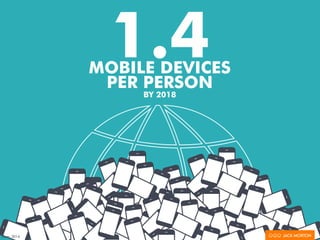
1.4MOBILE DEVICES
PER PERSON
BY 2018
Cisco, 2014
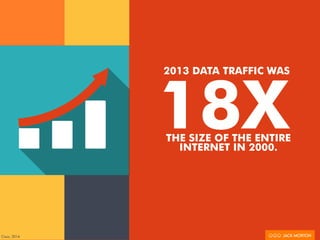
18XTHE SIZE OF THE ENTIRE
INTERNET IN 2000.
2013 DATA TRAFFIC WAS
Cisco, 2014
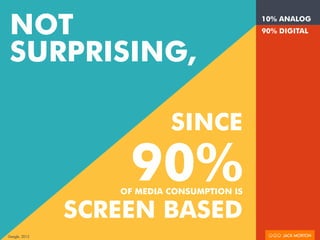
NOT
SURPRISING,
SINCE
90%OF MEDIA CONSUMPTION IS
SCREEN BASED
10% ANALOG
90% DIGITAL
Google, 2012
AND GIVEN
THAT WE LIVE IN
A WORLD WHERE
ATTENTION
IS A
PRECIOUS
COMMODITY,
PEOPLE SPEND A
LOT OF TIME
LOOKING AT
MULTIPLE
SCREENS.
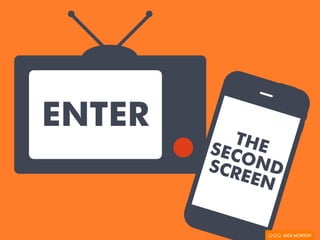
ENTER
THESECONDSCREEN
THE
SECOND
SCREEN
Use of a screen-based
device concurrent with the
consumption of another
form of linear content on a
separate screen.
THE
SECOND
SCREEN
Once specific to screens
secondary to the television,
today, the term has come
to describe consumers’
multi-screen habits and
cross-screen journeys.
2005 2007 2009 2011 2013
THE
SECOND
SCREEN
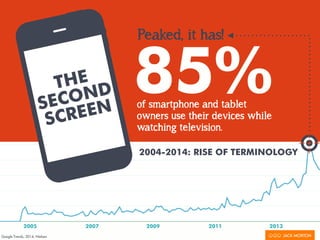
Peaked, it has!
2004-2014: RISE OF TERMINOLOGY
85%of smartphone and tablet
owners use their devices while
watching television.
Google Trends, 2014, Nielsen
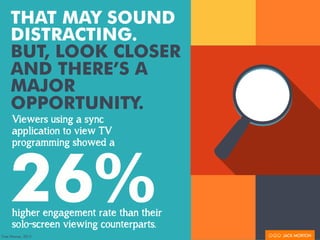
26%
THAT MAY SOUND
DISTRACTING.
BUT, LOOK CLOSER
AND THERE’S A
MAJOR
OPPORTUNITY.
Viewers using a sync
application to view TV
programming showed a
higher engagement rate than their
solo-screen viewing counterparts.
Time Warner, 2013
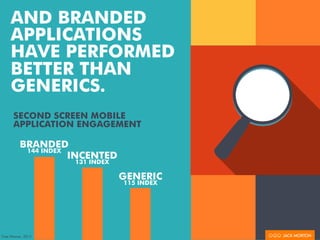
AND BRANDED
APPLICATIONS
HAVE PERFORMED
BETTER THAN
GENERICS.
BRANDED
144 INDEX
INCENTED
131 INDEX
GENERIC
115 INDEX
SECOND SCREEN MOBILE
APPLICATION ENGAGEMENT
Time Warner, 2013
THE LANDSCAPE
CONSUMER BEHAVIOR
PLANNING FOR
PLANNING AGAINST
Second Screen Agenda
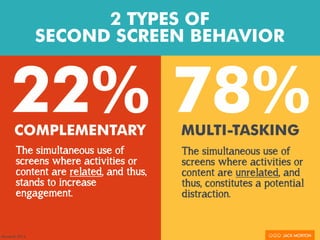
The simultaneous use of
screens where activities or
content are related, and thus,
stands to increase
engagement.
MULTI-TASKINGCOMPLEMENTARY
2 TYPES OF
SECOND SCREEN BEHAVIOR
The simultaneous use of
screens where activities or
content are unrelated, and
thus, constitutes a potential
distraction.
78%22%
Microsoft, 2014
MULTI-TASKINGCOMPLEMENTARY
“If there’s an actress that I
recognize, but I can’t
remember where I recognize
her from, I’ll just do a quick
search on IMDB, or
something like that.”
-Andrew
“Just out of habit, picking up
the touchpad or the phone
and deciding to search on
the internet for a little bit. [...]
It’s frustrating that I do it
though, because you feel like
you don’t stay as engaged...”
-Bradley
2 TYPES OF
SECOND SCREEN BEHAVIOR
Microsoft, 2014
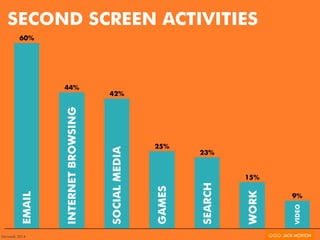
9%
15%
23%
25%
42%
44%
60%
SECOND SCREEN ACTIVITIESEMAIL
INTERNETBROWSING
SOCIALMEDIA
GAMES
SEARCH
WORK
VIDEO
Microsoft, 2014
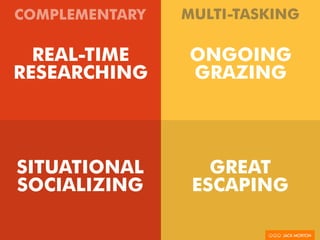
MULTI-TASKING
REAL-TIME
RESEARCHING
COMPLEMENTARY
SITUATIONAL
SOCIALIZING
ONGOING
GRAZING
GREAT
ESCAPING
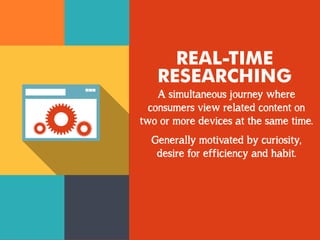
REAL-TIME
RESEARCHING
A simultaneous journey where
consumers view related content on
two or more devices at the same time.
Generally motivated by curiosity,
desire for efficiency and habit.
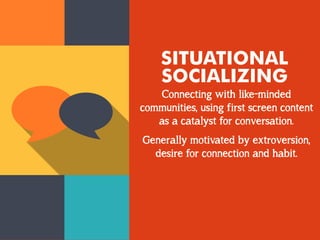
SITUATIONAL
SOCIALIZING
Connecting with like-minded
communities, using first screen content
as a catalyst for conversation.
Generally motivated by extroversion,
desire for connection and habit.
ONGOING
GRAZING
The most common behavior; users
access separate, unrelated content in
order to multi-task.
Generally motivated by habit,
personal preference and efficiency.
GREAT
ESCAPING
In the absence of interest in first
screen content, consumers jump to a
second screen, unrelated distraction.
Generally motivated by boredom,
desire for efficiency and habit.
THE LANDSCAPE
CONSUMER BEHAVIOR
PLANNING FOR
PLANNING AGAINST
Second Screen Agenda
Create A Multi-Screen Experience
Encourage Real-Time Researching and Situational
Socializing by actively suggesting a Second Screen
experience to attendees. Possibilities include:
1. Real-Time Engagement: Use a Mobile App or hashtag
to encourage voting or live questions.
2. Contextual Networking: Offer a private LinkedIn Group
or Mobile App-based social network for attendees.
3. Optional Deep-Dive: Enrich the first screen by providing
complementary content that offers more depth through a
Mobile App or online destination.
Provide Durable Content
Plan for some level of Ongoing Grazing and, in
worst cases, Great Escaping, by making key content
available after the first screen experience is over.
1. Digital Archives: Tap into popular, search engine
optimized digital archives like Slideshare, Issu or Podcasts.
2. Hard Copy Resources: On the way out of a session,
distribute a “Top 10 Takeaways” list.
3. Dedicated Follow-Up: Post-event communications
(email, Mobile App or phone call) are key and often lead to
a second wave of social amplification.
Use Snackable Content
Whether it’s to enable Situational Socializing or to
grab attention when an audience has begun
Ongoing Grazing, small-form content is key.
1. Organization of Information: Carefully organize and
curate content into numbered lists and a predictable flow.
2. Tweetable Tips: Use suggestions like “Tweetable Tips” to
encourage audiences to engage in Situational Socializing.
3. Statistics: Cited statistics can both offer an opportunity for
content sharing and also encourage Real-Time Researching
as attendees seek to be helpful and learn more.
THE LANDSCAPE
CONSUMER BEHAVIOR
PLANNING FOR
PLANNING AGAINST
Second Screen Agenda
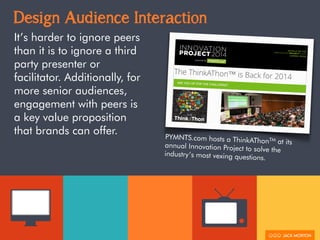
Design Audience Interaction
It’s harder to ignore peers
than it is to ignore a third
party presenter or
facilitator. Additionally, for
more senior audiences,
engagement with peers is
a key value proposition
that brands can offer. PYMNTS.com hosts a ThinkAThonTM
at itsannual Innovation Project to solve the
industry’s most vexing questions.
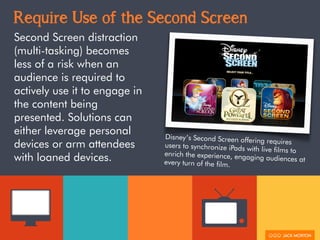
Require Use of the Second Screen
Second Screen distraction
(multi-tasking) becomes
less of a risk when an
audience is required to
actively use it to engage in
the content being
presented. Solutions can
either leverage personal
devices or arm attendees
with loaned devices.
Disney’s Second Screen offering requiresusers to synchronize iPads with live films toenrich the experience, engaging audiences atevery turn of the film.
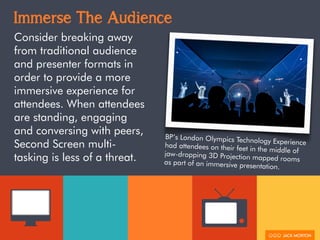
Immerse The Audience
Consider breaking away
from traditional audience
and presenter formats in
order to provide a more
immersive experience for
attendees. When attendees
are standing, engaging
and conversing with peers,
Second Screen multi-
tasking is less of a threat.
BP’s London Olympics Technology Experiencehad attendees on their feet in the middle ofjaw-dropping 3D Projection mapped roomsas part of an immersive presentation.
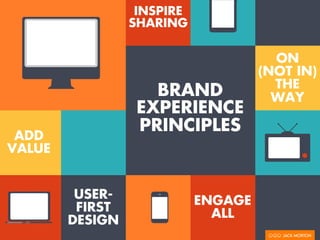
BRAND
EXPERIENCE
PRINCIPLES
INSPIRE
SHARING
ADD
VALUE
USER-
FIRST
DESIGN
ON
(NOT IN)
THE
WAY
ENGAGE
ALL
THE LANDSCAPE
CONSUMER BEHAVIOR
PLANNING FOR
PLANNING AGAINST
Second Screen Agenda
VP, STRATEGY DIRECTOR
JACK MORTON WORLDWIDE
@BENGROSSMAN
#2ndScreenStrategy
Ben Grossman
e: ben_grossman@jackmorton.com
m: + 1.617.752.1171
t: @BenGrossman
w: www.ben-grossman.com
Read our blog: blog.jackmorton.com
Follow us on twitter: @JackMorton
Visit us online: www.jackmorton.com
THE
SECOND
SCREEN
planning for (and against)
event marketing strategies
for a multi-screen world

Second screen strategy: Digital, social & mobile best practices for conferences and other events

  • 1.
    THE SECOND SCREEN planning for (andagainst) event marketing strategies for a multi-screen world
  • 2.
    VP, STRATEGY DIRECTOR JACKMORTON WORLDWIDE @BENGROSSMAN #2ndScreenStrategy Ben Grossman e: ben_grossman@jackmorton.com m: + 1.617.752.1171 t: @BenGrossman w: www.ben-grossman.com Read our blog: blog.jackmorton.com Follow us on twitter: @JackMorton Visit us online: www.jackmorton.com
  • 3.
    THE LANDSCAPE CONSUMER BEHAVIOR PLANNINGFOR PLANNING AGAINST Second Screen Agenda
  • 4.
    THE LANDSCAPE CONSUMER BEHAVIOR PLANNINGFOR PLANNING AGAINST Second Screen Agenda
  • 5.
  • 6.
    18XTHE SIZE OFTHE ENTIRE INTERNET IN 2000. 2013 DATA TRAFFIC WAS Cisco, 2014
  • 7.
    NOT SURPRISING, SINCE 90%OF MEDIA CONSUMPTIONIS SCREEN BASED 10% ANALOG 90% DIGITAL Google, 2012
  • 8.
    AND GIVEN THAT WELIVE IN A WORLD WHERE ATTENTION IS A PRECIOUS COMMODITY, PEOPLE SPEND A LOT OF TIME LOOKING AT MULTIPLE SCREENS.
  • 9.
  • 10.
    THE SECOND SCREEN Use of ascreen-based device concurrent with the consumption of another form of linear content on a separate screen.
  • 11.
    THE SECOND SCREEN Once specific toscreens secondary to the television, today, the term has come to describe consumers’ multi-screen habits and cross-screen journeys.
  • 12.
    2005 2007 20092011 2013 THE SECOND SCREEN Peaked, it has! 2004-2014: RISE OF TERMINOLOGY 85%of smartphone and tablet owners use their devices while watching television. Google Trends, 2014, Nielsen
  • 13.
    26% THAT MAY SOUND DISTRACTING. BUT,LOOK CLOSER AND THERE’S A MAJOR OPPORTUNITY. Viewers using a sync application to view TV programming showed a higher engagement rate than their solo-screen viewing counterparts. Time Warner, 2013
  • 14.
    AND BRANDED APPLICATIONS HAVE PERFORMED BETTERTHAN GENERICS. BRANDED 144 INDEX INCENTED 131 INDEX GENERIC 115 INDEX SECOND SCREEN MOBILE APPLICATION ENGAGEMENT Time Warner, 2013
  • 15.
    THE LANDSCAPE CONSUMER BEHAVIOR PLANNINGFOR PLANNING AGAINST Second Screen Agenda
  • 16.
    The simultaneous useof screens where activities or content are related, and thus, stands to increase engagement. MULTI-TASKINGCOMPLEMENTARY 2 TYPES OF SECOND SCREEN BEHAVIOR The simultaneous use of screens where activities or content are unrelated, and thus, constitutes a potential distraction. 78%22% Microsoft, 2014
  • 17.
    MULTI-TASKINGCOMPLEMENTARY “If there’s anactress that I recognize, but I can’t remember where I recognize her from, I’ll just do a quick search on IMDB, or something like that.” -Andrew “Just out of habit, picking up the touchpad or the phone and deciding to search on the internet for a little bit. [...] It’s frustrating that I do it though, because you feel like you don’t stay as engaged...” -Bradley 2 TYPES OF SECOND SCREEN BEHAVIOR Microsoft, 2014
  • 18.
  • 19.
  • 20.
    REAL-TIME RESEARCHING A simultaneous journeywhere consumers view related content on two or more devices at the same time. Generally motivated by curiosity, desire for efficiency and habit.
  • 21.
    SITUATIONAL SOCIALIZING Connecting with like-minded communities,using first screen content as a catalyst for conversation. Generally motivated by extroversion, desire for connection and habit.
  • 22.
    ONGOING GRAZING The most commonbehavior; users access separate, unrelated content in order to multi-task. Generally motivated by habit, personal preference and efficiency.
  • 23.
    GREAT ESCAPING In the absenceof interest in first screen content, consumers jump to a second screen, unrelated distraction. Generally motivated by boredom, desire for efficiency and habit.
  • 24.
    THE LANDSCAPE CONSUMER BEHAVIOR PLANNINGFOR PLANNING AGAINST Second Screen Agenda
  • 25.
    Create A Multi-ScreenExperience Encourage Real-Time Researching and Situational Socializing by actively suggesting a Second Screen experience to attendees. Possibilities include: 1. Real-Time Engagement: Use a Mobile App or hashtag to encourage voting or live questions. 2. Contextual Networking: Offer a private LinkedIn Group or Mobile App-based social network for attendees. 3. Optional Deep-Dive: Enrich the first screen by providing complementary content that offers more depth through a Mobile App or online destination.
  • 26.
    Provide Durable Content Planfor some level of Ongoing Grazing and, in worst cases, Great Escaping, by making key content available after the first screen experience is over. 1. Digital Archives: Tap into popular, search engine optimized digital archives like Slideshare, Issu or Podcasts. 2. Hard Copy Resources: On the way out of a session, distribute a “Top 10 Takeaways” list. 3. Dedicated Follow-Up: Post-event communications (email, Mobile App or phone call) are key and often lead to a second wave of social amplification.
  • 27.
    Use Snackable Content Whetherit’s to enable Situational Socializing or to grab attention when an audience has begun Ongoing Grazing, small-form content is key. 1. Organization of Information: Carefully organize and curate content into numbered lists and a predictable flow. 2. Tweetable Tips: Use suggestions like “Tweetable Tips” to encourage audiences to engage in Situational Socializing. 3. Statistics: Cited statistics can both offer an opportunity for content sharing and also encourage Real-Time Researching as attendees seek to be helpful and learn more.
  • 28.
    THE LANDSCAPE CONSUMER BEHAVIOR PLANNINGFOR PLANNING AGAINST Second Screen Agenda
  • 29.
    Design Audience Interaction It’sharder to ignore peers than it is to ignore a third party presenter or facilitator. Additionally, for more senior audiences, engagement with peers is a key value proposition that brands can offer. PYMNTS.com hosts a ThinkAThonTM at itsannual Innovation Project to solve the industry’s most vexing questions.
  • 30.
    Require Use ofthe Second Screen Second Screen distraction (multi-tasking) becomes less of a risk when an audience is required to actively use it to engage in the content being presented. Solutions can either leverage personal devices or arm attendees with loaned devices. Disney’s Second Screen offering requiresusers to synchronize iPads with live films toenrich the experience, engaging audiences atevery turn of the film.
  • 31.
    Immerse The Audience Considerbreaking away from traditional audience and presenter formats in order to provide a more immersive experience for attendees. When attendees are standing, engaging and conversing with peers, Second Screen multi- tasking is less of a threat. BP’s London Olympics Technology Experiencehad attendees on their feet in the middle ofjaw-dropping 3D Projection mapped roomsas part of an immersive presentation.
  • 32.
  • 33.
    THE LANDSCAPE CONSUMER BEHAVIOR PLANNINGFOR PLANNING AGAINST Second Screen Agenda
  • 34.
    VP, STRATEGY DIRECTOR JACKMORTON WORLDWIDE @BENGROSSMAN #2ndScreenStrategy Ben Grossman e: ben_grossman@jackmorton.com m: + 1.617.752.1171 t: @BenGrossman w: www.ben-grossman.com Read our blog: blog.jackmorton.com Follow us on twitter: @JackMorton Visit us online: www.jackmorton.com
  • 35.
    THE SECOND SCREEN planning for (andagainst) event marketing strategies for a multi-screen world