R. Zahra
INSTRUCTIONS
 Form groups of not more than 5 .
 Each group must have a common

subject.
 Choose a lesson from an upcoming
topic that you shall be covering with
your students in the near future.
R. Zahra
INSTRUCTIONS
 You are going to plan that lesson again

with the aim of changing it into an IBL
lesson.
 You need to be realistic and plan to
keep the same timeframe – basically,
you want to use what time is available
in a better way.
R. Zahra
Planning points
Where the you want your students
to get to (learning goals)
2. How will they get there (success
criteria) Bloom’s Taxonomy
3. How will you check where they are
(assessment/ feedback)
1.

R. Zahra
Points to consider
How unstructured/ structured will
the task be?
2. How will you engage the students?
3. How will you organise the class to
benefit most from collaborative
learning (effective groupwork)?
1.

R. Zahra
Points to consider
4. How will you gather evidence of

your students’ learning during the
activity itself?
5. What open-ended questions will
you ask to challenge high ability
students?
R. Zahra
Points to consider
6. What open-ended questions will

you ask to challenge lower ability
students?
7. What strategy will you use to help
struggling students/ groups
without giving them too much?
R. Zahra
Follow up
You will
present
your
lesson
plan to the
other
group
R. Zahra
Follow up
Each member of the
group will have to deliver
part of the presentation…

R. Zahra
Follow up
… While the other
group must analise
your lesson plan
and ask questions
about it!

R. Zahra
Later on…
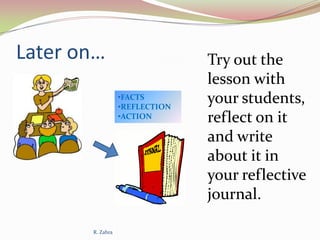
•FACTS
•REFLECTION
•ACTION

R. Zahra

Try out the
lesson with
your students,
reflect on it
and write
about it in
your reflective
journal.

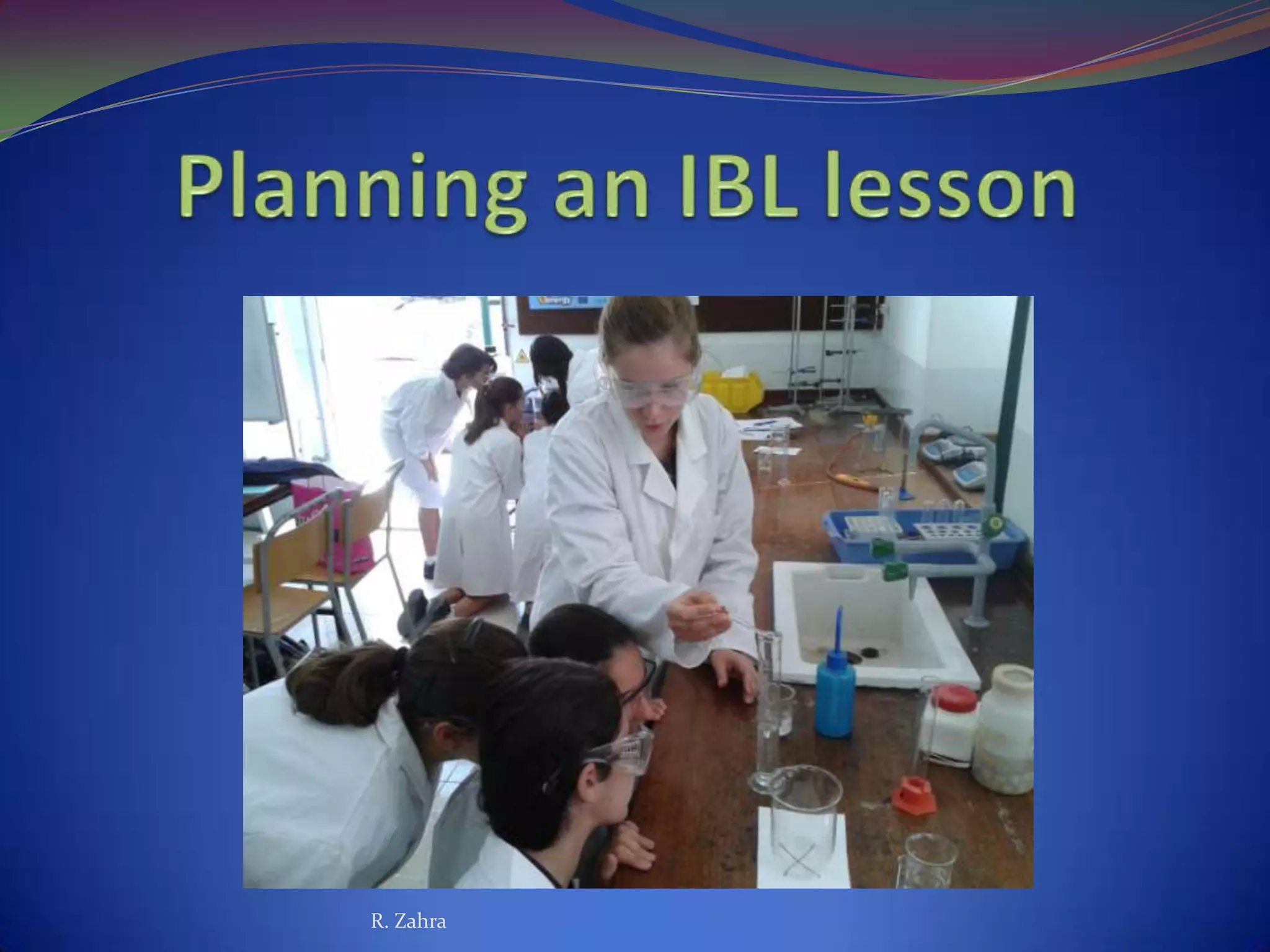
Planning an IBL chemistry lesson

  • 1.
  • 2.
    INSTRUCTIONS  Form groupsof not more than 5 .  Each group must have a common subject.  Choose a lesson from an upcoming topic that you shall be covering with your students in the near future. R. Zahra
  • 3.
    INSTRUCTIONS  You aregoing to plan that lesson again with the aim of changing it into an IBL lesson.  You need to be realistic and plan to keep the same timeframe – basically, you want to use what time is available in a better way. R. Zahra
  • 4.
    Planning points Where theyou want your students to get to (learning goals) 2. How will they get there (success criteria) Bloom’s Taxonomy 3. How will you check where they are (assessment/ feedback) 1. R. Zahra
  • 5.
    Points to consider Howunstructured/ structured will the task be? 2. How will you engage the students? 3. How will you organise the class to benefit most from collaborative learning (effective groupwork)? 1. R. Zahra
  • 6.
    Points to consider 4.How will you gather evidence of your students’ learning during the activity itself? 5. What open-ended questions will you ask to challenge high ability students? R. Zahra
  • 7.
    Points to consider 6.What open-ended questions will you ask to challenge lower ability students? 7. What strategy will you use to help struggling students/ groups without giving them too much? R. Zahra
  • 8.
  • 9.
    Follow up Each memberof the group will have to deliver part of the presentation… R. Zahra
  • 10.
    Follow up … Whilethe other group must analise your lesson plan and ask questions about it! R. Zahra
  • 11.
    Later on… •FACTS •REFLECTION •ACTION R. Zahra Tryout the lesson with your students, reflect on it and write about it in your reflective journal.