Internet Plagiarism in the
                 Classroom
By: Shelly Dunsford
Some statistics for you…
   “approximately 74 percent of students admit
    plagiarizing at least once during the past school
    year.”
   “more than half the high school students
    surveyed had used material copied from the
    Internet in research papers.”
   “Fifteen percent said they had turned in reports
    copied entirely off the Internet -- or purchased on
    the Internet.”
Why do students Plagiarize?
   Intentional vs.
•   most common type of plagiarism

   Unintentional
•   Happens in higher grades
Intentional Plagiarism
   Thrill/ challenge of trying to get away with
    plagiarizing.
   Lack of time.
   Intimidated by/ lack of confidence in their own
    work.
   Their classmates are doing it so why not do it too?
Unintentional Plagiarism
 They don’t know how to paraphrase.
 Mix up their own notes with notes from
  their source.
 Forget to write down the bibliographical
  information when researching, and can’t
  find it again later.
 Confusion over expectations and what
  plagiarizing is.
So what can we do as teachers?
   Prevention, prevention, and more
    prevention
Preventing Intentional Plagiarism
    Susan Sieber’s ideas:
1.    Use specific/ unique research topics for essays.
2.    Have students do lots of brainstorming, outlining,
      and prewriting within class time.
    Plagiarism.org’s ideas:
1.    Tell students that their perspectives/analyses are
      more important than the perspectives of other
      writers.
2.    Their own life experiences give a more interesting
      spin on the topic than other writer’s work on the
      same topic.
Preventing Intentional Plagiarism
          continued…
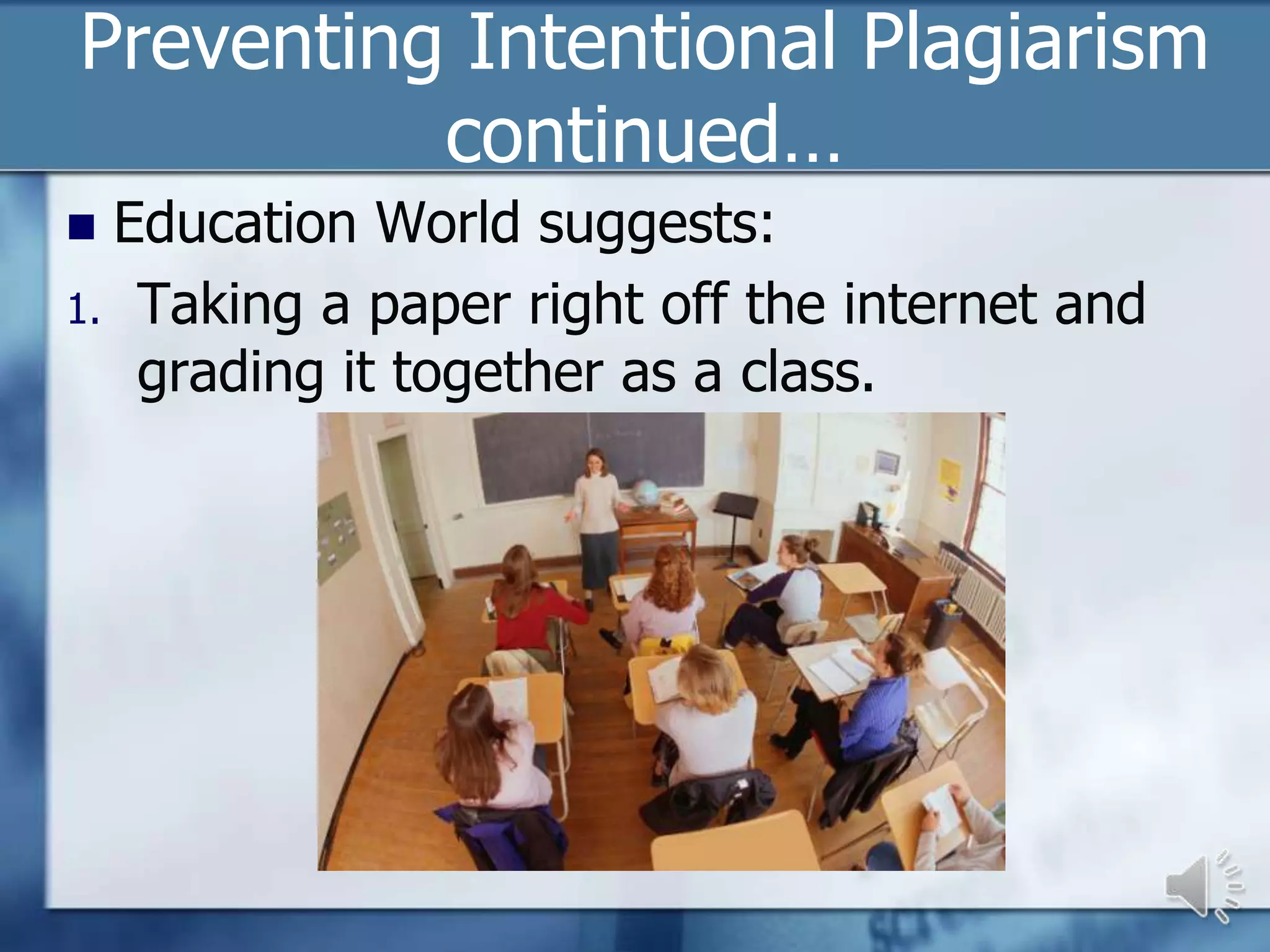
 Education World suggests:
1. Taking a paper right off the internet and
   grading it together as a class.
Preventing Unintentional Plagiarism
     Education World suggests to make sure your
      students:
 1.    know the specific consequences for plagiarism.
 2.    All the different forms plagiarism can take.
 3.    Write the citations next to all of their notes.
 4.    Give them a handout with clear expectations for
       citing within the assignment and in the
       Bibliography
Preventing Unintentional Plagiarism
           continued…
  Plagiarism.org suggests:
 Teachers have writing workshops within class
 time where students can practice skills like
 paraphrasing or note taking.
Resources to help you with
prevention
   There are literally hundreds of ways to prevent
    plagiarism so here are some websites, that I found
    very useful, for you to check out if you’re looking
    for more prevention strategies:
     http://www.plagiarism.org/index.html
     http://www.helium.com/knowledge/36346-plagiarism-
      in-the-classroom-prevention-rather-than-detection
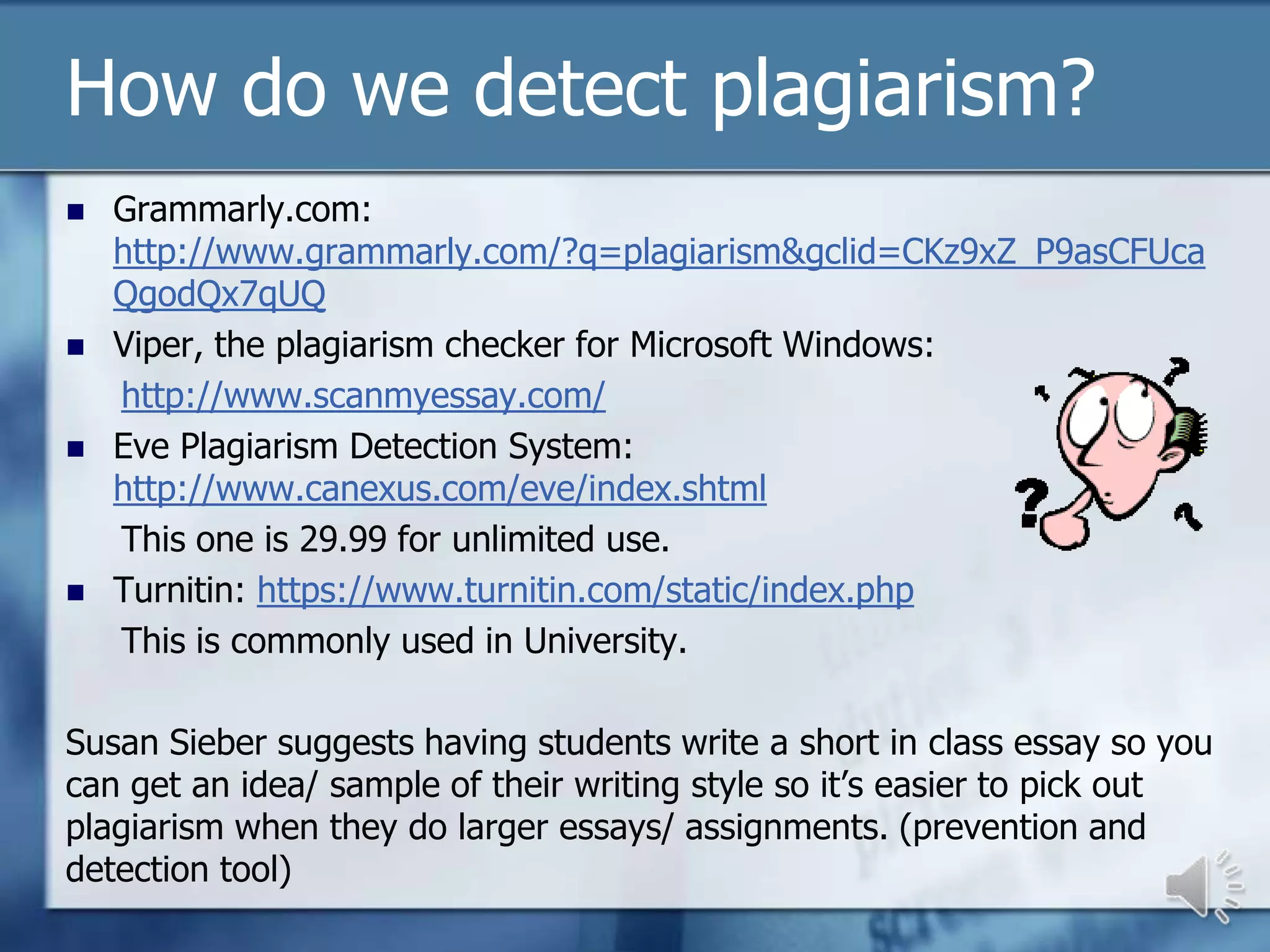
How do we detect plagiarism?
   Grammarly.com:
    http://www.grammarly.com/?q=plagiarism&gclid=CKz9xZ_P9asCFUca
    QgodQx7qUQ
   Viper, the plagiarism checker for Microsoft Windows:
    http://www.scanmyessay.com/
   Eve Plagiarism Detection System:
    http://www.canexus.com/eve/index.shtml
    This one is 29.99 for unlimited use.
   Turnitin: https://www.turnitin.com/static/index.php
    This is commonly used in University.

Susan Sieber suggests having students write a short in class essay so you
can get an idea/ sample of their writing style so it’s easier to pick out
plagiarism when they do larger essays/ assignments. (prevention and
detection tool)
References
iParadigms, LLC. (2011). Plagiarism in the Digital Age: Voices from the
Front Lines: What’s Happening in High Schools Now?. plagiarismdotORG.
Retrieved October 16th, 2011, from http://www.plagiarism.org/index.html

Kelly, Melissa. (n.d.). Integrating the Internet. About.com. Retrieved
October 14, 2011, from
http://712educators.about.com/cs/technology/a/integratetech_2.htm

Put an End to Plagiarism in Your Classroom.(n.d.). Education World.
Retrieved October 14, 2011, from
http://www.educationworld.com/a_curr/curr390.shtml

Sieber, Susan. (Nov.1, 2010). Plagiarism in the classroom: Prevention
rather than detection. Helium. Retrieved October 16, 2011, from
http://www.helium.com/items/1999591-how-to-prevent-plagiarism-in-the-
classroom
Extra Resources for you:
   This article is about one teacher`s battle with
    parents and students in regards to plagiarism:
    http://www.edutopia.org/dispatches-beat-the-
    cheat (retrieved October 18, 2011)


   More strategies for dealing with plagiarism
    for Teachers:
    http://www.virtualsalt.com/antiplag.htm
    (retrieved October 18, 2011)

Plagiarism in the classroom pp presentation

  • 1.
    Internet Plagiarism inthe Classroom By: Shelly Dunsford
  • 2.
    Some statistics foryou…  “approximately 74 percent of students admit plagiarizing at least once during the past school year.”  “more than half the high school students surveyed had used material copied from the Internet in research papers.”  “Fifteen percent said they had turned in reports copied entirely off the Internet -- or purchased on the Internet.”
  • 3.
    Why do studentsPlagiarize?  Intentional vs. • most common type of plagiarism  Unintentional • Happens in higher grades
  • 4.
    Intentional Plagiarism  Thrill/ challenge of trying to get away with plagiarizing.  Lack of time.  Intimidated by/ lack of confidence in their own work.  Their classmates are doing it so why not do it too?
  • 5.
    Unintentional Plagiarism  Theydon’t know how to paraphrase.  Mix up their own notes with notes from their source.  Forget to write down the bibliographical information when researching, and can’t find it again later.  Confusion over expectations and what plagiarizing is.
  • 6.
    So what canwe do as teachers?  Prevention, prevention, and more prevention
  • 7.
    Preventing Intentional Plagiarism  Susan Sieber’s ideas: 1. Use specific/ unique research topics for essays. 2. Have students do lots of brainstorming, outlining, and prewriting within class time.  Plagiarism.org’s ideas: 1. Tell students that their perspectives/analyses are more important than the perspectives of other writers. 2. Their own life experiences give a more interesting spin on the topic than other writer’s work on the same topic.
  • 8.
    Preventing Intentional Plagiarism continued…  Education World suggests: 1. Taking a paper right off the internet and grading it together as a class.
  • 9.
    Preventing Unintentional Plagiarism  Education World suggests to make sure your students: 1. know the specific consequences for plagiarism. 2. All the different forms plagiarism can take. 3. Write the citations next to all of their notes. 4. Give them a handout with clear expectations for citing within the assignment and in the Bibliography
  • 10.
    Preventing Unintentional Plagiarism continued…  Plagiarism.org suggests: Teachers have writing workshops within class time where students can practice skills like paraphrasing or note taking.
  • 11.
    Resources to helpyou with prevention  There are literally hundreds of ways to prevent plagiarism so here are some websites, that I found very useful, for you to check out if you’re looking for more prevention strategies:  http://www.plagiarism.org/index.html  http://www.helium.com/knowledge/36346-plagiarism- in-the-classroom-prevention-rather-than-detection
  • 12.
    How do wedetect plagiarism?  Grammarly.com: http://www.grammarly.com/?q=plagiarism&gclid=CKz9xZ_P9asCFUca QgodQx7qUQ  Viper, the plagiarism checker for Microsoft Windows: http://www.scanmyessay.com/  Eve Plagiarism Detection System: http://www.canexus.com/eve/index.shtml This one is 29.99 for unlimited use.  Turnitin: https://www.turnitin.com/static/index.php This is commonly used in University. Susan Sieber suggests having students write a short in class essay so you can get an idea/ sample of their writing style so it’s easier to pick out plagiarism when they do larger essays/ assignments. (prevention and detection tool)
  • 13.
    References iParadigms, LLC. (2011).Plagiarism in the Digital Age: Voices from the Front Lines: What’s Happening in High Schools Now?. plagiarismdotORG. Retrieved October 16th, 2011, from http://www.plagiarism.org/index.html Kelly, Melissa. (n.d.). Integrating the Internet. About.com. Retrieved October 14, 2011, from http://712educators.about.com/cs/technology/a/integratetech_2.htm Put an End to Plagiarism in Your Classroom.(n.d.). Education World. Retrieved October 14, 2011, from http://www.educationworld.com/a_curr/curr390.shtml Sieber, Susan. (Nov.1, 2010). Plagiarism in the classroom: Prevention rather than detection. Helium. Retrieved October 16, 2011, from http://www.helium.com/items/1999591-how-to-prevent-plagiarism-in-the- classroom
  • 14.
    Extra Resources foryou:  This article is about one teacher`s battle with parents and students in regards to plagiarism: http://www.edutopia.org/dispatches-beat-the- cheat (retrieved October 18, 2011)  More strategies for dealing with plagiarism for Teachers: http://www.virtualsalt.com/antiplag.htm (retrieved October 18, 2011)