PRESENTED BY
 Datta.Ch(15-417)
 Navya.G(15-425)
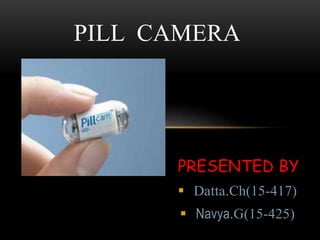
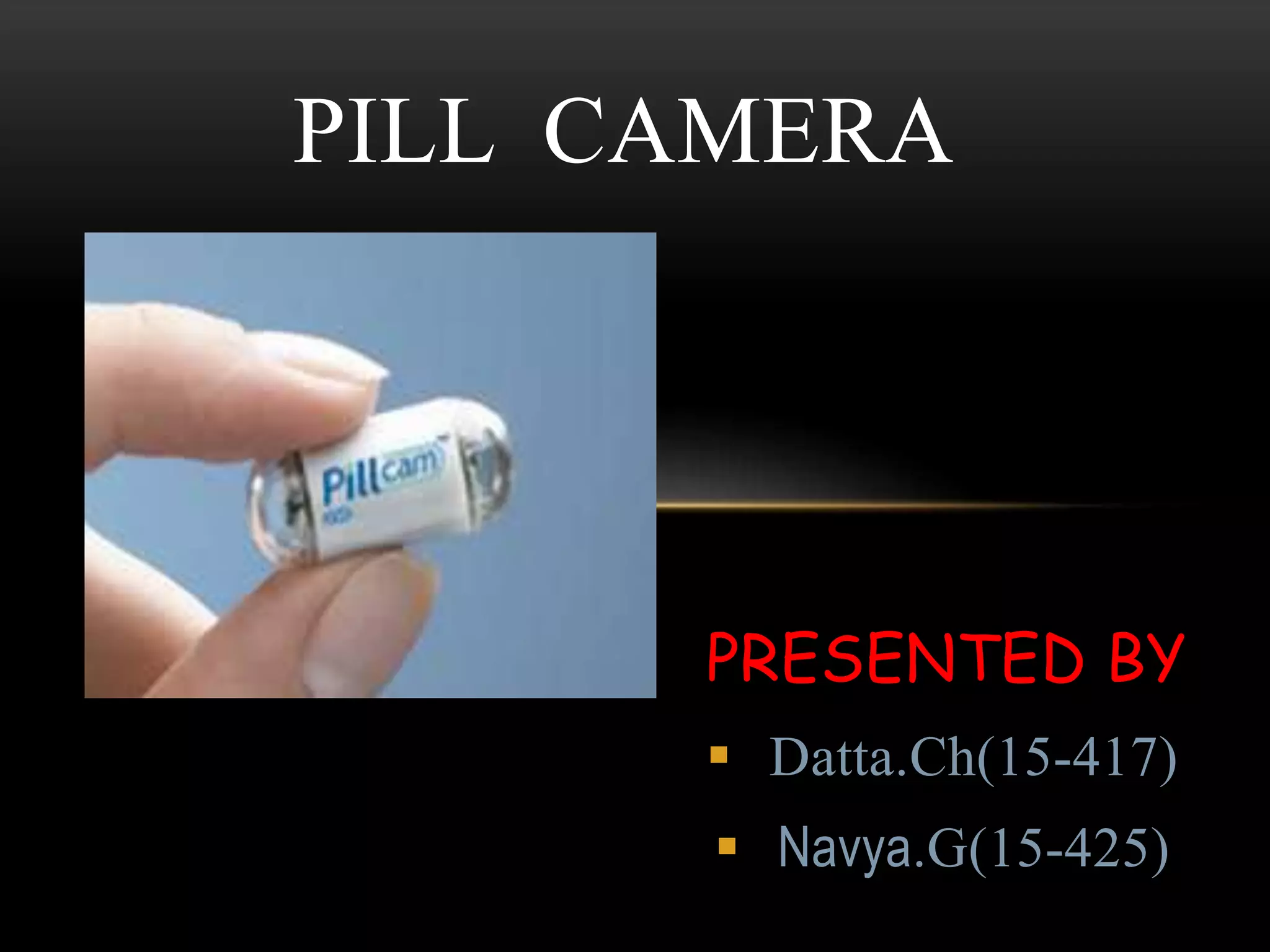
PILL CAMERA
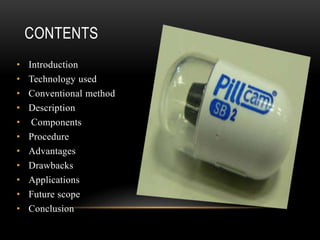
• Introduction
• Technology used
• Conventional method
• Description
• Components
• Procedure
• Advantages
• Drawbacks
• Applications
• Future scope
• Conclusion
CONTENTS
INTRODUCTION TO CAPSULE CAMERA
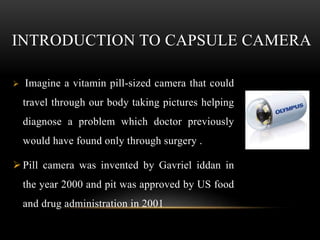
 Imagine a vitamin pill-sized camera that could
travel through our body taking pictures helping
diagnose a problem which doctor previously
would have found only through surgery .
Pill camera was invented by Gavriel iddan in
the year 2000 and pit was approved by US food
and drug administration in 2001
TECHNOLOGIES USED
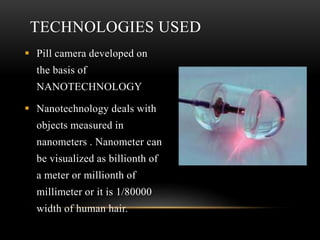
 Pill camera developed on
the basis of
NANOTECHNOLOGY
 Nanotechnology deals with
objects measured in
nanometers . Nanometer can
be visualized as billionth of
a meter or millionth of
millimeter or it is 1/80000
width of human hair.
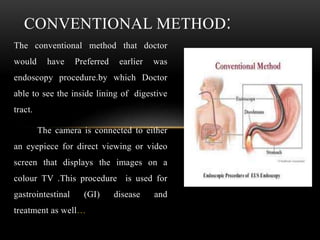
The conventional method that doctor
would have Preferred earlier was
endoscopy procedure.by which Doctor
able to see the inside lining of digestive
tract.
The camera is connected to either
an eyepiece for direct viewing or video
screen that displays the images on a
colour TV .This procedure is used for
gastrointestinal (GI) disease and
treatment as well…
CONVENTIONAL METHOD:
DESCRIPTION
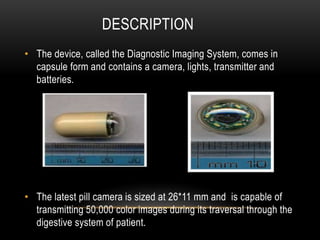
• The device, called the Diagnostic Imaging System, comes in
capsule form and contains a camera, lights, transmitter and
batteries.
• The latest pill camera is sized at 26*11 mm and is capable of
transmitting 50,000 color images during its traversal through the
digestive system of patient.
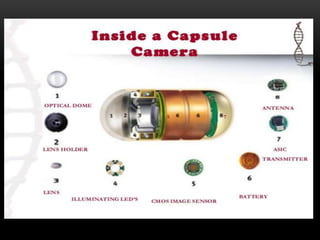
1. OPTICAL DOME
This shape result in easy orientation of the capsule axis
along the central axis of small intestine and so helps propel the
capsule forward easily.
2. Lens holder
The lens holder is that part of the capsule which
accommodates the lens . The lens is tightly fixed to the holder so
that it doesn’t get dislocated anytime.
COMPONENTS:
3.LENS
THE LENS IS AN INTEGRAL COMPONENT OF THE
CAPSULE. IT IS ARRANGED BEHIND THE LIGHT
RECEIVING WINDOW .
4.ILLUMINATING LED’S
AROUND THE LENS & CMOS IMAGE SENSOR,
FOUR LED’S(LIGHT EMITTING DIODES)ARE PRESENT
. THESE PLURAL LIGHTING DEVICES ARE ARRANGED
IN DO NUT SHAPE.
5.CMOS IMAGE SENSOR:
CMOS(COMPLEMENTARY METAL OXIDE SEMICONDUCTOR)
IMAGE SENSOR IS THE MOST IMPORTANT PART OF THE
CAPSULE. IT IS HIGHLY SENSITIVE AND PRODUCES VERY
HIGH QUALITY IMAGES.
IT HAS 140 FIELD OF VIEW AND CAN DIRECT OBJECTS AS
SMALL AS POSSIBLE .
6.BATTERY:
BATTERY USED IN THIS CAPSULE IS BUTTON SHAPED AND
ARE TWO IN NUMBER AS SHOWN. THE BATTERIES ARE
ARRANGED TOGETHER JUST BEHIND THE CMOS IMAGE
SENSOR.
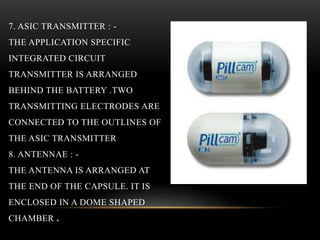
7. ASIC TRANSMITTER : -
THE APPLICATION SPECIFIC
INTEGRATED CIRCUIT
TRANSMITTER IS ARRANGED
BEHIND THE BATTERY .TWO
TRANSMITTING ELECTRODES ARE
CONNECTED TO THE OUTLINES OF
THE ASIC TRANSMITTER
8. ANTENNAE : -
THE ANTENNA IS ARRANGED AT
THE END OF THE CAPSULE. IT IS
ENCLOSED IN A DOME SHAPED
CHAMBER .
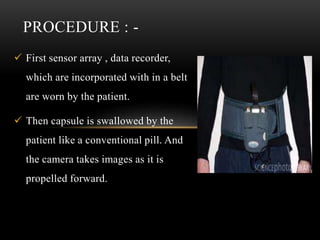
 First sensor array , data recorder,
which are incorporated with in a belt
are worn by the patient.
 Then capsule is swallowed by the
patient like a conventional pill. And
the camera takes images as it is
propelled forward.
PROCEDURE : -
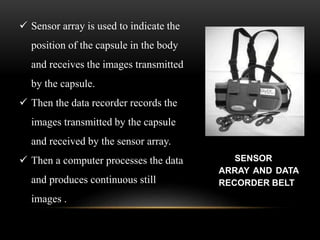
SENSOR
ARRAY AND DATA
RECORDER BELT
 Sensor array is used to indicate the
position of the capsule in the body
and receives the images transmitted
by the capsule.
 Then the data recorder records the
images transmitted by the capsule
and received by the sensor array.
 Then a computer processes the data
and produces continuous still
images .
 Painless , no side affects
 Small size .
 Accurate and effective .
 High quality images .
 Simple procedure.
 Efficient than endoscopy.
 Made with harmless material
ADVANTAGES : -
o Patients with pregnant women face difficulties.
o Impossible to control camera behavior.
o Very expensive.
o Not reusable.
DRAWBACKS :-
 Crohn’s Disease
 Mal-absorption Disorders
 Biggest impact in medical industry
 Nano robots perform delicate surgeries
APPLICATIONS : -
FUTURE SCOPE
• Zooming and auto focus
• Reduction in size
• Cost effective
• Longer battery life
CONCLUSION:
 The capsule endoscopy is a pioneering concept
for medical technology of the 21st century.
 The endoscopy system is the first if its kind to
be able to provide non-invasive imaging of the
entire small intestine.
 It has revolutionized the field of diagnostic
imaging to a great extent and has proved to be
of great help to physicians all over the world .
pill came
pill came

pill came

  • 1.
    PRESENTED BY  Datta.Ch(15-417) Navya.G(15-425) PILL CAMERA
  • 2.
    • Introduction • Technologyused • Conventional method • Description • Components • Procedure • Advantages • Drawbacks • Applications • Future scope • Conclusion CONTENTS
  • 3.
    INTRODUCTION TO CAPSULECAMERA  Imagine a vitamin pill-sized camera that could travel through our body taking pictures helping diagnose a problem which doctor previously would have found only through surgery . Pill camera was invented by Gavriel iddan in the year 2000 and pit was approved by US food and drug administration in 2001
  • 4.
    TECHNOLOGIES USED  Pillcamera developed on the basis of NANOTECHNOLOGY  Nanotechnology deals with objects measured in nanometers . Nanometer can be visualized as billionth of a meter or millionth of millimeter or it is 1/80000 width of human hair.
  • 5.
    The conventional methodthat doctor would have Preferred earlier was endoscopy procedure.by which Doctor able to see the inside lining of digestive tract. The camera is connected to either an eyepiece for direct viewing or video screen that displays the images on a colour TV .This procedure is used for gastrointestinal (GI) disease and treatment as well… CONVENTIONAL METHOD:
  • 6.
    DESCRIPTION • The device,called the Diagnostic Imaging System, comes in capsule form and contains a camera, lights, transmitter and batteries. • The latest pill camera is sized at 26*11 mm and is capable of transmitting 50,000 color images during its traversal through the digestive system of patient.
  • 8.
    1. OPTICAL DOME Thisshape result in easy orientation of the capsule axis along the central axis of small intestine and so helps propel the capsule forward easily. 2. Lens holder The lens holder is that part of the capsule which accommodates the lens . The lens is tightly fixed to the holder so that it doesn’t get dislocated anytime. COMPONENTS:
  • 9.
    3.LENS THE LENS ISAN INTEGRAL COMPONENT OF THE CAPSULE. IT IS ARRANGED BEHIND THE LIGHT RECEIVING WINDOW . 4.ILLUMINATING LED’S AROUND THE LENS & CMOS IMAGE SENSOR, FOUR LED’S(LIGHT EMITTING DIODES)ARE PRESENT . THESE PLURAL LIGHTING DEVICES ARE ARRANGED IN DO NUT SHAPE.
  • 10.
    5.CMOS IMAGE SENSOR: CMOS(COMPLEMENTARYMETAL OXIDE SEMICONDUCTOR) IMAGE SENSOR IS THE MOST IMPORTANT PART OF THE CAPSULE. IT IS HIGHLY SENSITIVE AND PRODUCES VERY HIGH QUALITY IMAGES. IT HAS 140 FIELD OF VIEW AND CAN DIRECT OBJECTS AS SMALL AS POSSIBLE . 6.BATTERY: BATTERY USED IN THIS CAPSULE IS BUTTON SHAPED AND ARE TWO IN NUMBER AS SHOWN. THE BATTERIES ARE ARRANGED TOGETHER JUST BEHIND THE CMOS IMAGE SENSOR.
  • 11.
    7. ASIC TRANSMITTER: - THE APPLICATION SPECIFIC INTEGRATED CIRCUIT TRANSMITTER IS ARRANGED BEHIND THE BATTERY .TWO TRANSMITTING ELECTRODES ARE CONNECTED TO THE OUTLINES OF THE ASIC TRANSMITTER 8. ANTENNAE : - THE ANTENNA IS ARRANGED AT THE END OF THE CAPSULE. IT IS ENCLOSED IN A DOME SHAPED CHAMBER .
  • 12.
     First sensorarray , data recorder, which are incorporated with in a belt are worn by the patient.  Then capsule is swallowed by the patient like a conventional pill. And the camera takes images as it is propelled forward. PROCEDURE : -
  • 13.
    SENSOR ARRAY AND DATA RECORDERBELT  Sensor array is used to indicate the position of the capsule in the body and receives the images transmitted by the capsule.  Then the data recorder records the images transmitted by the capsule and received by the sensor array.  Then a computer processes the data and produces continuous still images .
  • 14.
     Painless ,no side affects  Small size .  Accurate and effective .  High quality images .  Simple procedure.  Efficient than endoscopy.  Made with harmless material ADVANTAGES : -
  • 15.
    o Patients withpregnant women face difficulties. o Impossible to control camera behavior. o Very expensive. o Not reusable. DRAWBACKS :-
  • 16.
     Crohn’s Disease Mal-absorption Disorders  Biggest impact in medical industry  Nano robots perform delicate surgeries APPLICATIONS : -
  • 17.
    FUTURE SCOPE • Zoomingand auto focus • Reduction in size • Cost effective • Longer battery life
  • 18.
    CONCLUSION:  The capsuleendoscopy is a pioneering concept for medical technology of the 21st century.  The endoscopy system is the first if its kind to be able to provide non-invasive imaging of the entire small intestine.  It has revolutionized the field of diagnostic imaging to a great extent and has proved to be of great help to physicians all over the world .