1
2
1. Certificate
2. Acknowledgement
3. Introduction
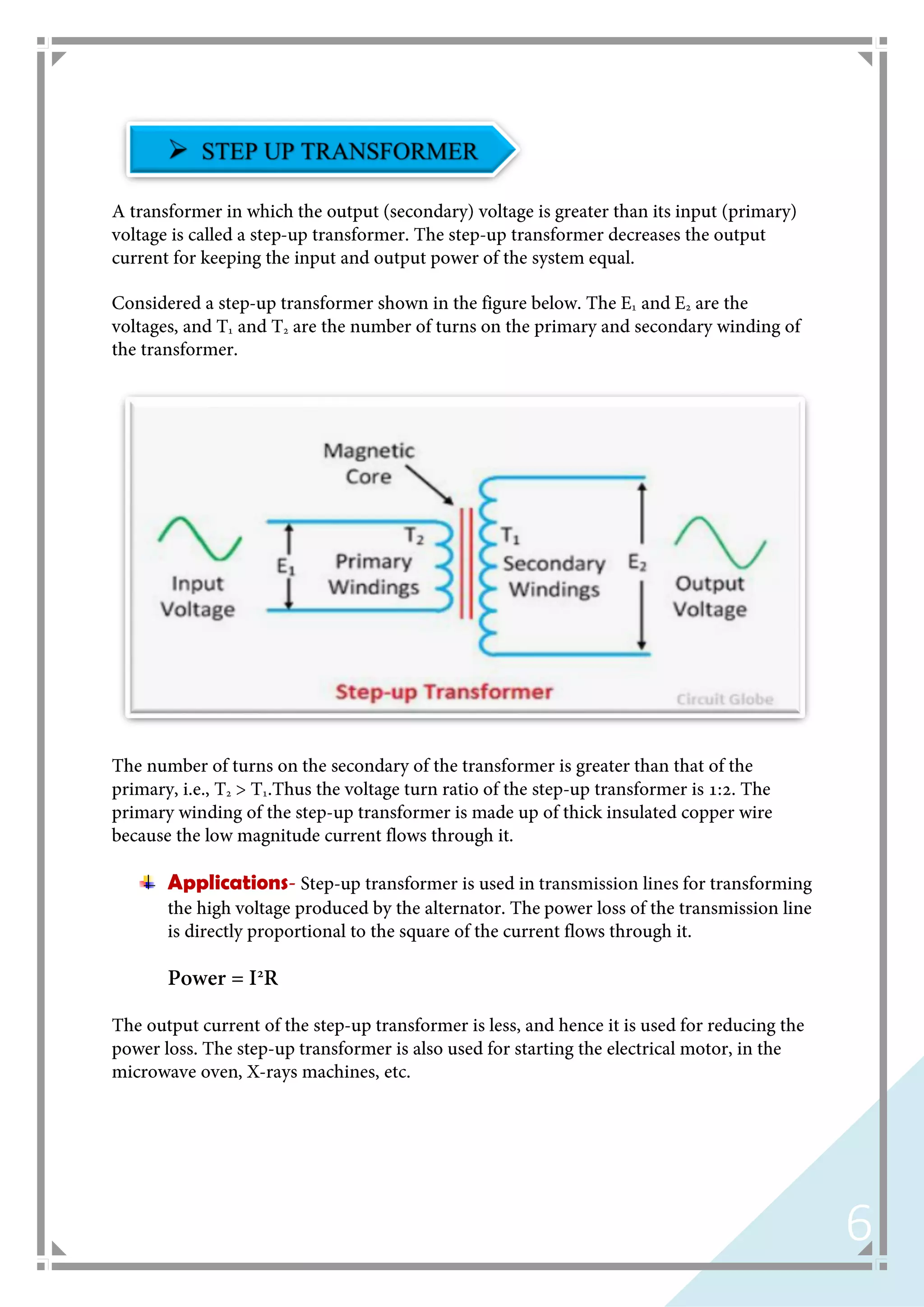
4. Step up transformer
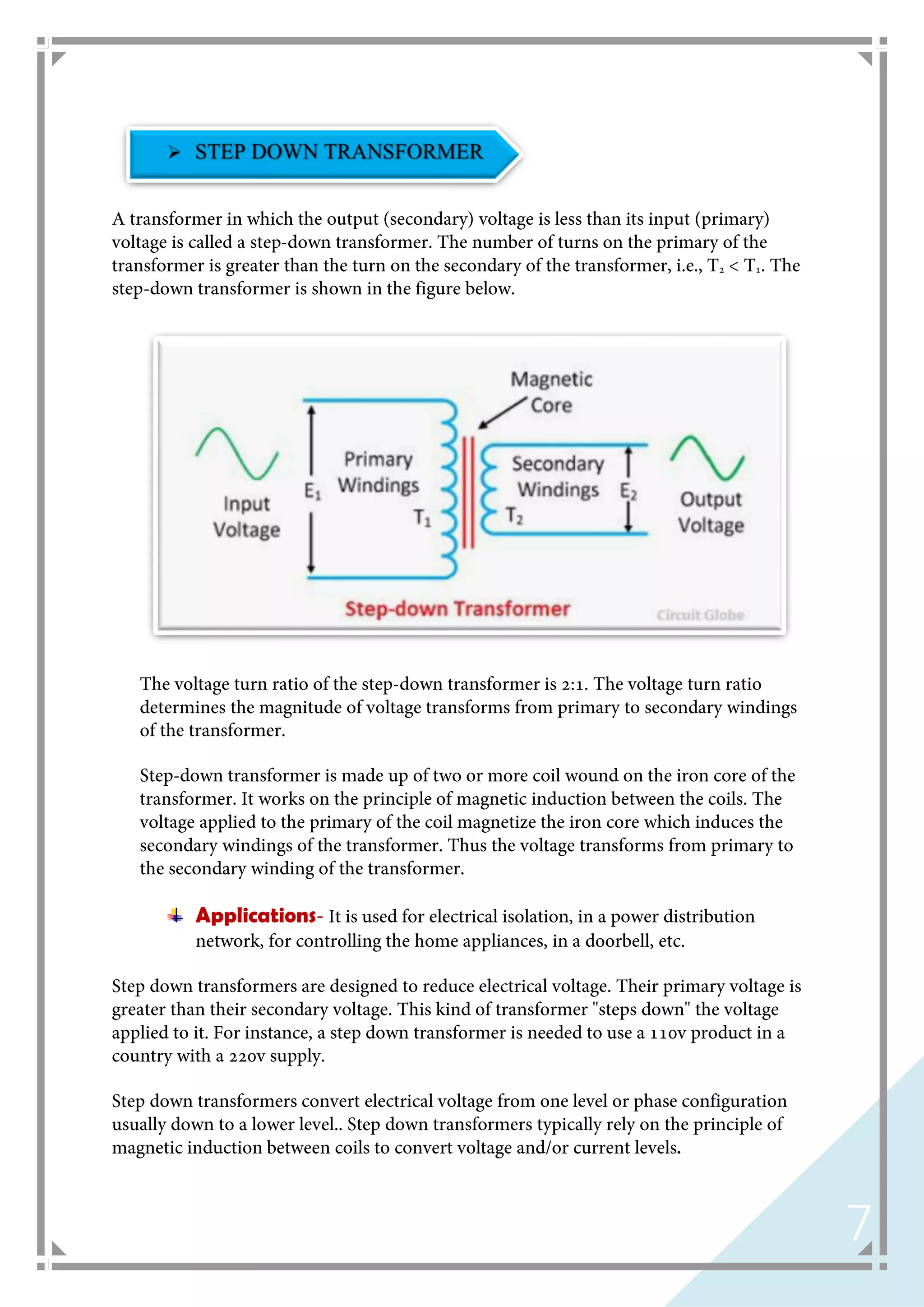
5. Step down transformer
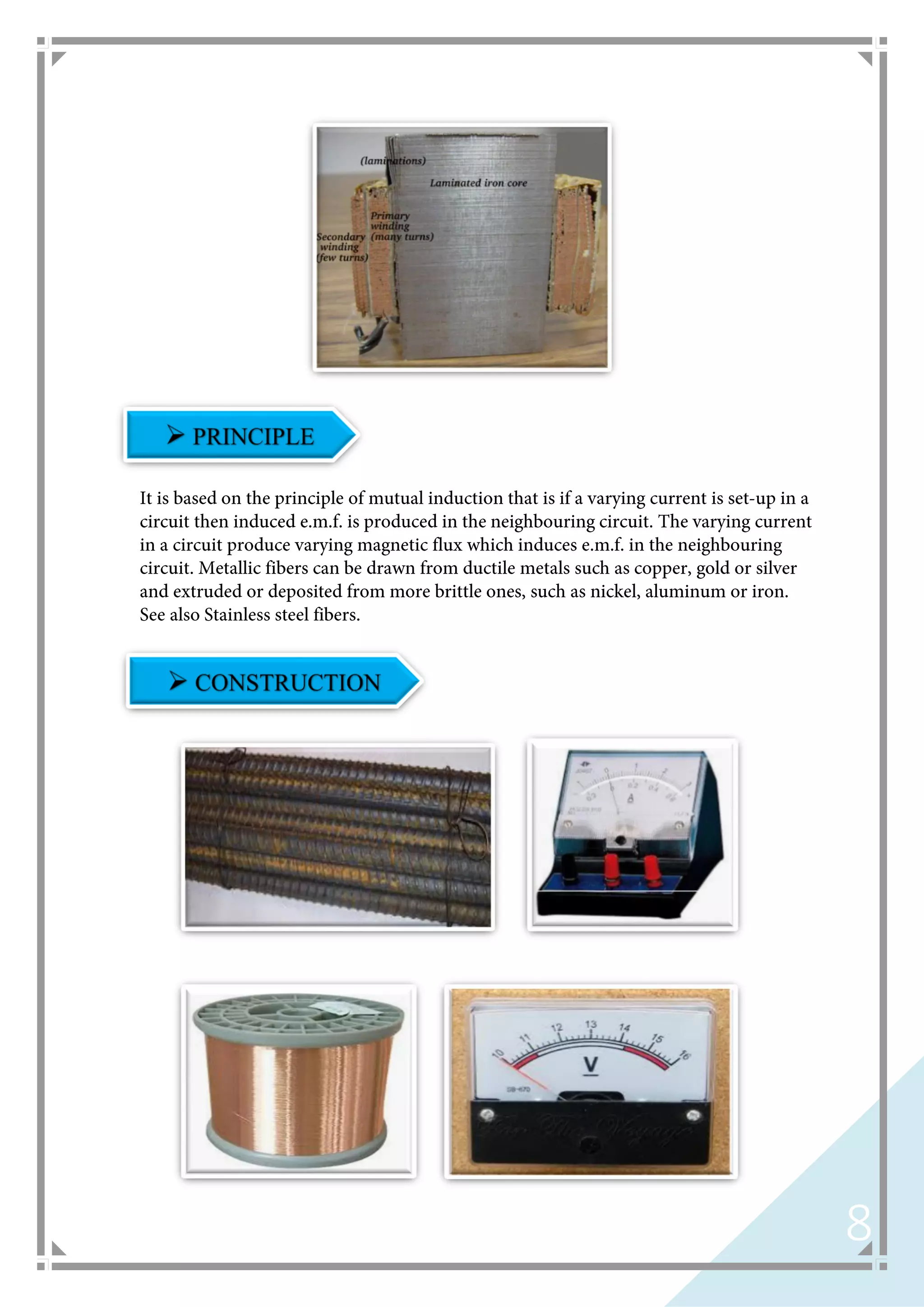
6. Principle
7. Construction
8. Theory
9. Procedure followed
10. Energy loses
11. Efficiency
12. Circuit diagram
13. Uses of transformers
14. Precautions
15. Sources of error
3
THIS IS TO CERTIFY THAT
DIVYAANSH MEHTA XII S1 – 06
–
OF
– SARALA BIRLA PUBLIC SCHOOL
HAS SUCCESSFULLY COMPLETED THE ASSIGNED PROJECT IN THE
SUBJECT OF
PHYSICS ENTITLED “TRANSFORMER & ITS WORKING “.
FOR THE
– 2017-2018.
EXTERNAL TEACHER SEAL OF
INVIGILATOR INCHARGE INSTITUTION
4
“There are times when silence speaks so much more loudly
than words of praise to only as good as belittle a person, whose
words do not express, but only put a veneer over true feelings,
which are of gratitude at this point of time.”
On the very outset of this project, I would like to extend my sincere & heartfelt obligation towards all
personages who have helped me in this endeavor. Without their active guidance and help, cooperation &
encouragement, I would not have made headway in the project. The success and final outcome of this
project required a lot of guidance and assistance from many people and I am extremely fortunate to have
got this all along the completion of my project work.
I am ineffably indebted and extremely thankful to Mr. Santosh Kumar for giving me the opportunity to
work on this project and for his conscientious guidance and encouragement to complete this project.
I owe my profound gratitude to our project guide Mr. Suman kumar & Mr. Deepak , who took keen
interest in my project work and guided me all along, till the completion of my project work by providing
all the necessary information and supervising me through all the processes involved. Working all along,
under their supervision brought me immense knowledge both practically and theoretically which would
be of great help to me ahead in my life.
I also acknowledge with a deep sense of reverence my gratitude towards my parents and member of
family, who have always supported me morally as well as economically.
At last but not least gratitude goes to my friends who directly or indirectly helped me to complete the
project. Any omission in this brief acknowledgement does not mean lack of gratitude.
Thanking you – Divyaansh mehta
5
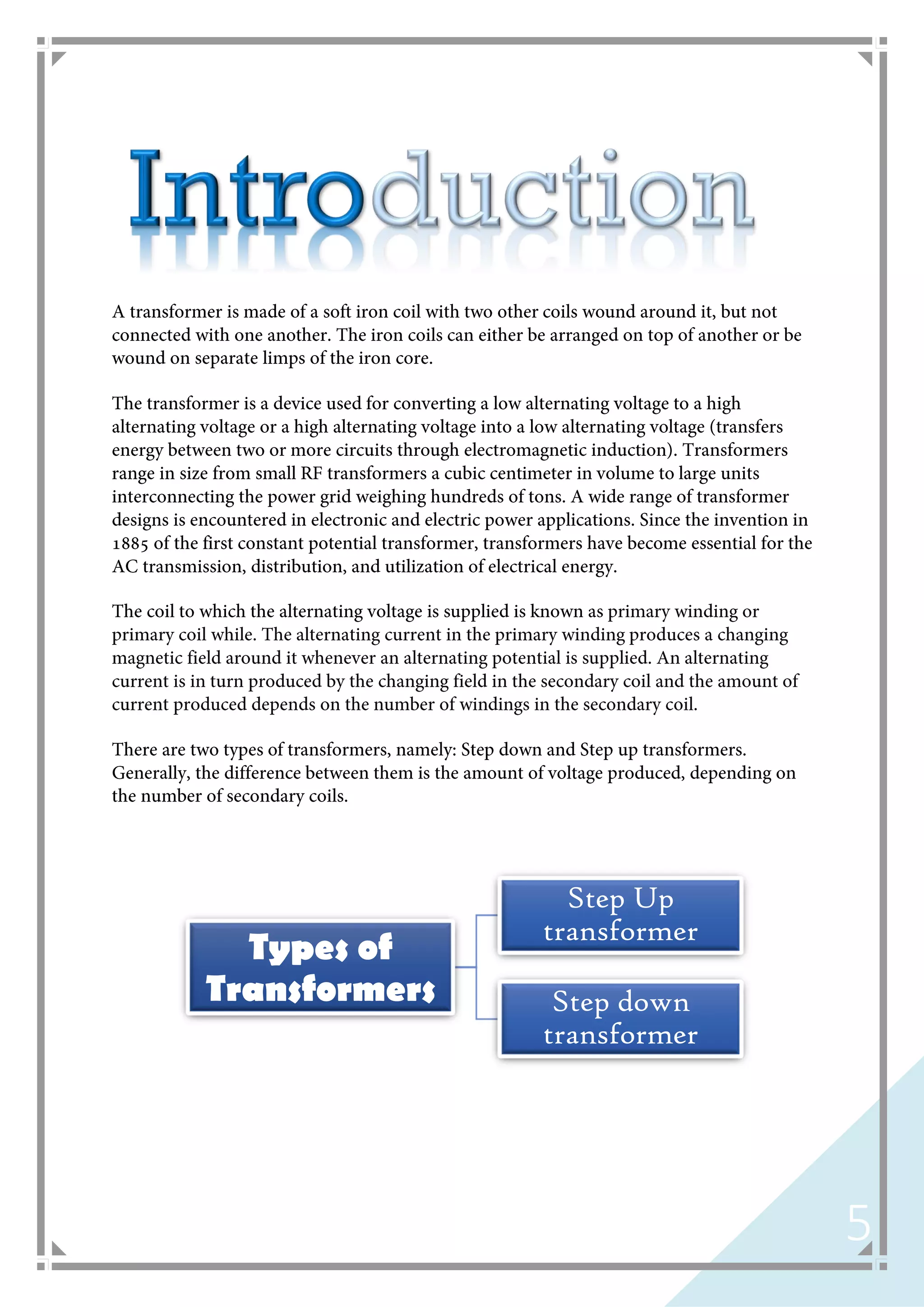
Types of
Transformers
Step Up
transformer
Step down
transformer
6
Applications
7
Applications
8
PRINCIPLE
9
ф
ф
ф
10
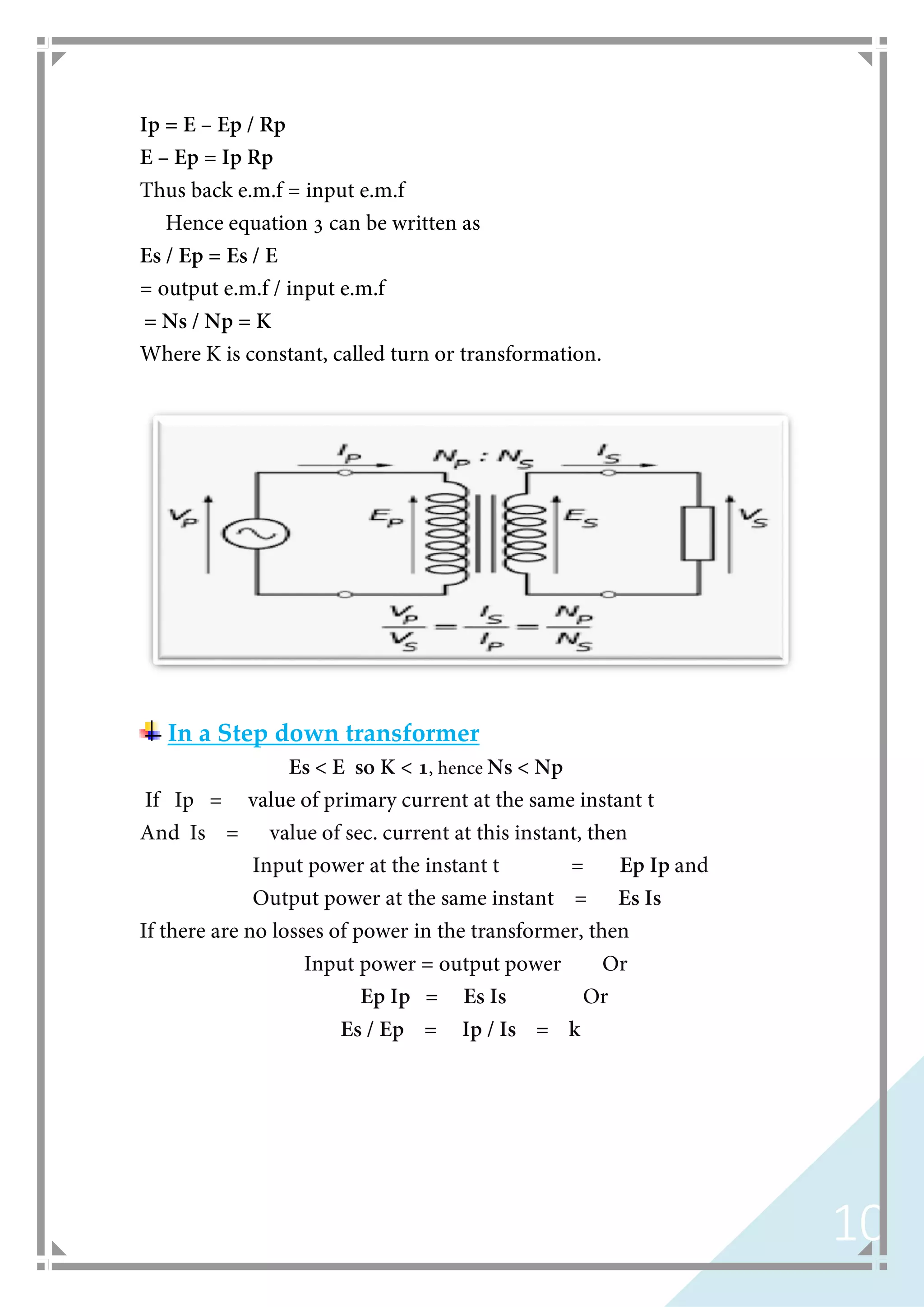
In a Step down transformer
11
12
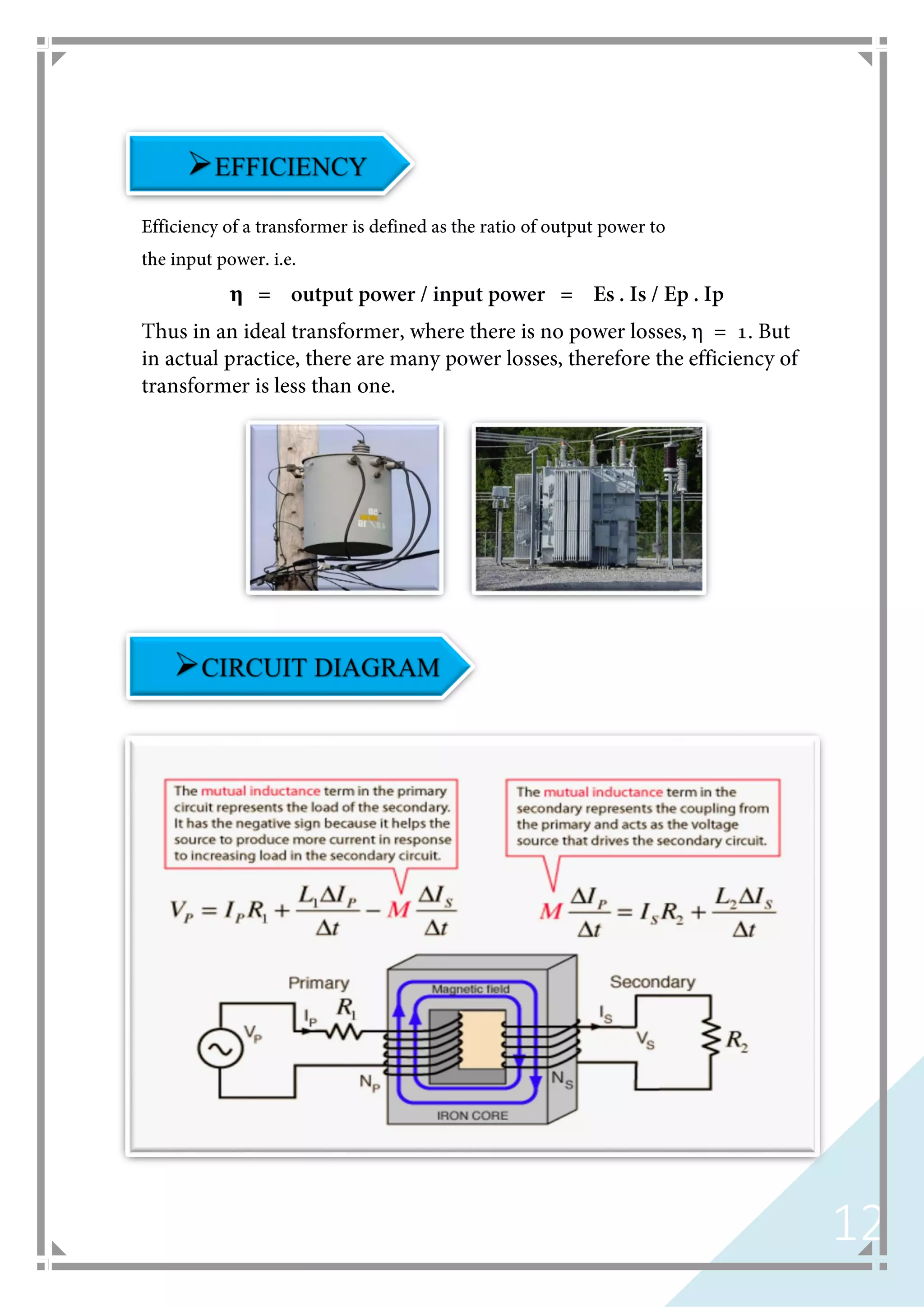
η
η
13
14
15
ENGINES:
 Google Scholar
 Bing
 Google
WEBSITES :
 www.scribd.com
 www.slideshare.com
 www.wikipedia.com
 www.allaboutcircuits.com
 www.eceandtransformers.com
 www.CBSEprojects.com
 www.blogspot.com/stepdowntransformer
MISCELLANEOUS:
 Physics textbook for class XII ,1st Edition NCERT
 Practical physics for class XII, Laxmi Publications
16
The output voltage of the transformer across
the secondary coil depends upon the ratio
(Ns/Np) with respect to the input voltage .
The output voltage of the transformer across
the secondary coil depends upon the ratio (Ns/N
p) with respect to the input voltage .
There is a loss of power between input and
output coil of a transformer.

Physics INVESTIGATORY PROJECT

  • 1.
  • 2.
    2 1. Certificate 2. Acknowledgement 3.Introduction 4. Step up transformer 5. Step down transformer 6. Principle 7. Construction 8. Theory 9. Procedure followed 10. Energy loses 11. Efficiency 12. Circuit diagram 13. Uses of transformers 14. Precautions 15. Sources of error
  • 3.
    3 THIS IS TOCERTIFY THAT DIVYAANSH MEHTA XII S1 – 06 – OF – SARALA BIRLA PUBLIC SCHOOL HAS SUCCESSFULLY COMPLETED THE ASSIGNED PROJECT IN THE SUBJECT OF PHYSICS ENTITLED “TRANSFORMER & ITS WORKING “. FOR THE – 2017-2018. EXTERNAL TEACHER SEAL OF INVIGILATOR INCHARGE INSTITUTION
  • 4.
    4 “There are timeswhen silence speaks so much more loudly than words of praise to only as good as belittle a person, whose words do not express, but only put a veneer over true feelings, which are of gratitude at this point of time.” On the very outset of this project, I would like to extend my sincere & heartfelt obligation towards all personages who have helped me in this endeavor. Without their active guidance and help, cooperation & encouragement, I would not have made headway in the project. The success and final outcome of this project required a lot of guidance and assistance from many people and I am extremely fortunate to have got this all along the completion of my project work. I am ineffably indebted and extremely thankful to Mr. Santosh Kumar for giving me the opportunity to work on this project and for his conscientious guidance and encouragement to complete this project. I owe my profound gratitude to our project guide Mr. Suman kumar & Mr. Deepak , who took keen interest in my project work and guided me all along, till the completion of my project work by providing all the necessary information and supervising me through all the processes involved. Working all along, under their supervision brought me immense knowledge both practically and theoretically which would be of great help to me ahead in my life. I also acknowledge with a deep sense of reverence my gratitude towards my parents and member of family, who have always supported me morally as well as economically. At last but not least gratitude goes to my friends who directly or indirectly helped me to complete the project. Any omission in this brief acknowledgement does not mean lack of gratitude. Thanking you – Divyaansh mehta
  • 5.
  • 6.
  • 7.
  • 8.
  • 9.
  • 10.
    10 In a Stepdown transformer
  • 11.
  • 12.
  • 13.
  • 14.
  • 15.
    15 ENGINES:  Google Scholar Bing  Google WEBSITES :  www.scribd.com  www.slideshare.com  www.wikipedia.com  www.allaboutcircuits.com  www.eceandtransformers.com  www.CBSEprojects.com  www.blogspot.com/stepdowntransformer MISCELLANEOUS:  Physics textbook for class XII ,1st Edition NCERT  Practical physics for class XII, Laxmi Publications
  • 16.
    16 The output voltageof the transformer across the secondary coil depends upon the ratio (Ns/Np) with respect to the input voltage . The output voltage of the transformer across the secondary coil depends upon the ratio (Ns/N p) with respect to the input voltage . There is a loss of power between input and output coil of a transformer.