B.Ed. Course 205 = 15 PHYSICS
Pedagogy of School Subject
Dr. Namita S. Sahare
Tilak College of Education , Pune
India
WAVE INTERACTIONS
205 – 15 : Physics
Understanding disciplines and
Pedagogy of school subject
Introduction
• Sound originates from vibrating or oscillating
objects, such as vocal cord in the human
throat , the skin of the drum .
• The vibrations are then passed through a
medium, they strike the ear drum, the ear
converts the vibrations into nerve impulses,
which pass to brain where they are
interpreted as sounds.
Some Definitions
• Periodic Motion
• Oscillatory or Vibrating Motion
• Oscillation
• Period of Oscillation(T)
• Frequency(n)
• Amplitude
Types of Waves
• Mechanical Waves: Waves which require material
medium for their propagation are mechanical
waves.
Ex.: Waves over a stretched string, waves on the
water surface, sound waves, etc
• Electromagnetic Waves: One of the waves that
are propagated by simultaneous periodic
variations of electric and magnetic field intensity.
Ex.: Light Waves, Radio Waves, Xrays, etc
Sensors
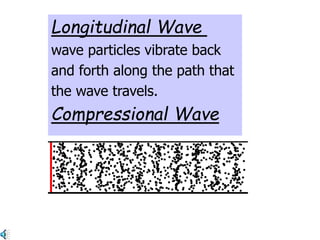
Longitudinal Wave
wave particles vibrate back
and forth along the path that
the wave travels.
Compressional Wave
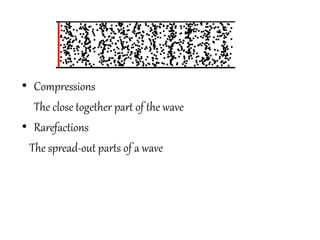
• Compressions
The close together part of the wave
• Rarefactions
The spread-out parts of a wave
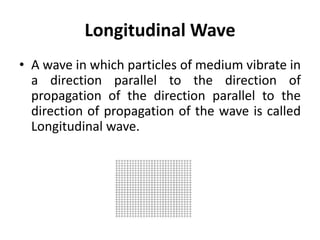
Longitudinal Wave
• A wave in which particles of medium vibrate in
a direction parallel to the direction of
propagation of the direction parallel to the
direction of propagation of the wave is called
Longitudinal wave.
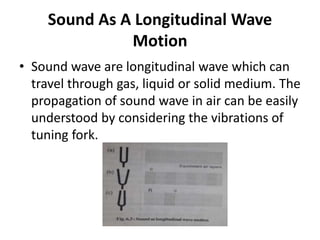
Sound As A Longitudinal Wave
Motion
• Sound wave are longitudinal wave which can
travel through gas, liquid or solid medium. The
propagation of sound wave in air can be easily
understood by considering the vibrations of
tuning fork.
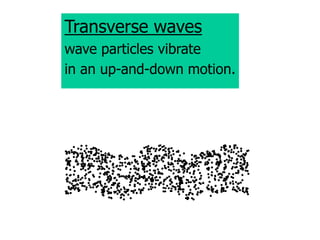
Transverse waves
wave particles vibrate
in an up-and-down motion.
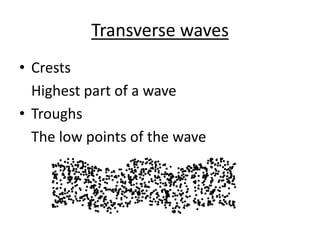
Transverse waves
• Crests
Highest part of a wave
• Troughs
The low points of the wave
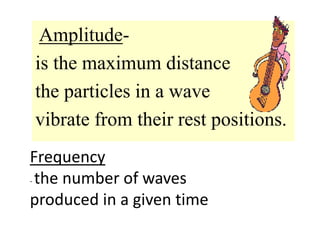
Amplitude-
is the maximum distance
the particles in a wave
vibrate from their rest positions.
Frequency
- the number of waves
produced in a given time
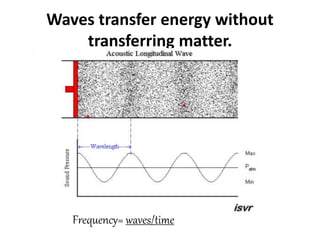
Waves transfer energy without
transferring matter.
Frequency= waves/time
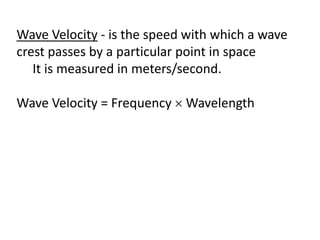
Wave Velocity - is the speed with which a wave
crest passes by a particular point in space
It is measured in meters/second.
Wave Velocity = Frequency  Wavelength
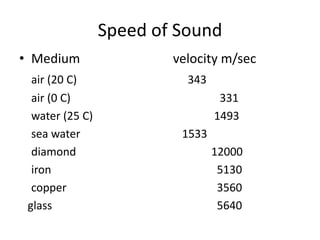
Speed of Sound
• Medium velocity m/sec
air (20 C) 343
air (0 C) 331
water (25 C) 1493
sea water 1533
diamond 12000
iron 5130
copper 3560
glass 5640
II. Properties of Sound
Pitch
- description of how high or low
the sound seems to a person
Loudness-
how loud or soft a sound is
perceived to be.
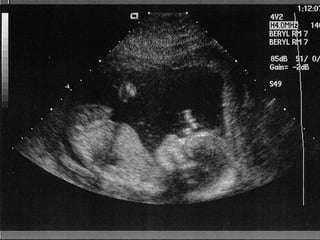
Ultrasound
- sound waves with frequencies above the
normal human range of hearing.
Sounds in the range from 20-100kHz
Infrasound
- sounds with frequencies below the
normal human range of hearing.
Sounds in the 20-200 Hz range
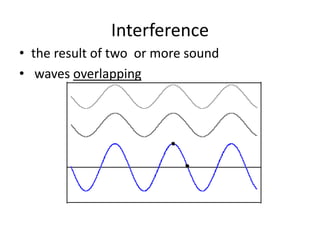
Interference
• the result of two or more sound
• waves overlapping
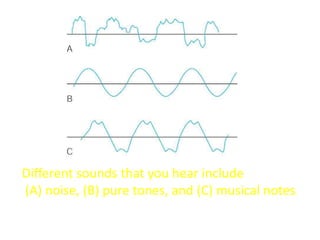
Different sounds that you hear include
(A) noise, (B) pure tones, and (C) musical notes.
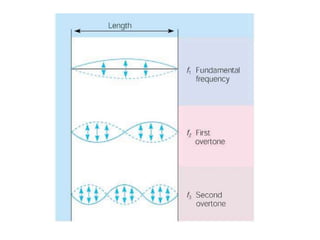
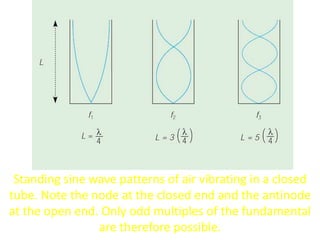
Standing sine wave patterns of air vibrating in a closed
tube. Note the node at the closed end and the antinode
at the open end. Only odd multiples of the fundamental
are therefore possible.
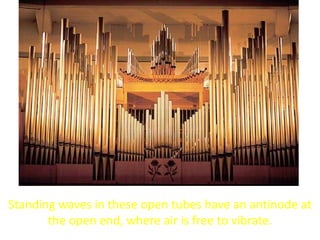
Standing waves in these open tubes have an antinode at
the open end, where air is free to vibrate.
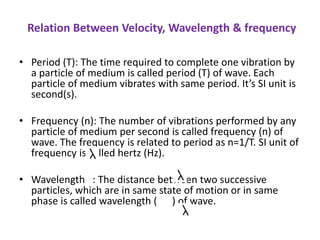
Relation Between Velocity, Wavelength & frequency
• Period (T): The time required to complete one vibration by
a particle of medium is called period (T) of wave. Each
particle of medium vibrates with same period. It’s SI unit is
second(s).
• Frequency (n): The number of vibrations performed by any
particle of medium per second is called frequency (n) of
wave. The frequency is related to period as n=1/T. SI unit of
frequency is called hertz (Hz).
• Wavelength : The distance between two successive
particles, which are in same state of motion or in same
phase is called wavelength ( ) of wave.
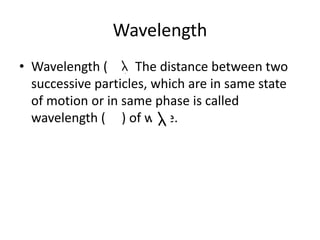
Wavelength
• Wavelength ( ): The distance between two
successive particles, which are in same state
of motion or in same phase is called
wavelength ( ) of wave.
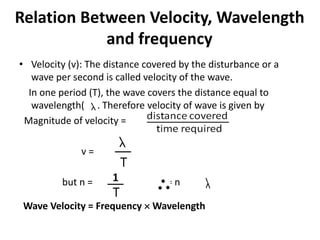
Relation Between Velocity, Wavelength
and frequency
• Velocity (v): The distance covered by the disturbance or a
wave per second is called velocity of the wave.
In one period (T), the wave covers the distance equal to
wavelength( ). Therefore velocity of wave is given by
Magnitude of velocity =
v =
but n = v = n
Wave Velocity = Frequency  Wavelength
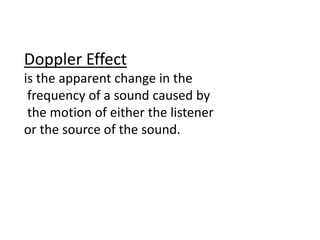
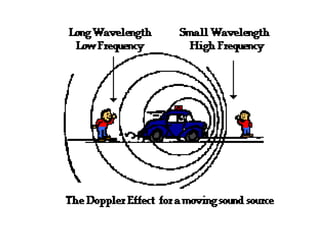
Doppler Effect
is the apparent change in the
frequency of a sound caused by
the motion of either the listener
or the source of the sound.
• Sounds from Moving Sources.
– A moving source of sound or a moving observer
experiences an apparent shift of frequency
called the Doppler Effect.
– If the source is moving as fast or faster than the
speed of sound, the sound waves pile up into a
shock wave called a sonic boom.
– A sonic boom sounds very much like the
pressure wave from an explosion

Physics sound.pptx

  • 1.
    B.Ed. Course 205= 15 PHYSICS Pedagogy of School Subject Dr. Namita S. Sahare Tilak College of Education , Pune India
  • 2.
    WAVE INTERACTIONS 205 –15 : Physics Understanding disciplines and Pedagogy of school subject
  • 3.
    Introduction • Sound originatesfrom vibrating or oscillating objects, such as vocal cord in the human throat , the skin of the drum . • The vibrations are then passed through a medium, they strike the ear drum, the ear converts the vibrations into nerve impulses, which pass to brain where they are interpreted as sounds.
  • 4.
    Some Definitions • PeriodicMotion • Oscillatory or Vibrating Motion • Oscillation • Period of Oscillation(T) • Frequency(n) • Amplitude
  • 5.
    Types of Waves •Mechanical Waves: Waves which require material medium for their propagation are mechanical waves. Ex.: Waves over a stretched string, waves on the water surface, sound waves, etc • Electromagnetic Waves: One of the waves that are propagated by simultaneous periodic variations of electric and magnetic field intensity. Ex.: Light Waves, Radio Waves, Xrays, etc
  • 6.
  • 7.
    Longitudinal Wave wave particlesvibrate back and forth along the path that the wave travels. Compressional Wave
  • 8.
    • Compressions The closetogether part of the wave • Rarefactions The spread-out parts of a wave
  • 9.
    Longitudinal Wave • Awave in which particles of medium vibrate in a direction parallel to the direction of propagation of the direction parallel to the direction of propagation of the wave is called Longitudinal wave.
  • 10.
    Sound As ALongitudinal Wave Motion • Sound wave are longitudinal wave which can travel through gas, liquid or solid medium. The propagation of sound wave in air can be easily understood by considering the vibrations of tuning fork.
  • 11.
    Transverse waves wave particlesvibrate in an up-and-down motion.
  • 12.
    Transverse waves • Crests Highestpart of a wave • Troughs The low points of the wave
  • 13.
    Amplitude- is the maximumdistance the particles in a wave vibrate from their rest positions. Frequency - the number of waves produced in a given time
  • 14.
    Waves transfer energywithout transferring matter. Frequency= waves/time
  • 15.
    Wave Velocity -is the speed with which a wave crest passes by a particular point in space It is measured in meters/second. Wave Velocity = Frequency  Wavelength
  • 16.
    Speed of Sound •Medium velocity m/sec air (20 C) 343 air (0 C) 331 water (25 C) 1493 sea water 1533 diamond 12000 iron 5130 copper 3560 glass 5640
  • 17.
    II. Properties ofSound Pitch - description of how high or low the sound seems to a person Loudness- how loud or soft a sound is perceived to be.
  • 18.
    Ultrasound - sound waveswith frequencies above the normal human range of hearing. Sounds in the range from 20-100kHz Infrasound - sounds with frequencies below the normal human range of hearing. Sounds in the 20-200 Hz range
  • 20.
    Interference • the resultof two or more sound • waves overlapping
  • 21.
    Different sounds thatyou hear include (A) noise, (B) pure tones, and (C) musical notes.
  • 23.
    Standing sine wavepatterns of air vibrating in a closed tube. Note the node at the closed end and the antinode at the open end. Only odd multiples of the fundamental are therefore possible.
  • 24.
    Standing waves inthese open tubes have an antinode at the open end, where air is free to vibrate.
  • 25.
    Relation Between Velocity,Wavelength & frequency • Period (T): The time required to complete one vibration by a particle of medium is called period (T) of wave. Each particle of medium vibrates with same period. It’s SI unit is second(s). • Frequency (n): The number of vibrations performed by any particle of medium per second is called frequency (n) of wave. The frequency is related to period as n=1/T. SI unit of frequency is called hertz (Hz). • Wavelength : The distance between two successive particles, which are in same state of motion or in same phase is called wavelength ( ) of wave.
  • 26.
    Wavelength • Wavelength (): The distance between two successive particles, which are in same state of motion or in same phase is called wavelength ( ) of wave.
  • 27.
    Relation Between Velocity,Wavelength and frequency • Velocity (v): The distance covered by the disturbance or a wave per second is called velocity of the wave. In one period (T), the wave covers the distance equal to wavelength( ). Therefore velocity of wave is given by Magnitude of velocity = v = but n = v = n Wave Velocity = Frequency  Wavelength
  • 28.
    Doppler Effect is theapparent change in the frequency of a sound caused by the motion of either the listener or the source of the sound.
  • 30.
    • Sounds fromMoving Sources. – A moving source of sound or a moving observer experiences an apparent shift of frequency called the Doppler Effect. – If the source is moving as fast or faster than the speed of sound, the sound waves pile up into a shock wave called a sonic boom. – A sonic boom sounds very much like the pressure wave from an explosion