Module 3:
Aristotle vs. Galileo
Aristotle- explained the behaviour of an object, such as a rock,
in terms of the “essential nature” of that object. For Aristotle, a
non-measurable force existed within an object that compelled it
to behave in a certain manner. A stone, for example, was
classified by Aristotle as a heavy object, while fire was defined
as a light object.
Aristotle’s- account of motion can be found in the Physics. By
motion, Aristotle (384-322 B.C.E.) understands any kind of
change. He defines motion as the actuality of a potentiality.
Initially, Aristotle's definition seems to involve a contradiction.
However, commentators on the works of Aristotle, such as St.
Thomas Aquinas, maintain that this is the only way to define
motion.
“Rocks will normally move
downwards”.
According to Aristotle, the motion of physical bodies is of
two types: natural motion and violent motion.
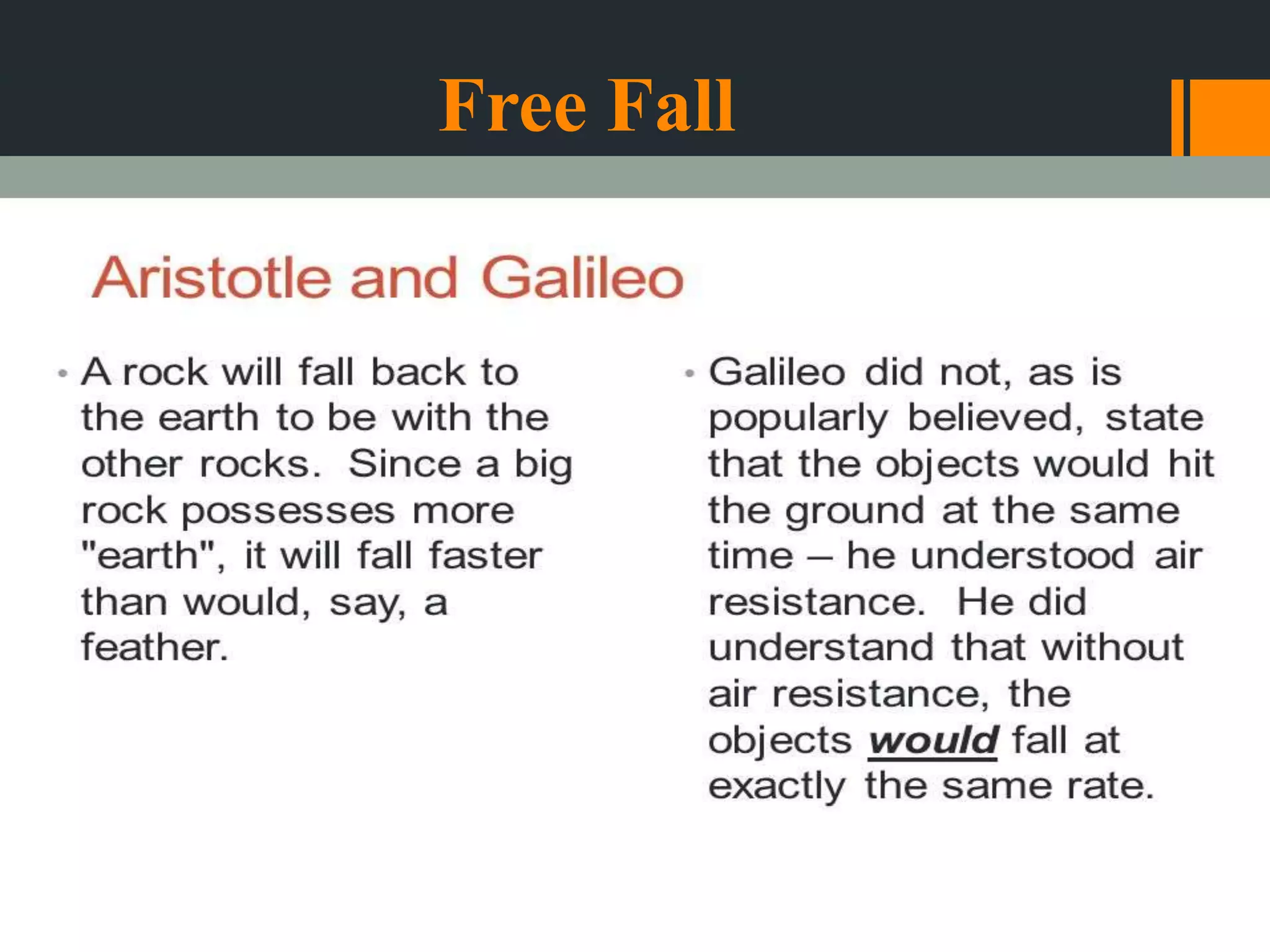
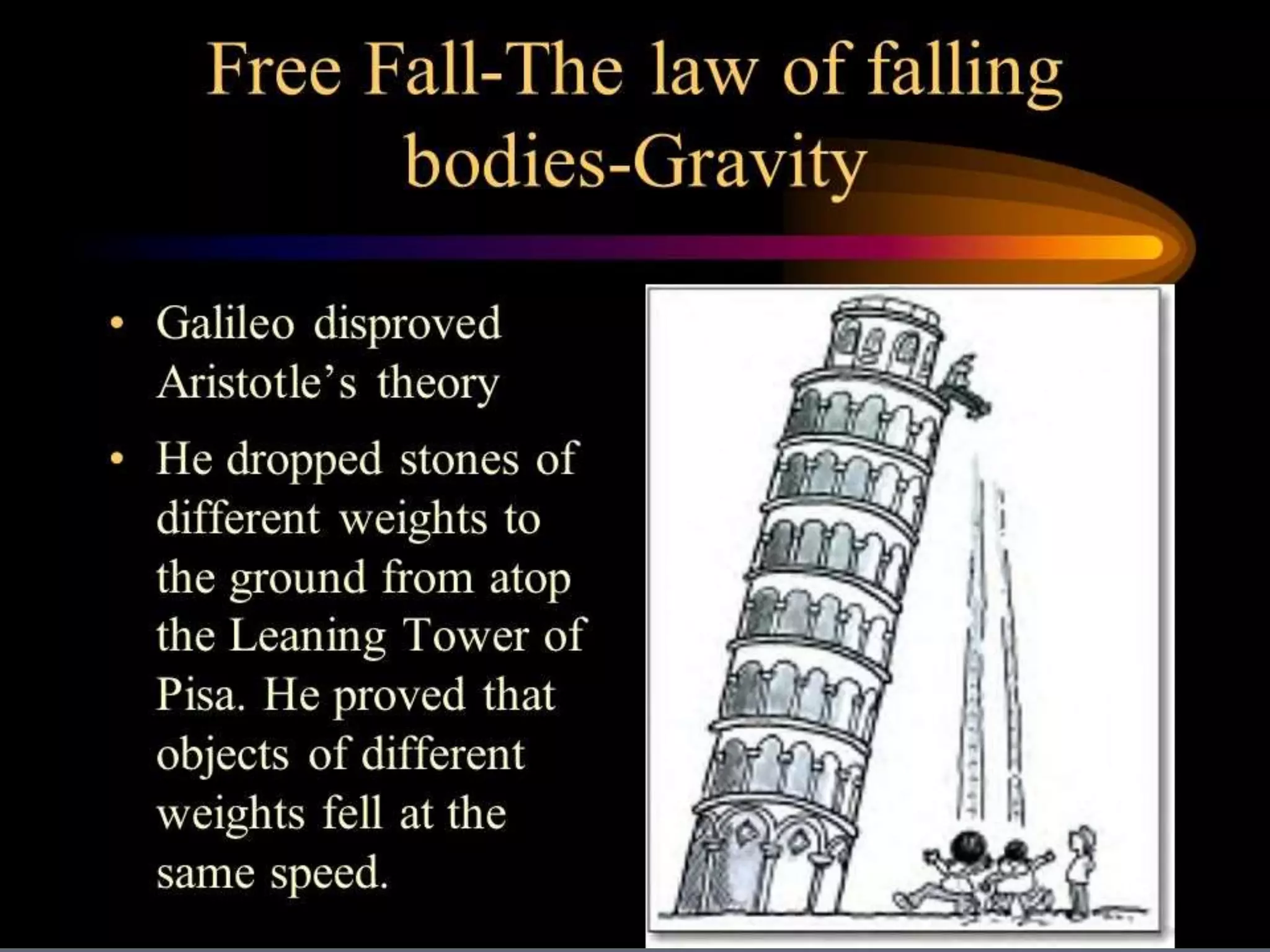
Free Fall
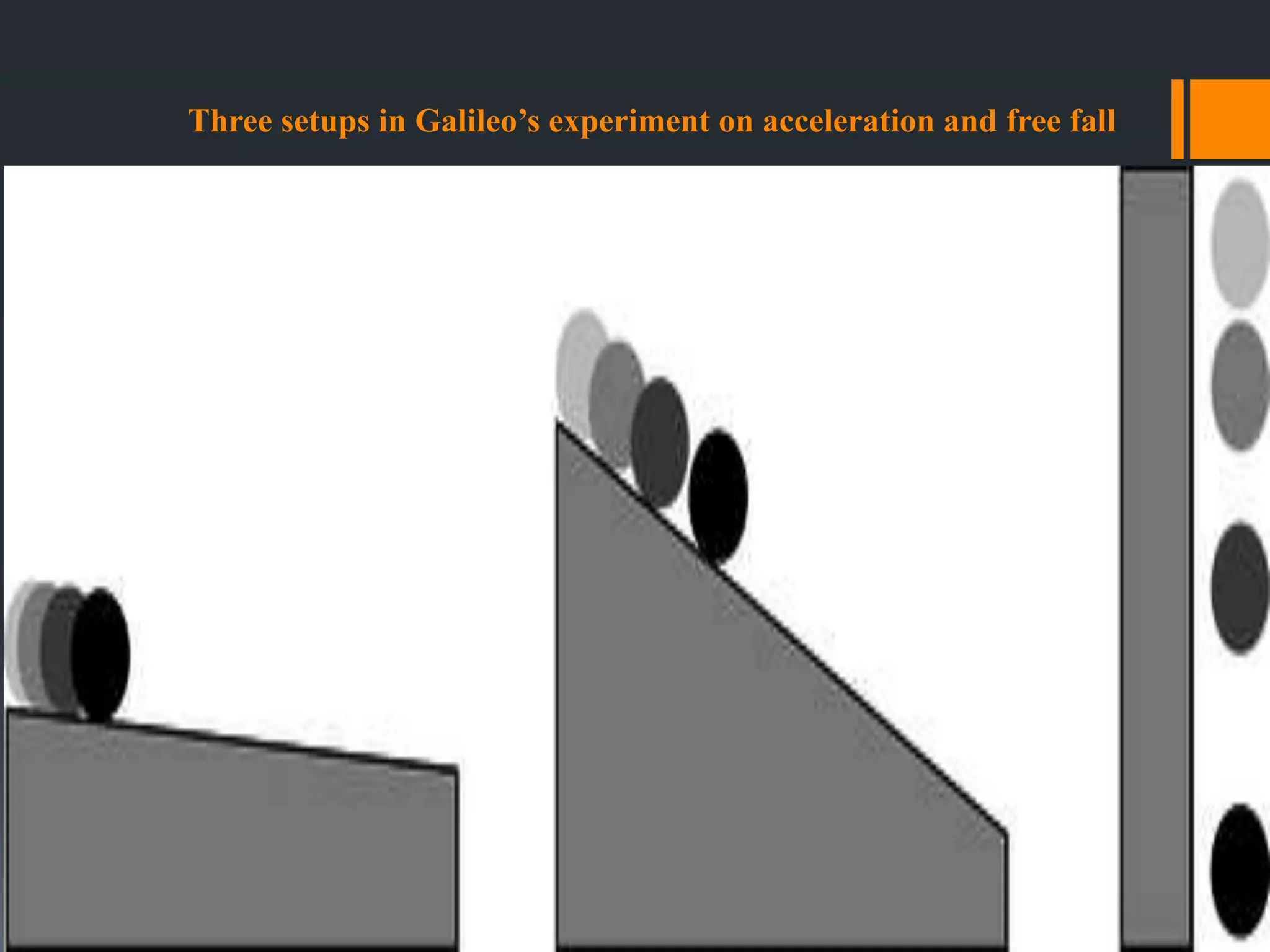
Three setups in Galileo’s experiment on acceleration and free fall
• Projectile Motion
 Aristotle
-Initial impetus is supplied to an object,
making it move a new region.
 Galileo
-A projectile moves in constant horizontal
motion simultaneously with a constant
vertical acceleration.
• Motion Graphs
Physical Science about Aristotle Vs. Galileo

Physical Science about Aristotle Vs. Galileo

  • 1.
  • 2.
    Aristotle- explained thebehaviour of an object, such as a rock, in terms of the “essential nature” of that object. For Aristotle, a non-measurable force existed within an object that compelled it to behave in a certain manner. A stone, for example, was classified by Aristotle as a heavy object, while fire was defined as a light object. Aristotle’s- account of motion can be found in the Physics. By motion, Aristotle (384-322 B.C.E.) understands any kind of change. He defines motion as the actuality of a potentiality. Initially, Aristotle's definition seems to involve a contradiction. However, commentators on the works of Aristotle, such as St. Thomas Aquinas, maintain that this is the only way to define motion.
  • 3.
    “Rocks will normallymove downwards”.
  • 4.
    According to Aristotle,the motion of physical bodies is of two types: natural motion and violent motion.
  • 6.
  • 10.
    Three setups inGalileo’s experiment on acceleration and free fall
  • 11.
  • 12.
     Aristotle -Initial impetusis supplied to an object, making it move a new region.  Galileo -A projectile moves in constant horizontal motion simultaneously with a constant vertical acceleration.
  • 15.