DEFINITION OF
PHYSICAL FITNESS
“ The ability to carry out daily tasks (work and
play) with vigour and alertness, without undue
fatigue and with ample energy to enjoy
leisure-time pursuits and to meet unforeseen
emergencies” (Clarke 1976)
COMPONENTS OF FITNESS
• Fitness needs to be expressed in terms
that are much more specific and clearly
understood. These terms are called the
components of fitness.
• This is the collective expression for
various aspects of fitness.
THE COMPONENTS OF FITNESS
The ‘health-related’ components are:
• cardio-respiratory endurance
• muscular strength
• (local) muscular endurance
• anaerobic power (associated with speed)
• flexibility
• body composition
THE COMPONENTS OF FITNESS
Motor-skill related components:
• muscular power
• speed
• agility
• co-ordination
• balance
• reaction time
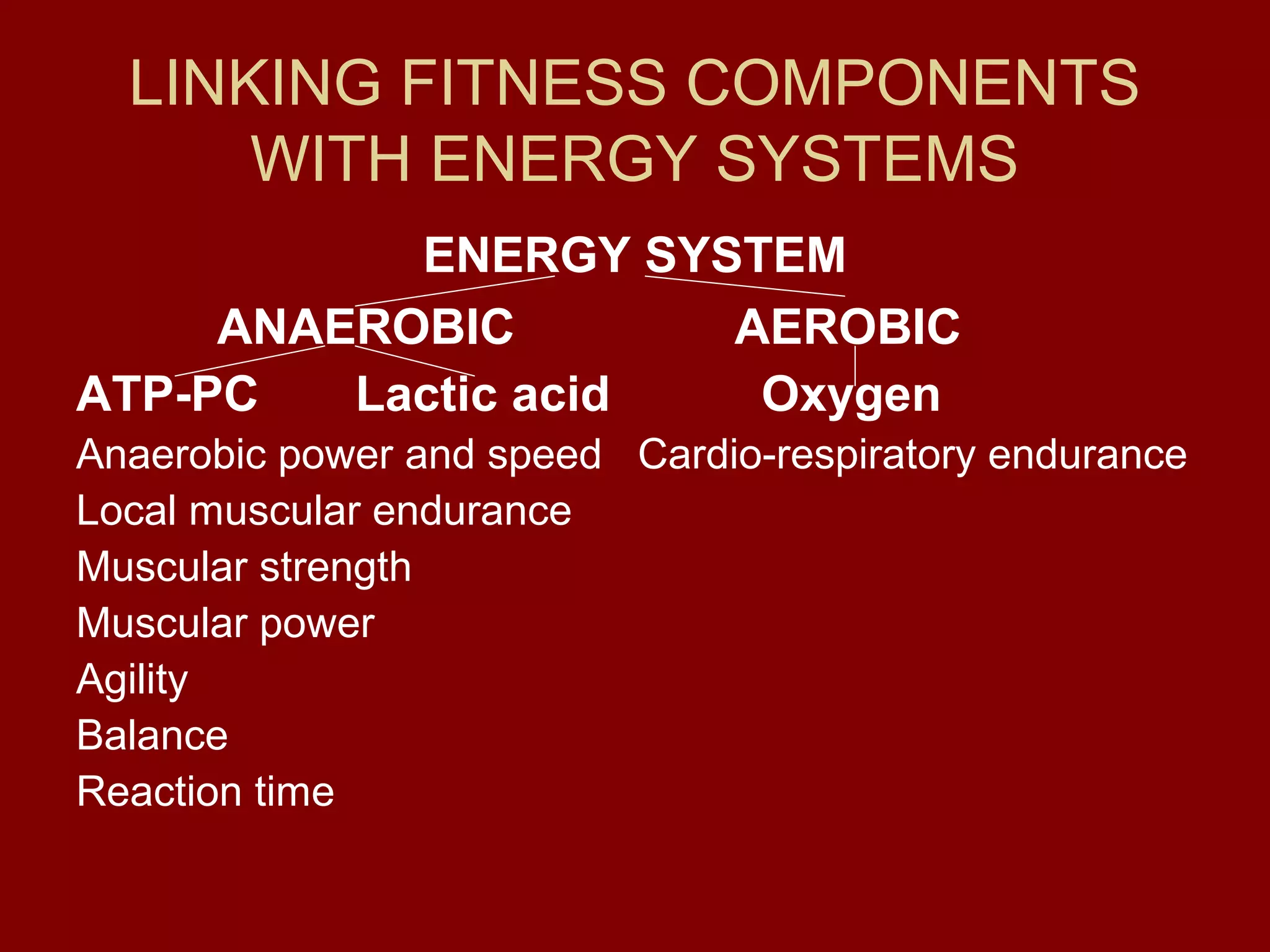
LINKING FITNESS COMPONENTS
WITH ENERGY SYSTEMS
ENERGY SYSTEM
ANAEROBIC AEROBIC
ATP-PC Lactic acid Oxygen
Anaerobic power and speed Cardio-respiratory endurance
Local muscular endurance
Muscular strength
Muscular power
Agility
Balance
Reaction time
CARDIO-RESPIRATORY ENDURANCE
• Ability of the heart, lungs and blood
vessels to deliver oxygen to the muscles
and remove wastes
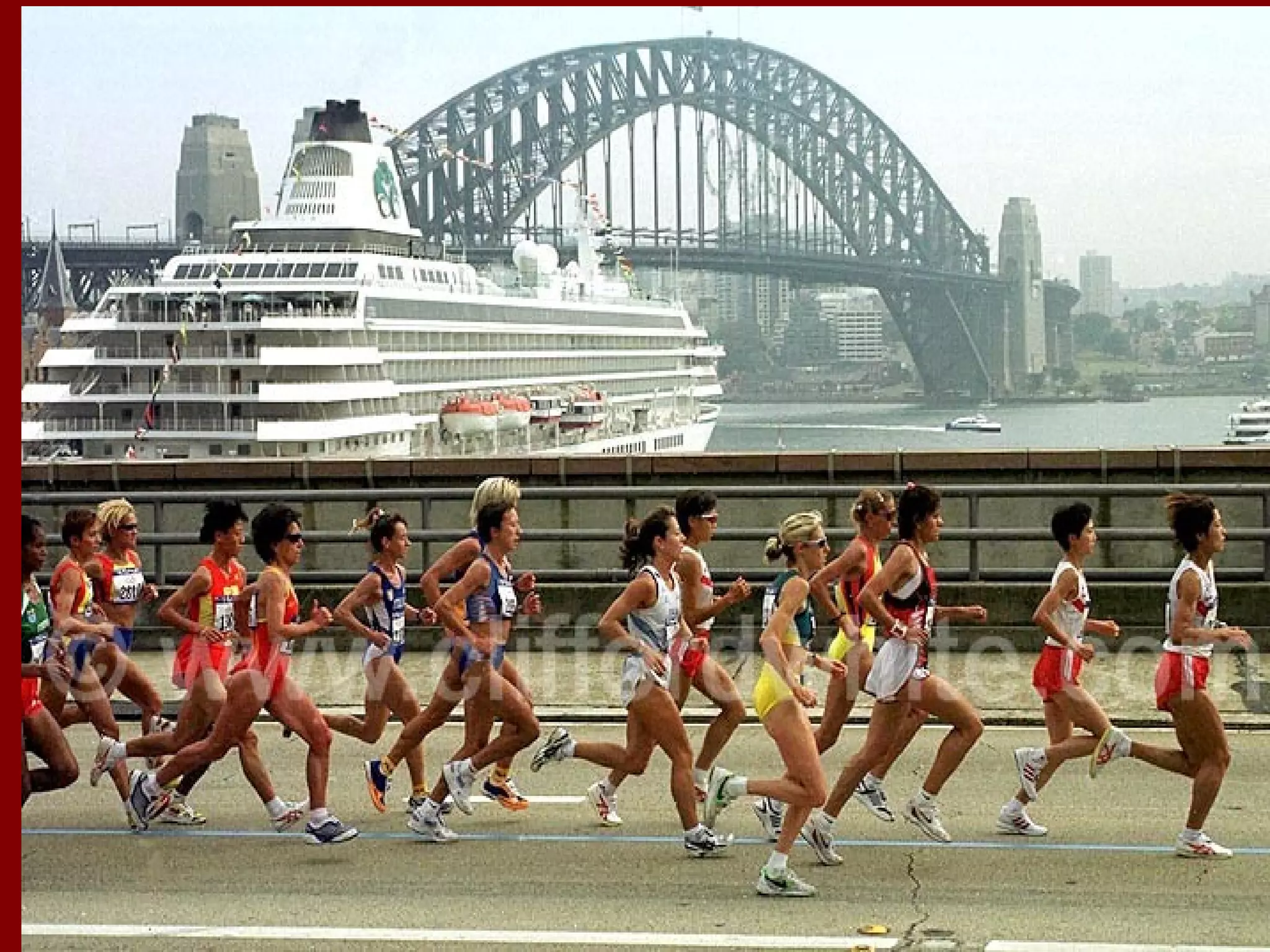
• Is most evident at rest; sustained activity
involving the whole body, such as running,
swimming and cycling long distances; and
during recovery
MUSCULAR STRENGTH
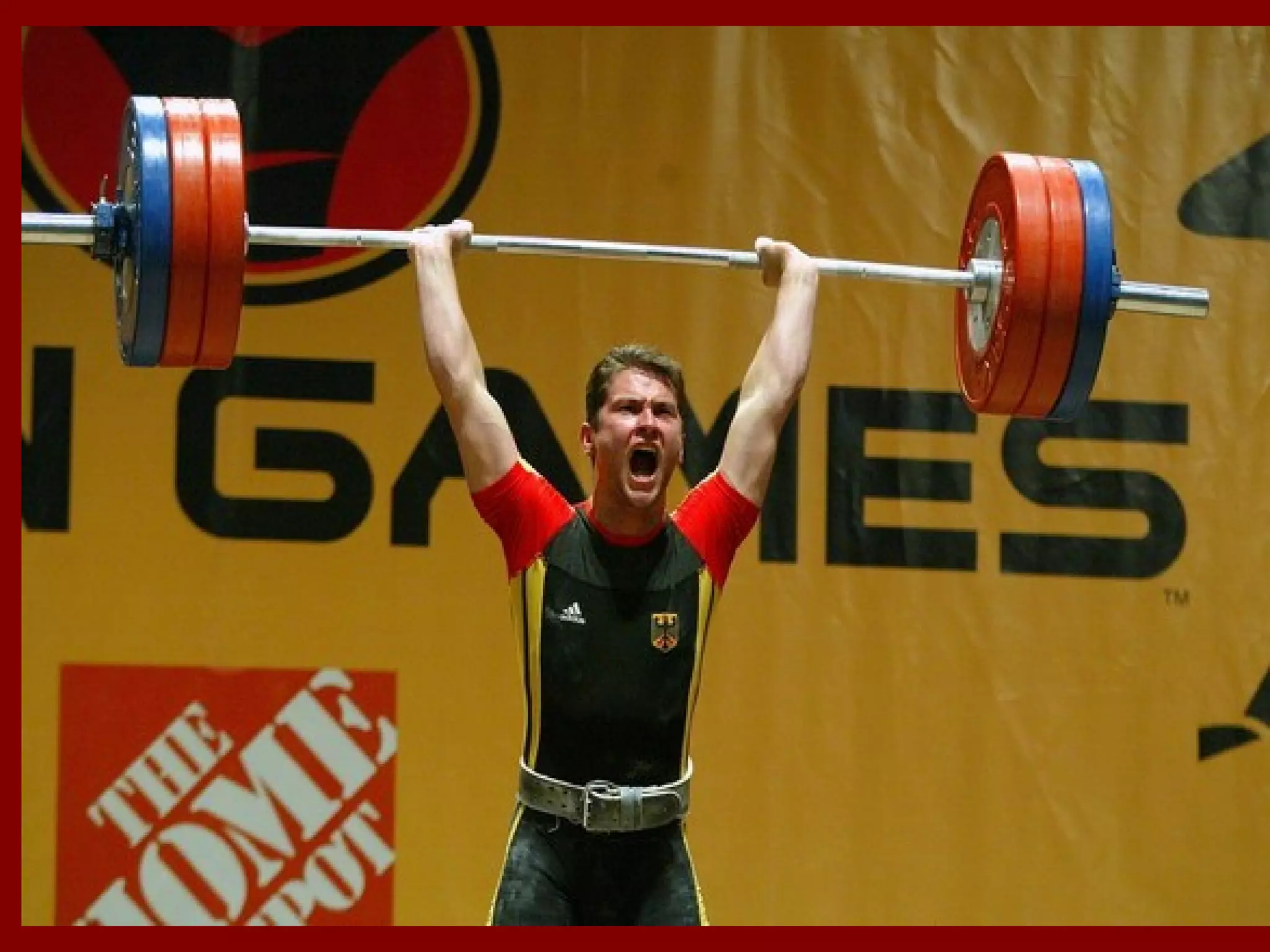
• The force/tension that a muscle or muscle
group can exert against a resistance in
one maximal effort
• It is important in sports in which we try to
gain or maintain position against an
opponent, or in which we aim to move an
object, our body or some body part,
forcefully
(LOCAL) MUSCULAR ENDURANCE
• The ability of a muscle or muscle group to
sustain an activity for a prolonged period
of time in the face of considerable local
fatigue
• Important in activities such as the arms in
a 200m swim; legs in a 1km cycling time-
trial; abdominals in a 1 min. sit-up test
ANAEROBIC POWER
• The ability to produce energy without
using oxygen
• The efficiency of the ATP-PC and lactic
acid systems are central factors to
anaerobic power
• Maximal efforts up to 10 seconds and
near-maximal efforts to about 1 minute
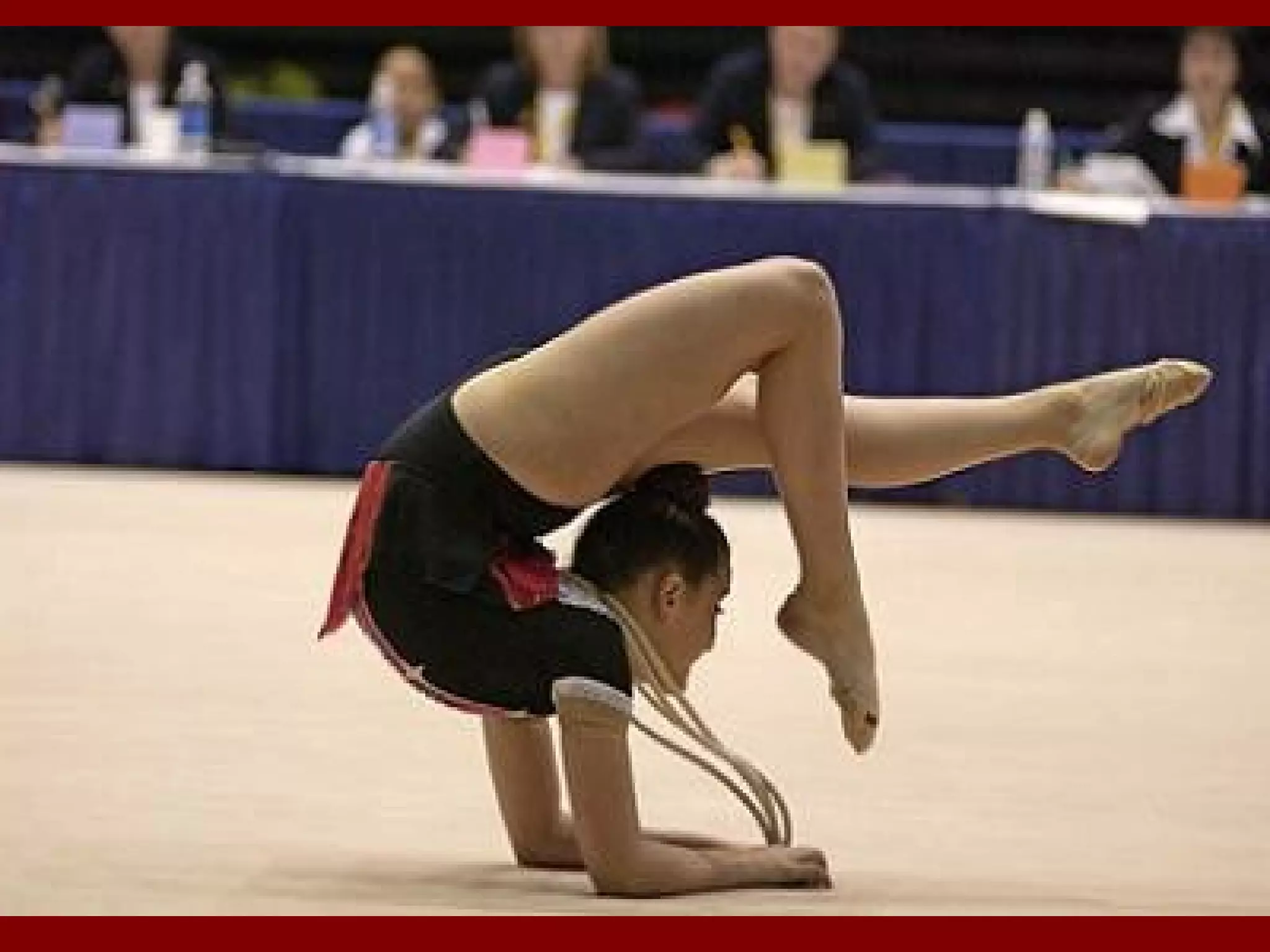
FLEXIBILITY
• The range of possible movement about a joint or
sequence of joints
• It is essential to all sports and recreational
activities
• It can be either static or dynamic
• Static flexibility is the ability to move a joint to its
maximum range of motion
• Dynamic flexibility is how easily a limb can be
moved through its range of motion when
executing a skill
BODY COMPOSITION
• Refers to the proportions of bone, muscle
and fat within the body
• We contrast the mass of bones, muscle
and organs – our lean body mass – with
body fat
• An athlete’s relative leanness or fatness
will have an impact on athletic
performance
• Fat is a non-energy-producing tissue
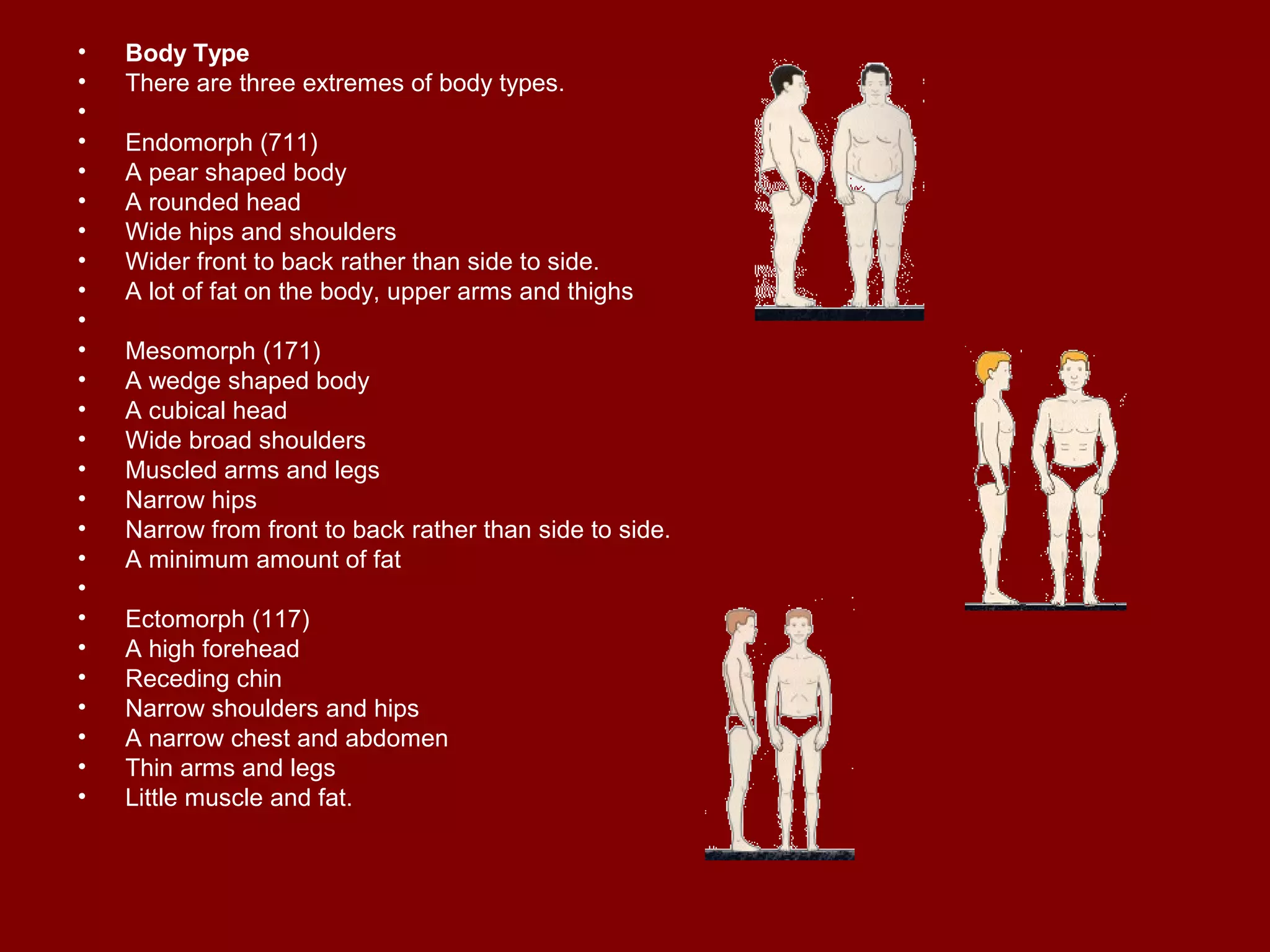
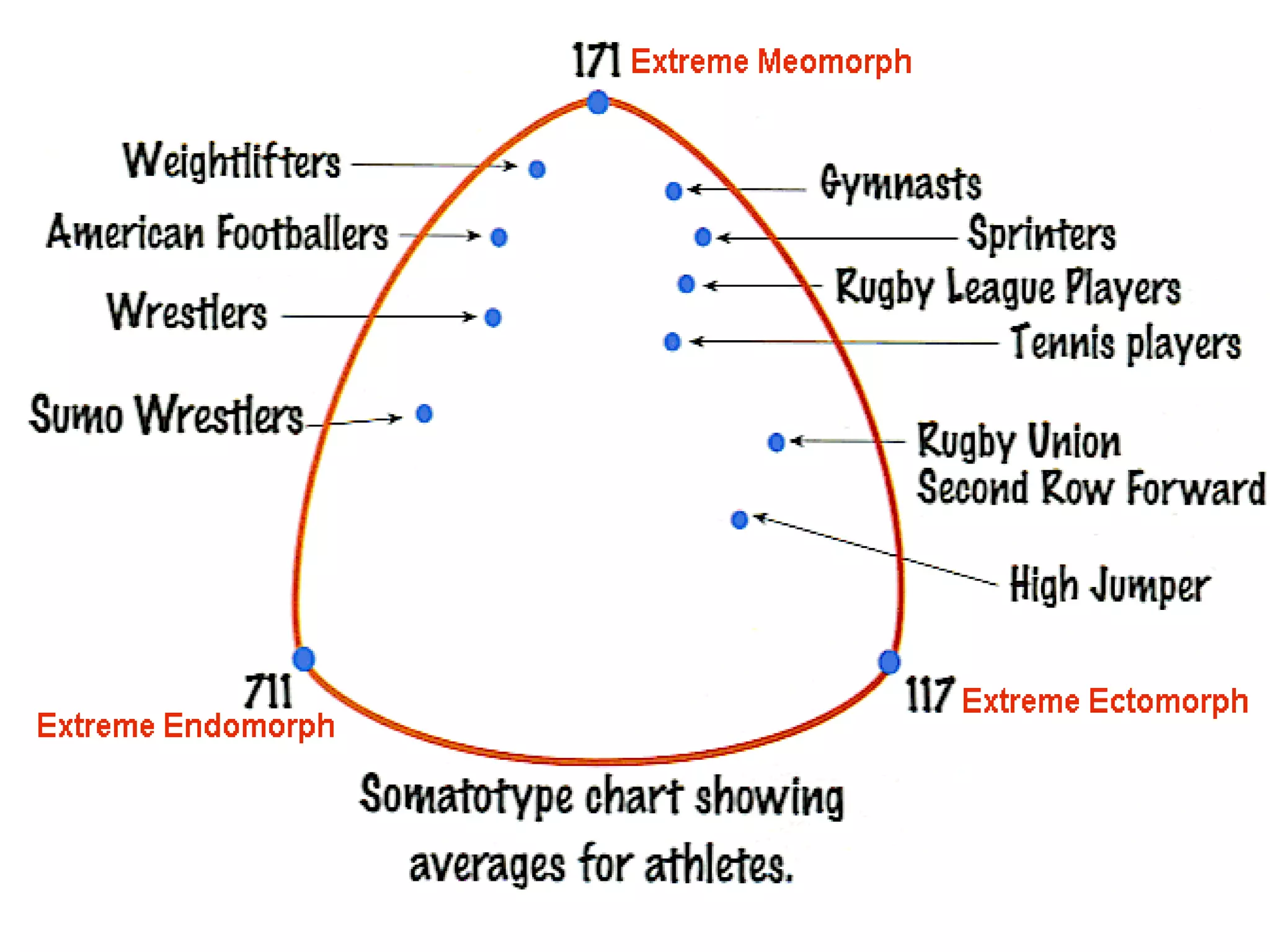
• Body Type
• There are three extremes of body types.
•
• Endomorph (711)
• A pear shaped body
• A rounded head
• Wide hips and shoulders
• Wider front to back rather than side to side.
• A lot of fat on the body, upper arms and thighs
•
• Mesomorph (171)
• A wedge shaped body
• A cubical head
• Wide broad shoulders
• Muscled arms and legs
• Narrow hips
• Narrow from front to back rather than side to side.
• A minimum amount of fat
•
• Ectomorph (117)
• A high forehead
• Receding chin
• Narrow shoulders and hips
• A narrow chest and abdomen
• Thin arms and legs
• Little muscle and fat.
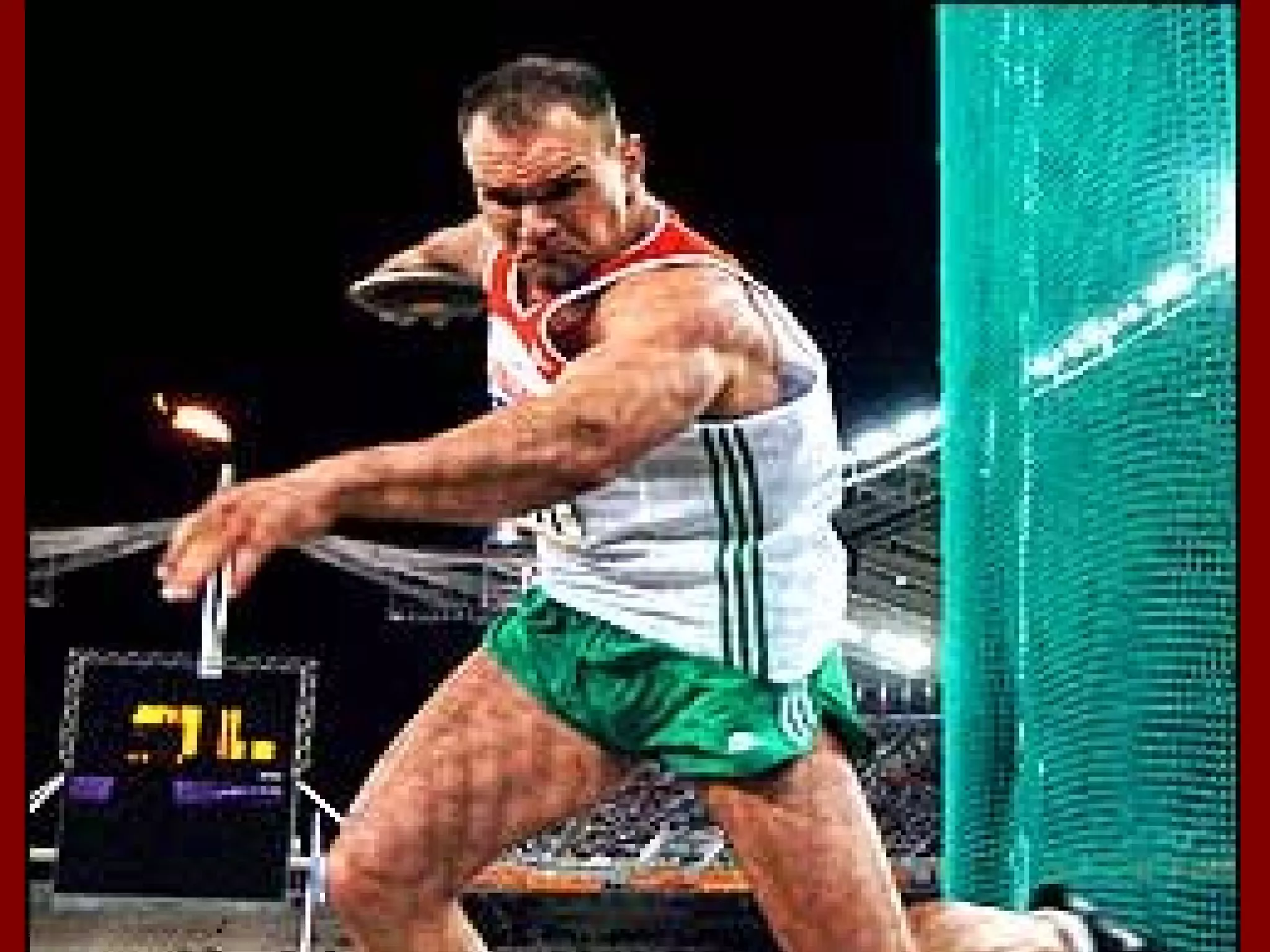
MUSCULAR POWER
• The ability to exert a ‘maximal’ contraction in one
explosive act
• It is dependent on the interaction of speed and
strength
• ‘Maximum’ muscular power is generated when
the speed of contraction is around 35% of its
maximum and the force of contraction is about
35 % of the maximum strength attainable
• Exemplified by explosive activities eg. athletic
field events
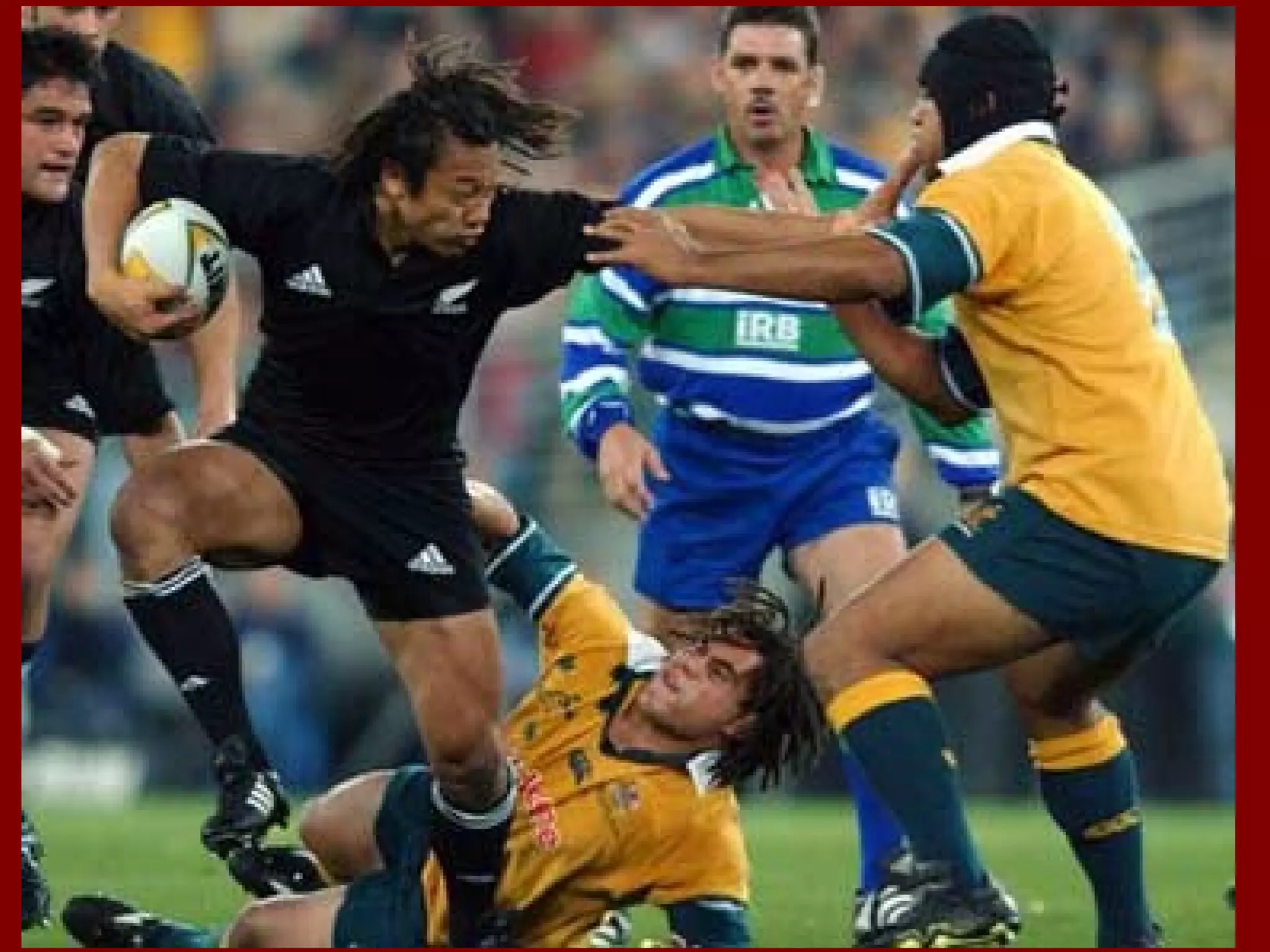
AGILITY
• The ability to change direction accurately
and quickly while moving rapidly
• A combination of power, speed, flexibility,
balance and co-ordination
• Characterised by activities such as
dodging, baulking and weaving
CO-ORDINATION
• The smooth flow of movement in the
execution of a physical task
• The common denominator of all the skill-
related components of fitness
• It involves the nervous system and the
skeletal-muscular system working together
• Important in all physical activities
BALANCE
• The ability to maintain the equilibrium of
the body
• It can be either static or dynamic
• Static involves maintaining the equilibrium
in one fixed position
• Dynamic involves maintaining the
equilibrium while moving
• Balance is an essential element of most
sports
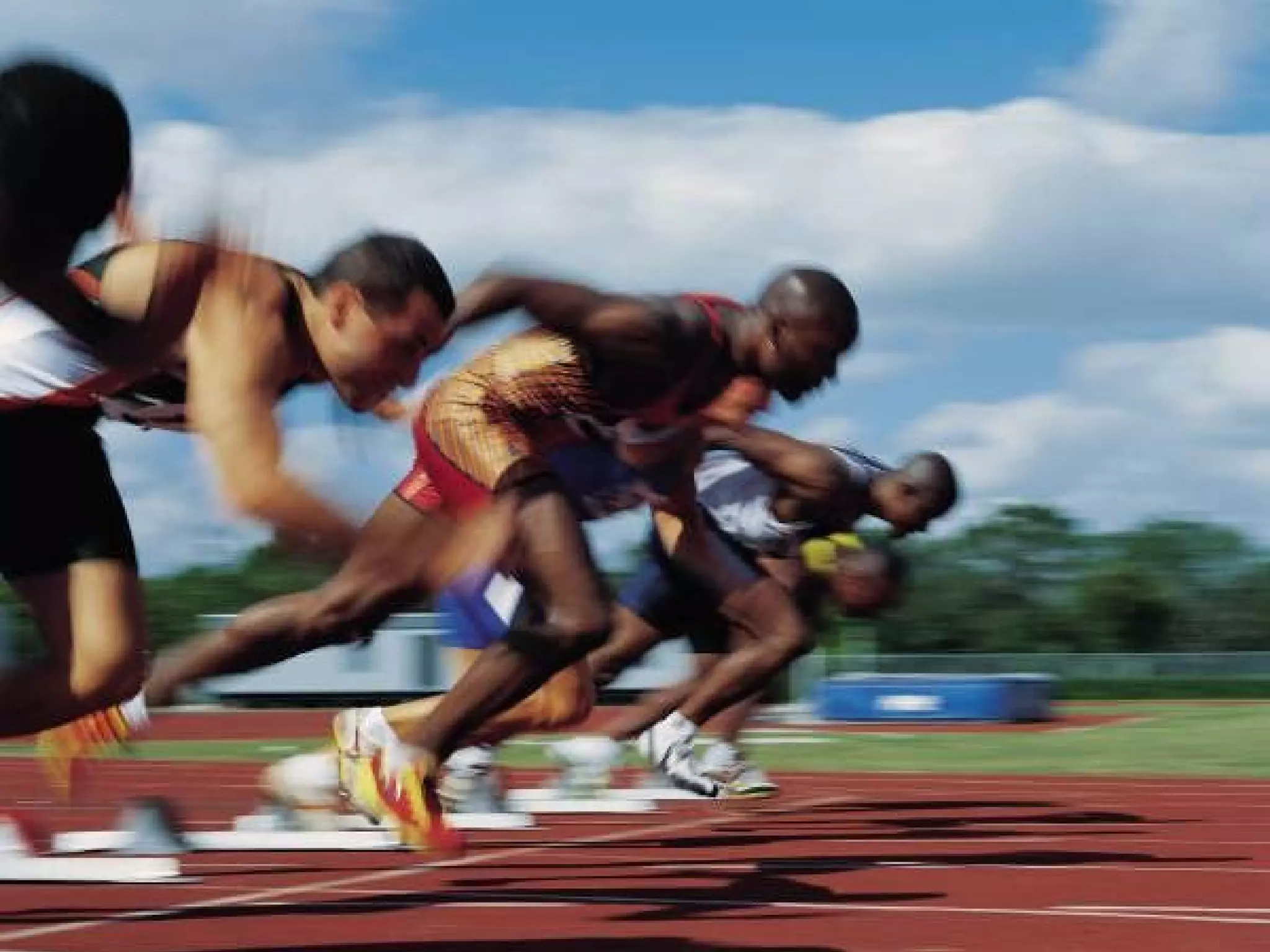
REACTION TIME
• The ability to process information via the
nervous system and to initiate a response
• It is the time taken from the brain receiving
the stimuli to the muscles contracting
• Average reaction time is about 0.2 sec.
• It is important in any sport that actions are
influenced by external stimuli
Definitionsoffitness 090917205350-phpapp02

Definitionsoffitness 090917205350-phpapp02

  • 1.
    DEFINITION OF PHYSICAL FITNESS “The ability to carry out daily tasks (work and play) with vigour and alertness, without undue fatigue and with ample energy to enjoy leisure-time pursuits and to meet unforeseen emergencies” (Clarke 1976)
  • 3.
    COMPONENTS OF FITNESS •Fitness needs to be expressed in terms that are much more specific and clearly understood. These terms are called the components of fitness. • This is the collective expression for various aspects of fitness.
  • 4.
    THE COMPONENTS OFFITNESS The ‘health-related’ components are: • cardio-respiratory endurance • muscular strength • (local) muscular endurance • anaerobic power (associated with speed) • flexibility • body composition
  • 5.
    THE COMPONENTS OFFITNESS Motor-skill related components: • muscular power • speed • agility • co-ordination • balance • reaction time
  • 6.
    LINKING FITNESS COMPONENTS WITHENERGY SYSTEMS ENERGY SYSTEM ANAEROBIC AEROBIC ATP-PC Lactic acid Oxygen Anaerobic power and speed Cardio-respiratory endurance Local muscular endurance Muscular strength Muscular power Agility Balance Reaction time
  • 7.
    CARDIO-RESPIRATORY ENDURANCE • Abilityof the heart, lungs and blood vessels to deliver oxygen to the muscles and remove wastes • Is most evident at rest; sustained activity involving the whole body, such as running, swimming and cycling long distances; and during recovery
  • 9.
    MUSCULAR STRENGTH • Theforce/tension that a muscle or muscle group can exert against a resistance in one maximal effort • It is important in sports in which we try to gain or maintain position against an opponent, or in which we aim to move an object, our body or some body part, forcefully
  • 11.
    (LOCAL) MUSCULAR ENDURANCE •The ability of a muscle or muscle group to sustain an activity for a prolonged period of time in the face of considerable local fatigue • Important in activities such as the arms in a 200m swim; legs in a 1km cycling time- trial; abdominals in a 1 min. sit-up test
  • 13.
    ANAEROBIC POWER • Theability to produce energy without using oxygen • The efficiency of the ATP-PC and lactic acid systems are central factors to anaerobic power • Maximal efforts up to 10 seconds and near-maximal efforts to about 1 minute
  • 15.
    FLEXIBILITY • The rangeof possible movement about a joint or sequence of joints • It is essential to all sports and recreational activities • It can be either static or dynamic • Static flexibility is the ability to move a joint to its maximum range of motion • Dynamic flexibility is how easily a limb can be moved through its range of motion when executing a skill
  • 17.
    BODY COMPOSITION • Refersto the proportions of bone, muscle and fat within the body • We contrast the mass of bones, muscle and organs – our lean body mass – with body fat • An athlete’s relative leanness or fatness will have an impact on athletic performance • Fat is a non-energy-producing tissue
  • 18.
    • Body Type •There are three extremes of body types. • • Endomorph (711) • A pear shaped body • A rounded head • Wide hips and shoulders • Wider front to back rather than side to side. • A lot of fat on the body, upper arms and thighs • • Mesomorph (171) • A wedge shaped body • A cubical head • Wide broad shoulders • Muscled arms and legs • Narrow hips • Narrow from front to back rather than side to side. • A minimum amount of fat • • Ectomorph (117) • A high forehead • Receding chin • Narrow shoulders and hips • A narrow chest and abdomen • Thin arms and legs • Little muscle and fat.
  • 20.
    MUSCULAR POWER • Theability to exert a ‘maximal’ contraction in one explosive act • It is dependent on the interaction of speed and strength • ‘Maximum’ muscular power is generated when the speed of contraction is around 35% of its maximum and the force of contraction is about 35 % of the maximum strength attainable • Exemplified by explosive activities eg. athletic field events
  • 22.
    AGILITY • The abilityto change direction accurately and quickly while moving rapidly • A combination of power, speed, flexibility, balance and co-ordination • Characterised by activities such as dodging, baulking and weaving
  • 24.
    CO-ORDINATION • The smoothflow of movement in the execution of a physical task • The common denominator of all the skill- related components of fitness • It involves the nervous system and the skeletal-muscular system working together • Important in all physical activities
  • 26.
    BALANCE • The abilityto maintain the equilibrium of the body • It can be either static or dynamic • Static involves maintaining the equilibrium in one fixed position • Dynamic involves maintaining the equilibrium while moving • Balance is an essential element of most sports
  • 28.
    REACTION TIME • Theability to process information via the nervous system and to initiate a response • It is the time taken from the brain receiving the stimuli to the muscles contracting • Average reaction time is about 0.2 sec. • It is important in any sport that actions are influenced by external stimuli