 Which should be the focus?
 Depends on each student’s needs and desire
 Fitness testing is not the answer
 Most students want to enjoy moderate to vigorous activity
 Don’t care about achieving a high fitness level
 Physical activity
 Process of moving
 Can be exercise, sports, or leisure activity
 Works toward health-related outcomes
 Physical fitness
 Focus on the product
 Genetics can be a significant factor
 Most students are nonathletic
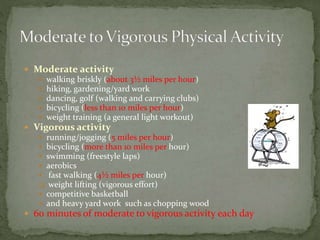
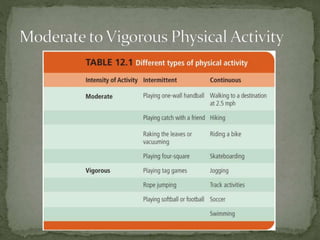
 Moderate activity
 walking briskly (about 3½ miles per hour)
 hiking, gardening/yard work
 dancing, golf (walking and carrying clubs)
 bicycling (less than 10 miles per hour)
 weight training (a general light workout)
 Vigorous activity
 running/jogging (5 miles per hour)
 bicycling (more than 10 miles per hour)
 swimming (freestyle laps)
 aerobics
 fast walking (4½ miles per hour)
 weight lifting (vigorous effort)
 competitive basketball
 and heavy yard work such as chopping wood
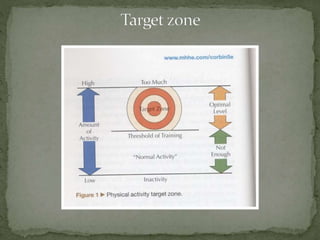
 60 minutes of moderate to vigorous activity each day
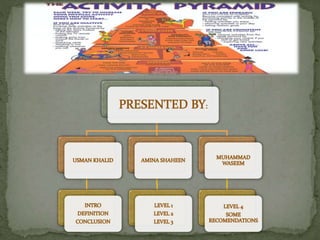
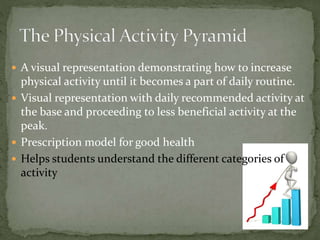
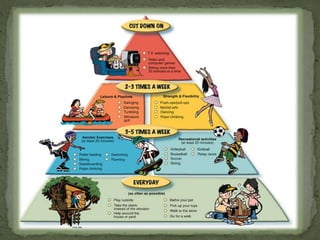
 A visual representation demonstrating how to increase
physical activity until it becomes a part of daily routine.
 Visual representation with daily recommended activity at
the base and proceeding to less beneficial activity at the
peak.
 Prescription model for good health
 Helps students understand the different categories of
activity
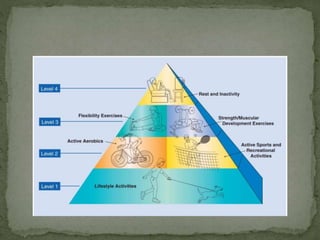
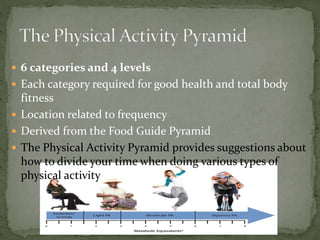
 6 categories and 4 levels
 Each category required for good health and total body
fitness
 Location related to frequency
 Derived from the Food Guide Pyramid
 The Physical Activity Pyramid provides suggestions about
how to divide your time when doing various types of
physical activity
 Factors that may affect your decision making include:
• Cost: Think about what you can afford.
• Where you live: Choose activities that you can do locally.
• Your level of health: Consider health conditions.
• Time and place: Build your program into your daily routine.
• Personal safety: Avoid going through unsafe areas.
• Comprehensive planning: Address all five areas of fitness
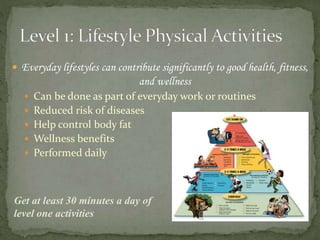
 Everyday lifestyles can contribute significantly to good health, fitness,
and wellness
 Can be done as part of everyday work or routines
 Reduced risk of diseases
 Help control body fat
 Wellness benefits
 Performed daily
Get at least 30 minutes a day of
level one activities
 Level 1: Lifestyle
 Every day
 Comes from lifestyle activities
 Play and games involving large muscles
 Climbing, tumbling
 Intermittent rather than continuous
 Little formal organization
 Walking to school, chores at home = appropriate
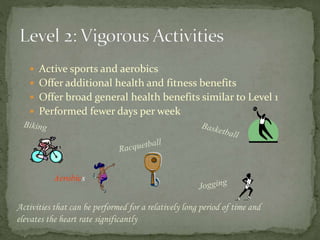
 Active sports and aerobics
 Offer additional health and fitness benefits
 Offer broad general health benefits similar to Level 1
 Performed fewer days per week
Activities that can be performed for a relatively long period of time and
elevates the heart rate significantly
Aerobics
 Level 2
 Active Aerobics
 Lifestyle activities meet the demands
 Brisk walking, jogging, biking
 Appropriate as long as not continuous for a long period
 Intermittent more appropriate
 Level 2
 Active Sports and Recreational Activities
 Involve vigorous bursts
 Modify to fit children
 Age-appropriate recreational activities with lifetime
emphasis encouraged
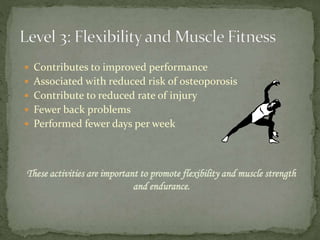
 Contributes to improved performance
 Associated with reduced risk of osteoporosis
 Contribute to reduced rate of injury
 Fewer back problems
 Performed fewer days per week
These activities are important to promote flexibility and muscle strength
and endurance.
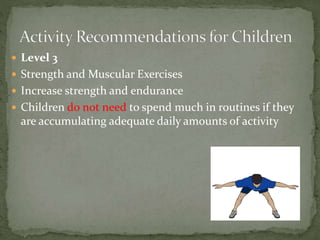
 Level 3
 Strength and Muscular Exercises
 Increase strength and endurance
 Children do not need to spend much in routines if they
are accumulating adequate daily amounts of activity
 Level 3
 Done specifically to build flexibility
 Minimal for Developmental Level I and II
 Developmental Level III more time learning and
performing
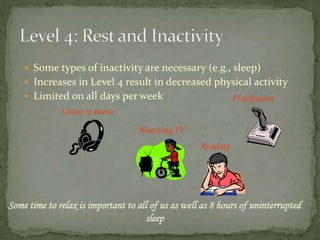
 Some types of inactivity are necessary (e.g., sleep)
 Increases in Level 4 result in decreased physical activity
 Limited on all days per week PlayStation
Watching TV
Listen to music
Reading
Some time to relax is important to all of us as well as 8 hours of uninterrupted
sleep
 Level 4
 Sedentary living not typical of children
 Reduce watching TV and video games
 Long periods during the day limited
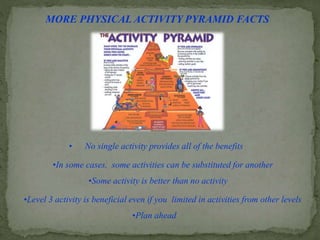
MORE PHYSICAL ACTIVITY PYRAMID FACTS
• No single activity provides all of the benefits
•In some cases, some activities can be substituted for another
•Some activity is better than no activity
•Plan ahead
•Level 3 activity is beneficial even if you limited in activities from other levels
• Before beginning a strength program, a teen
should have a physical exam.
• Teens should follow directions of coach or P.E.
teacher.
• Student-teacher ration should be no greater than
10 to 1.
• Strength training should be less than 20% of
overall training
Physical activity pyramid

Physical activity pyramid

  • 3.
     Which shouldbe the focus?  Depends on each student’s needs and desire  Fitness testing is not the answer  Most students want to enjoy moderate to vigorous activity  Don’t care about achieving a high fitness level
  • 4.
     Physical activity Process of moving  Can be exercise, sports, or leisure activity  Works toward health-related outcomes  Physical fitness  Focus on the product  Genetics can be a significant factor  Most students are nonathletic
  • 5.
     Moderate activity walking briskly (about 3½ miles per hour)  hiking, gardening/yard work  dancing, golf (walking and carrying clubs)  bicycling (less than 10 miles per hour)  weight training (a general light workout)  Vigorous activity  running/jogging (5 miles per hour)  bicycling (more than 10 miles per hour)  swimming (freestyle laps)  aerobics  fast walking (4½ miles per hour)  weight lifting (vigorous effort)  competitive basketball  and heavy yard work such as chopping wood  60 minutes of moderate to vigorous activity each day
  • 10.
     A visualrepresentation demonstrating how to increase physical activity until it becomes a part of daily routine.  Visual representation with daily recommended activity at the base and proceeding to less beneficial activity at the peak.  Prescription model for good health  Helps students understand the different categories of activity
  • 11.
     6 categoriesand 4 levels  Each category required for good health and total body fitness  Location related to frequency  Derived from the Food Guide Pyramid  The Physical Activity Pyramid provides suggestions about how to divide your time when doing various types of physical activity
  • 13.
     Factors thatmay affect your decision making include: • Cost: Think about what you can afford. • Where you live: Choose activities that you can do locally. • Your level of health: Consider health conditions. • Time and place: Build your program into your daily routine. • Personal safety: Avoid going through unsafe areas. • Comprehensive planning: Address all five areas of fitness
  • 14.
     Everyday lifestylescan contribute significantly to good health, fitness, and wellness  Can be done as part of everyday work or routines  Reduced risk of diseases  Help control body fat  Wellness benefits  Performed daily Get at least 30 minutes a day of level one activities
  • 15.
     Level 1:Lifestyle  Every day  Comes from lifestyle activities  Play and games involving large muscles  Climbing, tumbling  Intermittent rather than continuous  Little formal organization  Walking to school, chores at home = appropriate
  • 16.
     Active sportsand aerobics  Offer additional health and fitness benefits  Offer broad general health benefits similar to Level 1  Performed fewer days per week Activities that can be performed for a relatively long period of time and elevates the heart rate significantly Aerobics
  • 17.
     Level 2 Active Aerobics  Lifestyle activities meet the demands  Brisk walking, jogging, biking  Appropriate as long as not continuous for a long period  Intermittent more appropriate
  • 18.
     Level 2 Active Sports and Recreational Activities  Involve vigorous bursts  Modify to fit children  Age-appropriate recreational activities with lifetime emphasis encouraged
  • 19.
     Contributes toimproved performance  Associated with reduced risk of osteoporosis  Contribute to reduced rate of injury  Fewer back problems  Performed fewer days per week These activities are important to promote flexibility and muscle strength and endurance.
  • 20.
     Level 3 Strength and Muscular Exercises  Increase strength and endurance  Children do not need to spend much in routines if they are accumulating adequate daily amounts of activity
  • 21.
     Level 3 Done specifically to build flexibility  Minimal for Developmental Level I and II  Developmental Level III more time learning and performing
  • 22.
     Some typesof inactivity are necessary (e.g., sleep)  Increases in Level 4 result in decreased physical activity  Limited on all days per week PlayStation Watching TV Listen to music Reading Some time to relax is important to all of us as well as 8 hours of uninterrupted sleep
  • 23.
     Level 4 Sedentary living not typical of children  Reduce watching TV and video games  Long periods during the day limited
  • 24.
    MORE PHYSICAL ACTIVITYPYRAMID FACTS • No single activity provides all of the benefits •In some cases, some activities can be substituted for another •Some activity is better than no activity •Plan ahead •Level 3 activity is beneficial even if you limited in activities from other levels
  • 26.
    • Before beginninga strength program, a teen should have a physical exam. • Teens should follow directions of coach or P.E. teacher. • Student-teacher ration should be no greater than 10 to 1. • Strength training should be less than 20% of overall training