Fitness
for
All
Made By :
Vaishno Das
B.Tech(IT)
1st Year
Fitness and Health
 The word health is often associated only with physical fitness, but
there are other components of health.
 FITNESS means “readiness”. Fit people are better equipped than
non-fit people.
 The level of fitness includes all aspects of health and life.
 It affects physical, mental, and social health.
What is Physical Fitness?
 Physical Fitness is the
ability of your body
systems to work
efficiently. A fit person is
able to carry out the
typical activities of living,
such as work, and still
have enough energy and
vigor to respond to
emergency situations and
to enjoy leisure time
activities.
Physical Activity and Exercise
 Physical activity is a general
term that includes sports,
dance, and activities done at
work or at home, such as
walking, climbing stairs, or
mowing the lawn.
 When people do physical
activity especially for the
purpose of getting fit, we
say they are doing exercise.
Health and Wellness Benefits of Physical Activity
 Regular physical activity can do much to prevent disease and illness.
 It can help you look your best (with proper nutrition, good posture, and good body
mechanics).
 Besides looking better, people who do regular physical activity feel better, do better
on academic work, and are less depressed than people who are less active.
 Regular physical activity results in physical fitness which is the key to being able to
do more of things you want to do and enjoy life.
 It allows you to be fit enough to meet emergencies and day-to-day demanding
situations.
 Being physically active can build fitness, which, in turn, provides you with many
health and wellness benefits.
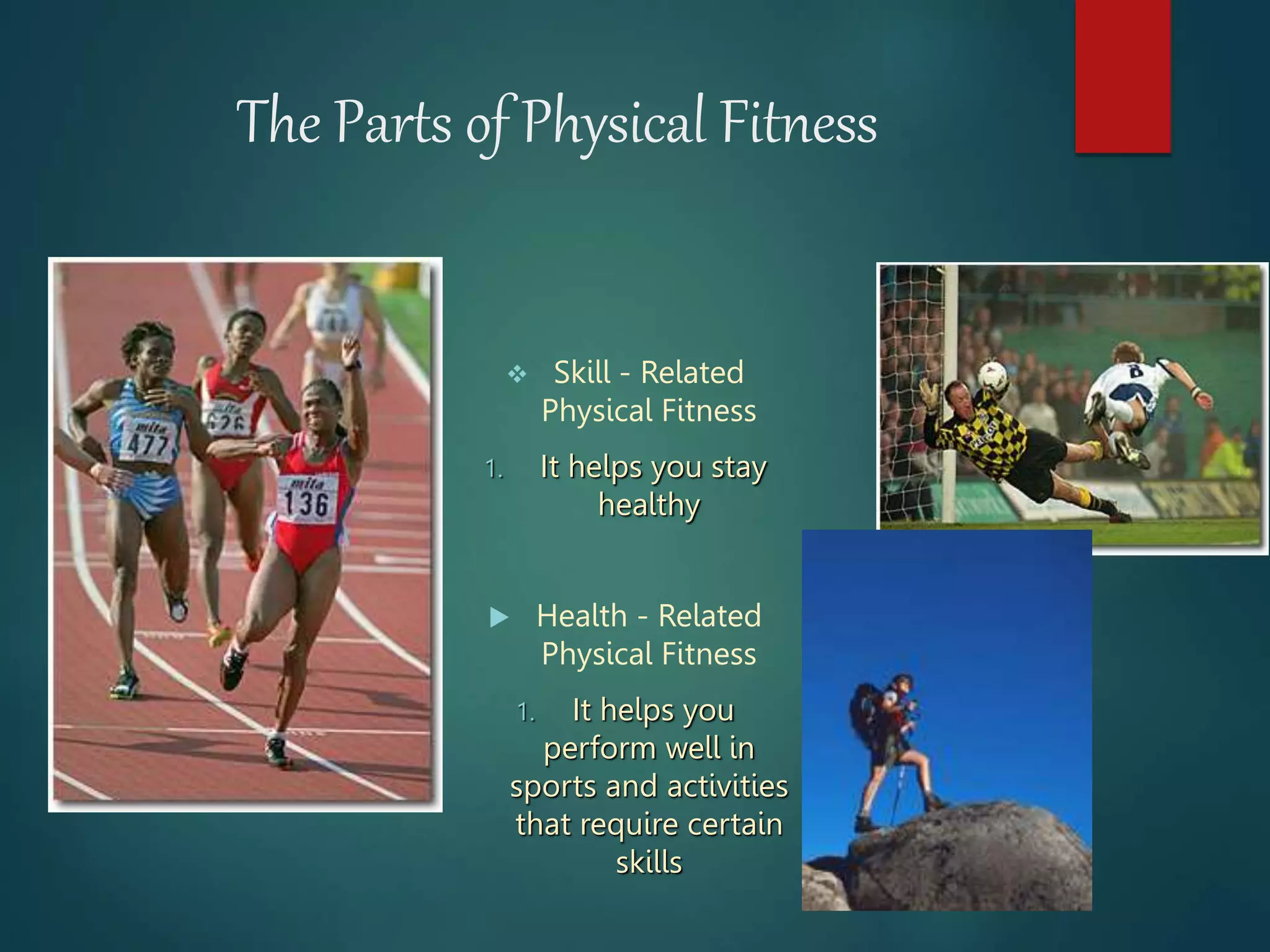
The Parts of Physical Fitness
 Skill - Related
Physical Fitness
1. It helps you stay
healthy
 Health - Related
Physical Fitness
1. It helps you
perform well in
sports and activities
that require certain
skills
Health - Related Physical
Fitness
 Cardiovascular fitness: the ability to exercise your entire body for long periods of
time.
 Strength: the amount of force your muscles can produce.
 Muscular endurance: the ability to use your muscles many times without tiring.
 Flexibility: the ability to use your joints fully through a wide range of motion.
 Body fatness – composition: is the percentage of body weight that is made up of
fat when compared to other body tissue, such as bone and muscle.
Skill - Related Physical Fitness
 Different sports require different
parts of skill -related fitness.
 Many sports require several parts.
For example, a skater might have
good agility, but may not posses
good power.
 Some people have more natural
ability in skill areas than others.
 Good health does not come from
being good in skill-related fitness.
Agility
• Agility is the ability to change the position of your body quickly
and to control body’s movements. People with good agility are
most likely to be good at activities such as: diving, soccer, ice
skating, wrestling, etc.
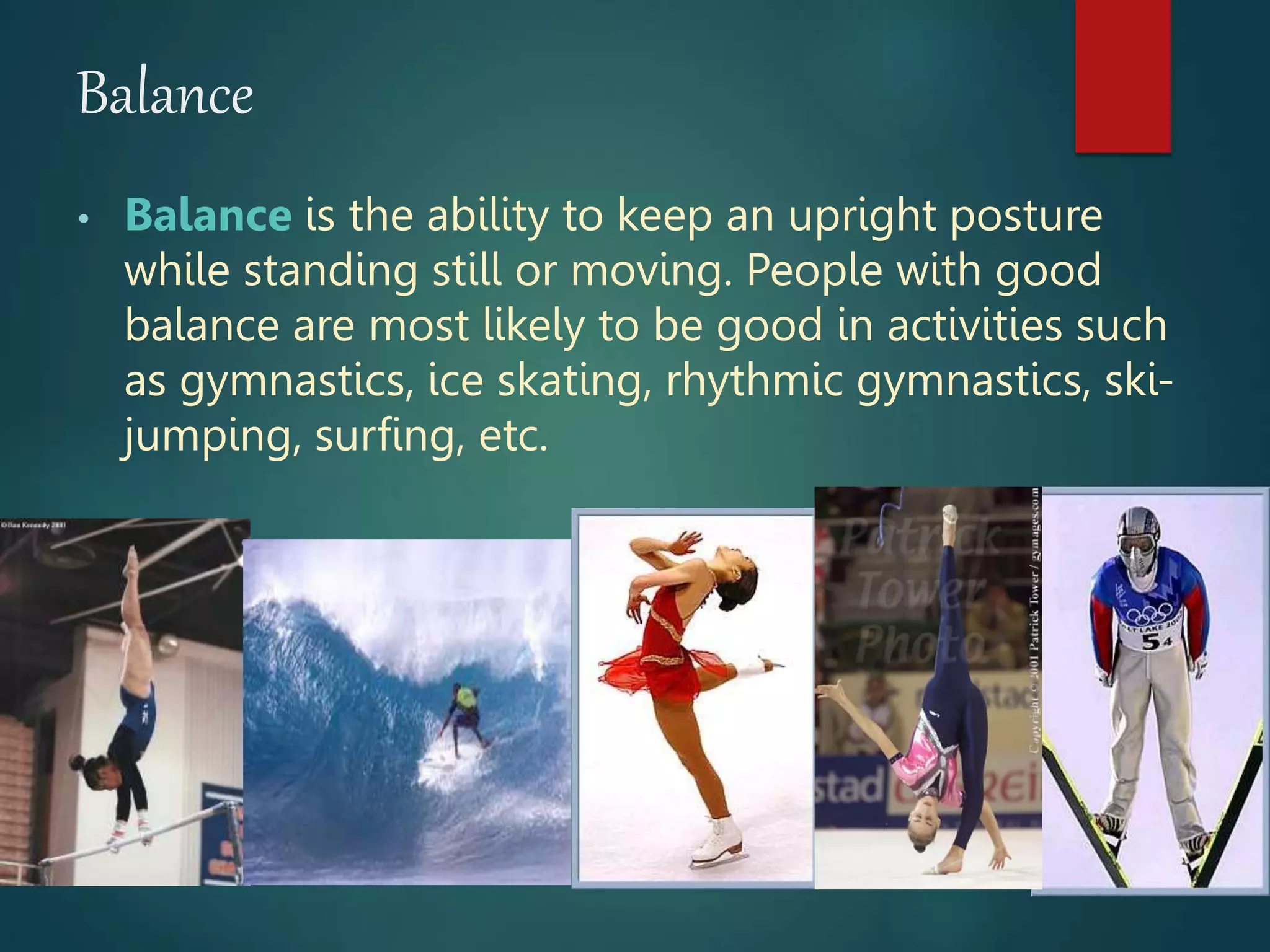
Balance
• Balance is the ability to keep an upright posture
while standing still or moving. People with good
balance are most likely to be good in activities such
as gymnastics, ice skating, rhythmic gymnastics, ski-
jumping, surfing, etc.
Power
• Power is the ability to use
strength and speed. People
with good power might have
the ability to put the shot,
throw the discus, high jump,
play football, speed swim,
speed skate, etc.
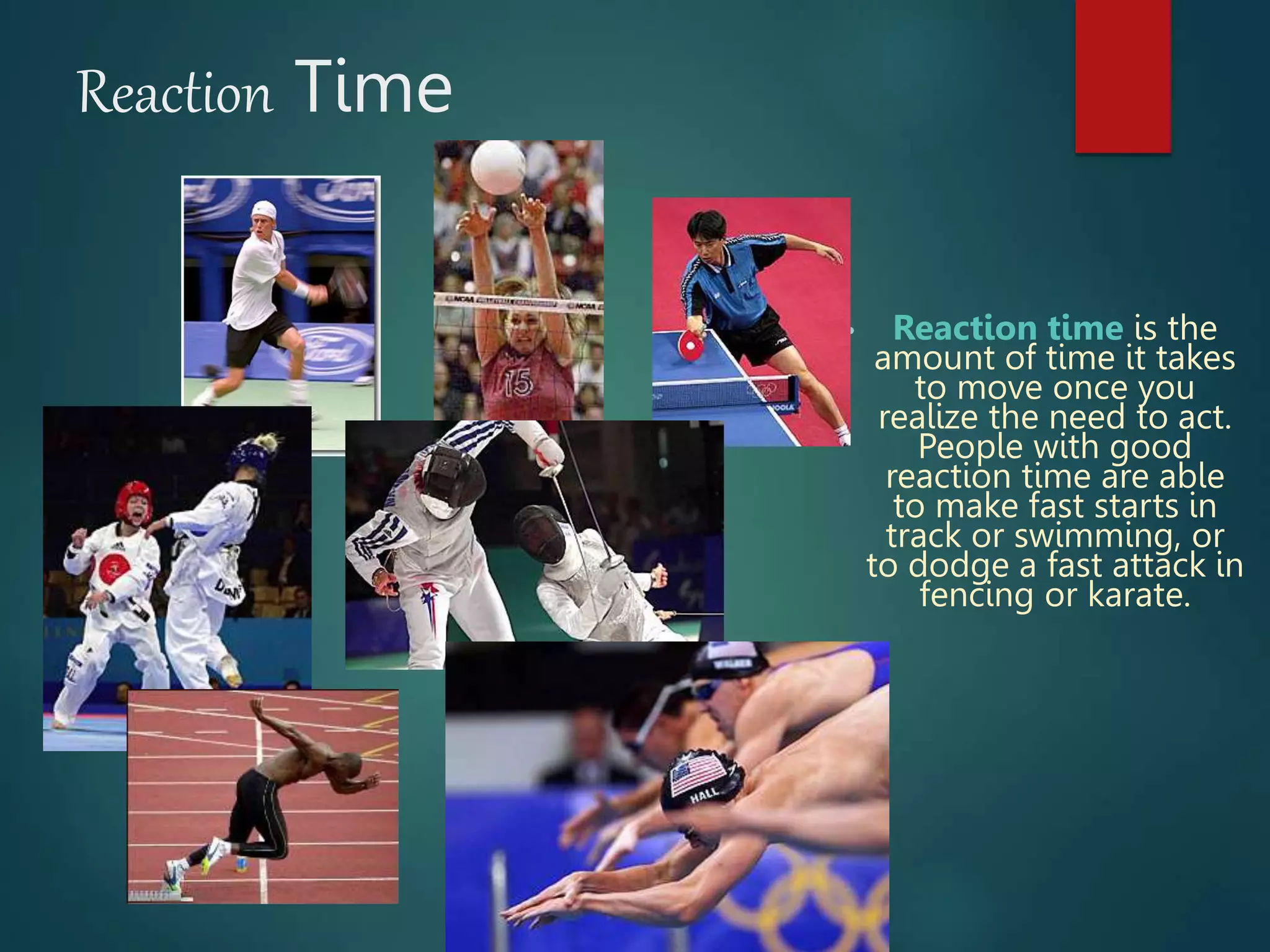
Reaction Time
• Reaction time is the
amount of time it takes
to move once you
realize the need to act.
People with good
reaction time are able
to make fast starts in
track or swimming, or
to dodge a fast attack in
fencing or karate.
Speed
• Speed is the ability to perform a movement or cover a distance in
a short period of time. People with leg speed can run fast, while
people with good arm speed can throw fast or hit a ball that is
thrown fast.
Lifetime Fitness
 Step 1: Doing Physical Activity
 Step 2: Getting Fit
 Step 3: Self-Assessment
 Step 4: Self-Planning
 Step 5: Lifetime Activity
 Step 6: Lifetime Fitness
THANK YOU

FITNESS FOR ALL.ppt

  • 1.
    Fitness for All Made By : VaishnoDas B.Tech(IT) 1st Year
  • 2.
    Fitness and Health The word health is often associated only with physical fitness, but there are other components of health.  FITNESS means “readiness”. Fit people are better equipped than non-fit people.  The level of fitness includes all aspects of health and life.  It affects physical, mental, and social health.
  • 3.
    What is PhysicalFitness?  Physical Fitness is the ability of your body systems to work efficiently. A fit person is able to carry out the typical activities of living, such as work, and still have enough energy and vigor to respond to emergency situations and to enjoy leisure time activities.
  • 4.
    Physical Activity andExercise  Physical activity is a general term that includes sports, dance, and activities done at work or at home, such as walking, climbing stairs, or mowing the lawn.  When people do physical activity especially for the purpose of getting fit, we say they are doing exercise.
  • 5.
    Health and WellnessBenefits of Physical Activity  Regular physical activity can do much to prevent disease and illness.  It can help you look your best (with proper nutrition, good posture, and good body mechanics).  Besides looking better, people who do regular physical activity feel better, do better on academic work, and are less depressed than people who are less active.  Regular physical activity results in physical fitness which is the key to being able to do more of things you want to do and enjoy life.  It allows you to be fit enough to meet emergencies and day-to-day demanding situations.  Being physically active can build fitness, which, in turn, provides you with many health and wellness benefits.
  • 6.
    The Parts ofPhysical Fitness  Skill - Related Physical Fitness 1. It helps you stay healthy  Health - Related Physical Fitness 1. It helps you perform well in sports and activities that require certain skills
  • 7.
    Health - RelatedPhysical Fitness  Cardiovascular fitness: the ability to exercise your entire body for long periods of time.  Strength: the amount of force your muscles can produce.  Muscular endurance: the ability to use your muscles many times without tiring.  Flexibility: the ability to use your joints fully through a wide range of motion.  Body fatness – composition: is the percentage of body weight that is made up of fat when compared to other body tissue, such as bone and muscle.
  • 8.
    Skill - RelatedPhysical Fitness  Different sports require different parts of skill -related fitness.  Many sports require several parts. For example, a skater might have good agility, but may not posses good power.  Some people have more natural ability in skill areas than others.  Good health does not come from being good in skill-related fitness.
  • 9.
    Agility • Agility isthe ability to change the position of your body quickly and to control body’s movements. People with good agility are most likely to be good at activities such as: diving, soccer, ice skating, wrestling, etc.
  • 10.
    Balance • Balance isthe ability to keep an upright posture while standing still or moving. People with good balance are most likely to be good in activities such as gymnastics, ice skating, rhythmic gymnastics, ski- jumping, surfing, etc.
  • 11.
    Power • Power isthe ability to use strength and speed. People with good power might have the ability to put the shot, throw the discus, high jump, play football, speed swim, speed skate, etc.
  • 12.
    Reaction Time • Reactiontime is the amount of time it takes to move once you realize the need to act. People with good reaction time are able to make fast starts in track or swimming, or to dodge a fast attack in fencing or karate.
  • 13.
    Speed • Speed isthe ability to perform a movement or cover a distance in a short period of time. People with leg speed can run fast, while people with good arm speed can throw fast or hit a ball that is thrown fast.
  • 14.
    Lifetime Fitness  Step1: Doing Physical Activity  Step 2: Getting Fit  Step 3: Self-Assessment  Step 4: Self-Planning  Step 5: Lifetime Activity  Step 6: Lifetime Fitness
  • 15.