PHYSICAL ABILITY/DISABILITY
TV Drama
Background
 Disability tends to still be represented in terms of stereotypical characters.
For example:
 Physically Disabled / Disfigured – often shown as outsiders, unable to do
normal things
 Mentally disabled – Often shown as strange, odd, childlike, outsiders
 Able Bodies / Minded – often shown as “normal” and “ideal”.
Stereotypes
Characters with disabilities are often portrayed in TV Dramas as
being outsiders, strange, unable to do everyday activities, immature,
weaker than “able bodied, able minded” characters, less attractive
etc. Traditionally in films, villains were often given a disability or
deformity to make them seem scarier or more evil. Although our
association of disability with “evil” has since declined, society often
still links disability to weakness and makes disabled characters
objects to pity.
Questions to consider:
If you get “disability” as an issue in the exam, you should be thinking about the following things when
watching the clip:
 Can I identify who is able / disabled in the clip?
 Are people with disabilities shown as different interests, personalities, attitudes, behaviours from
people who don’t have disabilities? If so, how?
 Is their disability represented as being important in their life?
 Are people without disabilities represented stereotypically as being normal / better / more
powerful? If so, how?
 Are people with disabilities represented stereotypically as being abnormal /weak/ pathetic? If so,
how?
 How do other characters in the clip treat the characters with disability?
 What is the message the clip is trying to portray about disability?
 Don’t ignore the able bodied characters as they need to be analysed too!
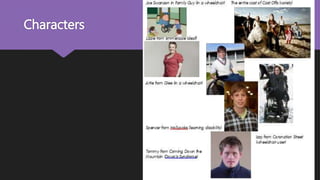
Characters
The Clip
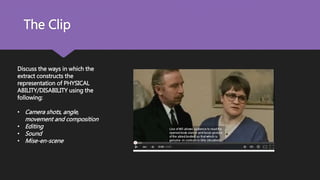
Discuss the ways in which the
extract constructs the
representation of PHYSICAL
ABILITY/DISABILITY using the
following:
• Camera shots, angle,
movement and composition
• Editing
• Sound
• Mise-en-scene
YOUR Analysis
Words to include:
Camera shots, angle, movement and composition
Editing
Sound
Mise-en-scene

Physical ability

  • 1.
  • 2.
    Background  Disability tendsto still be represented in terms of stereotypical characters. For example:  Physically Disabled / Disfigured – often shown as outsiders, unable to do normal things  Mentally disabled – Often shown as strange, odd, childlike, outsiders  Able Bodies / Minded – often shown as “normal” and “ideal”.
  • 3.
    Stereotypes Characters with disabilitiesare often portrayed in TV Dramas as being outsiders, strange, unable to do everyday activities, immature, weaker than “able bodied, able minded” characters, less attractive etc. Traditionally in films, villains were often given a disability or deformity to make them seem scarier or more evil. Although our association of disability with “evil” has since declined, society often still links disability to weakness and makes disabled characters objects to pity.
  • 4.
    Questions to consider: Ifyou get “disability” as an issue in the exam, you should be thinking about the following things when watching the clip:  Can I identify who is able / disabled in the clip?  Are people with disabilities shown as different interests, personalities, attitudes, behaviours from people who don’t have disabilities? If so, how?  Is their disability represented as being important in their life?  Are people without disabilities represented stereotypically as being normal / better / more powerful? If so, how?  Are people with disabilities represented stereotypically as being abnormal /weak/ pathetic? If so, how?  How do other characters in the clip treat the characters with disability?  What is the message the clip is trying to portray about disability?  Don’t ignore the able bodied characters as they need to be analysed too!
  • 5.
  • 6.
    The Clip Discuss theways in which the extract constructs the representation of PHYSICAL ABILITY/DISABILITY using the following: • Camera shots, angle, movement and composition • Editing • Sound • Mise-en-scene
  • 7.
    YOUR Analysis Words toinclude: Camera shots, angle, movement and composition Editing Sound Mise-en-scene