Match the term with it’s
definition
Using the hand-out provided.
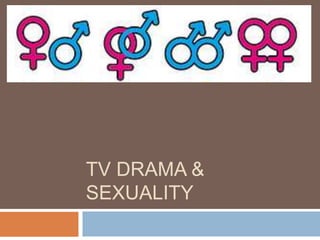
TV DRAMA &
SEXUALITY
Traditional representations of
sexuality
“It is a truth universally acknowledged that a
single man in possession of a good fortune
must be in want of a wife” – opening
sentence of Pride and Prejudice
 Heterosexuality
 Male and Female as Couple
 Traditionally centred around male ‘acquisition’
of the female
 Female attracted to male physical attributes
and/or wealth
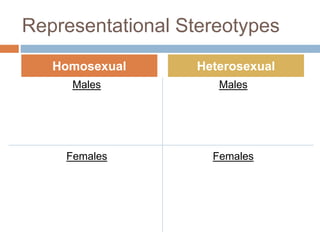
Representational Stereotypes
Males Males
Homosexual Heterosexual
Females Females
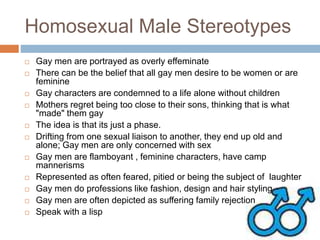
Homosexual Male Stereotypes
 Gay men are portrayed as overly effeminate
 There can be the belief that all gay men desire to be women or are
feminine
 Gay characters are condemned to a life alone without children
 Mothers regret being too close to their sons, thinking that is what
"made" them gay
 The idea is that its just a phase.
 Drifting from one sexual liaison to another, they end up old and
alone; Gay men are only concerned with sex
 Gay men are flamboyant , feminine characters, have camp
mannerisms
 Represented as often feared, pitied or being the subject of laughter
 Gay men do professions like fashion, design and hair styling
 Gay men are often depicted as suffering family rejection
 Speak with a lisp
Choose TWO
Of the previous bulletpoints and use examples
from media you have seen/know about to justify.
e.g.
Gay men are flamboyant , feminine
characters, have camp mannerisms
= Cameron from Modern Family in the moment
where he screams running after the guy who hit
their car.
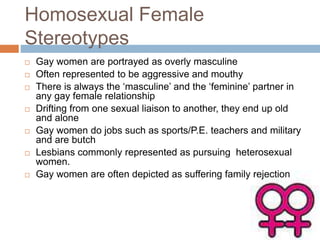
Homosexual Female
Stereotypes
 Gay women are portrayed as overly masculine
 Often represented to be aggressive and mouthy
 There is always the ‘masculine’ and the ‘feminine’ partner in
any gay female relationship
 Drifting from one sexual liaison to another, they end up old
and alone
 Gay women do jobs such as sports/P.E. teachers and military
and are butch
 Lesbians commonly represented as pursuing heterosexual
women.
 Gay women are often depicted as suffering family rejection
Choose TWO
Of the previous bullet points and use examples
from media you have seen/know about to justify.
e.g.
Gay women are portrayed as overly masculine
= Crazy Eyes in Orange is the New Black is
masculine and aggressive in her approach to
Piper.
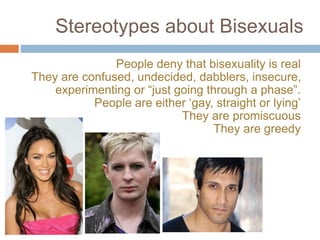
Stereotypes about Bisexuals
People deny that bisexuality is real
They are confused, undecided, dabblers, insecure,
experimenting or “just going through a phase”.
People are either ‘gay, straight or lying’
They are promiscuous
They are greedy
Stereotypes about
Heterosexuals
 It is the ‘norm’
 ‘There is nothing at all wrong with
heterosexuality’
 Male partners are the abusers
 Straight couples always have children
Laura Mulvey’s Male Gaze
(1975)
 What is the Gaze?
The concept of gaze is one that deals with how
an audience views the people presented.
 It can be thought of in 3 ways:
1. How men look at women,
2. How women look at themselves,
3. How women look at other women.
Laura Mulvey’s male gaze
(1975)
 She believes that in film audiences have to
‘view’ characters from the perspective of a
heterosexual male.
Features of the Male Gaze
 The camera lingers on the curves of the female
body
 Events which occur to women are presented
largely in the context of a man's reaction to
these events.
 Relegates women to the status of objects.
Editing Key Terms Reminder…
 Intercutting and pace: to build tension
 Jump cuts: show chaos, tension, panic
 Prevalence: who is more important? Who has
more status or power?
 Shot reverse-shot: the amount of time on
someone’s reaction could suggest their status
or encourage the audience to identify with a
specific character
Sexuality & Editing
 Watch and LIST the editing techniques they use.
 Next to each item in the list, suggest why it has been
used.
 Now pick out a 2 or 3 techniques and suggest how it
adds to the representation of sexuality.
E.g.
SRS – to show the character’s emotion – prolongs the
emotional impact and allows the audience to identify
who they should sympathise with.
(this also works with…
prevalence – longer screen time so they’re more
important – audience builds more of a relationship with
them)
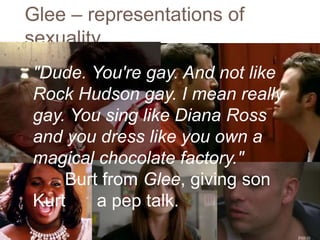
Glee – representations of
sexuality
"Dude. You're gay. And not like
Rock Hudson gay. I mean really
gay. You sing like Diana Ross
and you dress like you own a
magical chocolate factory."
Burt from Glee, giving son
Kurt a pep talk.
•
•
•
•
•
•
•
•
•
THROUGH THE MICRO-
Analysis: Touchwood
Using the Torchwood video, write up an analysis
of the clip in terms of it’s representation of
sexuality through the micro-elements.
Editing
MES
Sound
Camerawork
Essay question
 Using the notes you have produced on the
Touchwood clip class answer the following
question
 “In what ways have the micro elements been
used to represent sexuality?”
 Hand in 4th May

Tvdramasexualityautosaved 140506071646-phpapp01

  • 1.
    Match the termwith it’s definition Using the hand-out provided.
  • 2.
  • 3.
    Traditional representations of sexuality “Itis a truth universally acknowledged that a single man in possession of a good fortune must be in want of a wife” – opening sentence of Pride and Prejudice  Heterosexuality  Male and Female as Couple  Traditionally centred around male ‘acquisition’ of the female  Female attracted to male physical attributes and/or wealth
  • 4.
  • 5.
    Homosexual Male Stereotypes Gay men are portrayed as overly effeminate  There can be the belief that all gay men desire to be women or are feminine  Gay characters are condemned to a life alone without children  Mothers regret being too close to their sons, thinking that is what "made" them gay  The idea is that its just a phase.  Drifting from one sexual liaison to another, they end up old and alone; Gay men are only concerned with sex  Gay men are flamboyant , feminine characters, have camp mannerisms  Represented as often feared, pitied or being the subject of laughter  Gay men do professions like fashion, design and hair styling  Gay men are often depicted as suffering family rejection  Speak with a lisp
  • 6.
    Choose TWO Of theprevious bulletpoints and use examples from media you have seen/know about to justify. e.g. Gay men are flamboyant , feminine characters, have camp mannerisms = Cameron from Modern Family in the moment where he screams running after the guy who hit their car.
  • 7.
    Homosexual Female Stereotypes  Gaywomen are portrayed as overly masculine  Often represented to be aggressive and mouthy  There is always the ‘masculine’ and the ‘feminine’ partner in any gay female relationship  Drifting from one sexual liaison to another, they end up old and alone  Gay women do jobs such as sports/P.E. teachers and military and are butch  Lesbians commonly represented as pursuing heterosexual women.  Gay women are often depicted as suffering family rejection
  • 8.
    Choose TWO Of theprevious bullet points and use examples from media you have seen/know about to justify. e.g. Gay women are portrayed as overly masculine = Crazy Eyes in Orange is the New Black is masculine and aggressive in her approach to Piper.
  • 9.
    Stereotypes about Bisexuals Peopledeny that bisexuality is real They are confused, undecided, dabblers, insecure, experimenting or “just going through a phase”. People are either ‘gay, straight or lying’ They are promiscuous They are greedy
  • 10.
    Stereotypes about Heterosexuals  Itis the ‘norm’  ‘There is nothing at all wrong with heterosexuality’  Male partners are the abusers  Straight couples always have children
  • 11.
    Laura Mulvey’s MaleGaze (1975)  What is the Gaze? The concept of gaze is one that deals with how an audience views the people presented.  It can be thought of in 3 ways: 1. How men look at women, 2. How women look at themselves, 3. How women look at other women.
  • 12.
    Laura Mulvey’s malegaze (1975)  She believes that in film audiences have to ‘view’ characters from the perspective of a heterosexual male. Features of the Male Gaze  The camera lingers on the curves of the female body  Events which occur to women are presented largely in the context of a man's reaction to these events.  Relegates women to the status of objects.
  • 13.
    Editing Key TermsReminder…  Intercutting and pace: to build tension  Jump cuts: show chaos, tension, panic  Prevalence: who is more important? Who has more status or power?  Shot reverse-shot: the amount of time on someone’s reaction could suggest their status or encourage the audience to identify with a specific character
  • 14.
    Sexuality & Editing Watch and LIST the editing techniques they use.  Next to each item in the list, suggest why it has been used.  Now pick out a 2 or 3 techniques and suggest how it adds to the representation of sexuality. E.g. SRS – to show the character’s emotion – prolongs the emotional impact and allows the audience to identify who they should sympathise with. (this also works with… prevalence – longer screen time so they’re more important – audience builds more of a relationship with them)
  • 15.
    Glee – representationsof sexuality "Dude. You're gay. And not like Rock Hudson gay. I mean really gay. You sing like Diana Ross and you dress like you own a magical chocolate factory." Burt from Glee, giving son Kurt a pep talk.
  • 16.
  • 17.
    Analysis: Touchwood Using theTorchwood video, write up an analysis of the clip in terms of it’s representation of sexuality through the micro-elements. Editing MES Sound Camerawork
  • 18.
    Essay question  Usingthe notes you have produced on the Touchwood clip class answer the following question  “In what ways have the micro elements been used to represent sexuality?”  Hand in 4th May