Course on


In Embassy of Finland, Nairobi, June 2012   Seppo Toikka
This course consists of:


7)Basic ideas and concepts in photography
8)Digital photography technique
9)Composition and subjects in photography
10)Digital editing, workflow examples
11)Other topics requested by you
What camera should I get?

Any camera will do

Just remember…

”The best camera is the camera that
is with you”
Camera doesn’t matter

You can get amazing photos with
any camera

You just need to understand two things…

Amazing photos are about
composition and light, not about
the technical properties of the camera
Camera vs. the eye

”What you see is not what you get”

The eye:                            Camera:
Extremely wide angle of vision      Angle of vision varies
Extremely narrow angle of focus     Same focus in the whole picture
Large dynamic range                 Small dynamic range
Eye focus moves constantly across   Image is taken in a fraction of a
the field of vision                 second
Don’t capture, convey

You can’t capture exactly what
you see, so don’t even try

Instead, try to convey the feeling!

Good pictures are all about conveying
emotions, making us feel something

The next time you feel the urge to take
a picture, focus on that feeling
Light

Photography = drawing with light


Always pay attention to the light!

Different light can change details,
contrast, colors, focus of attention,
shadows, mood, etc…
Light (cont.)

Backlight, frontlight, sidelight,
diffused light, (shade)


Keep in mind, that the intensity
of artificial light decreases
rapidly for subjects further from
the light source
Exposure

Exposure = the amount of light
passed throught the lens to the
sensor surface

Change in exposure is measured
in stops (EV). +/-1 stop = doubling/halving
the amount of light passed through
the lens
Exposure (cont.)

Sunlight is appr. 1 000 000 times
brighter than full moonlight
(20 stops)

Dynamic range in digital cameras
varies from 7 to 14 stops
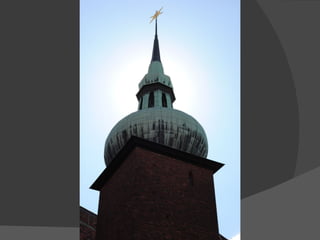
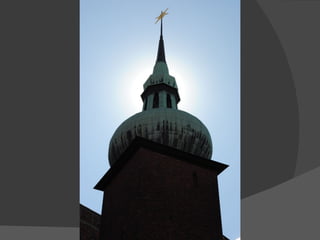
Exposure example

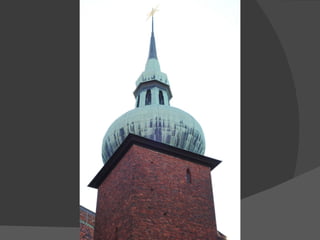
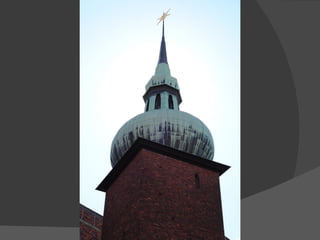
When the camera’s dynamic range
cannot capture the whole tonal
range, you need to decide what tones
are most important

Virtually all cameras have the
possibility to adjust exposure
by at least +/- 2 stops(EV)
+1 EV
+0,5 EV
+0 EV
-0,5 EV
-1 EV
-1,5 EV
Common exposure troubles

Subject is in the shade and background
is lit in direct sunlight

Shooting inside, with windows showing
daylight

Backlit subjects in bright sunlight
There is no correct exposure!

Automatic camera settings do a good
job in most situations, but it doesn’t
know what you want

Decide what tones are most important,
and try to position them in the middle
of the tonal range by adjusting EV
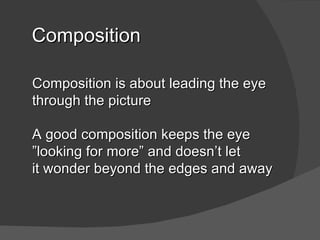
Composition

Composition is about leading the eye
through the picture

A good composition keeps the eye
”looking for more” and doesn’t let
it wonder beyond the edges and away
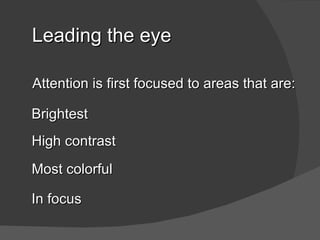
Leading the eye

Attention is first focused to areas that are:

Brightest
High contrast
Most colorful

In focus
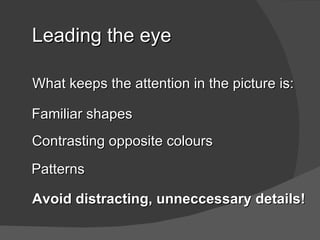
Leading the eye

What keeps the attention in the picture is:

Familiar shapes
Contrasting opposite colours
Patterns

Avoid distracting, unneccessary details!
Online

photocoursenairobi.wikispaces.com

Slides, example photos with
explanations, glossary

seppo.i.toikka@gmail.com
Homework
Find out how to adjust exposure
in your camera (+/- EV)

When you see any photographs,
try to figure out what is the lighting
like in that photo

If you want to know the technique
behind a specific photo, send it to me
Photography course, class 1

Photography course, class 1

  • 1.
    Course on In Embassyof Finland, Nairobi, June 2012 Seppo Toikka
  • 2.
    This course consistsof: 7)Basic ideas and concepts in photography 8)Digital photography technique 9)Composition and subjects in photography 10)Digital editing, workflow examples 11)Other topics requested by you
  • 3.
    What camera shouldI get? Any camera will do Just remember… ”The best camera is the camera that is with you”
  • 4.
    Camera doesn’t matter Youcan get amazing photos with any camera You just need to understand two things… Amazing photos are about composition and light, not about the technical properties of the camera
  • 5.
    Camera vs. theeye ”What you see is not what you get” The eye: Camera: Extremely wide angle of vision Angle of vision varies Extremely narrow angle of focus Same focus in the whole picture Large dynamic range Small dynamic range Eye focus moves constantly across Image is taken in a fraction of a the field of vision second
  • 6.
    Don’t capture, convey Youcan’t capture exactly what you see, so don’t even try Instead, try to convey the feeling! Good pictures are all about conveying emotions, making us feel something The next time you feel the urge to take a picture, focus on that feeling
  • 8.
    Light Photography = drawingwith light Always pay attention to the light! Different light can change details, contrast, colors, focus of attention, shadows, mood, etc…
  • 9.
    Light (cont.) Backlight, frontlight,sidelight, diffused light, (shade) Keep in mind, that the intensity of artificial light decreases rapidly for subjects further from the light source
  • 10.
    Exposure Exposure = theamount of light passed throught the lens to the sensor surface Change in exposure is measured in stops (EV). +/-1 stop = doubling/halving the amount of light passed through the lens
  • 11.
    Exposure (cont.) Sunlight isappr. 1 000 000 times brighter than full moonlight (20 stops) Dynamic range in digital cameras varies from 7 to 14 stops
  • 12.
    Exposure example When thecamera’s dynamic range cannot capture the whole tonal range, you need to decide what tones are most important Virtually all cameras have the possibility to adjust exposure by at least +/- 2 stops(EV)
  • 13.
  • 14.
  • 15.
  • 16.
  • 17.
  • 18.
  • 19.
    Common exposure troubles Subjectis in the shade and background is lit in direct sunlight Shooting inside, with windows showing daylight Backlit subjects in bright sunlight
  • 20.
    There is nocorrect exposure! Automatic camera settings do a good job in most situations, but it doesn’t know what you want Decide what tones are most important, and try to position them in the middle of the tonal range by adjusting EV
  • 23.
    Composition Composition is aboutleading the eye through the picture A good composition keeps the eye ”looking for more” and doesn’t let it wonder beyond the edges and away
  • 24.
    Leading the eye Attentionis first focused to areas that are: Brightest High contrast Most colorful In focus
  • 25.
    Leading the eye Whatkeeps the attention in the picture is: Familiar shapes Contrasting opposite colours Patterns Avoid distracting, unneccessary details!
  • 32.
    Online photocoursenairobi.wikispaces.com Slides, example photoswith explanations, glossary seppo.i.toikka@gmail.com
  • 33.
    Homework Find out howto adjust exposure in your camera (+/- EV) When you see any photographs, try to figure out what is the lighting like in that photo If you want to know the technique behind a specific photo, send it to me