Explicit Systematical Phonics
Curriculum Design and Rationale
English Course Design 102-1
Advising Pro: Dr.Yu-Lin Cheng
Sean Chen
陳智文
Contextual Environment
Where to teach?
Elementary school classroom
Whom to teach?
EFL 4th-5th graders
How long?
An hour a week for 5 weeks
Curriculum Aim
This curriculum aims to equip with knowledge
of phonics generalization, letter combinations
and explicit skills to sound out paired vowels
and r-controlled vowels in a word.
Objectives
Given a word reading test administered
individually, a student will orally read a set of
words with vowel pairs and r-controlled vowels
correctly and independently in a reasonable
period of time as judged by the teacher.
Curriculum Content
Sounds of R-controlled vowels
In some pairs the first vowel dominates.
In some pairs the vowels "cooperate".
In some pairs a new sound is created.
(Burmeister, 1968, p. 2)
What rules to teach?
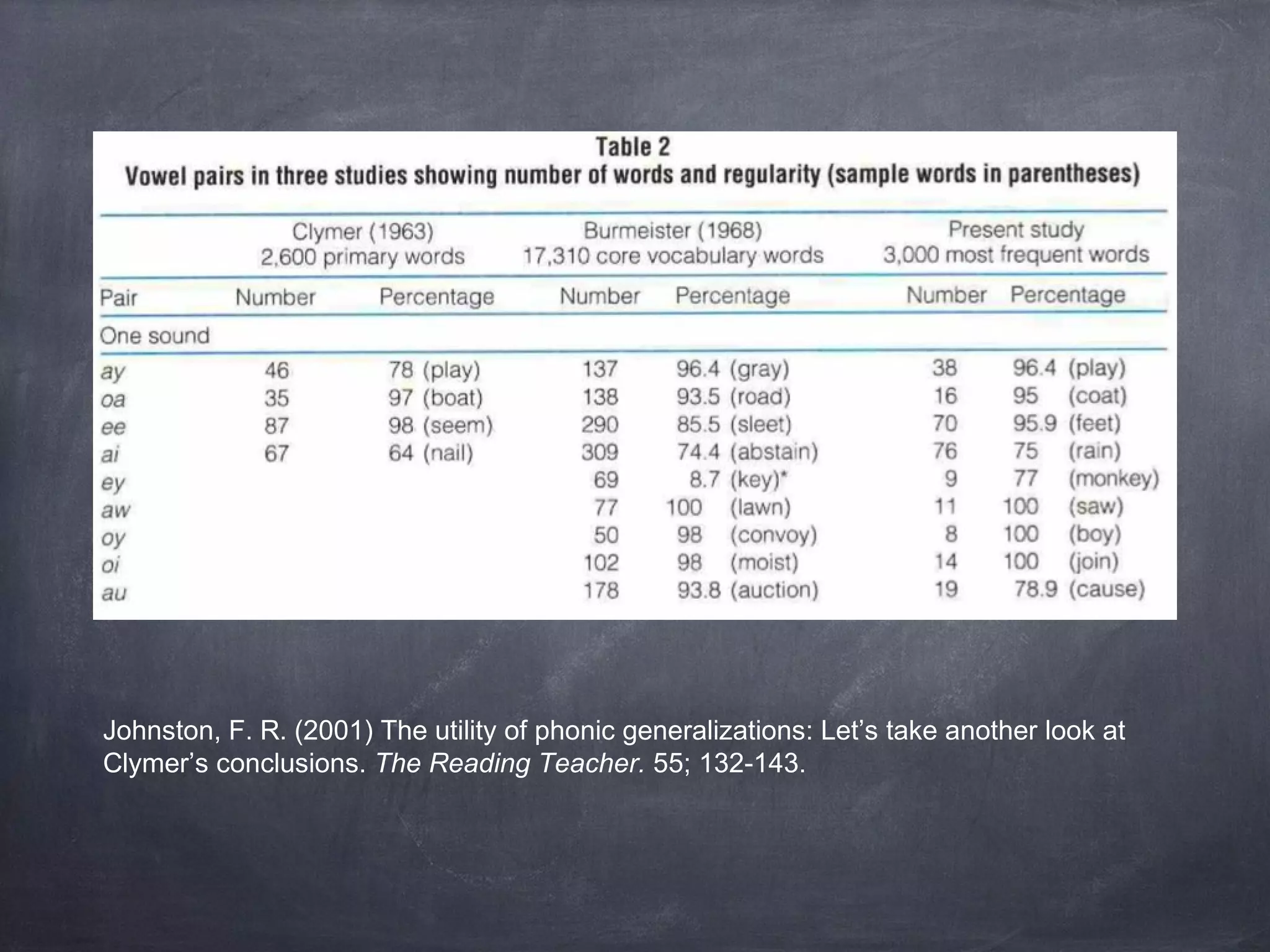
Clymer, T. (1963). The Utility of Phonic Generalizations in the Primary Grades [with Comment].
The Reading Teacher, 16(4), 252-258.
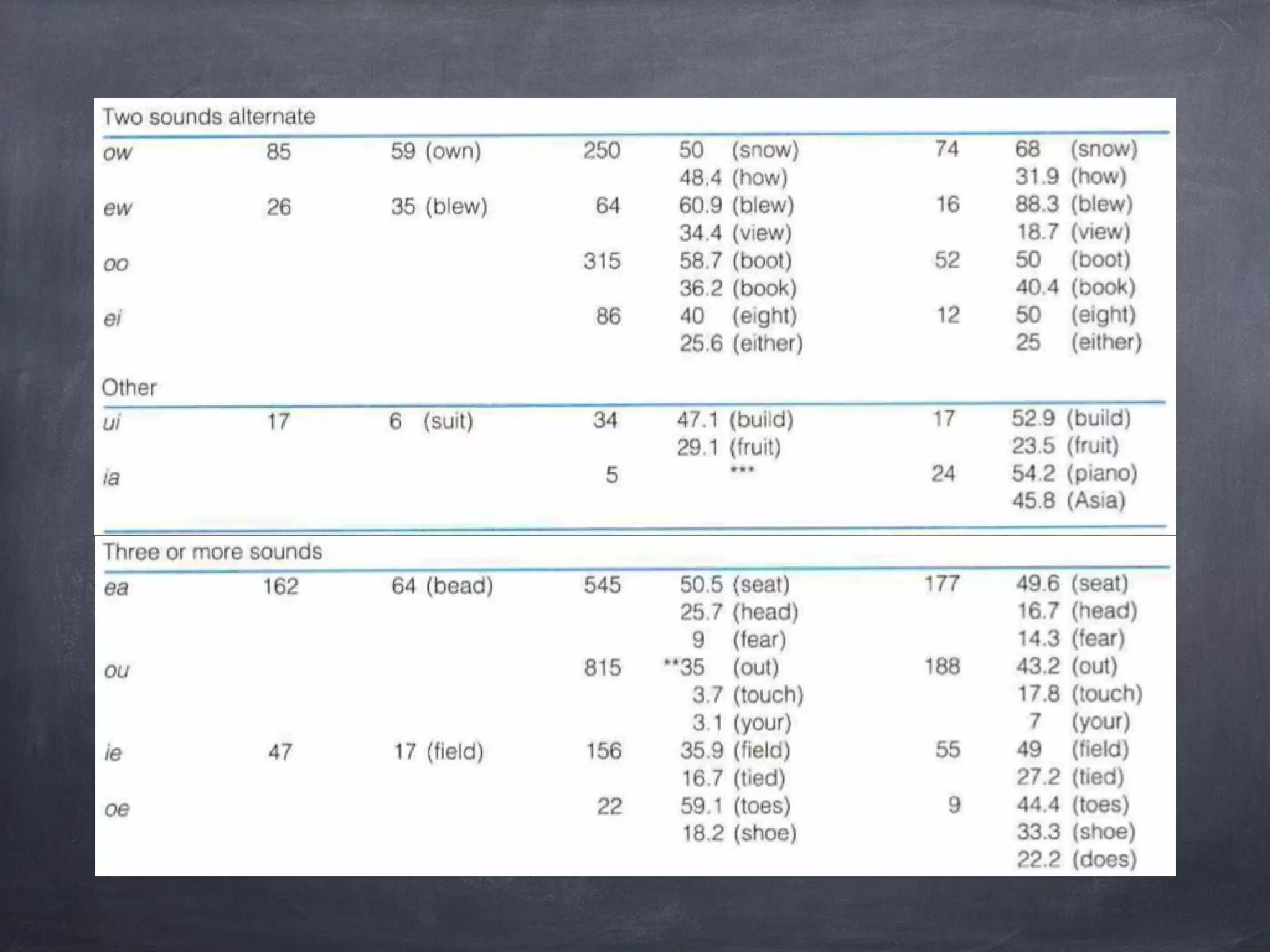
Johnston, F. R. (2001) The utility of phonic generalizations: Let’s take another look at
Clymer’s conclusions. The Reading Teacher. 55; 132-143.
Content Scope & Sequence
Structured based on:
*patterns with high utility of phonics generalization
*patterns that are variable and less reliable
but still common
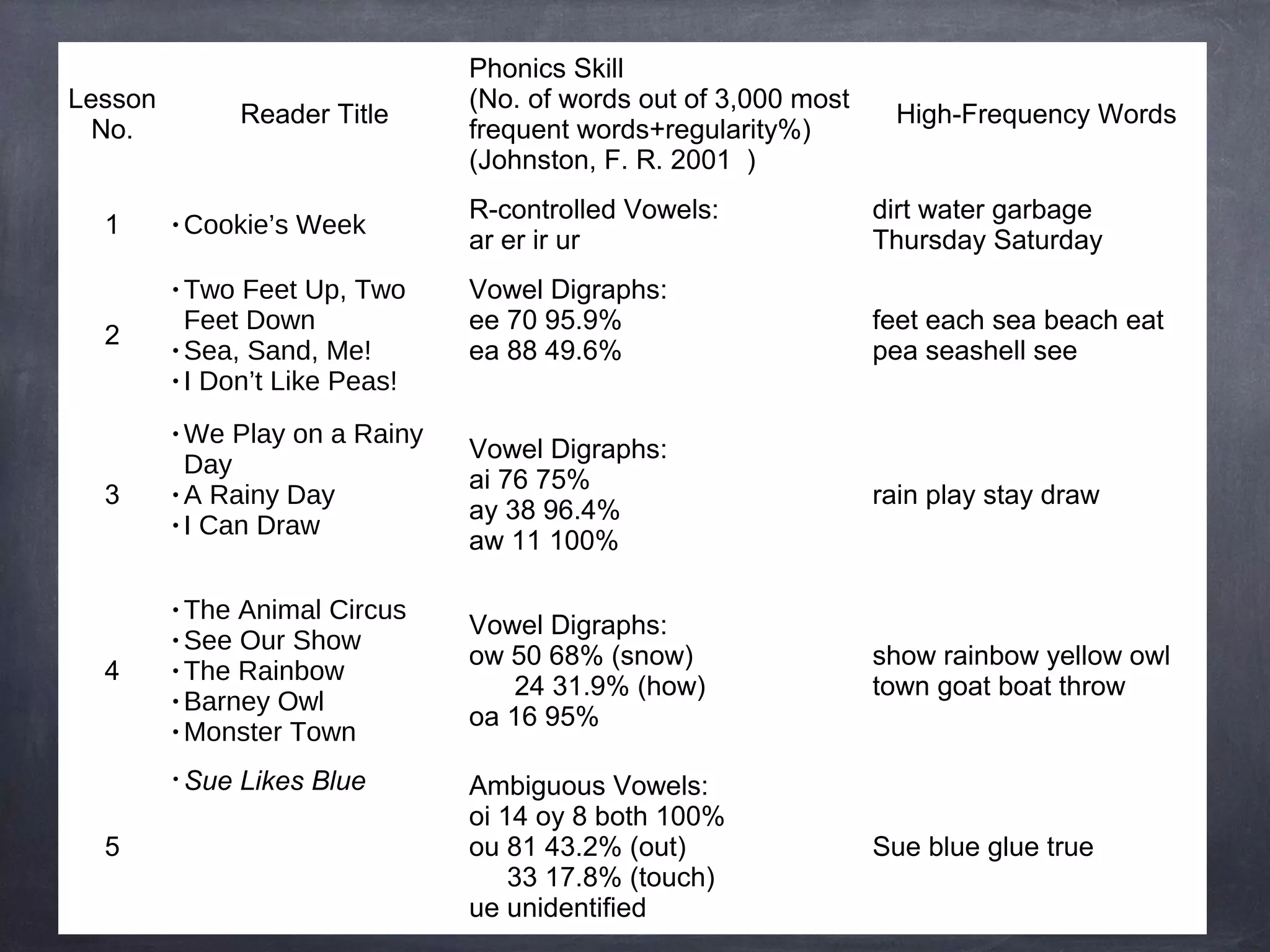
Lesson
No.
Reader Title
Phonics Skill
(No. of words out of 3,000 most
frequent words+regularity%)
(Johnston, F. R. 2001 )
High-Frequency Words
1 • Cookie’s Week
R-controlled Vowels:
ar er ir ur
dirt water garbage
Thursday Saturday
2
• Two Feet Up, Two
Feet Down
• Sea, Sand, Me!
• I Don’t Like Peas!
Vowel Digraphs:
ee 70 95.9%
ea 88 49.6%
feet each sea beach eat
pea seashell see
3
• We Play on a Rainy
Day
• A Rainy Day
• I Can Draw
Vowel Digraphs:
ai 76 75%
ay 38 96.4%
aw 11 100%
rain play stay draw
4
• The Animal Circus
• See Our Show
• The Rainbow
• Barney Owl
• Monster Town
Vowel Digraphs:
ow 50 68% (snow)
24 31.9% (how)
oa 16 95%
show rainbow yellow owl
town goat boat throw
5
• Sue Likes Blue Ambiguous Vowels:
oi 14 oy 8 both 100%
ou 81 43.2% (out)
33 17.8% (touch)
ue unidentified
Sue blue glue true
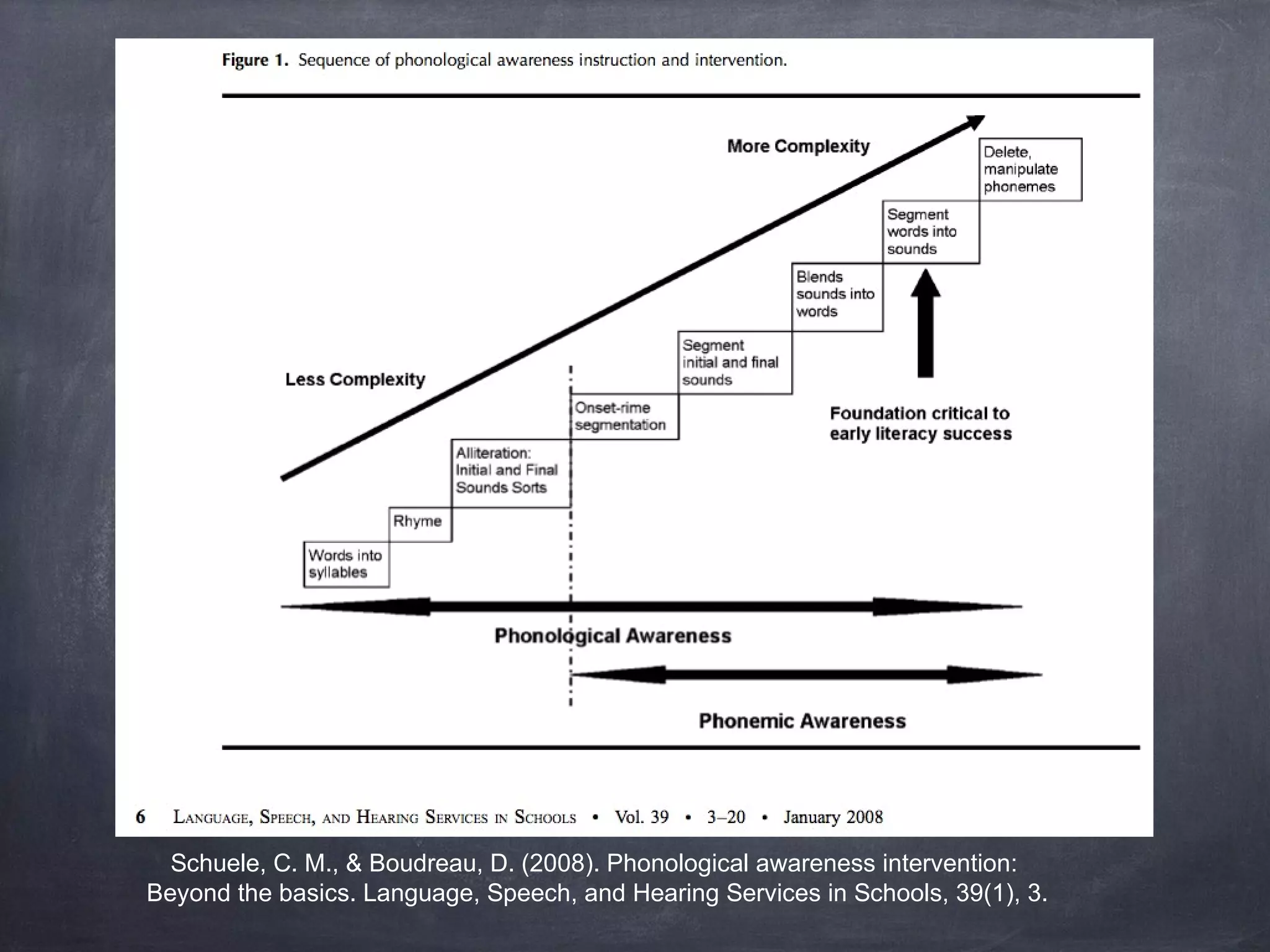
Schuele, C. M., & Boudreau, D. (2008). Phonological awareness intervention:
Beyond the basics. Language, Speech, and Hearing Services in Schools, 39(1), 3.
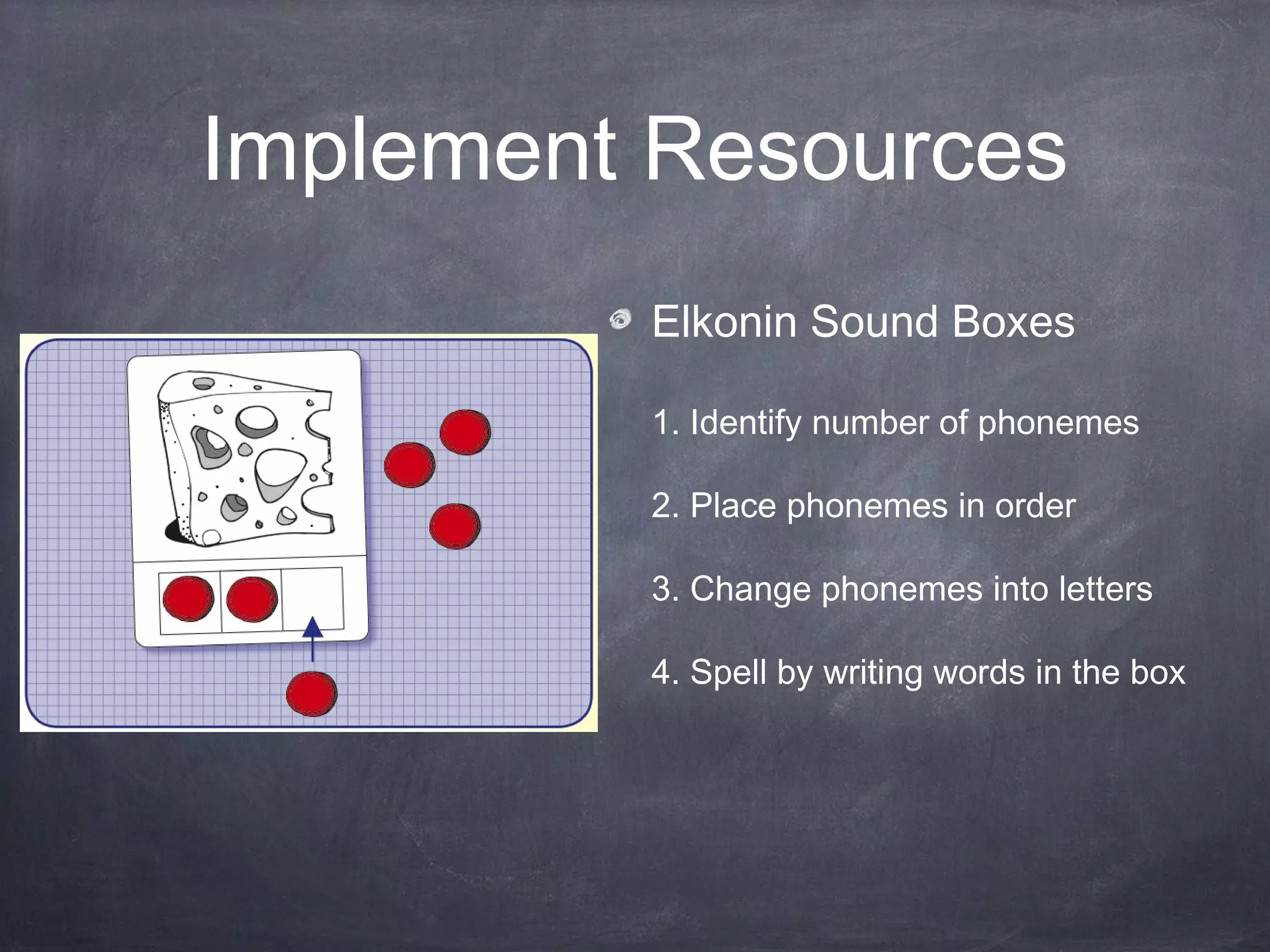
Implement Resources
Elkonin Sound Boxes
1. Identify number of phonemes
2. Place phonemes in order
3. Change phonemes into letters
4. Spell by writing words in the box
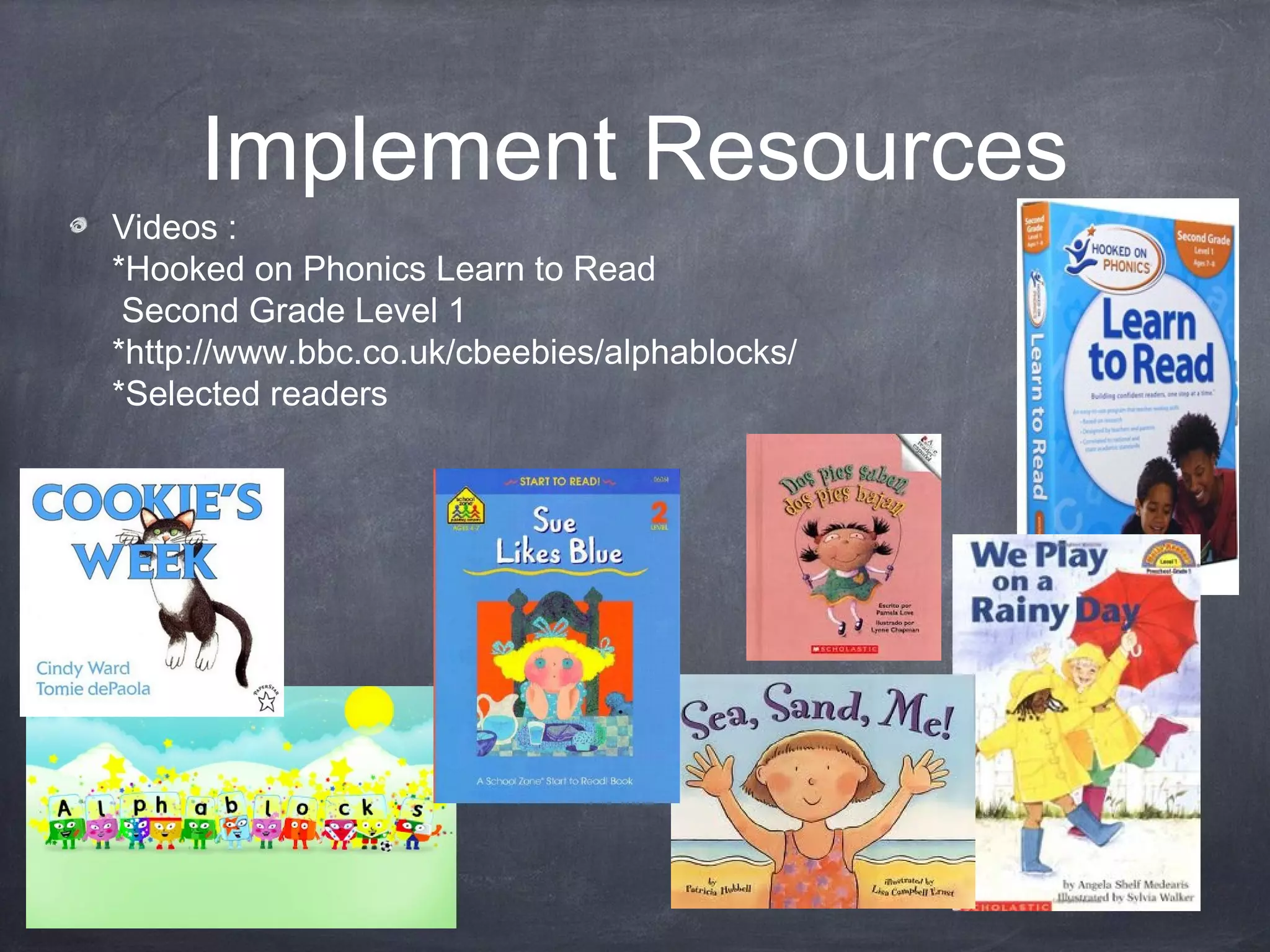
Implement Resources
Videos :
*Hooked on Phonics Learn to Read
Second Grade Level 1
*http://www.bbc.co.uk/cbeebies/alphablocks/
*Selected readers
Teaching Methodology
Synthetic phonics approach
Students are taught to associate an individual
letter or letter combination with its appropriate
sound and then blend the sounds to build word
recognition.
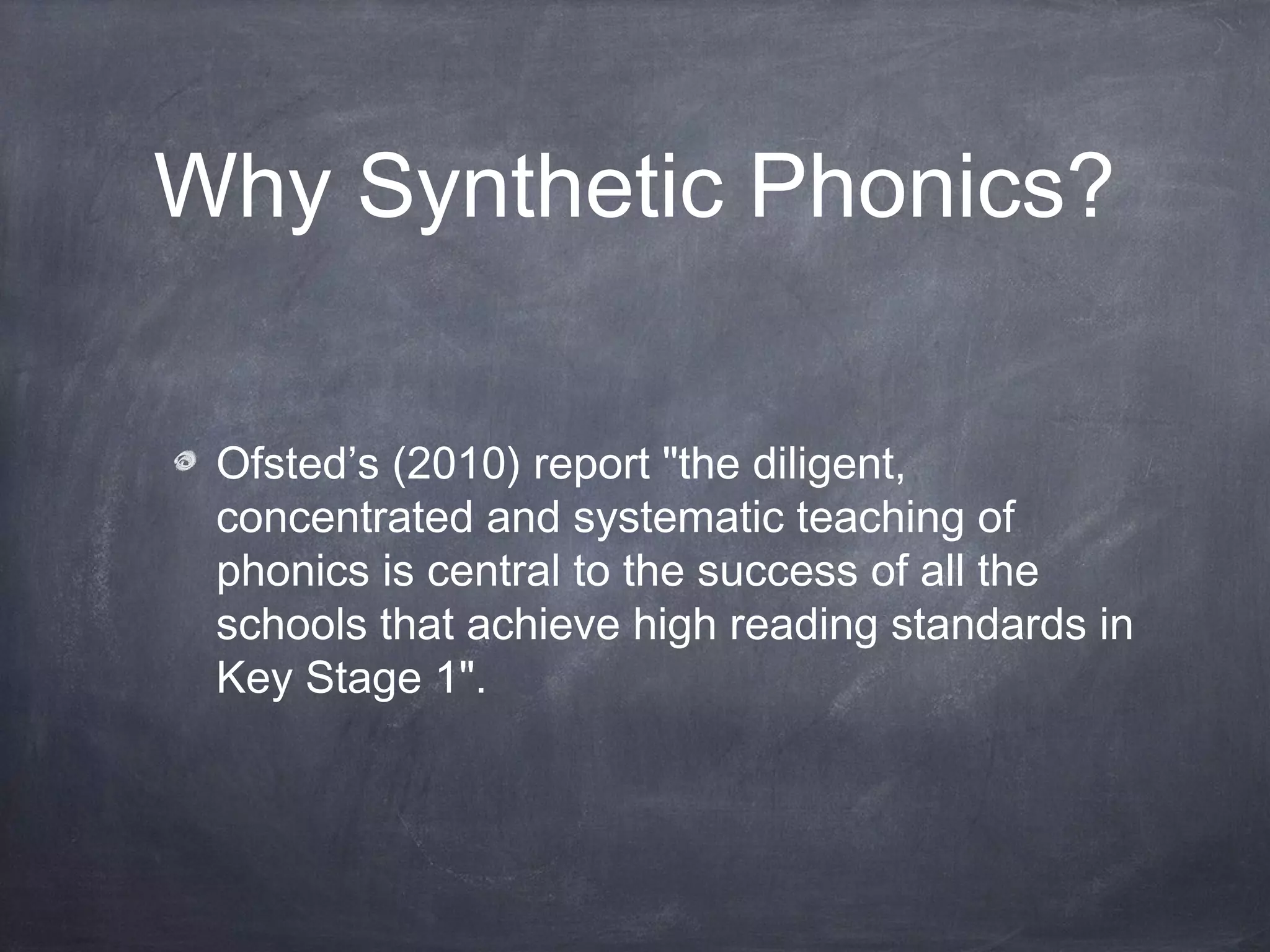
Why Synthetic Phonics?
Ofsted’s (2010) report "the diligent,
concentrated and systematic teaching of
phonics is central to the success of all the
schools that achieve high reading standards in
Key Stage 1".
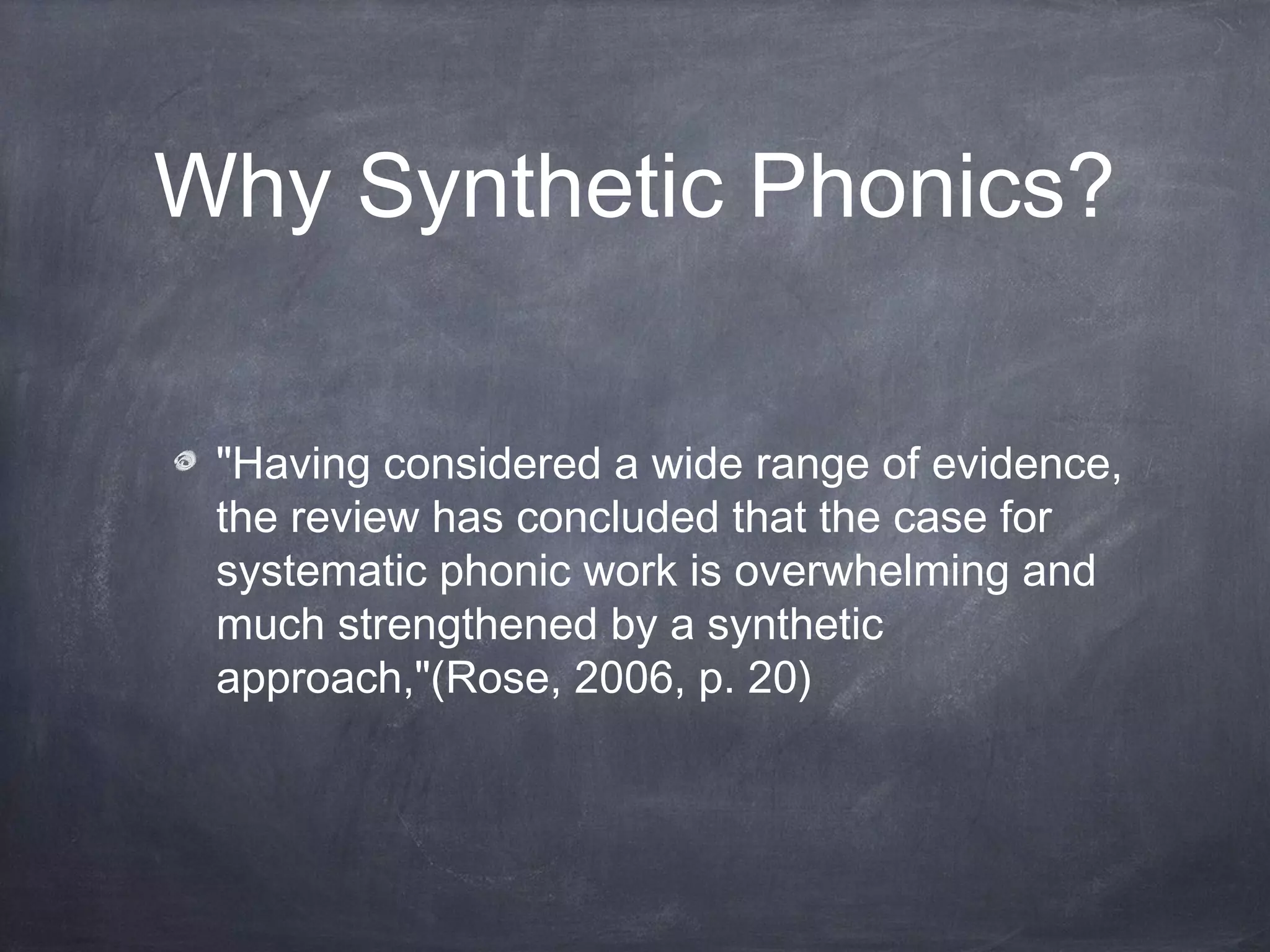
Why Synthetic Phonics?
"Having considered a wide range of evidence,
the review has concluded that the case for
systematic phonic work is overwhelming and
much strengthened by a synthetic
approach,"(Rose, 2006, p. 20)
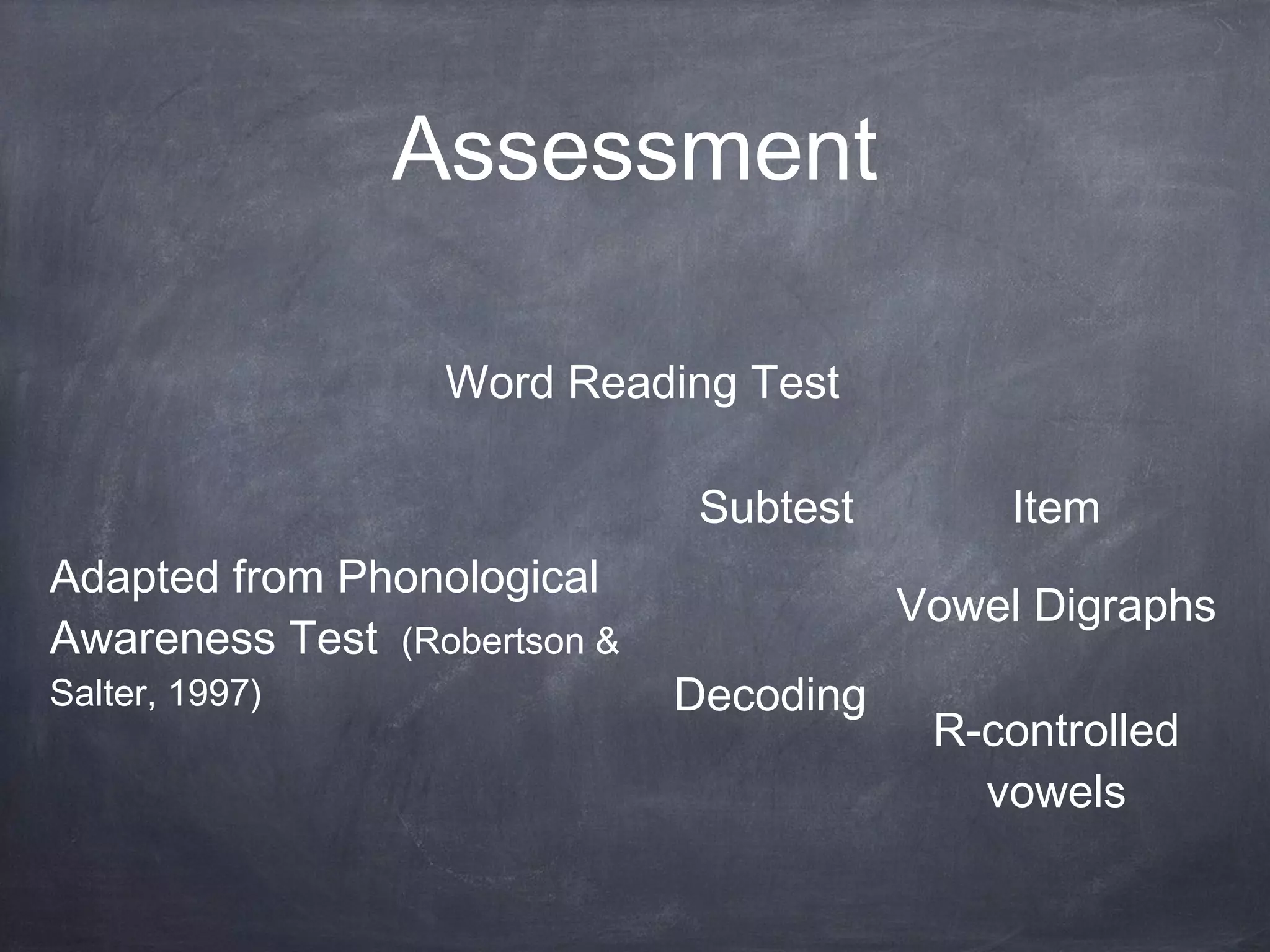
Assessment
Word Reading Test
Adapted from Phonological
Awareness Test (Robertson &
Salter, 1997)
Subtest Item
Decoding
Vowel Digraphs
R-controlled
vowels
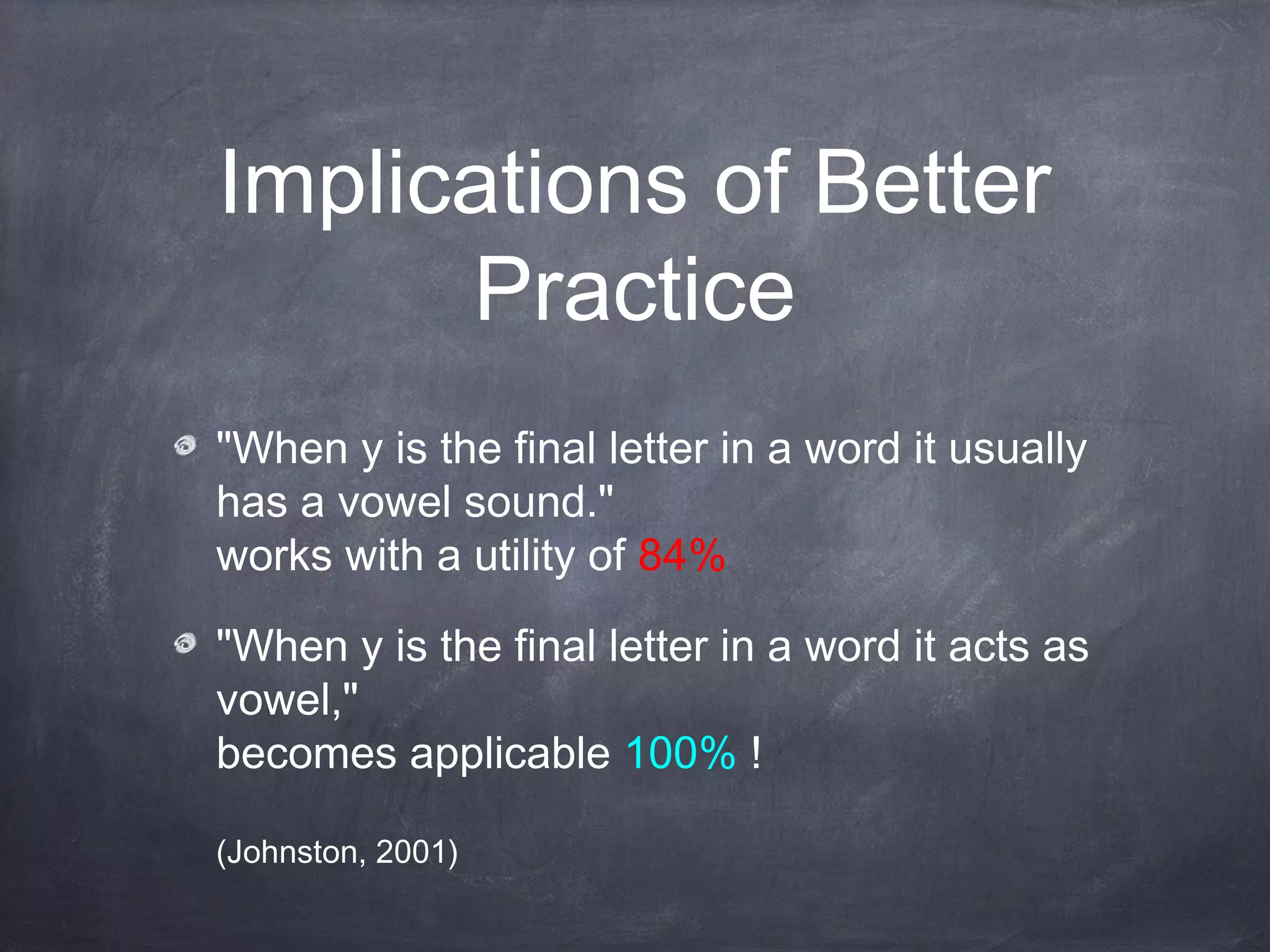
Implications of Better
Practice
"When y is the final letter in a word it usually
has a vowel sound."
works with a utility of 84%
"When y is the final letter in a word it acts as
vowel,"
becomes applicable 100% !
(Johnston, 2001)
Implications of Better
Practice
Teachers should put greater emphasis on the
development of children's speaking and
listening skills due to their intrinsic value and
their provision of foundations for high quality
phonic work. (Rose, 2005, 2006)
Implications of Better
Practice
In spite of the formality in design of best work,
teachers should use multimodality to teach
creatively considering individual differences in
children's learning rates and styles.
(Rose, 2006, p. 20)
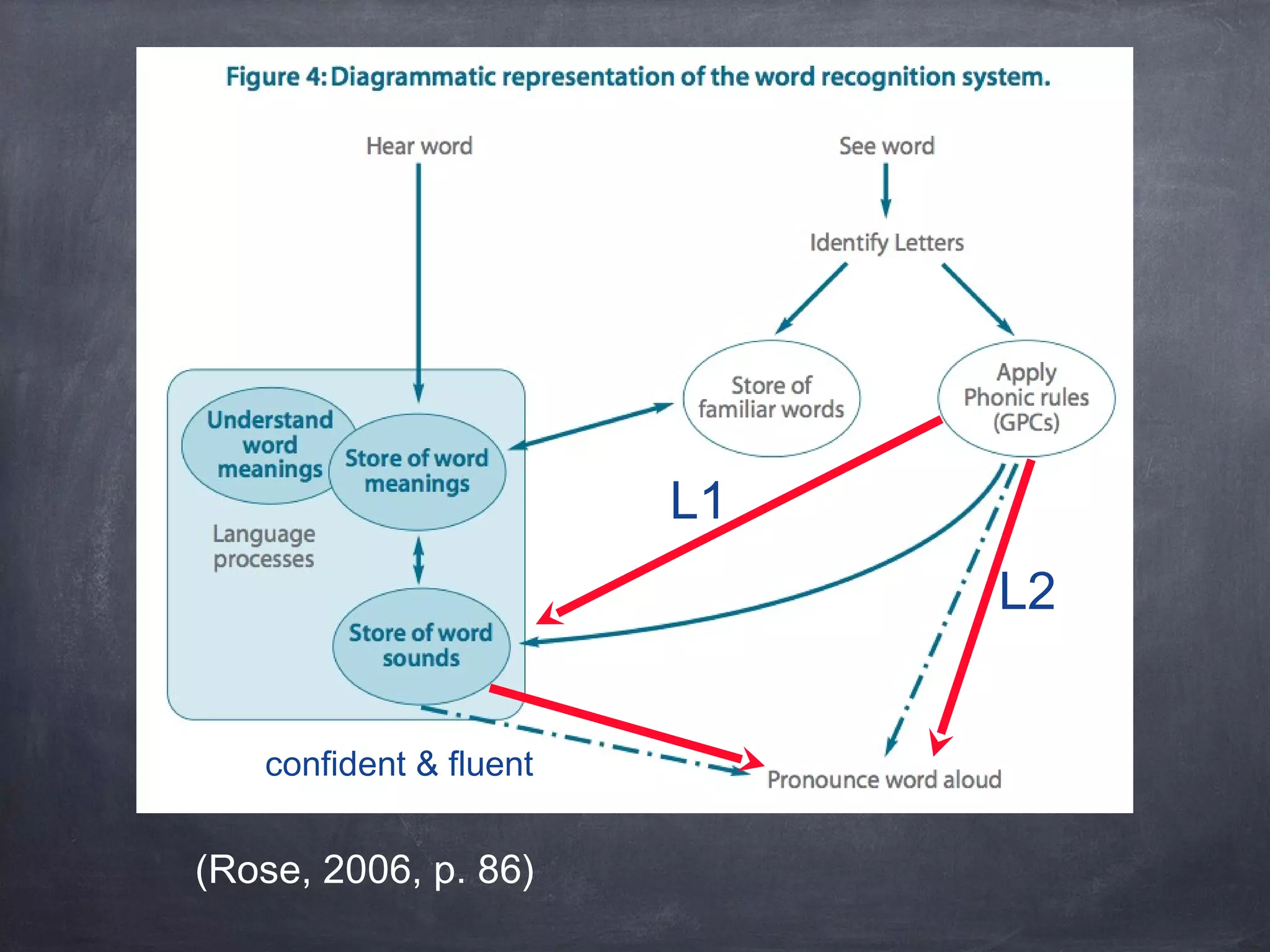
(Rose, 2006, p. 86)
L2
L1
confident & fluent

Phonics-Based Curriculum Design

  • 1.
    Explicit Systematical Phonics CurriculumDesign and Rationale English Course Design 102-1 Advising Pro: Dr.Yu-Lin Cheng Sean Chen 陳智文
  • 2.
    Contextual Environment Where toteach? Elementary school classroom Whom to teach? EFL 4th-5th graders How long? An hour a week for 5 weeks
  • 3.
    Curriculum Aim This curriculumaims to equip with knowledge of phonics generalization, letter combinations and explicit skills to sound out paired vowels and r-controlled vowels in a word.
  • 4.
    Objectives Given a wordreading test administered individually, a student will orally read a set of words with vowel pairs and r-controlled vowels correctly and independently in a reasonable period of time as judged by the teacher.
  • 5.
    Curriculum Content Sounds ofR-controlled vowels In some pairs the first vowel dominates. In some pairs the vowels "cooperate". In some pairs a new sound is created. (Burmeister, 1968, p. 2)
  • 6.
    What rules toteach? Clymer, T. (1963). The Utility of Phonic Generalizations in the Primary Grades [with Comment]. The Reading Teacher, 16(4), 252-258.
  • 7.
    Johnston, F. R.(2001) The utility of phonic generalizations: Let’s take another look at Clymer’s conclusions. The Reading Teacher. 55; 132-143.
  • 9.
    Content Scope &Sequence Structured based on: *patterns with high utility of phonics generalization *patterns that are variable and less reliable but still common
  • 10.
    Lesson No. Reader Title Phonics Skill (No.of words out of 3,000 most frequent words+regularity%) (Johnston, F. R. 2001 ) High-Frequency Words 1 • Cookie’s Week R-controlled Vowels: ar er ir ur dirt water garbage Thursday Saturday 2 • Two Feet Up, Two Feet Down • Sea, Sand, Me! • I Don’t Like Peas! Vowel Digraphs: ee 70 95.9% ea 88 49.6% feet each sea beach eat pea seashell see 3 • We Play on a Rainy Day • A Rainy Day • I Can Draw Vowel Digraphs: ai 76 75% ay 38 96.4% aw 11 100% rain play stay draw 4 • The Animal Circus • See Our Show • The Rainbow • Barney Owl • Monster Town Vowel Digraphs: ow 50 68% (snow) 24 31.9% (how) oa 16 95% show rainbow yellow owl town goat boat throw 5 • Sue Likes Blue Ambiguous Vowels: oi 14 oy 8 both 100% ou 81 43.2% (out) 33 17.8% (touch) ue unidentified Sue blue glue true
  • 11.
    Schuele, C. M.,& Boudreau, D. (2008). Phonological awareness intervention: Beyond the basics. Language, Speech, and Hearing Services in Schools, 39(1), 3.
  • 12.
    Implement Resources Elkonin SoundBoxes 1. Identify number of phonemes 2. Place phonemes in order 3. Change phonemes into letters 4. Spell by writing words in the box
  • 13.
    Implement Resources Videos : *Hookedon Phonics Learn to Read Second Grade Level 1 *http://www.bbc.co.uk/cbeebies/alphablocks/ *Selected readers
  • 14.
    Teaching Methodology Synthetic phonicsapproach Students are taught to associate an individual letter or letter combination with its appropriate sound and then blend the sounds to build word recognition.
  • 15.
    Why Synthetic Phonics? Ofsted’s(2010) report "the diligent, concentrated and systematic teaching of phonics is central to the success of all the schools that achieve high reading standards in Key Stage 1".
  • 16.
    Why Synthetic Phonics? "Havingconsidered a wide range of evidence, the review has concluded that the case for systematic phonic work is overwhelming and much strengthened by a synthetic approach,"(Rose, 2006, p. 20)
  • 17.
    Assessment Word Reading Test Adaptedfrom Phonological Awareness Test (Robertson & Salter, 1997) Subtest Item Decoding Vowel Digraphs R-controlled vowels
  • 18.
    Implications of Better Practice "Wheny is the final letter in a word it usually has a vowel sound." works with a utility of 84% "When y is the final letter in a word it acts as vowel," becomes applicable 100% ! (Johnston, 2001)
  • 19.
    Implications of Better Practice Teachersshould put greater emphasis on the development of children's speaking and listening skills due to their intrinsic value and their provision of foundations for high quality phonic work. (Rose, 2005, 2006)
  • 20.
    Implications of Better Practice Inspite of the formality in design of best work, teachers should use multimodality to teach creatively considering individual differences in children's learning rates and styles. (Rose, 2006, p. 20)
  • 21.
    (Rose, 2006, p.86) L2 L1 confident & fluent