Phonetic
Syllabification
Presented by: Rodolfo Turney
Introduction
In some languages, the spoken syllables
are also the basis of Syllabication in
writing. However, possibly due to the weak
correspondence between sounds and
letters in the spelling of modern English,
written Syllabication in English is based
mostly on etymological or morphological
instead of phonetic principles.
Definition
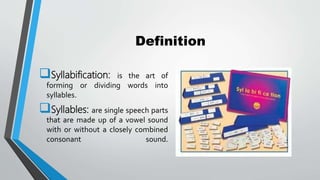
Syllabification: is the art of
forming or dividing words into
syllables.
Syllables: are single speech parts
that are made up of a vowel sound
with or without a closely combined
consonant sound.
RULES FOR SYLLABIFICATION
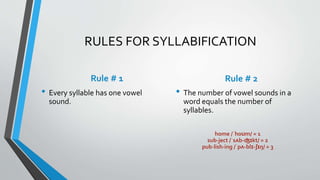
Rule # 1
• Every syllable has one vowel
sound.
Rule # 2
• The number of vowel sounds in a
word equals the number of
syllables.
home /ˈhoʊm/ = 1
sub·ject /ˈsʌb-ʤɪkt/ = 2
pub·lish·ing /ˈpʌ-blɪ-ʃɪŋ/ = 3
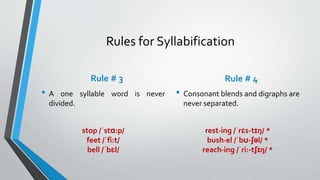
Rules for Syllabification
Rule # 3
• A one syllable word is never
divided.
stop /ˈstɑ:p/
feet /ˈfi:t/
bell /ˈbɛl/
Rule # 4
• Consonant blends and digraphs are
never separated.
rest·ing /ˈrɛs-tɪŋ/ *
bush·el /ˈbʊ-ʃəl/ *
reach·ing /ˈri:-tʃɪŋ/ *
Rules for Syllabification
Rule # 5
• When a word has a "ck" or an "x" in
it, the word is usually divided after
the "ck" or "x".
nick·el /ˈnɪ-kəl/ *
tax·is /ˈtæk-siz/ **
Rule # 6
• A compound word is divided
between the two words that make
the compound
word.
in·side /ɪn-ˈsaɪd/ or /ˈɪn-ˌsaɪd/
foot·ball /ˈfʊt-ˌbɑ:l/
tooth·brush /ˈtu:θ-ˌbrʌʃ/
Rules for Syllabification
Rule # 7
• When two or more consonants come
between two vowels in a word, it is
usually divided between the first two
consonants.
sis·ter /ˈsɪs-tɚ/
but·ter /ˈbʌ-tɚ/
hun·gry /ˈhʌŋ-gri/
Rule # 8
• When a single consonant comes
between two vowels in a word, it is
usually divided after the consonant
if the vowel is short.
drag·on /ˈdræ-gən/ *
can·is·ter /ˈkæ-nəs-tɚ/ *
hab·it /ˈhæ-bət/ *
Rules for Syllabification
Rule # 9
• When a single consonant comes
between two vowels in a word, it is
usually divided before the
consonant if the vowel is long.
ba·sin /ˈbeɪ-sṇ .n/
fe·ver /ˈfi:-vɚ/
ma·jor /ˈmeɪ-ʤɚ/
Rule # 10
• When two vowels come together in a
word, and are sounded separately,
divided the word between the two
vowels.
di·as·po·ra /daɪ-ˈæs-pə-rə/
di·et /ˈdaj-ət/
pro·nun·ci·a·tion /prə-ˌnʌn-si-ˈeɪ-ʃən/
Rules for Syllabification
Rule # 11
• When a vowel is sound alone in a
word, it forms a syllable itself.
grad·u·ate /ˈgræ-ʤə-ˌweɪt/ *
ed·u·ca·tion /ˌɛ-ʤə-ˈkeɪ-ʃən/ *
hi·a·tus /haɪ-ˈeɪ-təs/
Rule # 12
• A word that has a prefix is divided
between the root word and the
prefix.
dis·count /ˈdɪs-ˌkaʊnt/
mis·fit /ˈmɪs-ˌfɪt/
un·tie /ˌʌn-ˈtaɪ/
Rules for Syllabification
Rule # 13
• When be, de, ex and re are at the
beginning of a word, they make a
syllable of their own
be·come /bɪˈ-kʌm/
de·fend /dɪ-ˈfɛnd/
ex·hale /eks-ˈheɪl/
re·main /rɪ-ˈmeɪn/
Rule # 14
• A world that has a suffix is divided
between the root word and the
suffix.
kind·ness /ˈkaɪnd-nəs/
thank·ful /ˈθæŋk-fəl/
stuff·ing /ˈstʌ-fɪŋ/
Rules for Syllabification
Rule # 15
• When a word ends in le, preceded
by a consonant, the word is divided
before that consonant.
pur·ple /ˈpɚ-pəl/
fum·ble /ˈfʌm-bəl/
mid·dle /ˈmɪ-dḷ .l/
Rule # 16
• When -ed comes at the end of a
word, it forms a syllable only when
preceded by "d" or "t".
fund·ed /ˈfʌn-dəd/ *
start·ed /ˈstɑɚ-təd/ *
Rules for Syllabification
Rule # 17
• When a word or syllable ends
in al or el, these letters usually
form the last syllable.
usu·al /ˈju:-ʒə-wəl/ or /ˈju:ʒəl/ or
/ˈju:ʒ-wəl/
lev·el /ˈlɛ-vəl/
Rule # 18
• When ture and tion are at the end
of a word, they make their own
syllable.
pos·ture /ˈpɑ:s-tʃɚ/
lo·tion /ˈloʊ-ʃən/
Rules for Syllabification
Rule # 19
• When a word ends in ly, divide the
word before the ending
es·pe·cial·ly /ɪs-ˈpɛ-ʃə-li/
rough·ly /ˈrʌ-fli/
Rule # 20
When a word ends in the noun
suffix ant preceded by a consonant or
digraph, divide the word before that
consonant or digraph.
as·sis·tant /ə-ˈsɪs-tənt/ *
at·ten·dant /ə-ˈtɛn-dənt/ *
im·mi·grant /ˈɪ-mə-grənt/ *
Conclusion
English written syllabification therefore deals with a
concept of "syllable" that does not correspond to the
linguistic concept of a phonological (as opposed to
morphological) unit. As a result, even most native
English speakers are unable to syllabify words
according to established rules without consulting a
dictionary or using a word processor.

Phonetic syllabification

  • 1.
  • 2.
    Introduction In some languages,the spoken syllables are also the basis of Syllabication in writing. However, possibly due to the weak correspondence between sounds and letters in the spelling of modern English, written Syllabication in English is based mostly on etymological or morphological instead of phonetic principles.
  • 3.
    Definition Syllabification: is theart of forming or dividing words into syllables. Syllables: are single speech parts that are made up of a vowel sound with or without a closely combined consonant sound.
  • 4.
    RULES FOR SYLLABIFICATION Rule# 1 • Every syllable has one vowel sound. Rule # 2 • The number of vowel sounds in a word equals the number of syllables. home /ˈhoʊm/ = 1 sub·ject /ˈsʌb-ʤɪkt/ = 2 pub·lish·ing /ˈpʌ-blɪ-ʃɪŋ/ = 3
  • 5.
    Rules for Syllabification Rule# 3 • A one syllable word is never divided. stop /ˈstɑ:p/ feet /ˈfi:t/ bell /ˈbɛl/ Rule # 4 • Consonant blends and digraphs are never separated. rest·ing /ˈrɛs-tɪŋ/ * bush·el /ˈbʊ-ʃəl/ * reach·ing /ˈri:-tʃɪŋ/ *
  • 6.
    Rules for Syllabification Rule# 5 • When a word has a "ck" or an "x" in it, the word is usually divided after the "ck" or "x". nick·el /ˈnɪ-kəl/ * tax·is /ˈtæk-siz/ ** Rule # 6 • A compound word is divided between the two words that make the compound word. in·side /ɪn-ˈsaɪd/ or /ˈɪn-ˌsaɪd/ foot·ball /ˈfʊt-ˌbɑ:l/ tooth·brush /ˈtu:θ-ˌbrʌʃ/
  • 7.
    Rules for Syllabification Rule# 7 • When two or more consonants come between two vowels in a word, it is usually divided between the first two consonants. sis·ter /ˈsɪs-tɚ/ but·ter /ˈbʌ-tɚ/ hun·gry /ˈhʌŋ-gri/ Rule # 8 • When a single consonant comes between two vowels in a word, it is usually divided after the consonant if the vowel is short. drag·on /ˈdræ-gən/ * can·is·ter /ˈkæ-nəs-tɚ/ * hab·it /ˈhæ-bət/ *
  • 8.
    Rules for Syllabification Rule# 9 • When a single consonant comes between two vowels in a word, it is usually divided before the consonant if the vowel is long. ba·sin /ˈbeɪ-sṇ .n/ fe·ver /ˈfi:-vɚ/ ma·jor /ˈmeɪ-ʤɚ/ Rule # 10 • When two vowels come together in a word, and are sounded separately, divided the word between the two vowels. di·as·po·ra /daɪ-ˈæs-pə-rə/ di·et /ˈdaj-ət/ pro·nun·ci·a·tion /prə-ˌnʌn-si-ˈeɪ-ʃən/
  • 9.
    Rules for Syllabification Rule# 11 • When a vowel is sound alone in a word, it forms a syllable itself. grad·u·ate /ˈgræ-ʤə-ˌweɪt/ * ed·u·ca·tion /ˌɛ-ʤə-ˈkeɪ-ʃən/ * hi·a·tus /haɪ-ˈeɪ-təs/ Rule # 12 • A word that has a prefix is divided between the root word and the prefix. dis·count /ˈdɪs-ˌkaʊnt/ mis·fit /ˈmɪs-ˌfɪt/ un·tie /ˌʌn-ˈtaɪ/
  • 10.
    Rules for Syllabification Rule# 13 • When be, de, ex and re are at the beginning of a word, they make a syllable of their own be·come /bɪˈ-kʌm/ de·fend /dɪ-ˈfɛnd/ ex·hale /eks-ˈheɪl/ re·main /rɪ-ˈmeɪn/ Rule # 14 • A world that has a suffix is divided between the root word and the suffix. kind·ness /ˈkaɪnd-nəs/ thank·ful /ˈθæŋk-fəl/ stuff·ing /ˈstʌ-fɪŋ/
  • 11.
    Rules for Syllabification Rule# 15 • When a word ends in le, preceded by a consonant, the word is divided before that consonant. pur·ple /ˈpɚ-pəl/ fum·ble /ˈfʌm-bəl/ mid·dle /ˈmɪ-dḷ .l/ Rule # 16 • When -ed comes at the end of a word, it forms a syllable only when preceded by "d" or "t". fund·ed /ˈfʌn-dəd/ * start·ed /ˈstɑɚ-təd/ *
  • 12.
    Rules for Syllabification Rule# 17 • When a word or syllable ends in al or el, these letters usually form the last syllable. usu·al /ˈju:-ʒə-wəl/ or /ˈju:ʒəl/ or /ˈju:ʒ-wəl/ lev·el /ˈlɛ-vəl/ Rule # 18 • When ture and tion are at the end of a word, they make their own syllable. pos·ture /ˈpɑ:s-tʃɚ/ lo·tion /ˈloʊ-ʃən/
  • 13.
    Rules for Syllabification Rule# 19 • When a word ends in ly, divide the word before the ending es·pe·cial·ly /ɪs-ˈpɛ-ʃə-li/ rough·ly /ˈrʌ-fli/ Rule # 20 When a word ends in the noun suffix ant preceded by a consonant or digraph, divide the word before that consonant or digraph. as·sis·tant /ə-ˈsɪs-tənt/ * at·ten·dant /ə-ˈtɛn-dənt/ * im·mi·grant /ˈɪ-mə-grənt/ *
  • 14.
    Conclusion English written syllabificationtherefore deals with a concept of "syllable" that does not correspond to the linguistic concept of a phonological (as opposed to morphological) unit. As a result, even most native English speakers are unable to syllabify words according to established rules without consulting a dictionary or using a word processor.