Child Care from a Global Perspective
                  PHILIPPINES

       Annie
    , Junnifer,
     Shamsun
    Nasima,
:
    Avelina
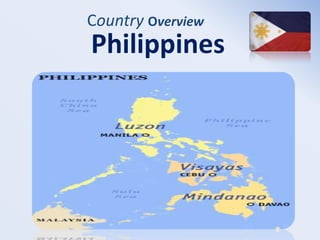
Country Overview
Philippines
•   1564-1882- PRE-SPANISH PERIOD
    1890 -1900 -SPANISH ERA

    1935-1948- AMERICAN ERA
FORMAL
o   Children are engaged in a teacher-directed, structured
    classroom tasks;
o   Activities are limited to paper- pencil tasks with
    arts/crafts, music &movement
o   Focus mainly on cognitive literacy and numeracy skills;
o   Offered both in a private Pre-school and Public Kinder and
    Primary Schools
o   Primary service provider requires university or college
    graduate of B S Degree in Early Childhood or Kindergarten
    Education or Family Life and Child Development.
• Day care programmes are carried out in public centres and
  home-based setting
    a. Home-based – Parents , guardians enhanced their
  knowledge, skills and attitudes in parenting through
  listening to air program –Philippine family on the air;
    b. PublicDay Care Centres- largest provider of early child
  care
• 3 to 4 hr sessions per age group, Monday till Friday
• Education aims to develop physical,social,emotional, and
       cognitive in a less structured curriculum and mostly
  through play.
  Both Formal and Informal aim to develop children in all
  aspects(physical,social, emotional,and cognitive )to
  maximize children’s potential through a variety of
  experiences considering their interests and capabilities.
July 26, 2005 -National Pre-School Education Program was
  conceived and started which ensures that all 5 year old
   children have access to quality pre-school education.
•To engage children in a teacher-
directed, structured classroom tasks;
•Educators maintain the children’s
health and follow safety policies, if they
get sick (I.e. cold, flu, running nose or
diarrhea).
•Encourage children’s growth in all
domains
(physical, social, emotional, language
and cognitive).
•Create enhancing programs and
curriculums
• High School Diploma

•The education must be a Bachelor of
Science degree with specialization in
Early Childhood or Kindergarten
education.

•Female between ages 18-45 (for
daycares)

•Male or female, between the age of 21-
35 (for pre-school)

•Training experience and an interest in
working with young children and
certified physically and emotionally fit.
Phillipines powerpoint

Phillipines powerpoint

  • 1.
    Child Care froma Global Perspective PHILIPPINES Annie , Junnifer, Shamsun Nasima, : Avelina
  • 2.
  • 3.
    1564-1882- PRE-SPANISH PERIOD 1890 -1900 -SPANISH ERA 1935-1948- AMERICAN ERA
  • 4.
    FORMAL o Children are engaged in a teacher-directed, structured classroom tasks; o Activities are limited to paper- pencil tasks with arts/crafts, music &movement o Focus mainly on cognitive literacy and numeracy skills; o Offered both in a private Pre-school and Public Kinder and Primary Schools o Primary service provider requires university or college graduate of B S Degree in Early Childhood or Kindergarten Education or Family Life and Child Development.
  • 5.
    • Day careprogrammes are carried out in public centres and home-based setting a. Home-based – Parents , guardians enhanced their knowledge, skills and attitudes in parenting through listening to air program –Philippine family on the air; b. PublicDay Care Centres- largest provider of early child care • 3 to 4 hr sessions per age group, Monday till Friday • Education aims to develop physical,social,emotional, and cognitive in a less structured curriculum and mostly through play. Both Formal and Informal aim to develop children in all aspects(physical,social, emotional,and cognitive )to maximize children’s potential through a variety of experiences considering their interests and capabilities.
  • 7.
    July 26, 2005-National Pre-School Education Program was conceived and started which ensures that all 5 year old children have access to quality pre-school education.
  • 8.
    •To engage childrenin a teacher- directed, structured classroom tasks; •Educators maintain the children’s health and follow safety policies, if they get sick (I.e. cold, flu, running nose or diarrhea). •Encourage children’s growth in all domains (physical, social, emotional, language and cognitive). •Create enhancing programs and curriculums
  • 9.
    • High SchoolDiploma •The education must be a Bachelor of Science degree with specialization in Early Childhood or Kindergarten education. •Female between ages 18-45 (for daycares) •Male or female, between the age of 21- 35 (for pre-school) •Training experience and an interest in working with young children and certified physically and emotionally fit.