Phenomenological
    Research
PHENOMENOLOGICAL
    RESEARCH


 to describe a
     "lived
  experience"
PURPOSE OF
        PHENOMENOLOGICAL
             RESEARCH
• is to illuminate the
  specific, to identify
  phenomena through
  how they are perceived
  by the actors in a
  situation.
In the human sphere this normally
translates into gathering ‘deep’ information and
perceptions through inductive, qualitative methods
such as:
 interviews,
 discussions,
participant observation,
 representing it from the perspective
of the research participant(s)
• Phenomenology is          • Epistemologically,
  concerned with the          phenomenological
  study of experience         approaches are based in
  from the perspective of     a paradigm of personal
  the individual,             knowledge and
  ‘bracketing’ taken-for-     subjectivity, and
  granted assumptions         emphasize the
  and usual ways of           importance of personal
  perceiving                  perspective and
                              interpretation.
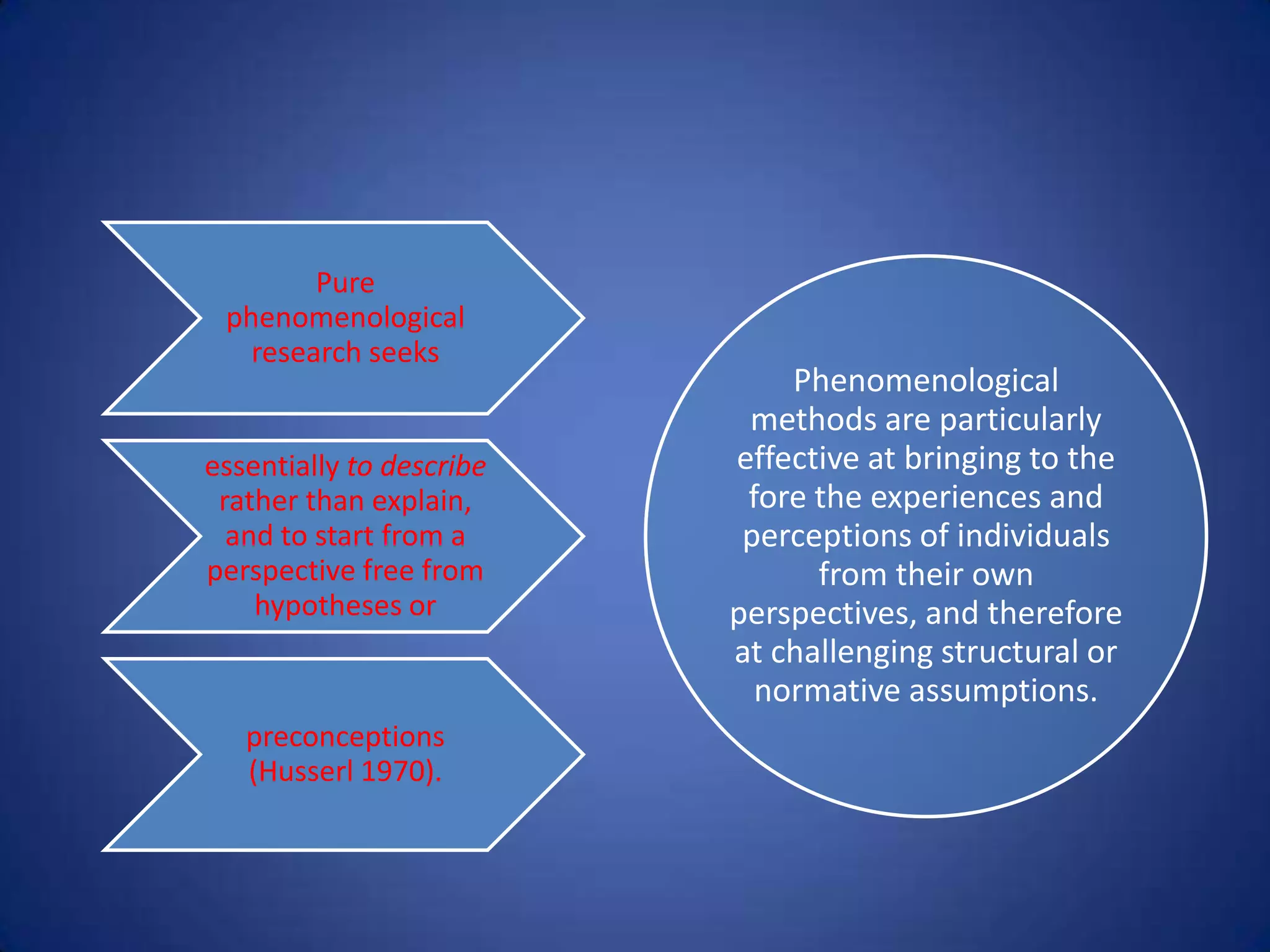
Pure
 phenomenological
   research seeks
                              Phenomenological
                           methods are particularly
essentially to describe   effective at bringing to the
 rather than explain,      fore the experiences and
  and to start from a      perceptions of individuals
perspective free from           from their own
    hypotheses or         perspectives, and therefore
                          at challenging structural or
                            normative assumptions.
   preconceptions
   (Husserl 1970).
Methods
*Phenomenological and
associated approaches can be
 applied to single cases or to   *While single-case studies are able to
       serendipitous or          identify issues which illustrate
                                 discrepancies and system failures - and to
                                 illuminate or draw attention to ‘different’
                                 situations -
    deliberately selected
          samples.

                                 positive inferences are less easy to make
                                 without a small sample of participants.
research, the strength
                of inference which
In multiple                             to recur with more
                   can be made
participant                            than one participant.
                 increases rapidly
                once factors start
In this respect it is
 important to distinguish
                                  to the
  between statistical and      population
     qualitative validity:
     phenomenological          from which
research can be robust in
  indicating the presence           the
     of factors and their
     effects in individual
                               participants
     cases, but must be       or cases were
   tentative in suggesting
   their extent in relation       drawn.
Analysis
The ‘problem’ for many
researchers with
phenomenological research is that
it generates a large quantity of
interview notes, tape recordings,
jottings or other records all of
which have to be analyzed.
Analysis is also necessarily
messy, as data doesn’t tend
 to fall into neat categories
and there can be many ways
of linking between different
   parts of discussions or
         observations.
Two methods
Where the data is fairly disorganized -
interview transcripts, unstructured
notes or personal texts - the first stage     In a small-scale project looking
is to read through and get a feel for       across themes between participants
what is being said, identifying key            is likely to be easy to do with
themes and issues in each text. These
points - from all the texts for a small-         physical documents, but an
scale project, or a sample of different      alternative useful where there are
ones where there are more than 15-20        larger numbers of participants is to
- can then be aggregated and                    enter the data into a database
organised with the aid of a mind-map        according to the analysis headings,
or set of „post-it‟ notes. The resulting      and use a mail merge facility to
list is used as a set of points to           extract and compare entries. This
interrogate the texts and structure and       also enables data entered under
summarise them (“what is this               different headings to be juxtaposed
participant saying about:”). Points
which aren‟t brought out through this        and compared, particularly useful
process need to be added.                    to identify relationships between
                                                different themes and factors.

Phenomenological research

  • 1.
  • 2.
    PHENOMENOLOGICAL RESEARCH to describe a "lived experience"
  • 3.
    PURPOSE OF PHENOMENOLOGICAL RESEARCH • is to illuminate the specific, to identify phenomena through how they are perceived by the actors in a situation.
  • 4.
    In the humansphere this normally translates into gathering ‘deep’ information and perceptions through inductive, qualitative methods such as: interviews, discussions, participant observation, representing it from the perspective of the research participant(s)
  • 5.
    • Phenomenology is • Epistemologically, concerned with the phenomenological study of experience approaches are based in from the perspective of a paradigm of personal the individual, knowledge and ‘bracketing’ taken-for- subjectivity, and granted assumptions emphasize the and usual ways of importance of personal perceiving perspective and interpretation.
  • 6.
    Pure phenomenological research seeks Phenomenological methods are particularly essentially to describe effective at bringing to the rather than explain, fore the experiences and and to start from a perceptions of individuals perspective free from from their own hypotheses or perspectives, and therefore at challenging structural or normative assumptions. preconceptions (Husserl 1970).
  • 7.
  • 8.
    *Phenomenological and associated approachescan be applied to single cases or to *While single-case studies are able to serendipitous or identify issues which illustrate discrepancies and system failures - and to illuminate or draw attention to ‘different’ situations - deliberately selected samples. positive inferences are less easy to make without a small sample of participants.
  • 9.
    research, the strength of inference which In multiple to recur with more can be made participant than one participant. increases rapidly once factors start
  • 10.
    In this respectit is important to distinguish to the between statistical and population qualitative validity: phenomenological from which research can be robust in indicating the presence the of factors and their effects in individual participants cases, but must be or cases were tentative in suggesting their extent in relation drawn.
  • 11.
  • 12.
    The ‘problem’ formany researchers with phenomenological research is that it generates a large quantity of interview notes, tape recordings, jottings or other records all of which have to be analyzed.
  • 13.
    Analysis is alsonecessarily messy, as data doesn’t tend to fall into neat categories and there can be many ways of linking between different parts of discussions or observations.
  • 14.
  • 15.
    Where the datais fairly disorganized - interview transcripts, unstructured notes or personal texts - the first stage In a small-scale project looking is to read through and get a feel for across themes between participants what is being said, identifying key is likely to be easy to do with themes and issues in each text. These points - from all the texts for a small- physical documents, but an scale project, or a sample of different alternative useful where there are ones where there are more than 15-20 larger numbers of participants is to - can then be aggregated and enter the data into a database organised with the aid of a mind-map according to the analysis headings, or set of „post-it‟ notes. The resulting and use a mail merge facility to list is used as a set of points to extract and compare entries. This interrogate the texts and structure and also enables data entered under summarise them (“what is this different headings to be juxtaposed participant saying about:”). Points which aren‟t brought out through this and compared, particularly useful process need to be added. to identify relationships between different themes and factors.