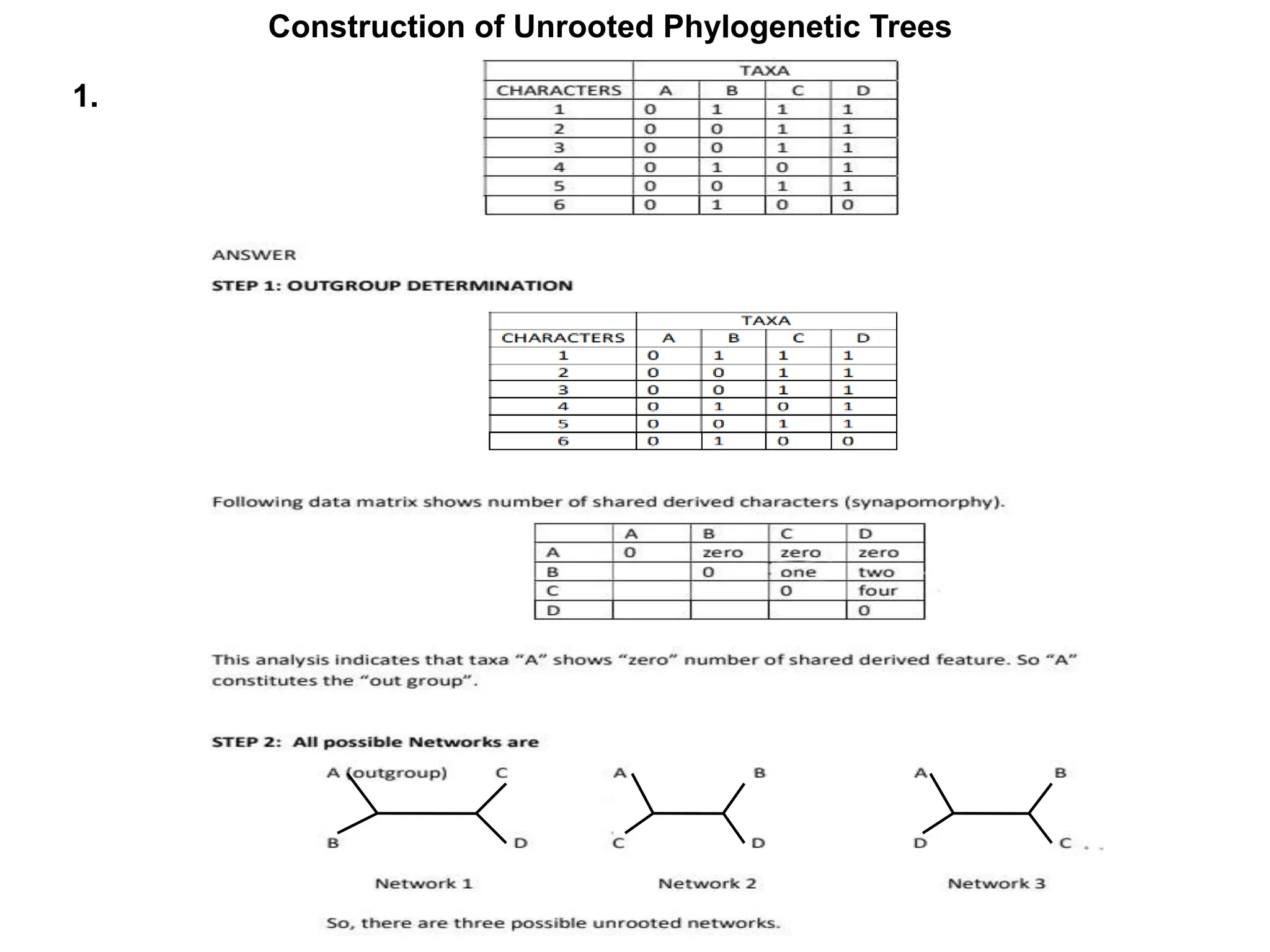
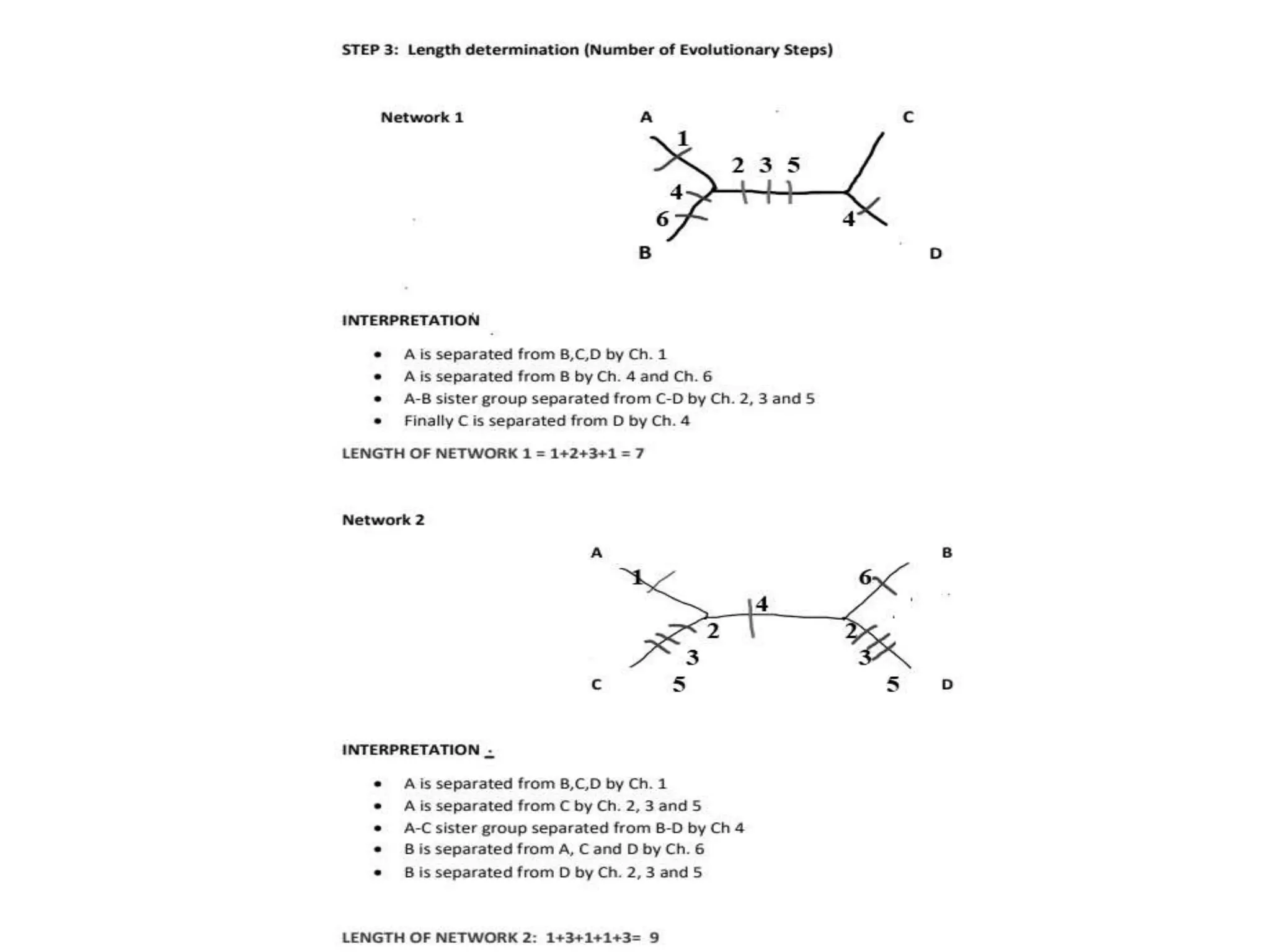
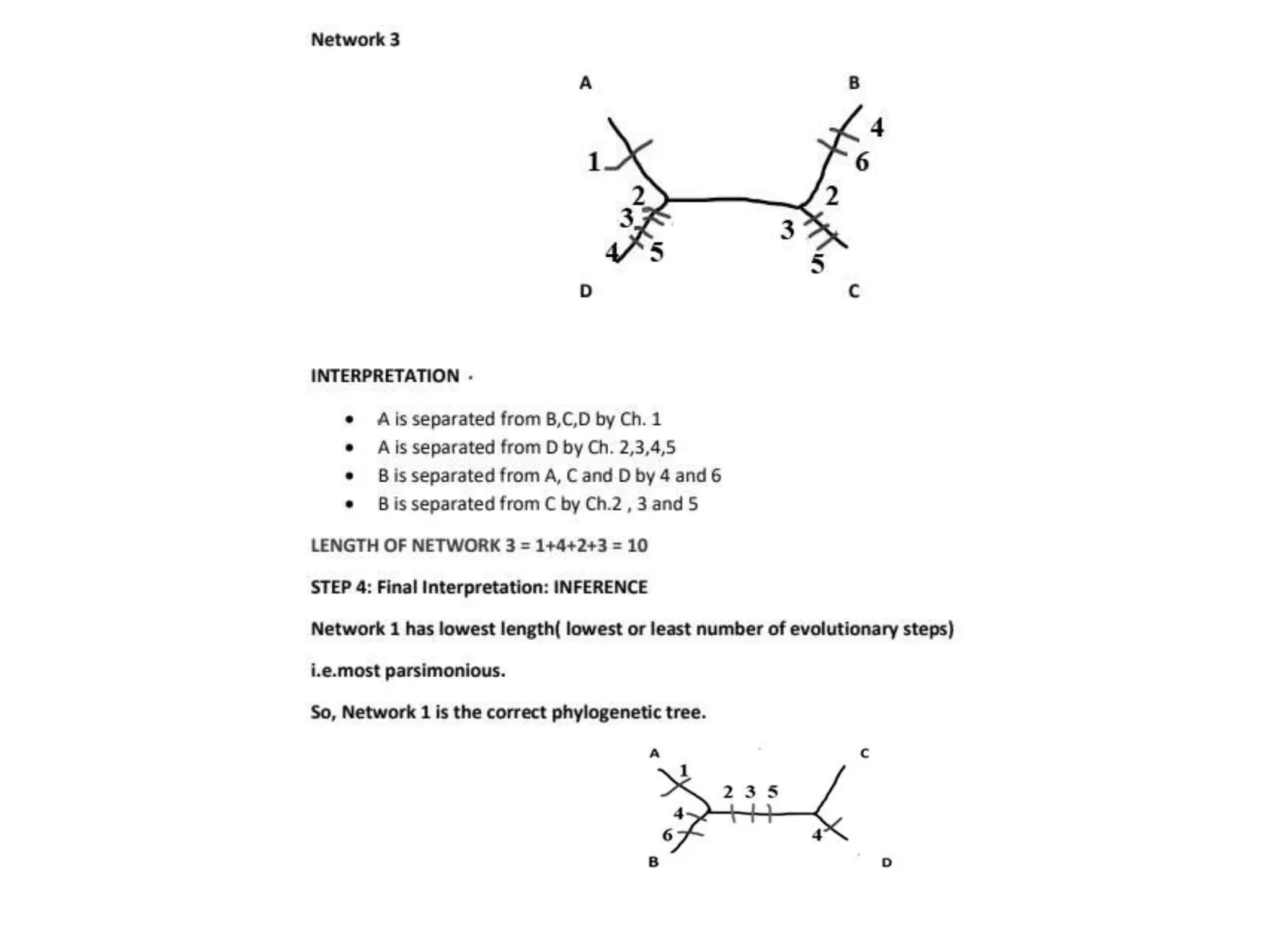
Construction of Unrooted Phylogenetic Trees
1.
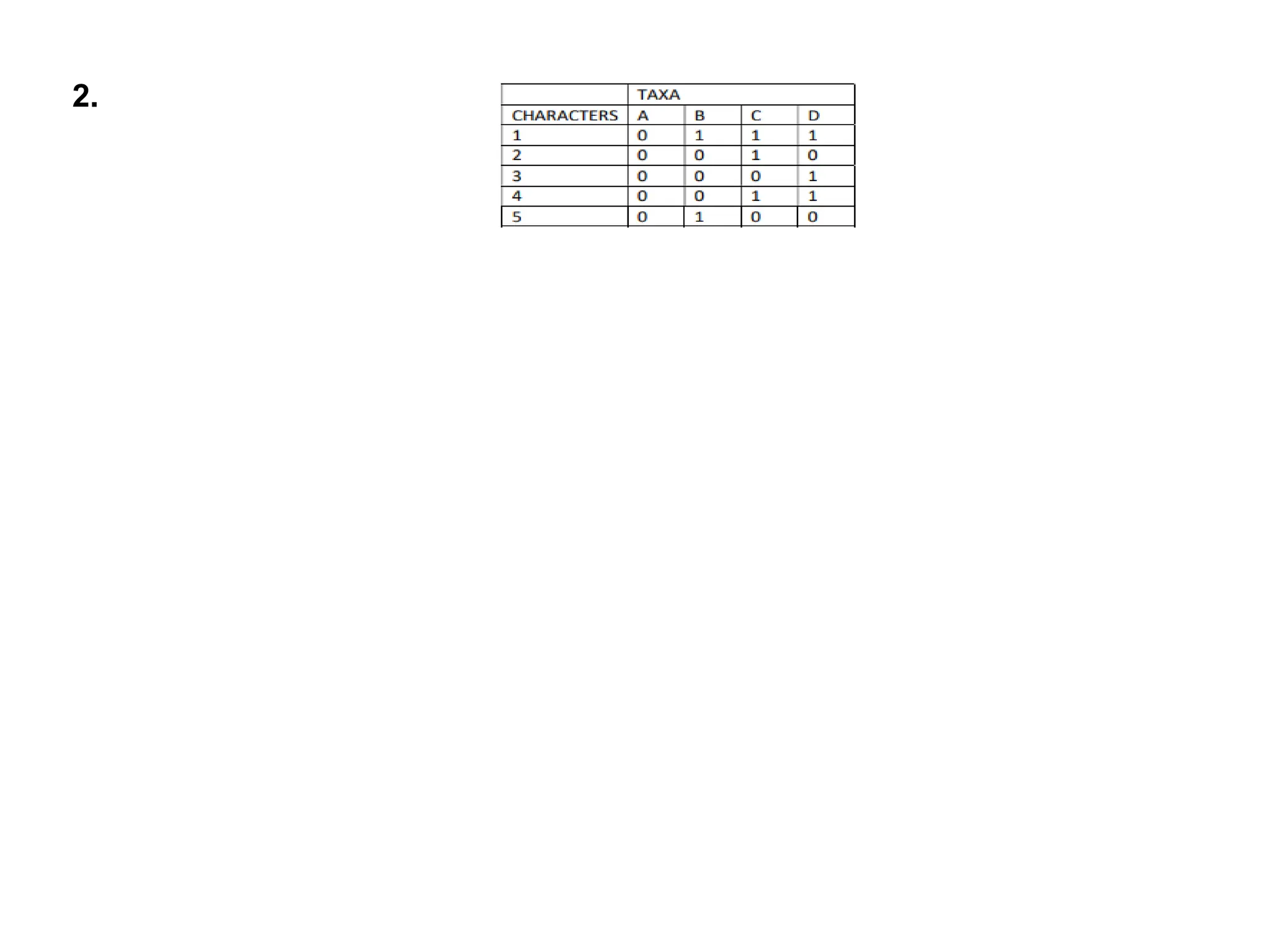
2.
Tree Building Methods:
Phenetic methods are based on distances and cladistic methods are based on characters.
1. Distance Based Methods:
Genetic distance is the number of mutation/evolutionary events between species since their divergence.
Distance-based methods are more rapid and less computationally intensive than characterbased methods, but
the actual characters are discarded once the distance matrix is derived.
Basic step: Multiple sequence alignment (MSA)
P distance: raw form of genetic distance
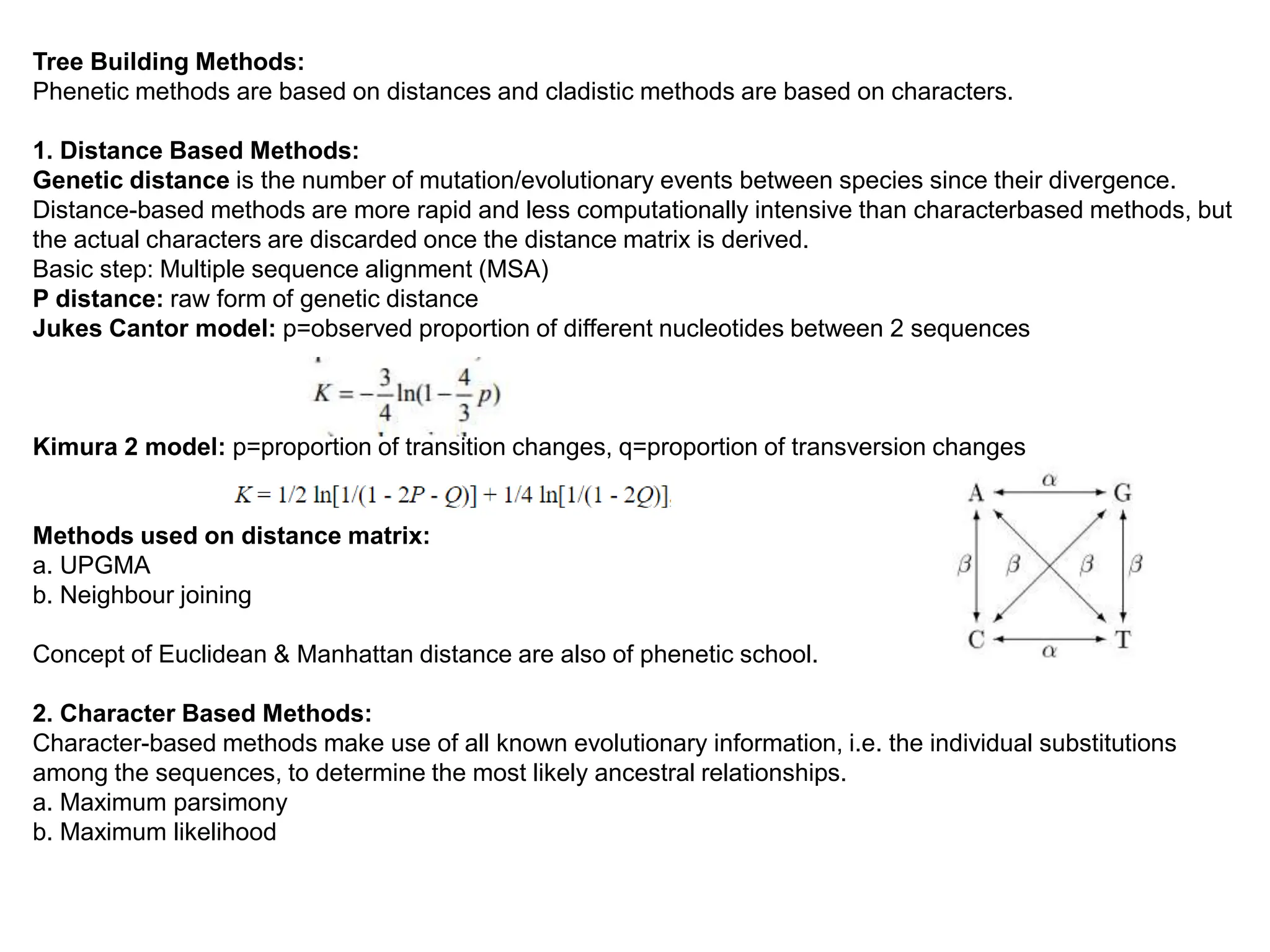
Jukes Cantor model: p=observed proportion of different nucleotides between 2 sequences
Kimura 2 model: p=proportion of transition changes, q=proportion of transversion changes
Methods used on distance matrix:
a. UPGMA
b. Neighbour joining
Concept of Euclidean & Manhattan distance are also of phenetic school.
2. Character Based Methods:
Character-based methods make use of all known evolutionary information, i.e. the individual substitutions
among the sequences, to determine the most likely ancestral relationships.
a. Maximum parsimony
b. Maximum likelihood
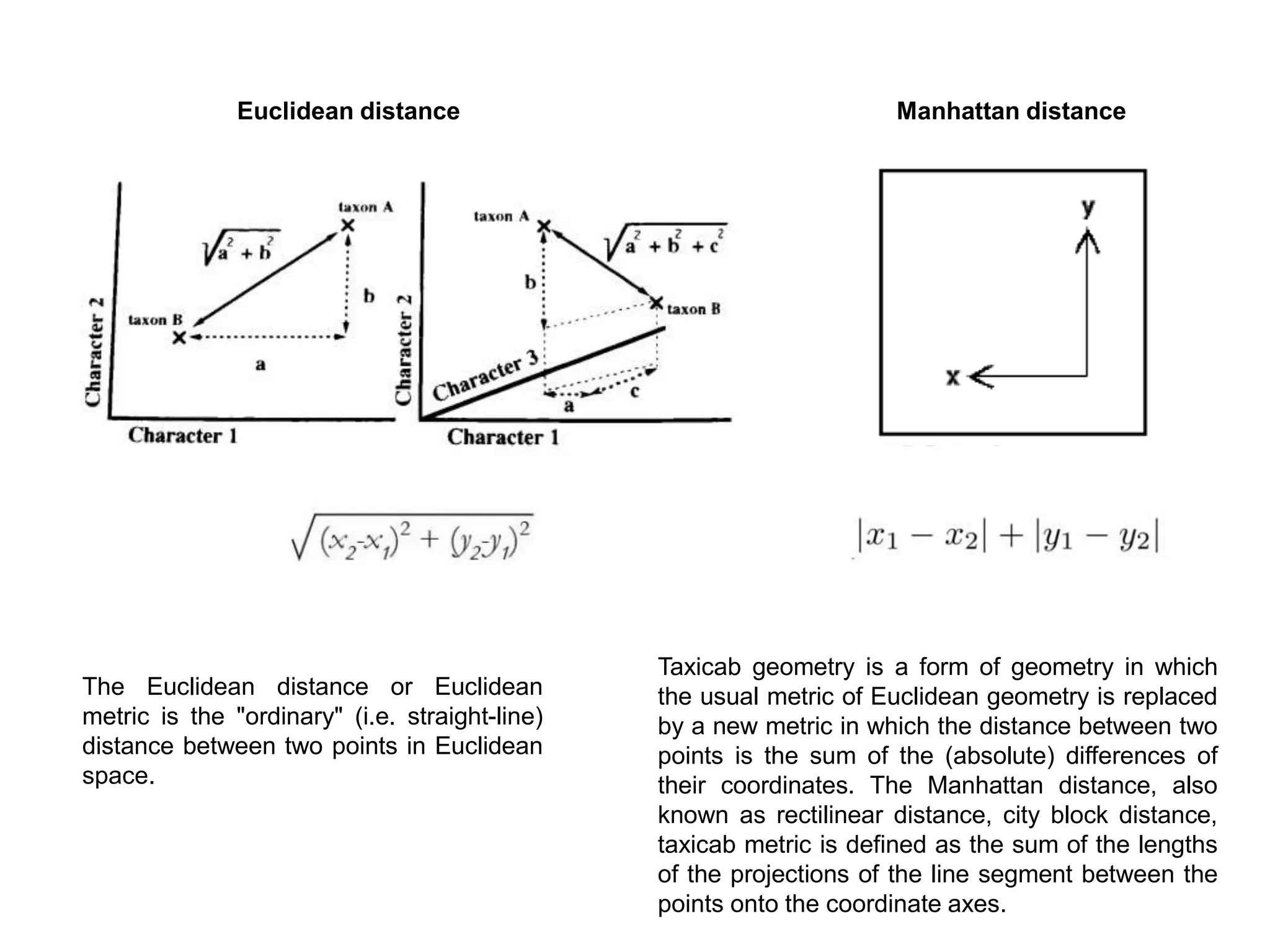
Euclidean distance Manhattan distance
The Euclidean distance or Euclidean
metric is the "ordinary" (i.e. straight-line)
distance between two points in Euclidean
space.
Taxicab geometry is a form of geometry in which
the usual metric of Euclidean geometry is replaced
by a new metric in which the distance between two
points is the sum of the (absolute) differences of
their coordinates. The Manhattan distance, also
known as rectilinear distance, city block distance,
taxicab metric is defined as the sum of the lengths
of the projections of the line segment between the
points onto the coordinate axes.

Phenetics explanation with examples B.Sc level

  • 1.
    Construction of UnrootedPhylogenetic Trees 1.
  • 4.
  • 5.
    Tree Building Methods: Pheneticmethods are based on distances and cladistic methods are based on characters. 1. Distance Based Methods: Genetic distance is the number of mutation/evolutionary events between species since their divergence. Distance-based methods are more rapid and less computationally intensive than characterbased methods, but the actual characters are discarded once the distance matrix is derived. Basic step: Multiple sequence alignment (MSA) P distance: raw form of genetic distance Jukes Cantor model: p=observed proportion of different nucleotides between 2 sequences Kimura 2 model: p=proportion of transition changes, q=proportion of transversion changes Methods used on distance matrix: a. UPGMA b. Neighbour joining Concept of Euclidean & Manhattan distance are also of phenetic school. 2. Character Based Methods: Character-based methods make use of all known evolutionary information, i.e. the individual substitutions among the sequences, to determine the most likely ancestral relationships. a. Maximum parsimony b. Maximum likelihood
  • 6.
    Euclidean distance Manhattandistance The Euclidean distance or Euclidean metric is the "ordinary" (i.e. straight-line) distance between two points in Euclidean space. Taxicab geometry is a form of geometry in which the usual metric of Euclidean geometry is replaced by a new metric in which the distance between two points is the sum of the (absolute) differences of their coordinates. The Manhattan distance, also known as rectilinear distance, city block distance, taxicab metric is defined as the sum of the lengths of the projections of the line segment between the points onto the coordinate axes.