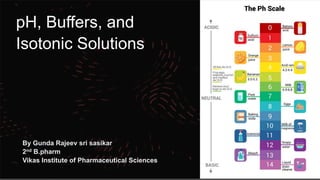
pH, Buffers, and
Isotonic Solutions
By Gunda Rajeev sri sasikar
2nd B.pharm
Vikas Institute of Pharmaceutical Sciences
Introduction to pH
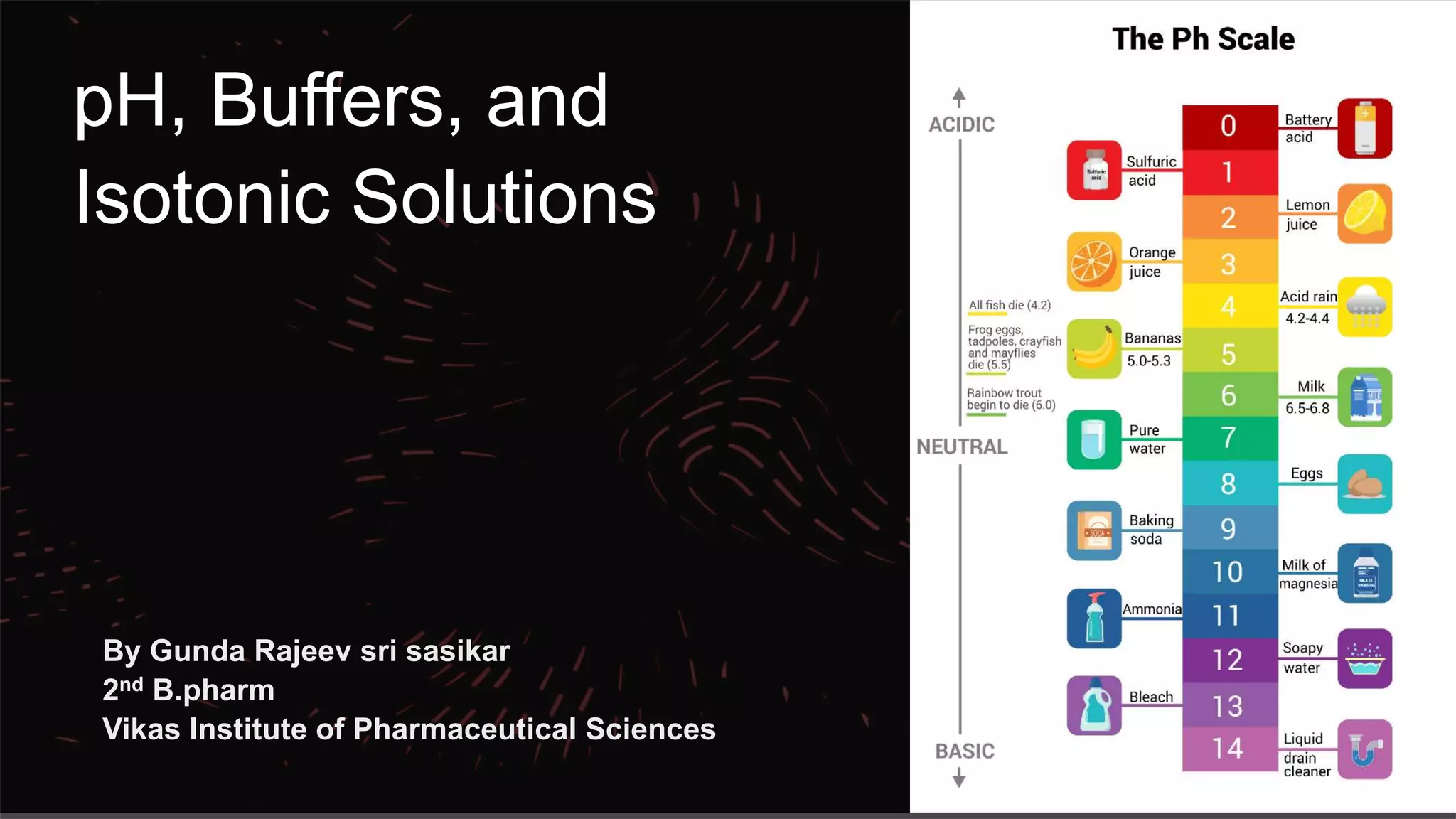
pH is a measure of the acidity or alkalinity of a solution. Sorensen's pH scale assigns values of 0 to 14, with 7 being neutral, pH<7
being acidic and pH>7 being alkaline.
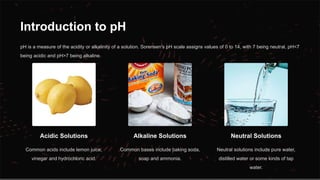
Acidic Solutions
Common acids include lemon juice,
vinegar and hydrochloric acid.
Alkaline Solutions
Common bases include baking soda,
soap and ammonia.
Neutral Solutions
Neutral solutions include pure water,
distilled water or some kinds of tap
water.
pH Determination
Electrometric Method
• The Electrometric Method is a technique used to measure the
electrical potential difference between two electrodes to determine
pH. This method is particularly useful in highly diluted or highly
concentrated solutions where other methods of measuring pH may
not work well.
• The Electrometric Method is based on the principle that when an acidic or
basic solution is brought in contact with a suitable electrode, a potential
difference is created between the solution and the electrode. By measuring
this potential difference, we can determine the pH of the solution.
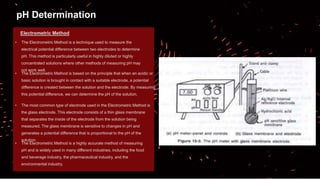
• The most common type of electrode used in the Electrometric Method is
the glass electrode. This electrode consists of a thin glass membrane
that separates the inside of the electrode from the solution being
measured. The glass membrane is sensitive to changes in pH and
generates a potential difference that is proportional to the pH of the
solution.
• The Electrometric Method is a highly accurate method of measuring
pH and is widely used in many different industries, including the food
and beverage industry, the pharmaceutical industry, and the
environmental industry.
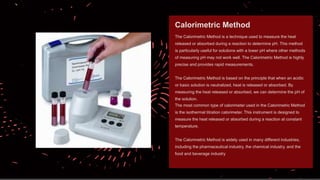
The Calorimetric Method is a technique used to measure the heat
released or absorbed during a reaction to determine pH. This method
is particularly useful for solutions with a lower pH where other methods
of measuring pH may not work well. The Calorimetric Method is highly
precise and provides rapid measurements.
The Calorimetric Method is based on the principle that when an acidic
or basic solution is neutralized, heat is released or absorbed. By
measuring the heat released or absorbed, we can determine the pH of
the solution.
The most common type of calorimeter used in the Calorimetric Method
is the isothermal titration calorimeter. This instrument is designed to
measure the heat released or absorbed during a reaction at constant
temperature.
The Calorimetric Method is widely used in many different industries,
including the pharmaceutical industry, the chemical industry, and the
food and beverage industry
Calorimetric Method
Applications of Buffers
A buffer keeps pH levels within a narrow range, even when small amounts of acids or bases are added to it. Buffers are used in many chemical
processes to maintain the desired environment that permits reactions to proceed with high efficiency and selectivity.
Pharmaceutical Industry
Buffers are a crucial component in many drugs
to maintain the pH range, thus increasing their
efficacy.
Biotech Industry
Buffers maintain a stable environment for
biological organisms and assist in
understanding the features of different
biological processes.
Environmental Science
Buffers play an important role in limiting pH
changes in water systems, ensuring the
survival of aquatic organisms.
Buffers and their Role in Regulating pH
pH regulation is crucial for many biological, chemical and industrial processes. Buffers stabilize the pH by
resisting changes or neutralizing added acid or base in a solution.
The Acid Buffer The Base Buffer
Contains a weak acid and its salt. When excess
hydroxyl ions are added, the weak acid neutralizes
them by converting them into water and
decreasing the pH level.
The base buffer contains a weak base and its salt.
When excess hydrogen ions are added, the weak
base neutralizes them by converting them into
water and increasing the pH level.
Examples of Buffers
1
Acetate buffer
Organic buffer that stabilizes at a pH of 4.8.
2
Phosphate buffer
This inorganic buffer is perfect for buffering
biological systems at a pH of 7.4.
3
HEPES buffer
HEPES buffer is a commonly used buffering
agent in biological research. It has an excellent
buffering capacity and can provide a pH between
7.2 and 8.4.
Buffer Equation
The Henderson-Hasselbalch equation is commonly used to calculate the pH of a buffered solution:
pH = pKa + log([A-]/[HA])
Where "pKa" is the acid dissociation constant and "[A-]" and "[HA]" represent the concentrations
of the deprotonated and protonated forms of the buffer, respectively.
Buffer Capacity
Buffer capacity is the amount of acid or base that can be added/removed without any significant impact on the pH of the solution. It tells us how strong the
buffer is. Buffers with higher capacity are better suited to stabilize pH changes in complex systems.
The equation for buffer capacity is:
β = Δ[base]/ΔpH = Δ[acid]/ΔpH
Alka-Seltzer
The buffer in Alka-Seltzer neutralizes excess gastric acid in the stomach.
Blood Buffering Systems
The bicarbonate buffer system in blood maintains its pH in the narrow range
of 7.35 to 7.45.
Buffered Isotonic Solutions
What is Isotonicity?
A solution with the same salt concentration as
that inside a cell is said to be isotonic with the
cell.
Application of Buffered Isotonic Solutions
Buffered isotonic solutions are used to maintain
physiological pH in transport media, intravenous
fluids, and eye drops to prevent irritation.
Conclusion
pH and buffers are present everywhere - from the food we eat to the biological processes within our bodies. We
hope this presentation has provided insight into these fascinating concepts and how they shape our world.
Thank You
Thank You

pH-Buffers-and-Isotonic-Solutions.pptx

  • 1.
    pH, Buffers, and IsotonicSolutions By Gunda Rajeev sri sasikar 2nd B.pharm Vikas Institute of Pharmaceutical Sciences
  • 2.
    Introduction to pH pHis a measure of the acidity or alkalinity of a solution. Sorensen's pH scale assigns values of 0 to 14, with 7 being neutral, pH<7 being acidic and pH>7 being alkaline. Acidic Solutions Common acids include lemon juice, vinegar and hydrochloric acid. Alkaline Solutions Common bases include baking soda, soap and ammonia. Neutral Solutions Neutral solutions include pure water, distilled water or some kinds of tap water.
  • 3.
    pH Determination Electrometric Method •The Electrometric Method is a technique used to measure the electrical potential difference between two electrodes to determine pH. This method is particularly useful in highly diluted or highly concentrated solutions where other methods of measuring pH may not work well. • The Electrometric Method is based on the principle that when an acidic or basic solution is brought in contact with a suitable electrode, a potential difference is created between the solution and the electrode. By measuring this potential difference, we can determine the pH of the solution. • The most common type of electrode used in the Electrometric Method is the glass electrode. This electrode consists of a thin glass membrane that separates the inside of the electrode from the solution being measured. The glass membrane is sensitive to changes in pH and generates a potential difference that is proportional to the pH of the solution. • The Electrometric Method is a highly accurate method of measuring pH and is widely used in many different industries, including the food and beverage industry, the pharmaceutical industry, and the environmental industry.
  • 4.
    The Calorimetric Methodis a technique used to measure the heat released or absorbed during a reaction to determine pH. This method is particularly useful for solutions with a lower pH where other methods of measuring pH may not work well. The Calorimetric Method is highly precise and provides rapid measurements. The Calorimetric Method is based on the principle that when an acidic or basic solution is neutralized, heat is released or absorbed. By measuring the heat released or absorbed, we can determine the pH of the solution. The most common type of calorimeter used in the Calorimetric Method is the isothermal titration calorimeter. This instrument is designed to measure the heat released or absorbed during a reaction at constant temperature. The Calorimetric Method is widely used in many different industries, including the pharmaceutical industry, the chemical industry, and the food and beverage industry Calorimetric Method
  • 5.
    Applications of Buffers Abuffer keeps pH levels within a narrow range, even when small amounts of acids or bases are added to it. Buffers are used in many chemical processes to maintain the desired environment that permits reactions to proceed with high efficiency and selectivity. Pharmaceutical Industry Buffers are a crucial component in many drugs to maintain the pH range, thus increasing their efficacy. Biotech Industry Buffers maintain a stable environment for biological organisms and assist in understanding the features of different biological processes. Environmental Science Buffers play an important role in limiting pH changes in water systems, ensuring the survival of aquatic organisms.
  • 6.
    Buffers and theirRole in Regulating pH pH regulation is crucial for many biological, chemical and industrial processes. Buffers stabilize the pH by resisting changes or neutralizing added acid or base in a solution. The Acid Buffer The Base Buffer Contains a weak acid and its salt. When excess hydroxyl ions are added, the weak acid neutralizes them by converting them into water and decreasing the pH level. The base buffer contains a weak base and its salt. When excess hydrogen ions are added, the weak base neutralizes them by converting them into water and increasing the pH level.
  • 7.
    Examples of Buffers 1 Acetatebuffer Organic buffer that stabilizes at a pH of 4.8. 2 Phosphate buffer This inorganic buffer is perfect for buffering biological systems at a pH of 7.4. 3 HEPES buffer HEPES buffer is a commonly used buffering agent in biological research. It has an excellent buffering capacity and can provide a pH between 7.2 and 8.4.
  • 8.
    Buffer Equation The Henderson-Hasselbalchequation is commonly used to calculate the pH of a buffered solution: pH = pKa + log([A-]/[HA]) Where "pKa" is the acid dissociation constant and "[A-]" and "[HA]" represent the concentrations of the deprotonated and protonated forms of the buffer, respectively.
  • 9.
    Buffer Capacity Buffer capacityis the amount of acid or base that can be added/removed without any significant impact on the pH of the solution. It tells us how strong the buffer is. Buffers with higher capacity are better suited to stabilize pH changes in complex systems. The equation for buffer capacity is: β = Δ[base]/ΔpH = Δ[acid]/ΔpH Alka-Seltzer The buffer in Alka-Seltzer neutralizes excess gastric acid in the stomach. Blood Buffering Systems The bicarbonate buffer system in blood maintains its pH in the narrow range of 7.35 to 7.45.
  • 10.
    Buffered Isotonic Solutions Whatis Isotonicity? A solution with the same salt concentration as that inside a cell is said to be isotonic with the cell. Application of Buffered Isotonic Solutions Buffered isotonic solutions are used to maintain physiological pH in transport media, intravenous fluids, and eye drops to prevent irritation.
  • 11.
    Conclusion pH and buffersare present everywhere - from the food we eat to the biological processes within our bodies. We hope this presentation has provided insight into these fascinating concepts and how they shape our world.
  • 12.