PHARMACOGENOMICS
AND DRUG
DEVELOPMENT
• ABHISHEK GOEL
• AJIT KUMAR SINGH
(MSc Bioinformatics)
AMITY UNIVERSITY NOIDA
PHARMACOGENOMICS
• Pharmacogenomics refers to the study of the relationship between specific DNA-
sequence variation and drug effect, for example, variation in haplotype versus variation
in therapeutic outcome.
• Pharmacogenomics holds the promise that medications and diagnostic interventions
may be tailor-made for individuals and adapted to each person's unique genetic
makeup, considering that individual's environment, diet, age, lifestyle, and current
state of health as significant modifiers.
• Therefore, pharmacogenomics combines traditional pharmaceutical sciences, such as
biochemistry, pharmacology, or toxicology, with annotated knowledge of genes,
proteins, and their variations that are capable of defining relationships across
variables.
CURRENT
SCENARIO IN
DRUG
DISCOVERY AND
DEVELOPMENT
• Drug discovery and development is an
elaborate and time consuming process. And
it take around 9-12 years for a drug to come
from research phase to marketing phase.
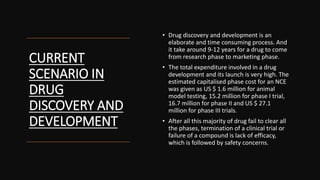
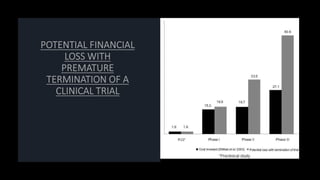
• The total expenditure involved in a drug
development and its launch is very high. The
estimated capitalised phase cost for an NCE
was given as US $ 1.6 million for animal
model testing, 15.2 million for phase I trial,
16.7 million for phase II and US $ 27.1
million for phase III trials.
• After all this majority of drug fail to clear all
the phases, termination of a clinical trial or
failure of a compound is lack of efficacy,
which is followed by safety concerns.
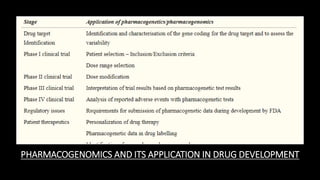
PHARMACOGENOMICS AND ITS APPLICATION IN DRUG DEVELOPMENT
DRUG TARGET AND
PHARMACOGENOMICS
• The process of drug discovery starts with the
identification of a potential target at which the
drug can act.
• The target can be an enzyme in a vital pathway, a
receptor, a transporter, a protein in signal
transduction or any protein produced in a
pathological condition.
• These targets are known to exhibit variations
owing to genetic polymorphisms. This can lead to
inconsistent results in the preclinical and clinical
studies that would follow if such a drug compound
is pursued.
• Selection of the right target for development of a
drug is vital and pharmacogenomics can play a vital
role in it.
PHARMACOGENOMICS AND CLINICAL TRIALS
• Pharmacogenomics in clinical trials is a relatively new area in which
considerable hesitation is shown by pharmaceutical companies.
Incorporation of pharmacogenomic testing with clinical trials has
multiple advantages.
• The two most important concerns for new drug development are
efficacy and safety. Before the advent of pharmacogenetic tools, the
predictability of both these factors was very low. This translated into
heavy financial loss due to attrition of the drug compound during clinical
trials. In current times, the scenario has changed and with the
availability of sophisticated pharmacogenetic tools, the attrition rate can
be significantly reduced. This translates into reduction in loss of financial
resources for drug development.
PREDICTION OF EFFICACY OF DRUG
• Drugs designed with pharmacogenomic support have a predicted efficacy status which in conventional
method was investigated in later phases.
• The chance of a drug failing in preclinical and clinical studies due to the absence of efficacy is
minimized.
• To cite an example, the drug trastuzumab, an anti-HER2 monoclonal antibody against metastatic
breast cancer, was effective only in women who over express the HER2 protein during early clinical
trials.
• The drug got approval for marketing with the requirement of testing for HER2 over expression, before
starting therapy.
• Had this drug been tested in a whole population without genetic stratification, the efficacy of the drug
would not have been brought out.
• Pharmacogenomic identify the target population that would benefit the most from the drug.
PREDICTION OF
SAFETY OF DRUG
• The second major concern in a clinical trial is the safety profile of
the drug. Data provided by preclinical studies can be applied to
humans only to a certain extent. During a clinical trial, the
occurrence of a serious adverse event could jeopardize the drug
status. Usually, such an event would culminate in the termination
of the trial.
• Drug toxicity occurs mainly due to increased plasma levels of the
drug, which may be the result of poor metabolizing capacity
owing to genetic polymorphisms. The drug metabolizing enzymes
have been identified to exhibit single nucleotide polymorphisms
and hence pharmacogenetic approach has a better predictability
of the safety of a drug.
• Those who are identified as poor metabolizers of the drug tend to
attain a higher plasma concentration of the drug, and hence the
higher incidence of toxicity. When poor metabolizers are avoided
in the study, the occurrence of serious adverse events is reduced
CONCERNS WITH PHARMACOGENOMICS IN DRUG DEVELOPMENT PROTOCOLS
• When drugs are tested, based on pharmacogenetic profile of patients and their categorization, it
gives the impression that those with poor metabolizing capacity are being left out
• It may be noted that this method only brings to light what has not been realized in the pregenomic
period, where the occurrence of serious adverse events in clinical trials and in clinical practice has
been poorly explained.
• By utilizing pharmacogenetic tools and understanding the cause for adverse effects, the drug
induced morbidity in poor metabolizers can actually be prevented when pharmacogenetics gets
linked with clinical practice and drugs are prescribed with appropriately guided doses
• Subset of population with poor metabolizing capacity, arising from genetic polymorphism,
constitutes only a minor segment, with very low frequency distribution. In the event of an enzyme
polymorphism occurring in a larger population, the development of such a drug is avoided by the
pharmaceutical firm.
PHARMACOGENETICS IN
PATIENT CARE
• The most commonly applied pharmacogenetic
testing for patient care is detection of
polymorphisms of genes coding for drug
metabolizing enzymes and assisting in dosage
selection or modification. A recent study has
shown that 59% of the drugs that cause adverse
effects are metabolized by polymorphic enzymes
• Another potential use of pharmacogenetics is
identification of population with risk factors not
directly related to the drug. It has been found
that patients with prothrombin gene mutation
have a risk of developing cerebral vein
thrombosis and when these patients are on oral
contraceptive pills, they run an even higher
risk.[33] This information, when made available,
could prevent the occurrence of adverse events
with oral contraceptives in high risk patients
having a genetic susceptibility.
CHALLENGES IN
INCLUSION OF
PHARMACOGENETICS
IN A CLINICAL SETTING
• The knowledge regarding the influence of
genetics on specific drug response and
dose modulation is yet to be imparted to
many of the clinicians.
• The drug dosage is likely to become
complicated with the involvement of
genetic data.
• Moreover, the fact that most of the
patients receive more than one drug for a
single disease and that many combination
therapies exist are likely to make the task
enormous. Adjustment of drug dosage
based on clinical parameters like liver and
renal function test is well accepted and
practiced.
• there is hesitation among clinicians to
modulate the dose on the basis of the
genetic status of the individual and they
prefer to rely on the clinical parameters
Pharmacogenomics and drug development

Pharmacogenomics and drug development

  • 1.
    PHARMACOGENOMICS AND DRUG DEVELOPMENT • ABHISHEKGOEL • AJIT KUMAR SINGH (MSc Bioinformatics) AMITY UNIVERSITY NOIDA
  • 2.
    PHARMACOGENOMICS • Pharmacogenomics refersto the study of the relationship between specific DNA- sequence variation and drug effect, for example, variation in haplotype versus variation in therapeutic outcome. • Pharmacogenomics holds the promise that medications and diagnostic interventions may be tailor-made for individuals and adapted to each person's unique genetic makeup, considering that individual's environment, diet, age, lifestyle, and current state of health as significant modifiers. • Therefore, pharmacogenomics combines traditional pharmaceutical sciences, such as biochemistry, pharmacology, or toxicology, with annotated knowledge of genes, proteins, and their variations that are capable of defining relationships across variables.
  • 3.
    CURRENT SCENARIO IN DRUG DISCOVERY AND DEVELOPMENT •Drug discovery and development is an elaborate and time consuming process. And it take around 9-12 years for a drug to come from research phase to marketing phase. • The total expenditure involved in a drug development and its launch is very high. The estimated capitalised phase cost for an NCE was given as US $ 1.6 million for animal model testing, 15.2 million for phase I trial, 16.7 million for phase II and US $ 27.1 million for phase III trials. • After all this majority of drug fail to clear all the phases, termination of a clinical trial or failure of a compound is lack of efficacy, which is followed by safety concerns.
  • 5.
    PHARMACOGENOMICS AND ITSAPPLICATION IN DRUG DEVELOPMENT
  • 6.
    DRUG TARGET AND PHARMACOGENOMICS •The process of drug discovery starts with the identification of a potential target at which the drug can act. • The target can be an enzyme in a vital pathway, a receptor, a transporter, a protein in signal transduction or any protein produced in a pathological condition. • These targets are known to exhibit variations owing to genetic polymorphisms. This can lead to inconsistent results in the preclinical and clinical studies that would follow if such a drug compound is pursued. • Selection of the right target for development of a drug is vital and pharmacogenomics can play a vital role in it.
  • 7.
    PHARMACOGENOMICS AND CLINICALTRIALS • Pharmacogenomics in clinical trials is a relatively new area in which considerable hesitation is shown by pharmaceutical companies. Incorporation of pharmacogenomic testing with clinical trials has multiple advantages. • The two most important concerns for new drug development are efficacy and safety. Before the advent of pharmacogenetic tools, the predictability of both these factors was very low. This translated into heavy financial loss due to attrition of the drug compound during clinical trials. In current times, the scenario has changed and with the availability of sophisticated pharmacogenetic tools, the attrition rate can be significantly reduced. This translates into reduction in loss of financial resources for drug development.
  • 8.
    PREDICTION OF EFFICACYOF DRUG • Drugs designed with pharmacogenomic support have a predicted efficacy status which in conventional method was investigated in later phases. • The chance of a drug failing in preclinical and clinical studies due to the absence of efficacy is minimized. • To cite an example, the drug trastuzumab, an anti-HER2 monoclonal antibody against metastatic breast cancer, was effective only in women who over express the HER2 protein during early clinical trials. • The drug got approval for marketing with the requirement of testing for HER2 over expression, before starting therapy. • Had this drug been tested in a whole population without genetic stratification, the efficacy of the drug would not have been brought out. • Pharmacogenomic identify the target population that would benefit the most from the drug.
  • 9.
    PREDICTION OF SAFETY OFDRUG • The second major concern in a clinical trial is the safety profile of the drug. Data provided by preclinical studies can be applied to humans only to a certain extent. During a clinical trial, the occurrence of a serious adverse event could jeopardize the drug status. Usually, such an event would culminate in the termination of the trial. • Drug toxicity occurs mainly due to increased plasma levels of the drug, which may be the result of poor metabolizing capacity owing to genetic polymorphisms. The drug metabolizing enzymes have been identified to exhibit single nucleotide polymorphisms and hence pharmacogenetic approach has a better predictability of the safety of a drug. • Those who are identified as poor metabolizers of the drug tend to attain a higher plasma concentration of the drug, and hence the higher incidence of toxicity. When poor metabolizers are avoided in the study, the occurrence of serious adverse events is reduced
  • 10.
    CONCERNS WITH PHARMACOGENOMICSIN DRUG DEVELOPMENT PROTOCOLS • When drugs are tested, based on pharmacogenetic profile of patients and their categorization, it gives the impression that those with poor metabolizing capacity are being left out • It may be noted that this method only brings to light what has not been realized in the pregenomic period, where the occurrence of serious adverse events in clinical trials and in clinical practice has been poorly explained. • By utilizing pharmacogenetic tools and understanding the cause for adverse effects, the drug induced morbidity in poor metabolizers can actually be prevented when pharmacogenetics gets linked with clinical practice and drugs are prescribed with appropriately guided doses • Subset of population with poor metabolizing capacity, arising from genetic polymorphism, constitutes only a minor segment, with very low frequency distribution. In the event of an enzyme polymorphism occurring in a larger population, the development of such a drug is avoided by the pharmaceutical firm.
  • 11.
    PHARMACOGENETICS IN PATIENT CARE •The most commonly applied pharmacogenetic testing for patient care is detection of polymorphisms of genes coding for drug metabolizing enzymes and assisting in dosage selection or modification. A recent study has shown that 59% of the drugs that cause adverse effects are metabolized by polymorphic enzymes • Another potential use of pharmacogenetics is identification of population with risk factors not directly related to the drug. It has been found that patients with prothrombin gene mutation have a risk of developing cerebral vein thrombosis and when these patients are on oral contraceptive pills, they run an even higher risk.[33] This information, when made available, could prevent the occurrence of adverse events with oral contraceptives in high risk patients having a genetic susceptibility.
  • 12.
    CHALLENGES IN INCLUSION OF PHARMACOGENETICS INA CLINICAL SETTING • The knowledge regarding the influence of genetics on specific drug response and dose modulation is yet to be imparted to many of the clinicians. • The drug dosage is likely to become complicated with the involvement of genetic data. • Moreover, the fact that most of the patients receive more than one drug for a single disease and that many combination therapies exist are likely to make the task enormous. Adjustment of drug dosage based on clinical parameters like liver and renal function test is well accepted and practiced. • there is hesitation among clinicians to modulate the dose on the basis of the genetic status of the individual and they prefer to rely on the clinical parameters