
Welcome to the PGPTP Secondary Science Session Dawn Berkeley, Seminar Leader After you sign in, please jot down 3 interesting facts about yourself on the index cards provided…..
Professional ValuesFocus on our primary mission of closing the achievement gap by setting high expectations for our students, our colleagues and ourselves.Maximize our experience – working with a sense of urgency, seeking out and welcoming experiences, resources, and feedback in order to grow.Be flexible.Respect one another.Model a Culture of Achievement.
Group NormsBe respectful of one anotherNo side conversationsBe on timeFocus on things within your controlNo war stories…limit dwelling (whining or complaining)No blame or excusesNo interruptingTake ownership of the session by actively participating
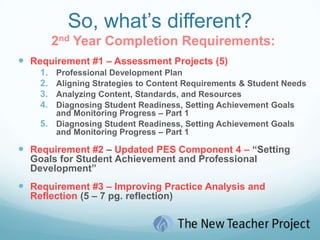
So, what’s different?2nd Year Completion Requirements:Requirement #1 – Assessment Projects (5)Professional Development PlanAligning Strategies to Content Requirements & Student NeedsAnalyzing Content, Standards, and ResourcesDiagnosing Student Readiness, Setting Achievement Goals and Monitoring Progress – Part 1Diagnosing Student Readiness, Setting Achievement Goals and Monitoring Progress – Part 1Requirement #2 – Updated PES Component 4 – “Setting Goals for Student Achievement and Professional Development”Requirement #3 – Improving Practice Analysis and Reflection (5 – 7 pg. reflection)
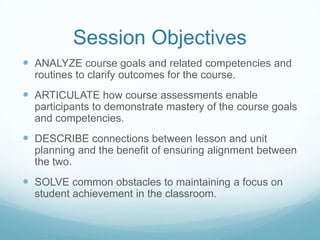
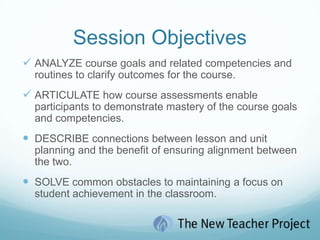
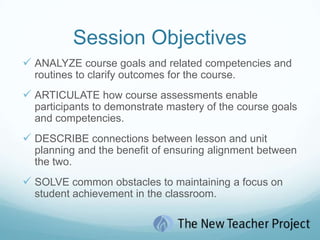
Session ObjectivesANALYZE course goals and related competencies and routines to clarify outcomes for the course.ARTICULATE how course assessments enable participants to demonstrate mastery of the course goals and competencies.DESCRIBE connections between lesson and unit planning and the benefit of ensuring alignment between the two.SOLVE common obstacles to maintaining a focus on student achievement in the classroom.
Section 1Goals, Competencies & RoutinesPersonal & Course GoalsCourse CompetenciesCourse Routines
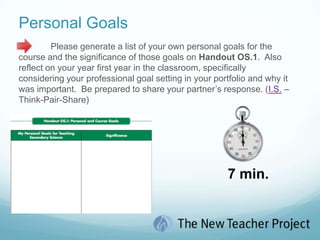
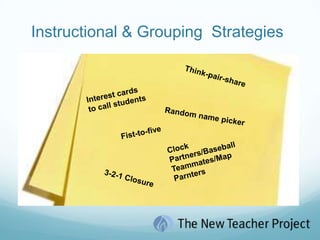
Personal Goals     	Please generate a list of your own personal goals for the course and the significance of those goals on Handout OS.1.  Also reflect on your year first year in the classroom, specifically considering your professional goal setting in your portfolio and why it was important.  Be prepared to share your partner’s response. (I.S. – Think-Pair-Share)7 min.
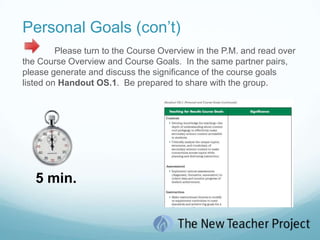
Personal Goals (con’t)	Please turn to the Course Overview in the P.M. and read over the Course Overview and Course Goals.  In the same partner pairs, please generate and discuss the significance of the course goals listed on Handout OS.1.  Be prepared to share with the group.   5 min.
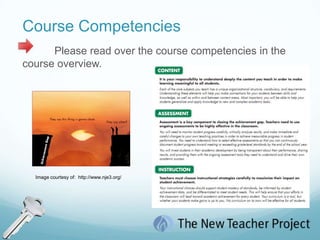
Course Competencies   	Please read over the course competencies in the course overview.Image courtesy of:  http://www.nje3.org/
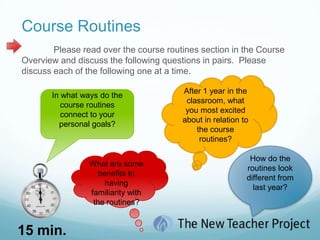
Course Routines	Please read over the course routines section in the Course Overview and discuss the following questions in pairs.  Please discuss each of the following one at a time.  After 1 year in the classroom, what you most excited about in relation to the course routines?In what ways do the course routines connect to your personal goals?How do the routines look different from last year?What are some benefits to having familiarity with the routines?15 min.
Percentage of Students at or above proficient in secondary science as measured by the 2005 National Assessment of Educational Progress
How do the course routineshelp you build the skills andknowledge essential to closing the achievement gap?
Session ObjectivesANALYZE course goals and related competencies and routines to clarify outcomes for the course.ARTICULATE how course assessments enable participants to demonstrate mastery of the course goals and competencies.DESCRIBE connections between lesson and unit planning and the benefit of ensuring alignment between the two.SOLVE common obstacles to maintaining a focus on student achievement in the classroom.
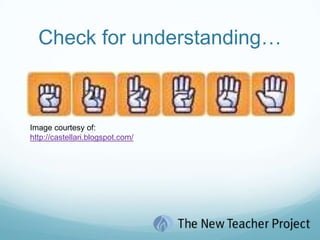
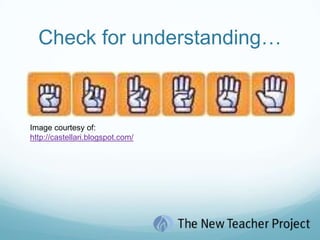
Check for understanding…Image courtesy of:  http://castellari.blogspot.com/
Section 2Course Assessments
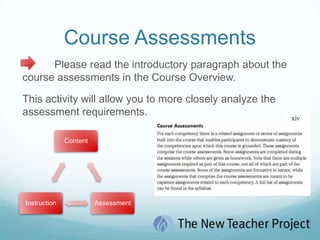
Course AssessmentsPlease read the introductory paragraph about the course assessments in the Course Overview.This activity will allow you to more closely analyze the assessment requirements.
Rationale…The goal of this activity is to provide an introduction and overview of the course assessments in order to understand the big picture before moving forward in the course. You will have 15 minutes to complete each center activity.  15 min.
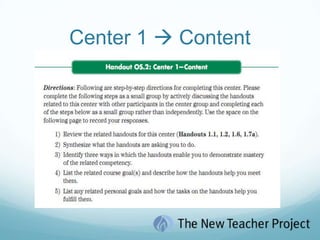
Center 1  Content
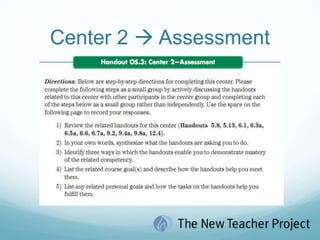
Center 2 Assessment
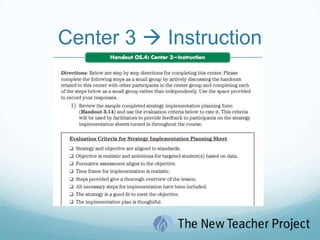
Center 3  Instruction
Rationale…The goal of this activity is to provide an introduction and overview of the course assessments in order to understand the big picture before moving forward in the course. You will have 15 minutes to complete each center activity.  15 min.
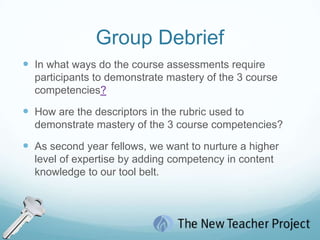
Group DebriefIn what ways do the course assessments require participants to demonstrate mastery of the 3 course competencies?How are the descriptors in the rubric used to demonstrate mastery of the 3 course competencies?As second year fellows, we want to nurture a higher level of expertise by adding competency in content knowledge to our tool belt.
Session ObjectivesANALYZE course goals and related competencies and routines to clarify outcomes for the course.
ARTICULATE how course assessments enable participants to demonstrate mastery of the course goals and competencies.DESCRIBE connections between lesson and unit planning and the benefit of ensuring alignment between the two.SOLVE common obstacles to maintaining a focus on student achievement in the classroom.
Check for understanding…Image courtesy of:  http://castellari.blogspot.com/
10 min.
Section 3Unit Planning Review
Backward Design/Strategic DesignThe overarching approach to lesson & unit planning in this course is referred to as “backward design”.Please look at the graphic on Handout OS.5and with a partner, please discuss the following key points.  Please be prepared to share your partner’s responses to the following questions:  What is the significance of the order of the three stages of “Strategic Design”?Why might this approach to unit planning pose a paradigm shift?What role does Bloom’s Taxonomy play in “Strategic Design”?           What key messages does this practice apply to and how?        What did this look like in your own practice last year? 5 min.
Strategy Implementation Planning SheetTo assist in the backward design process, the Strategy Implementation Planning Sheet helps to give context to the selection of your strategies, along with the objectives and goals of the unit.i.e.  “Toward what standard will the strategy build?”i.e.  “How is the lesson connected to your current unit or topic of study?”
Strategy Implementation Planning Sheet (con’t)For each session where the completion of a Strategy Implementation Planning and Reflection Sheet is required, always bring a unit plan to session.Although there is no specific format for the unit plan as outlined by TfR, PGCPS does provide a template for your use.  Please use these in your planning.
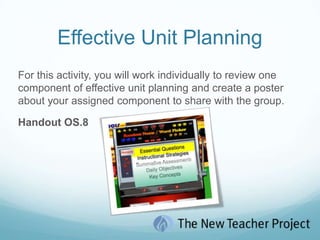
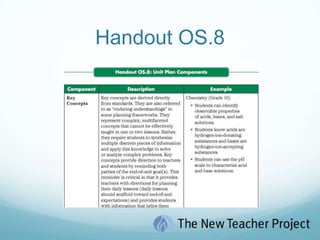
Effective Unit PlanningFor this activity, you will work individually to review one component of effective unit planning and create a poster about your assigned component to share with the group.  Handout OS.8
Handout OS.8
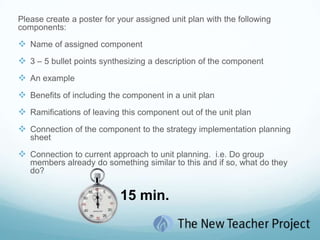
Please create a poster for your assigned unit plan with the following components:Name of assigned component
3 – 5 bullet points synthesizing a description of the component
An example
Benefits of including the component in a unit plan
Ramifications of leaving this component out of the unit plan
Connection of the component to the strategy implementation planning sheet
Connection to current approach to unit planning.  i.e. Do group members already do something similar to this and if so, what do they do?  15 min.
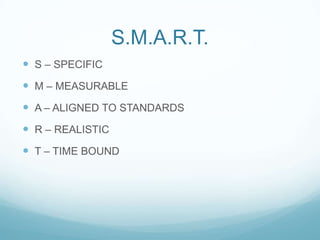
S.M.A.R.T.S – SPECIFICM – MEASURABLEA – ALIGNED TO STANDARDSR – REALISTICT – TIME BOUND

PGPTP Orientation Session Notes

  • 1.
    Welcome to thePGPTP Secondary Science Session Dawn Berkeley, Seminar Leader After you sign in, please jot down 3 interesting facts about yourself on the index cards provided…..
  • 2.
    Professional ValuesFocus onour primary mission of closing the achievement gap by setting high expectations for our students, our colleagues and ourselves.Maximize our experience – working with a sense of urgency, seeking out and welcoming experiences, resources, and feedback in order to grow.Be flexible.Respect one another.Model a Culture of Achievement.
  • 3.
    Group NormsBe respectfulof one anotherNo side conversationsBe on timeFocus on things within your controlNo war stories…limit dwelling (whining or complaining)No blame or excusesNo interruptingTake ownership of the session by actively participating
  • 4.
    So, what’s different?2ndYear Completion Requirements:Requirement #1 – Assessment Projects (5)Professional Development PlanAligning Strategies to Content Requirements & Student NeedsAnalyzing Content, Standards, and ResourcesDiagnosing Student Readiness, Setting Achievement Goals and Monitoring Progress – Part 1Diagnosing Student Readiness, Setting Achievement Goals and Monitoring Progress – Part 1Requirement #2 – Updated PES Component 4 – “Setting Goals for Student Achievement and Professional Development”Requirement #3 – Improving Practice Analysis and Reflection (5 – 7 pg. reflection)
  • 6.
    Session ObjectivesANALYZE coursegoals and related competencies and routines to clarify outcomes for the course.ARTICULATE how course assessments enable participants to demonstrate mastery of the course goals and competencies.DESCRIBE connections between lesson and unit planning and the benefit of ensuring alignment between the two.SOLVE common obstacles to maintaining a focus on student achievement in the classroom.
  • 7.
    Section 1Goals, Competencies& RoutinesPersonal & Course GoalsCourse CompetenciesCourse Routines
  • 8.
    Personal Goals Please generate a list of your own personal goals for the course and the significance of those goals on Handout OS.1. Also reflect on your year first year in the classroom, specifically considering your professional goal setting in your portfolio and why it was important. Be prepared to share your partner’s response. (I.S. – Think-Pair-Share)7 min.
  • 9.
    Personal Goals (con’t) Pleaseturn to the Course Overview in the P.M. and read over the Course Overview and Course Goals. In the same partner pairs, please generate and discuss the significance of the course goals listed on Handout OS.1. Be prepared to share with the group. 5 min.
  • 10.
    Course Competencies Please read over the course competencies in the course overview.Image courtesy of: http://www.nje3.org/
  • 11.
    Course Routines Please readover the course routines section in the Course Overview and discuss the following questions in pairs. Please discuss each of the following one at a time. After 1 year in the classroom, what you most excited about in relation to the course routines?In what ways do the course routines connect to your personal goals?How do the routines look different from last year?What are some benefits to having familiarity with the routines?15 min.
  • 12.
    Percentage of Studentsat or above proficient in secondary science as measured by the 2005 National Assessment of Educational Progress
  • 13.
    How do thecourse routineshelp you build the skills andknowledge essential to closing the achievement gap?
  • 14.
    Session ObjectivesANALYZE coursegoals and related competencies and routines to clarify outcomes for the course.ARTICULATE how course assessments enable participants to demonstrate mastery of the course goals and competencies.DESCRIBE connections between lesson and unit planning and the benefit of ensuring alignment between the two.SOLVE common obstacles to maintaining a focus on student achievement in the classroom.
  • 15.
    Check for understanding…Imagecourtesy of: http://castellari.blogspot.com/
  • 16.
  • 17.
    Course AssessmentsPlease readthe introductory paragraph about the course assessments in the Course Overview.This activity will allow you to more closely analyze the assessment requirements.
  • 18.
    Rationale…The goal ofthis activity is to provide an introduction and overview of the course assessments in order to understand the big picture before moving forward in the course. You will have 15 minutes to complete each center activity. 15 min.
  • 19.
    Center 1 Content
  • 20.
  • 21.
    Center 3 Instruction
  • 22.
    Rationale…The goal ofthis activity is to provide an introduction and overview of the course assessments in order to understand the big picture before moving forward in the course. You will have 15 minutes to complete each center activity. 15 min.
  • 23.
    Group DebriefIn whatways do the course assessments require participants to demonstrate mastery of the 3 course competencies?How are the descriptors in the rubric used to demonstrate mastery of the 3 course competencies?As second year fellows, we want to nurture a higher level of expertise by adding competency in content knowledge to our tool belt.
  • 24.
    Session ObjectivesANALYZE coursegoals and related competencies and routines to clarify outcomes for the course.
  • 25.
    ARTICULATE how courseassessments enable participants to demonstrate mastery of the course goals and competencies.DESCRIBE connections between lesson and unit planning and the benefit of ensuring alignment between the two.SOLVE common obstacles to maintaining a focus on student achievement in the classroom.
  • 26.
    Check for understanding…Imagecourtesy of: http://castellari.blogspot.com/
  • 27.
  • 28.
  • 29.
    Backward Design/Strategic DesignTheoverarching approach to lesson & unit planning in this course is referred to as “backward design”.Please look at the graphic on Handout OS.5and with a partner, please discuss the following key points. Please be prepared to share your partner’s responses to the following questions: What is the significance of the order of the three stages of “Strategic Design”?Why might this approach to unit planning pose a paradigm shift?What role does Bloom’s Taxonomy play in “Strategic Design”? What key messages does this practice apply to and how? What did this look like in your own practice last year? 5 min.
  • 30.
    Strategy Implementation PlanningSheetTo assist in the backward design process, the Strategy Implementation Planning Sheet helps to give context to the selection of your strategies, along with the objectives and goals of the unit.i.e. “Toward what standard will the strategy build?”i.e. “How is the lesson connected to your current unit or topic of study?”
  • 31.
    Strategy Implementation PlanningSheet (con’t)For each session where the completion of a Strategy Implementation Planning and Reflection Sheet is required, always bring a unit plan to session.Although there is no specific format for the unit plan as outlined by TfR, PGCPS does provide a template for your use. Please use these in your planning.
  • 32.
    Effective Unit PlanningForthis activity, you will work individually to review one component of effective unit planning and create a poster about your assigned component to share with the group. Handout OS.8
  • 33.
  • 34.
    Please create aposter for your assigned unit plan with the following components:Name of assigned component
  • 35.
    3 – 5bullet points synthesizing a description of the component
  • 36.
  • 37.
    Benefits of includingthe component in a unit plan
  • 38.
    Ramifications of leavingthis component out of the unit plan
  • 39.
    Connection of thecomponent to the strategy implementation planning sheet
  • 40.
    Connection to currentapproach to unit planning. i.e. Do group members already do something similar to this and if so, what do they do? 15 min.
  • 41.
    S.M.A.R.T.S – SPECIFICM– MEASURABLEA – ALIGNED TO STANDARDSR – REALISTICT – TIME BOUND