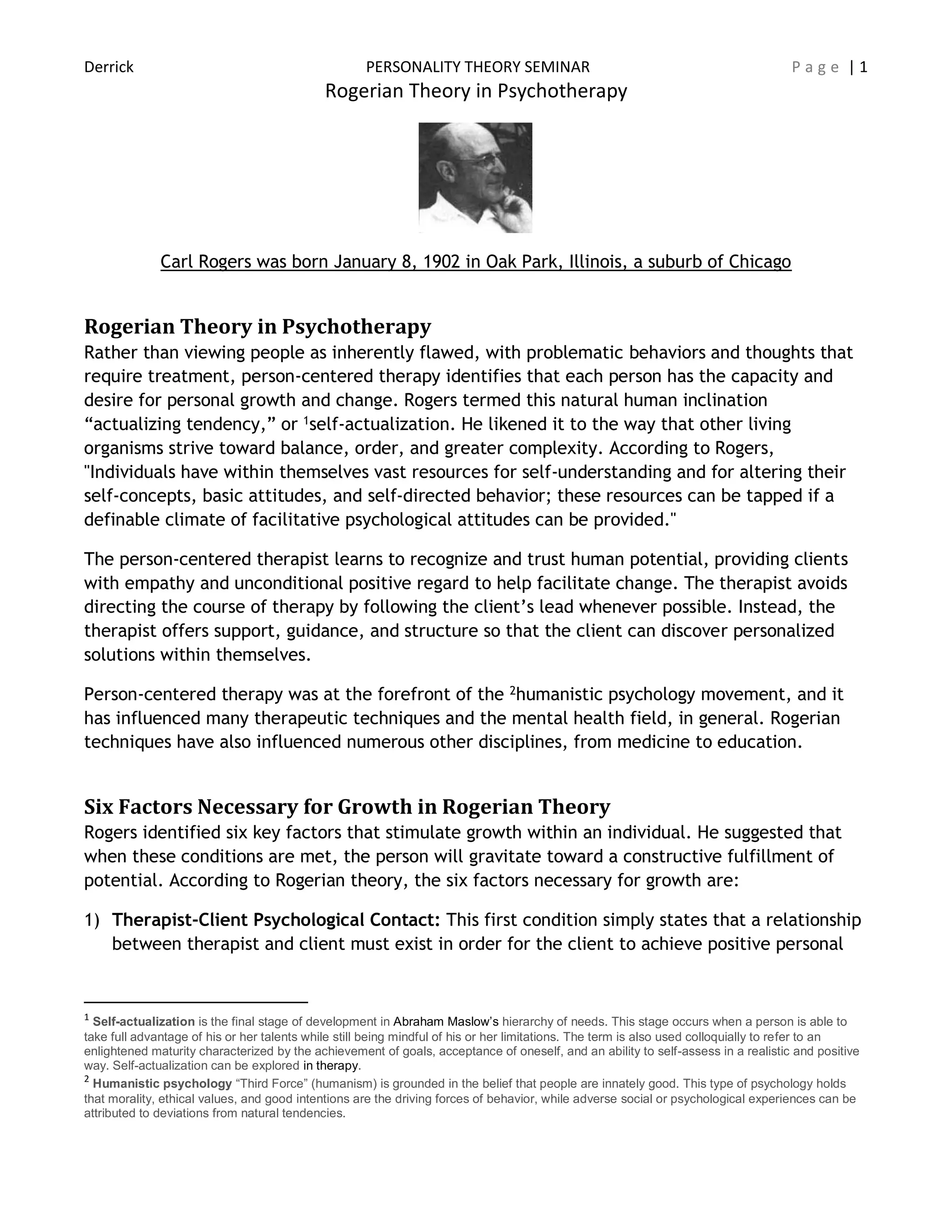
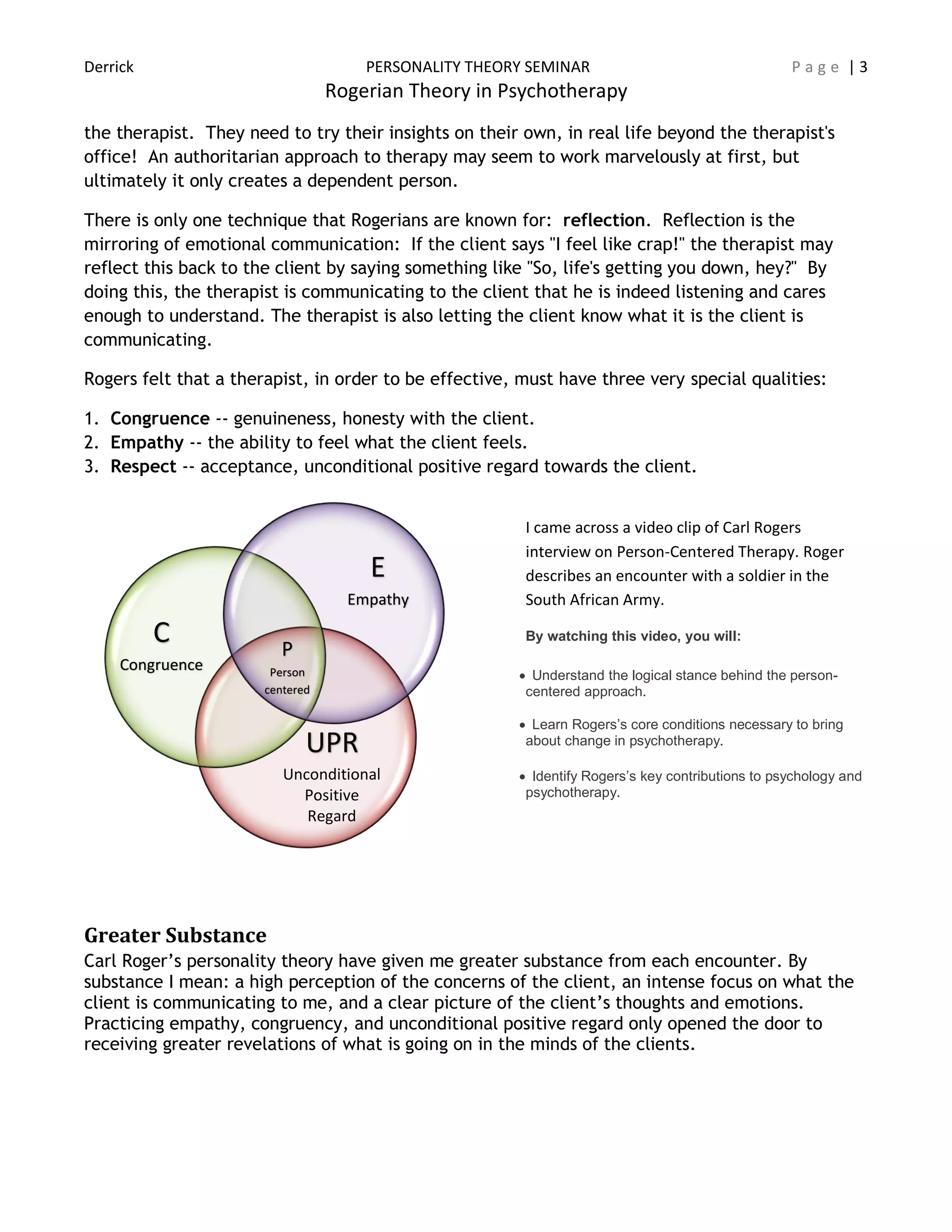
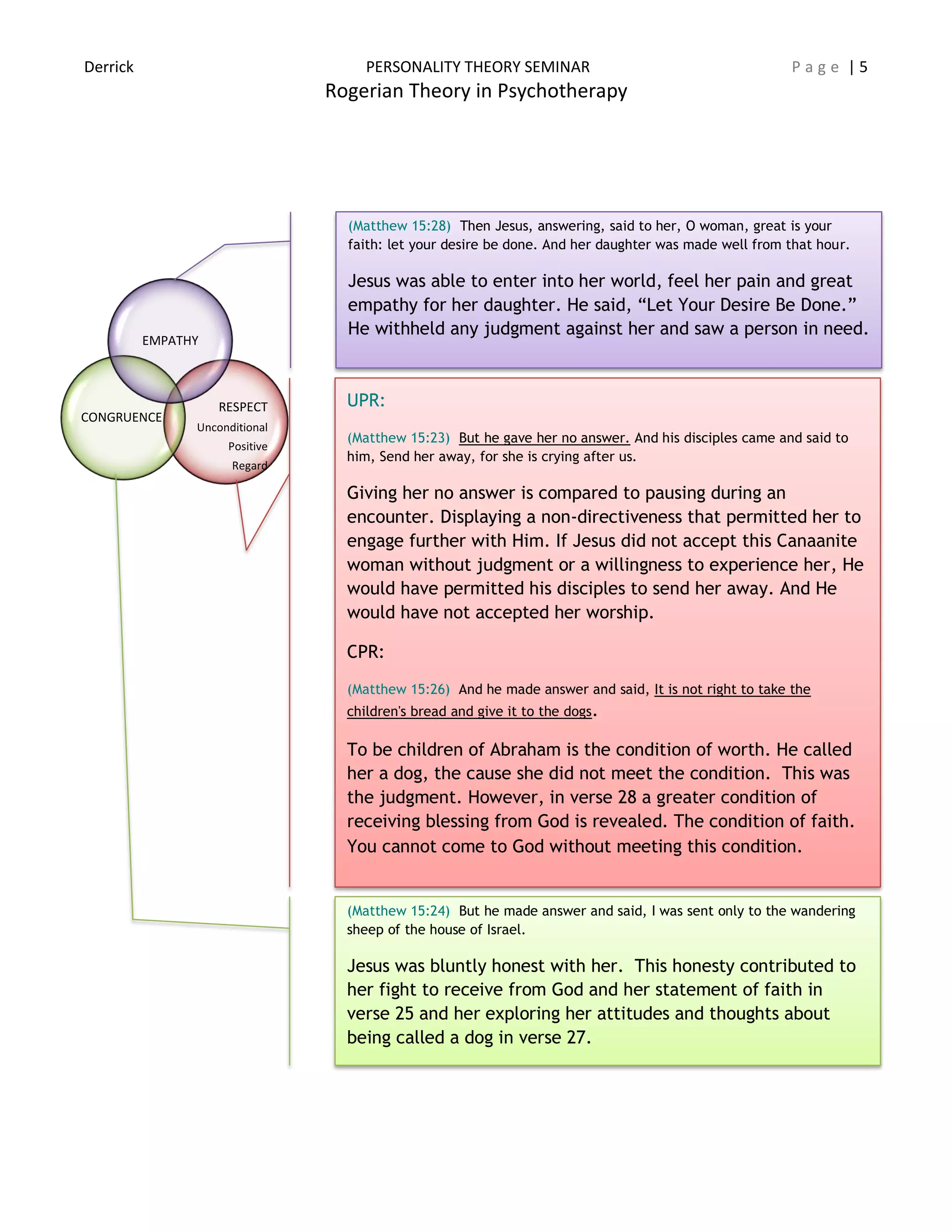
Carl Rogers developed person-centered therapy based on the idea that people have an innate desire for personal growth. The therapist's role is to provide empathy, unconditional positive regard, and congruence to facilitate change as the client discovers their own solutions. Key aspects of Rogers' theory include recognizing each person's potential, avoiding directing the course of therapy, and reflecting the client's emotions back to them. The document also discusses six factors Rogers identified as necessary for growth, examples of applying person-centered therapy to pastoral care, and parallels between Rogers' therapist qualities and qualities demonstrated by Jesus.