BEYOND PERSONALITY DRIVEN TO
STANDARD DRIVEN PARISH MANAGEMENT
2015 Mid-Atlantic Congress
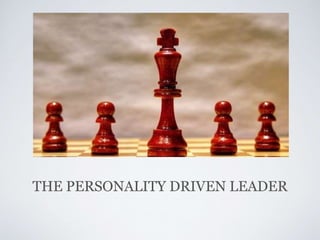
THE PERSONALITY DRIVEN LEADER
EFFECTS OF
UTILIZING CHARISMA
Positives Negatives
• Higher output from
followers
• Broadening and
elevating followers
interests
• Gives meaning and
purpose to followers’
goals
• May not have best
interests in mind
• Manipulations and
exaggerations
• Limiting
communication and
access
• Can be polarizing
Personality driven
management
Standards based
management
Limits capacity of mission
Expands capacity for
mission
Lacks consistency and
justice
Consistent and fair
Encourages fragmentation
and politics
Encourages unity
and stability
Creates competition
of resources
Prioritizes resources based
on agreed upon values
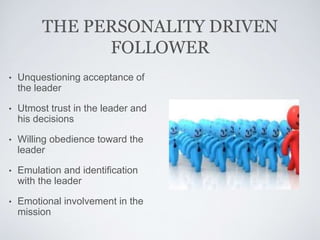
THE PERSONALITY DRIVEN
FOLLOWER
• Unquestioning acceptance of
the leader
• Utmost trust in the leader and
his decisions
• Willing obedience toward the
leader
• Emulation and identification
with the leader
• Emotional involvement in the
mission
PERSONALITY DRIVEN
LEADERSHIP
• Lack of consensus and power sharing
• Demanding and controlling behaviors
• Strong use and preservation of privilege and
influence
on founder’s syndrome
Stephen R. Block, Why Nonprofits Fail
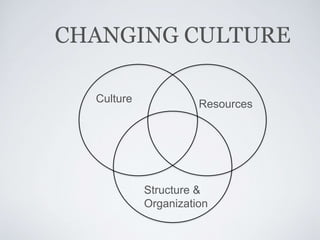
Culture Resources
Structure &
Organization
CHANGING CULTURE
DISTINCTIONS BETWEEN
GOVERNANCE STRUCTURES
Discern the will of
the people
Secular Political Catholic Church
Discern the will
of God
TWO REQUIREMENTS FOR
A VIBRANT PARISH
• Pastoral
Planning
• Human
Resources
• Financial
Planning
• Stewardship
• Technology
•Communications
• Minimal Politics
• Minimal
Confusion
• High Morale
• High Productivity
• Low Turnover
SMART HEALTHY
Patrick Lencioni, The Advantage
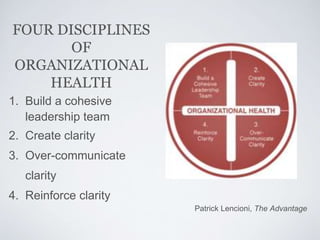
FOUR DISCIPLINES
OF
ORGANIZATIONAL
HEALTH
1. Build a cohesive
leadership team
2. Create clarity
3. Over-communicate
clarity
4. Reinforce clarity
Patrick Lencioni, The Advantage
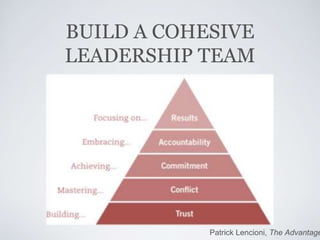
BUILD A COHESIVE
LEADERSHIP TEAM
Patrick Lencioni, The Advantage
RESULTS IN CATHOLIC
PARISHES AND ORGANIZATIONS
“Central to our understanding of stewardship and development is the concept of
accountability. Dioceses, parishes, schools, and other church-related
organizations that seek to develop urgently needed human and financial
resources need to show that their programs and services truly “make a
difference” in meeting the spiritual, educational, and social needs of the people
they serve.
They also need to give evidence of their long-term stability and growth potential
to encourage investment. This is a basic requirement of stewardship and
development—to render an account of the organization’s use of the time, talent,
and treasure entrusted to its care. As the demand for charitable giving grows
(and competition increases), accountability will become an even more important
indicator of whether an organization is “worthy of investment.”
Stewardship: A Disciple’s Response
US Bishops’ Pastoral Letter on Stewardship, USCCB, 1993
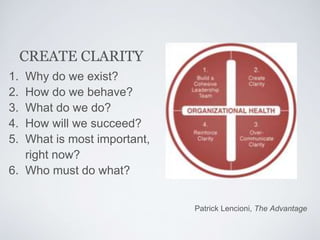
CREATE CLARITY
1. Why do we exist?
2. How do we behave?
3. What do we do?
4. How will we succeed?
5. What is most important,
right now?
6. Who must do what?
Patrick Lencioni, The Advantage
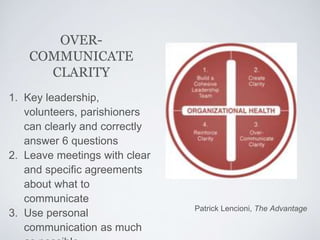
OVER-
COMMUNICATE
CLARITY
1. Key leadership,
volunteers, parishioners
can clearly and correctly
answer 6 questions
2. Leave meetings with clear
and specific agreements
about what to
communicate
3. Use personal
communication as much
Patrick Lencioni, The Advantage
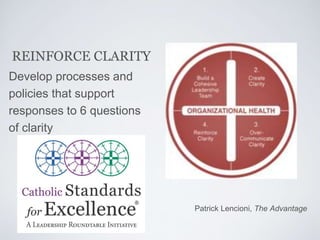
REINFORCE CLARITY
Develop processes and
policies that support
responses to 6 questions
of clarity
Patrick Lencioni, The Advantage
Personality driven to standards driven management

Personality driven to standards driven management

  • 1.
    BEYOND PERSONALITY DRIVENTO STANDARD DRIVEN PARISH MANAGEMENT 2015 Mid-Atlantic Congress
  • 2.
  • 3.
    EFFECTS OF UTILIZING CHARISMA PositivesNegatives • Higher output from followers • Broadening and elevating followers interests • Gives meaning and purpose to followers’ goals • May not have best interests in mind • Manipulations and exaggerations • Limiting communication and access • Can be polarizing
  • 4.
    Personality driven management Standards based management Limitscapacity of mission Expands capacity for mission Lacks consistency and justice Consistent and fair Encourages fragmentation and politics Encourages unity and stability Creates competition of resources Prioritizes resources based on agreed upon values
  • 5.
    THE PERSONALITY DRIVEN FOLLOWER •Unquestioning acceptance of the leader • Utmost trust in the leader and his decisions • Willing obedience toward the leader • Emulation and identification with the leader • Emotional involvement in the mission
  • 6.
    PERSONALITY DRIVEN LEADERSHIP • Lackof consensus and power sharing • Demanding and controlling behaviors • Strong use and preservation of privilege and influence on founder’s syndrome Stephen R. Block, Why Nonprofits Fail
  • 7.
  • 8.
    DISTINCTIONS BETWEEN GOVERNANCE STRUCTURES Discernthe will of the people Secular Political Catholic Church Discern the will of God
  • 9.
    TWO REQUIREMENTS FOR AVIBRANT PARISH • Pastoral Planning • Human Resources • Financial Planning • Stewardship • Technology •Communications • Minimal Politics • Minimal Confusion • High Morale • High Productivity • Low Turnover SMART HEALTHY Patrick Lencioni, The Advantage
  • 10.
    FOUR DISCIPLINES OF ORGANIZATIONAL HEALTH 1. Builda cohesive leadership team 2. Create clarity 3. Over-communicate clarity 4. Reinforce clarity Patrick Lencioni, The Advantage
  • 11.
    BUILD A COHESIVE LEADERSHIPTEAM Patrick Lencioni, The Advantage
  • 12.
    RESULTS IN CATHOLIC PARISHESAND ORGANIZATIONS “Central to our understanding of stewardship and development is the concept of accountability. Dioceses, parishes, schools, and other church-related organizations that seek to develop urgently needed human and financial resources need to show that their programs and services truly “make a difference” in meeting the spiritual, educational, and social needs of the people they serve. They also need to give evidence of their long-term stability and growth potential to encourage investment. This is a basic requirement of stewardship and development—to render an account of the organization’s use of the time, talent, and treasure entrusted to its care. As the demand for charitable giving grows (and competition increases), accountability will become an even more important indicator of whether an organization is “worthy of investment.” Stewardship: A Disciple’s Response US Bishops’ Pastoral Letter on Stewardship, USCCB, 1993
  • 13.
    CREATE CLARITY 1. Whydo we exist? 2. How do we behave? 3. What do we do? 4. How will we succeed? 5. What is most important, right now? 6. Who must do what? Patrick Lencioni, The Advantage
  • 14.
    OVER- COMMUNICATE CLARITY 1. Key leadership, volunteers,parishioners can clearly and correctly answer 6 questions 2. Leave meetings with clear and specific agreements about what to communicate 3. Use personal communication as much Patrick Lencioni, The Advantage
  • 15.
    REINFORCE CLARITY Develop processesand policies that support responses to 6 questions of clarity Patrick Lencioni, The Advantage