Personal Branding
                              Erika Penner
                          HR Professional
       MBA / Masters in Conflict Resolution
Agenda
•What is a personal brand?

•Where do I start?

• How do I showcase my personal brand to potential
employers?

• How do I choose the right internship or career path?

• How do I communicate my personal brand during
the interview?
Personal Branding

The goal is to influence others by
  emphasizing your personal
  strengths and differentiating
      yourself from others.


Similar to a corporate brand, your
personal brand is simply “how you
        package yourself.”
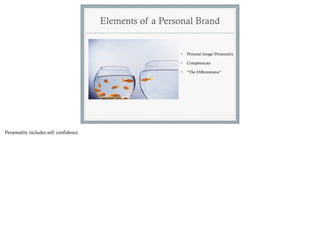
Elements of a Personal Brand


                                                         •   Personal Image/Personality

                                                         •   Competencies

                                                         •   “The Differentiator”


Personality includes self confidence
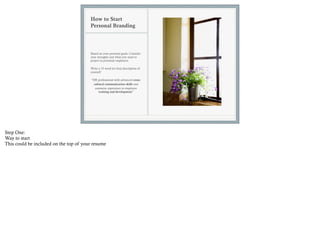
How to Start
                                        Personal Branding


                                        Based on your personal goals: Consider
                                        your strengths and what you want to
                                        project to potential employers

                                        Write a 15 word (or less) description of
                                        yourself

                                         “HR professional with advanced cross-
                                          cultural communication skills and
                                           extensive experience in employee
                                              training and development”


Step One:
Way to start
This could be included on the top of your resume
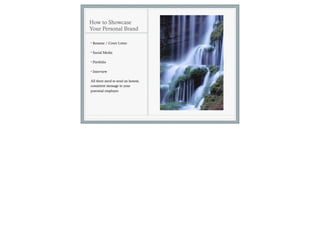
How to Showcase
Your Personal Brand

• Resume / Cover Letter

• Social Media

• Portfolio

• Interview

All three need to send an honest,
consistent message to your
potential employer.
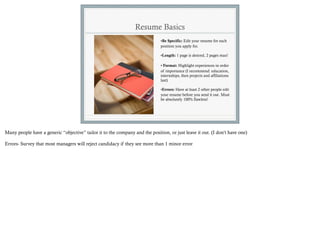
Resume Basics
                                                                              •Be Specific: Edit your resume for each
                                                                              position you apply for.

                                                                              •Length: 1 page is desired, 2 pages max!

                                                                              • Format: Highlight experiences in order
                                                                              of importance (I recommend: education,
                                                                              internships, then projects and affiliations
                                                                              last)

                                                                              •Errors: Have at least 2 other people edit
                                                                              your resume before you send it out. Must
                                                                              be absolutely 100% flawless!


Many people have a generic “objective” tailor it to the company and the position, or just leave it out. (I don’t have one)

Errors- Survey that most managers will reject candidacy if they see more than 1 minor error
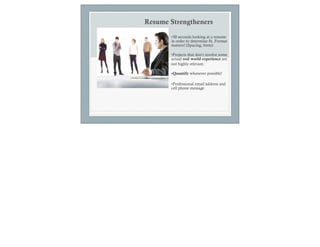
Resume Strengtheners

       •30 seconds looking at a resume
       in order to determine fit. Format
       matters! (Spacing, fonts)

       •Projects that don’t involve some
       actual real world experience are
       not highly relevant.

       •Quantify whenever possible!

       •Professional email address and
       cell phone message
The Cover Letter

• 3 Paragraphs maximum! (Remember the 30 second
  rule)

• Highlight your differentiator (with 1-2 examples) of
  what you would add to this particular organization.

• Address concerns that they may have when looking
  at your resume (gaps, lack of experience)
• Show your personality, but remain professional
Social Media Tips
The 4 Steps to Personal
Branding using social media
(Me 2.0, 2009)
www.personalbrandingblog.com

Discover your Personal
Brand
Create your Personal Brand

Communicate your Personal
Brand

Maintain your Personal
Brand
Social Media
                                       Pitfalls
                                       •Your online reputation follows
                                       you. Proactively manage it!

                                       •The recruiter will google your
                                       name. Know what comes up and
                                       set a google alert.

                                       •Set your boundaries and stay
                                       true to them.

                                       •Personal websites, Linkedin, and
                                       Visual CV all add to your
                                       personal brand. Maintaining is
                                       the hardest part.


Create boundaries and stick to them!
Portfolio
This is part of your personal
brand and is reflective of your
professional growth.

•Your resume and portfolio need
to be consistent

•Start early! The majority of your
time should be spent thinking
about the most effective way to
display yourself.

•Don’t let your portfolio speak for
you; your portfolio highlights
you as a professional, not the
other way around.
Picking the Right
Company or
Industry
• Browse company websites!
History, values and mission
statement, current news.

• Read Job Descriptions.
• Have an open mind! Working
for the right company may be
more beneficial that having the
right job.

• Consider re-locating. The right
opportunity may lead you to the
ideal career path.
Career Search
•Use at least 5 online resources

•Use your contacts: Acquaintances,
Professors, Classmates, Friends,
Family.

•Companies often have their own
career website.

•If you are interested in working in
bigger cities, contact a recruiter!
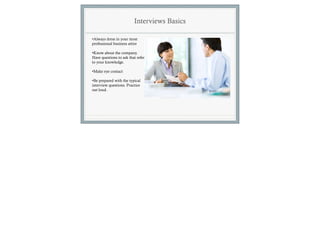
Interviews Basics

•Always dress in your most
professional business attire

•Know about the company.
Have questions to ask that refer
to your knowledge.

•Make eye contact

•Be prepared with the typical
interview questions. Practice
out loud.
Interview tips
      Bring references and at least 2
      copies of your resume to the
                 interview
                       
          Do not be late or early
                       
        Be confident yourself and
          enthusiastic about the
               opportunity
                       
     Send a thank you email to your
      interviewers within 48 hours
                       
           Trust your instincts!
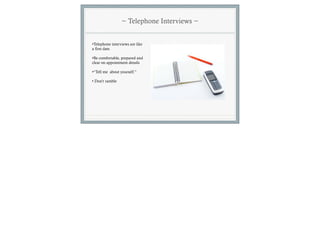
~ Telephone Interviews ~


•Telephone interviews are like
a first date.

•Be comfortable, prepared and
clear on appointment details

•“Tell me about yourself.”

• Don’t ramble
Takeaways

• Take time to evaluate and establish your personal
  brand now
• Be Authentic and honest! It’s easy to spot a fake

• Don’t be afraid to adjust your personal brand. Self-
  realization is a necessary process
• Maintain your personal brand and never stop
  networking.
Resources

• http://www.careerealism.com/

• http://personalbrandingblog.com/

• Me 2.0 By Dan Schwabel

• My Info
  • penner@uoregon.edu
  • penner.erika@gmail.com

Personal Branding

  • 1.
    Personal Branding Erika Penner HR Professional MBA / Masters in Conflict Resolution
  • 2.
    Agenda •What is apersonal brand? •Where do I start? • How do I showcase my personal brand to potential employers? • How do I choose the right internship or career path? • How do I communicate my personal brand during the interview?
  • 3.
    Personal Branding The goalis to influence others by emphasizing your personal strengths and differentiating yourself from others. Similar to a corporate brand, your personal brand is simply “how you package yourself.”
  • 4.
    Elements of aPersonal Brand • Personal Image/Personality • Competencies • “The Differentiator” Personality includes self confidence
  • 5.
    How to Start Personal Branding Based on your personal goals: Consider your strengths and what you want to project to potential employers Write a 15 word (or less) description of yourself “HR professional with advanced cross- cultural communication skills and extensive experience in employee training and development”   Step One: Way to start This could be included on the top of your resume
  • 6.
    How to Showcase YourPersonal Brand • Resume / Cover Letter • Social Media • Portfolio • Interview All three need to send an honest, consistent message to your potential employer.
  • 7.
    Resume Basics •Be Specific: Edit your resume for each position you apply for. •Length: 1 page is desired, 2 pages max! • Format: Highlight experiences in order of importance (I recommend: education, internships, then projects and affiliations last) •Errors: Have at least 2 other people edit your resume before you send it out. Must be absolutely 100% flawless! Many people have a generic “objective” tailor it to the company and the position, or just leave it out. (I don’t have one) Errors- Survey that most managers will reject candidacy if they see more than 1 minor error
  • 8.
    Resume Strengtheners •30 seconds looking at a resume in order to determine fit. Format matters! (Spacing, fonts) •Projects that don’t involve some actual real world experience are not highly relevant. •Quantify whenever possible! •Professional email address and cell phone message
  • 9.
    The Cover Letter •3 Paragraphs maximum! (Remember the 30 second rule) • Highlight your differentiator (with 1-2 examples) of what you would add to this particular organization. • Address concerns that they may have when looking at your resume (gaps, lack of experience) • Show your personality, but remain professional
  • 10.
    Social Media Tips The4 Steps to Personal Branding using social media (Me 2.0, 2009) www.personalbrandingblog.com Discover your Personal Brand Create your Personal Brand Communicate your Personal Brand Maintain your Personal Brand
  • 11.
    Social Media Pitfalls •Your online reputation follows you. Proactively manage it! •The recruiter will google your name. Know what comes up and set a google alert. •Set your boundaries and stay true to them. •Personal websites, Linkedin, and Visual CV all add to your personal brand. Maintaining is the hardest part. Create boundaries and stick to them!
  • 12.
    Portfolio This is partof your personal brand and is reflective of your professional growth. •Your resume and portfolio need to be consistent •Start early! The majority of your time should be spent thinking about the most effective way to display yourself. •Don’t let your portfolio speak for you; your portfolio highlights you as a professional, not the other way around.
  • 13.
    Picking the Right Companyor Industry • Browse company websites! History, values and mission statement, current news. • Read Job Descriptions. • Have an open mind! Working for the right company may be more beneficial that having the right job. • Consider re-locating. The right opportunity may lead you to the ideal career path.
  • 14.
    Career Search •Use atleast 5 online resources •Use your contacts: Acquaintances, Professors, Classmates, Friends, Family. •Companies often have their own career website. •If you are interested in working in bigger cities, contact a recruiter!
  • 15.
    Interviews Basics •Always dressin your most professional business attire •Know about the company. Have questions to ask that refer to your knowledge. •Make eye contact •Be prepared with the typical interview questions. Practice out loud.
  • 16.
    Interview tips Bring references and at least 2 copies of your resume to the interview   Do not be late or early   Be confident yourself and enthusiastic about the opportunity   Send a thank you email to your interviewers within 48 hours   Trust your instincts!
  • 17.
    ~ Telephone Interviews~ •Telephone interviews are like a first date. •Be comfortable, prepared and clear on appointment details •“Tell me about yourself.” • Don’t ramble
  • 18.
    Takeaways • Take timeto evaluate and establish your personal brand now • Be Authentic and honest! It’s easy to spot a fake • Don’t be afraid to adjust your personal brand. Self- realization is a necessary process • Maintain your personal brand and never stop networking.
  • 19.
    Resources • http://www.careerealism.com/ • http://personalbrandingblog.com/ •Me 2.0 By Dan Schwabel • My Info • penner@uoregon.edu • penner.erika@gmail.com