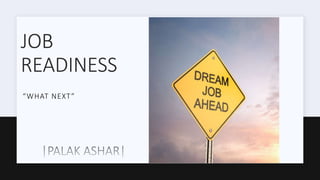
JOB
READINESS
“WHAT NEXT”
After completion of your graduation, the question you ask yourself is… WHAT NEXT? In this case,
you are up for the next venture – finding a job. There may be a case where you already have something
in mind, but do not know how to act for it, hot to get through the process, how to make your resume
attractive…
It is not just a matter of being simply being a good candidate, you have to be exceeding in strategizing
it all.
GET HIRED FAST:
o Always do your research & be engaged
Dive into the company’s profile, history, mission, milestones achieved and the challenges faced. Go
through the SWAT analysis. This will help you know the company a lot better to carry on a
conversation for the interview. Nodding, maintaining the eye-contact shows confidence and a sense
of attentiveness.
o Sell yourself & be confident
Sell the strengths you have, highlight the positives. Though, do not make it all about yourself, do
not push them on an edge, know your interviewer. Present yourself in the best way possible. Be
professional, think like a professional, act like a professional. Set the right attitude.
o Have many referrals
Networking is a must. This will attract all the attention and consideration you need. Use your
network.
o Updated profiles
Google yourself and see what’s popping. Update LinkedIn, Facebook, Twitter to get yourself
connected with the company. Follow them, subscribe to them, like their posts.
CONTINUE….
o “tell us about yourself”
Prepare and rehearse a 60 seconds response. Have an elevator pitch ready. Groom yourself to it.
o Be mindful & be a learner
Have all your senses opened, being aware is the key.
o Be thorough & patient, don’t just quit, ask yourself questions
Keeping up with the job hunting feels you’re playing a multitasking game. Keep an eye out for other
prospective jobs and openings; it's best to apply for a variety of vacancies that concern you rather
than one or two. When you get a rejection letter from an organisation, use it as an excuse to improve
for the future. Ask yourself; Where? Why? How? WHAT NEXT?
o Follow up
Remind them why should they hire you. Express the most important takeaways from the interview
and how you want to make a difference. Thank you notes proves that you listened, you are aware of
the company's main problems, worries, and difficulties, and, that you are willing to assist with their
resolution.
The strategies should be applied considering the process,
from building the resume, to the follow-up. Considering this,
your resume should not just be eye-catching but it should
capture their attention from point A of your resume to point
Z.
There is no way to escape the process of resume making, if
there is a job, there is a resume! Do not wait for the “right
time” to come, start working on it. Make it as best as possible.
Update it. Include the skillset which you believe will help you
get the job. Add extra ‘wow factors’.
There are a lot of points to be taken care of in the resume, to
summarize it, take a look at the following bulletins.
POINTS FOR YOUR RESUME:
o Cover letter
Hiring managers only spend between 5-7 seconds reviewing, so it’s important to grab their attention with a cover letter. The best practice
to do this is to change it for each position you apply for. 83% OF THEM SAY A GREAT COVER LETTER CAN HELP YOU LAND AN
INTERVIEW EVEN IF YOUR RESUME ISN’T THAT GOOD.
o Keep it simple
Keep it clear and new when it comes to stating experience and job history. Listing 5-7 years of work experience, are overwhelming to have
a good image of your career background. So many details can be frustrating, allowing the recruiting manager to feel irritated rather than
impressed.
o Job-specific
Each resume you send, including your cover letter, should be tailored to the specific role. Make a point in emphasising specific skills and
expertise that are relevant to the job. You could be skipped by recruiting manager if you lack this.
o The key to resume sections and their order is importance and relevance. Naturally, the HR manager reads from the top down, so if you have
little experience but impressive education, put that up top.
o Sections for the resume,
 Contact information: name, address, phone number, email address, social media URLs.
 Employment history: job title, company, location, duties & responsibilities, achievements
 Education: degree type, degree major, school name, extras like relevant coursework, projects, awards and honours, clubs and
organizations, scholarship… (GPA is not necessary, make sure it serves as ‘cherry on the top’)
 Skills: technical skills, management skills, professional skills, communication critical thinking skills
 Volunteer work
 Languages
 Memberships
CONTINUE…
 Resume summary
 Internships or training section
 Software skills
o How long should the resume be?
It should be one page for most candidates. Two pages are okay, but just make sure everything on your resume is adding value.
o Use 4 or 5 bullet points to support each work experience entry.
o Dress to impress, well, write to impress
Select the best resume type, Choose a simple font, speaking of fonts, according to Certified Professional Resume Writers about their
favourite resume fonts. Here are the most popular choices:
Calibri: 44% , Times New Roman: 13% , Arial: 11%, Helvetica: 8%, Garamond: 6%
o What part of the resume to focus on?
 46% of respondents chose work experience, 15% education , 13% skills, 3% resume profile, 22% other resume sections.
o Keep your formatting consistent
o Choose the right words.
For example:
Right: Resume Profile, Experience, Education, Skills
Wrong: About Me, Accreditations, Professional Background and Work History
CONTINUE…
o NEVER lie on a resume about your skills’ experience level. Even if you do make it past the interviews and miraculously get the job, you’ll
eventually be caught in the lie.
o Always tailor the resume to different jobs you apply for
o Check for grammatical errors
Make sure that there is no grammatical error or typos as your resume is a sample of your writing skills. It's better if you read your resume
aloud or ask someone else to proofread it for you, usually, we fail to figure out our own mistakes.

Job readiness

  • 1.
  • 2.
    After completion ofyour graduation, the question you ask yourself is… WHAT NEXT? In this case, you are up for the next venture – finding a job. There may be a case where you already have something in mind, but do not know how to act for it, hot to get through the process, how to make your resume attractive… It is not just a matter of being simply being a good candidate, you have to be exceeding in strategizing it all.
  • 3.
    GET HIRED FAST: oAlways do your research & be engaged Dive into the company’s profile, history, mission, milestones achieved and the challenges faced. Go through the SWAT analysis. This will help you know the company a lot better to carry on a conversation for the interview. Nodding, maintaining the eye-contact shows confidence and a sense of attentiveness. o Sell yourself & be confident Sell the strengths you have, highlight the positives. Though, do not make it all about yourself, do not push them on an edge, know your interviewer. Present yourself in the best way possible. Be professional, think like a professional, act like a professional. Set the right attitude. o Have many referrals Networking is a must. This will attract all the attention and consideration you need. Use your network. o Updated profiles Google yourself and see what’s popping. Update LinkedIn, Facebook, Twitter to get yourself connected with the company. Follow them, subscribe to them, like their posts.
  • 4.
    CONTINUE…. o “tell usabout yourself” Prepare and rehearse a 60 seconds response. Have an elevator pitch ready. Groom yourself to it. o Be mindful & be a learner Have all your senses opened, being aware is the key. o Be thorough & patient, don’t just quit, ask yourself questions Keeping up with the job hunting feels you’re playing a multitasking game. Keep an eye out for other prospective jobs and openings; it's best to apply for a variety of vacancies that concern you rather than one or two. When you get a rejection letter from an organisation, use it as an excuse to improve for the future. Ask yourself; Where? Why? How? WHAT NEXT? o Follow up Remind them why should they hire you. Express the most important takeaways from the interview and how you want to make a difference. Thank you notes proves that you listened, you are aware of the company's main problems, worries, and difficulties, and, that you are willing to assist with their resolution.
  • 5.
    The strategies shouldbe applied considering the process, from building the resume, to the follow-up. Considering this, your resume should not just be eye-catching but it should capture their attention from point A of your resume to point Z. There is no way to escape the process of resume making, if there is a job, there is a resume! Do not wait for the “right time” to come, start working on it. Make it as best as possible. Update it. Include the skillset which you believe will help you get the job. Add extra ‘wow factors’. There are a lot of points to be taken care of in the resume, to summarize it, take a look at the following bulletins.
  • 6.
    POINTS FOR YOURRESUME: o Cover letter Hiring managers only spend between 5-7 seconds reviewing, so it’s important to grab their attention with a cover letter. The best practice to do this is to change it for each position you apply for. 83% OF THEM SAY A GREAT COVER LETTER CAN HELP YOU LAND AN INTERVIEW EVEN IF YOUR RESUME ISN’T THAT GOOD. o Keep it simple Keep it clear and new when it comes to stating experience and job history. Listing 5-7 years of work experience, are overwhelming to have a good image of your career background. So many details can be frustrating, allowing the recruiting manager to feel irritated rather than impressed. o Job-specific Each resume you send, including your cover letter, should be tailored to the specific role. Make a point in emphasising specific skills and expertise that are relevant to the job. You could be skipped by recruiting manager if you lack this. o The key to resume sections and their order is importance and relevance. Naturally, the HR manager reads from the top down, so if you have little experience but impressive education, put that up top. o Sections for the resume,  Contact information: name, address, phone number, email address, social media URLs.  Employment history: job title, company, location, duties & responsibilities, achievements  Education: degree type, degree major, school name, extras like relevant coursework, projects, awards and honours, clubs and organizations, scholarship… (GPA is not necessary, make sure it serves as ‘cherry on the top’)  Skills: technical skills, management skills, professional skills, communication critical thinking skills  Volunteer work  Languages  Memberships
  • 7.
    CONTINUE…  Resume summary Internships or training section  Software skills o How long should the resume be? It should be one page for most candidates. Two pages are okay, but just make sure everything on your resume is adding value. o Use 4 or 5 bullet points to support each work experience entry. o Dress to impress, well, write to impress Select the best resume type, Choose a simple font, speaking of fonts, according to Certified Professional Resume Writers about their favourite resume fonts. Here are the most popular choices: Calibri: 44% , Times New Roman: 13% , Arial: 11%, Helvetica: 8%, Garamond: 6% o What part of the resume to focus on?  46% of respondents chose work experience, 15% education , 13% skills, 3% resume profile, 22% other resume sections. o Keep your formatting consistent o Choose the right words. For example: Right: Resume Profile, Experience, Education, Skills Wrong: About Me, Accreditations, Professional Background and Work History
  • 8.
    CONTINUE… o NEVER lieon a resume about your skills’ experience level. Even if you do make it past the interviews and miraculously get the job, you’ll eventually be caught in the lie. o Always tailor the resume to different jobs you apply for o Check for grammatical errors Make sure that there is no grammatical error or typos as your resume is a sample of your writing skills. It's better if you read your resume aloud or ask someone else to proofread it for you, usually, we fail to figure out our own mistakes.