


PERICORONITIS:
PAIN IN THE LAST TOOTH
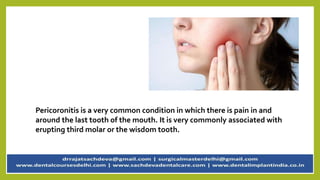
Pericoronitis is a very common condition in which there is pain in and
around the last tooth of the mouth. It is very commonly associated with
erupting third molar or the wisdom tooth.
HOW DOESTHE PAIN START?
• The flabby gum tissue that covers
the tooth partially gets infected
due to food lodgment.
• Poor oral hygiene.
• Mechanical trauma on molar
tissue
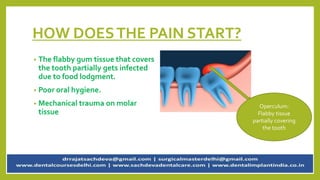
Operculum:
Flabby tissue
partially covering
the tooth
TYPES OF PERICORONITIS
A) Sub acute Periocoronits
B) Acute Pericoronitis
C) Chronic Pericoronitis
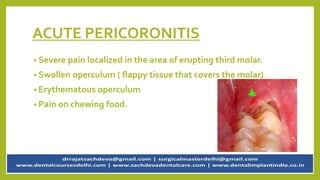
ACUTE PERICORONITIS
• Severe pain localized in the area of erupting third molar.
• Swollen operculum ( flappy tissue that covers the molar)
• Erythematous operculum
• Pain on chewing food.
SUB ACUTE PERICORONITIS
• Condition which has slight subsided symptoms of acute
phase.
• Slight extra oral swelling at the angle of the jaw.
• Stiffness in the jaw.
• Regional lymphadenopathy ( swelling of the lymphnodes).
• Pus discharged from operculum.
CHRONIC PERICORONITIS
• Also called recurrent pericoronitis.
• Increased frequency of episodes of Acute Pericoronitis over an
year.
• The symptoms are the same as that of acute pericoronitis.
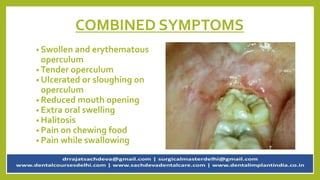
COMBINED SYMPTOMS
• Swollen and erythematous
operculum
• Tender operculum
• Ulcerated or sloughing on
operculum
• Reduced mouth opening
• Extra oral swelling
• Halitosis
• Pain on chewing food
• Pain while swallowing
DIAGNOSIS
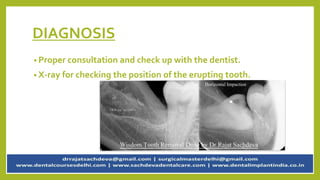
• Proper consultation and check up with the dentist.
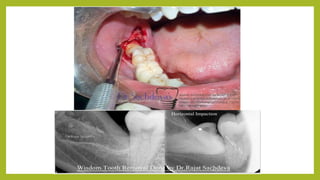
• X-ray for checking the position of the erupting tooth.
PRECAUTIONSTO BETAKEN
• Maintain good and proper oral hygiene.
• Regular check up and follow up with dentist.
AVAILABLETREATMENT OPTIONS
• Irrigation with medicated solution of the infected site.
• Local application of anesthetic agent to educe the pain.
• Antibiotic and analgesic course if required.
• Operculectomy if required.
• Extraction of the impacted tooth
COMPLICATIONS
•Localised Periodontal Abscess
•Peritonsillar abscess
•Cellulitis
•Ludwig’s Angina
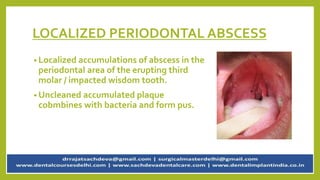
LOCALIZED PERIODONTAL ABSCESS
• Localized accumulations of abscess in the
periodontal area of the erupting third
molar / impacted wisdom tooth.
• Uncleaned accumulated plaque
cobmbines with bacteria and form pus.
CELLULITIS
• Spread of the infection from the infected tissue laterally into
the deeper layers of the skin.
• The skin appears hot, red and tender.
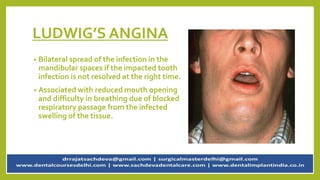
LUDWIG’S ANGINA
• Bilateral spread of the infection in the
mandibular spaces if the impacted tooth
infection is not resolved at the right time.
• Associated with reduced mouth opening
and difficulty in breathing due of blocked
respiratory passage from the infected
swelling of the tissue.
To book an appointment contact :
Dr.Rajat Sachdeva
Director & Mentor
Dr Sachdeva’s Dental
Aesthetic And Implant
Institute
I 101, Ashok Vihar Phase 1, Delhi-
110052
IMAGE COURTESY
• https://en.wikipedia.org/wiki/Pericoronitis
• https://healthh.com/pericoronitis/
• https://wikem.org/wiki/Peritonsillar_abscess
• https://slideplayer.com/slide/4555813/

Pericoronitis

  • 1.
  • 2.
    Pericoronitis is avery common condition in which there is pain in and around the last tooth of the mouth. It is very commonly associated with erupting third molar or the wisdom tooth.
  • 3.
    HOW DOESTHE PAINSTART? • The flabby gum tissue that covers the tooth partially gets infected due to food lodgment. • Poor oral hygiene. • Mechanical trauma on molar tissue Operculum: Flabby tissue partially covering the tooth
  • 4.
    TYPES OF PERICORONITIS A)Sub acute Periocoronits B) Acute Pericoronitis C) Chronic Pericoronitis
  • 5.
    ACUTE PERICORONITIS • Severepain localized in the area of erupting third molar. • Swollen operculum ( flappy tissue that covers the molar) • Erythematous operculum • Pain on chewing food.
  • 6.
    SUB ACUTE PERICORONITIS •Condition which has slight subsided symptoms of acute phase. • Slight extra oral swelling at the angle of the jaw. • Stiffness in the jaw. • Regional lymphadenopathy ( swelling of the lymphnodes). • Pus discharged from operculum.
  • 7.
    CHRONIC PERICORONITIS • Alsocalled recurrent pericoronitis. • Increased frequency of episodes of Acute Pericoronitis over an year. • The symptoms are the same as that of acute pericoronitis.
  • 8.
    COMBINED SYMPTOMS • Swollenand erythematous operculum • Tender operculum • Ulcerated or sloughing on operculum • Reduced mouth opening • Extra oral swelling • Halitosis • Pain on chewing food • Pain while swallowing
  • 9.
    DIAGNOSIS • Proper consultationand check up with the dentist. • X-ray for checking the position of the erupting tooth.
  • 10.
    PRECAUTIONSTO BETAKEN • Maintaingood and proper oral hygiene. • Regular check up and follow up with dentist.
  • 11.
    AVAILABLETREATMENT OPTIONS • Irrigationwith medicated solution of the infected site. • Local application of anesthetic agent to educe the pain. • Antibiotic and analgesic course if required. • Operculectomy if required. • Extraction of the impacted tooth
  • 13.
    COMPLICATIONS •Localised Periodontal Abscess •Peritonsillarabscess •Cellulitis •Ludwig’s Angina
  • 14.
    LOCALIZED PERIODONTAL ABSCESS •Localized accumulations of abscess in the periodontal area of the erupting third molar / impacted wisdom tooth. • Uncleaned accumulated plaque cobmbines with bacteria and form pus.
  • 15.
    CELLULITIS • Spread ofthe infection from the infected tissue laterally into the deeper layers of the skin. • The skin appears hot, red and tender.
  • 16.
    LUDWIG’S ANGINA • Bilateralspread of the infection in the mandibular spaces if the impacted tooth infection is not resolved at the right time. • Associated with reduced mouth opening and difficulty in breathing due of blocked respiratory passage from the infected swelling of the tissue.
  • 18.
    To book anappointment contact : Dr.Rajat Sachdeva Director & Mentor Dr Sachdeva’s Dental Aesthetic And Implant Institute I 101, Ashok Vihar Phase 1, Delhi- 110052
  • 19.
    IMAGE COURTESY • https://en.wikipedia.org/wiki/Pericoronitis •https://healthh.com/pericoronitis/ • https://wikem.org/wiki/Peritonsillar_abscess • https://slideplayer.com/slide/4555813/