PERFORMANCE MANAGEMENT
Feedback, counselling and coaching
FEEDBACK
The vital information which is conveyed to the employees of an
organization to modify, change, or control their attitudes and/or
behaviors for ensuring the proper functioning of the organization
is referred to as feedback.
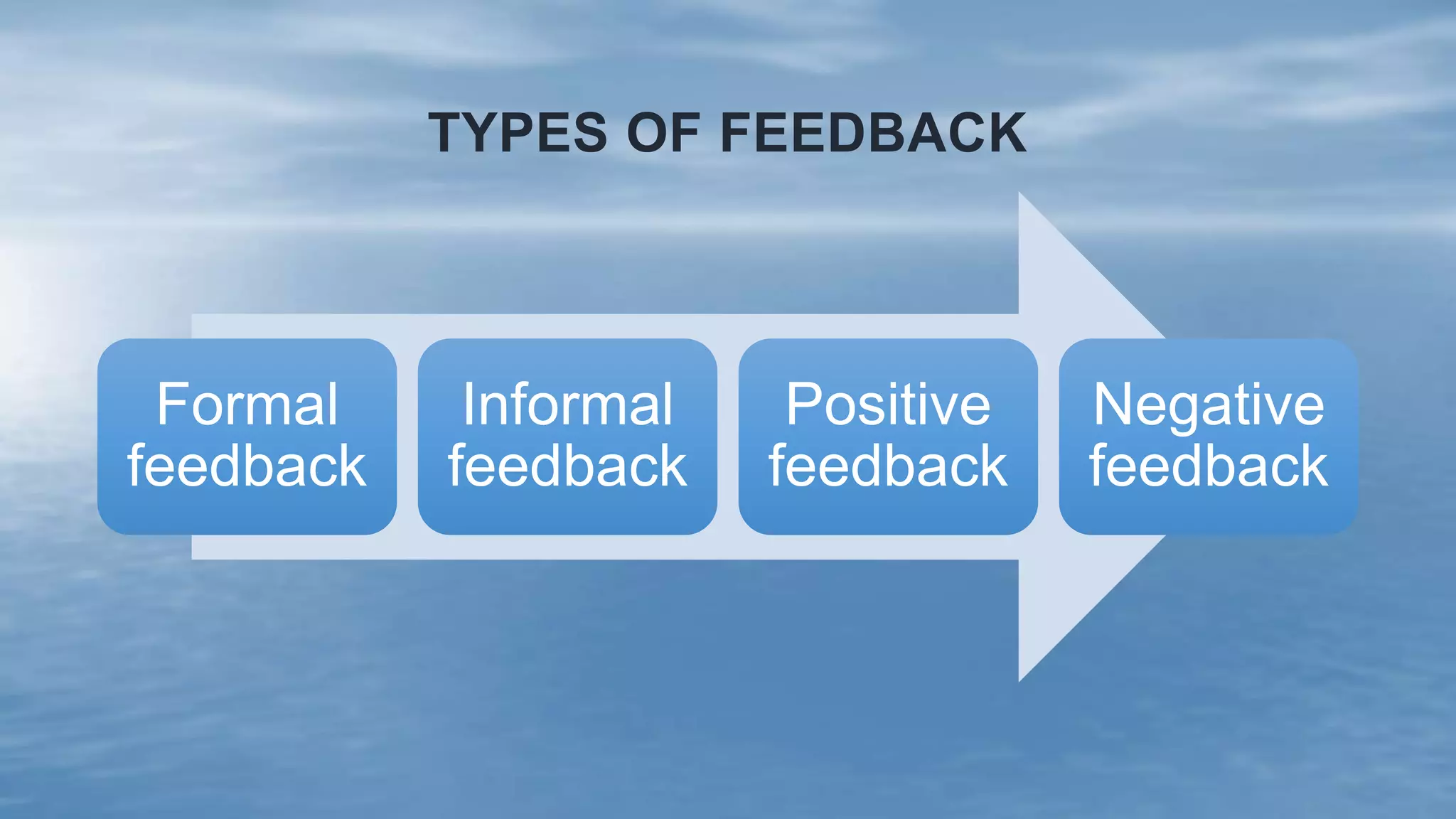
TYPES OF FEEDBACK
Formal
feedback
Informal
feedback
Positive
feedback
Negative
feedback
• Formal feedback: Gathering sessions can take place on a
monthly, quarterly or annual review cycle. Formal performance
feedback generally consists of a documented discussion
between a supervisor and a employee. The manager uses a
specially designed form that is complicated and filed after the
feedback session.
• Informal feedback: These sessions occur on a more
regular basis than formal feedback sessions. informal
feedback is not generally documented. It is delivered
personally by a supervisor or a team leader. The best thing
about informal feedback is that it usually does not cost
anything.
• Positive feedback: such feedback are always
focused on building the strength of an individual. The
positive feedback can be provided to an individual from a
manager in a formal way.
• Negative feedback: it can be used to inform an
individual about his shortcomings in the performance and
guiding him how to improve his performance.
PROCESS OF FEEDBACK
Observation
Assessment
Consequence
Development
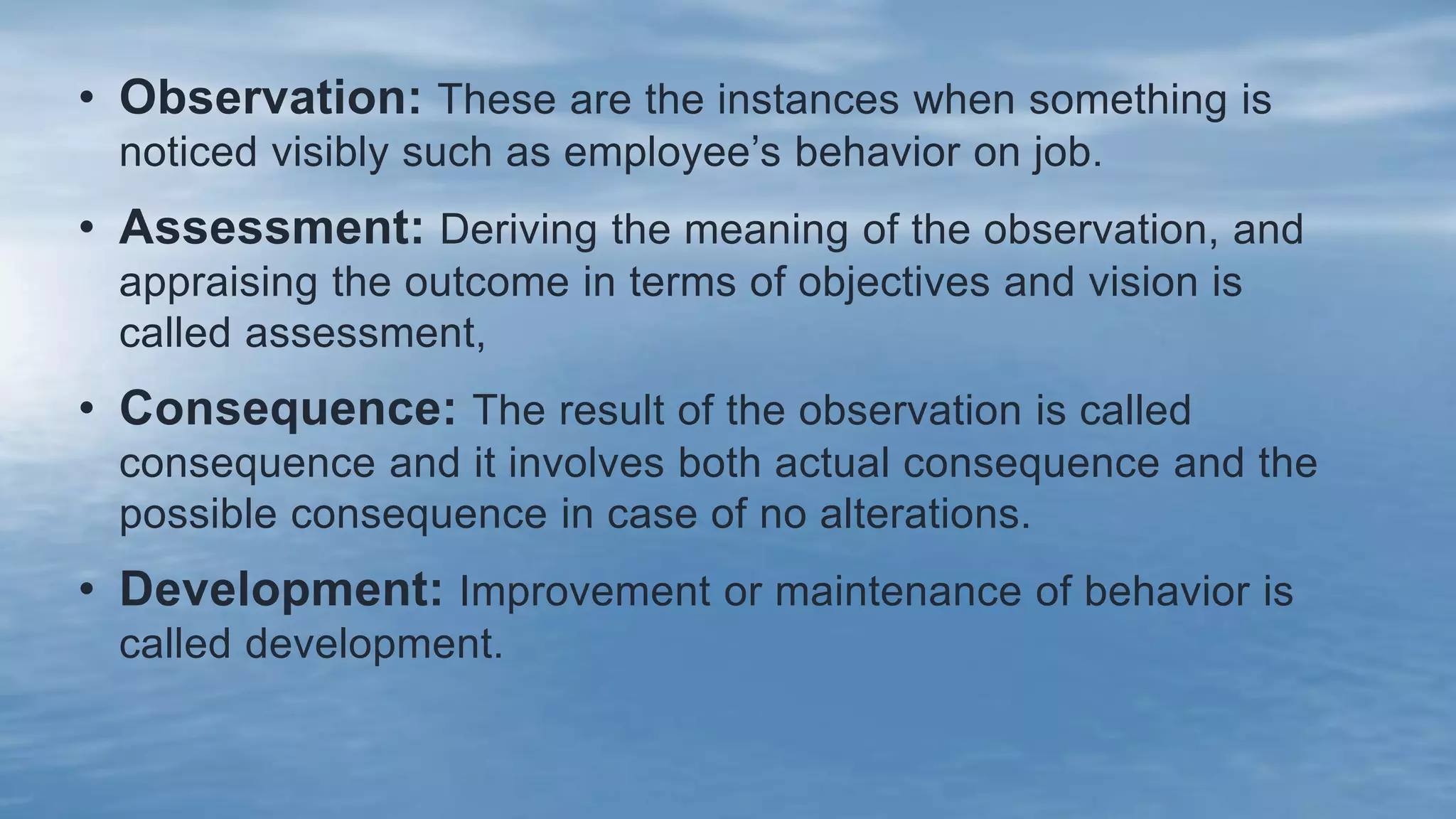
• Observation: These are the instances when something is
noticed visibly such as employee’s behavior on job.
• Assessment: Deriving the meaning of the observation, and
appraising the outcome in terms of objectives and vision is
called assessment,
• Consequence: The result of the observation is called
consequence and it involves both actual consequence and the
possible consequence in case of no alterations.
• Development: Improvement or maintenance of behavior is
called development.
IMPORTANCE OF FEEDBACK
Improves performance
Promote professional and personal Growth
Boosts Employee morale
Creates and sustains communication
COUNSELLING
• According to Strang, “Counselling is a face-to-face
relationship in which growth takes place in the
counsellor as well as the counselee”.
NEED FOR COUNSELLING
Stress
Pre-
promotional
Before
Disciplinary
Action
Handling
mid-career
crisis
Pre-
retirement
OBJECTIVES OF COUNSELLING
To bring
change in
behavior
To maintain
better
relationship
To
enhance
awareness
To ensure
effective
decision-
making
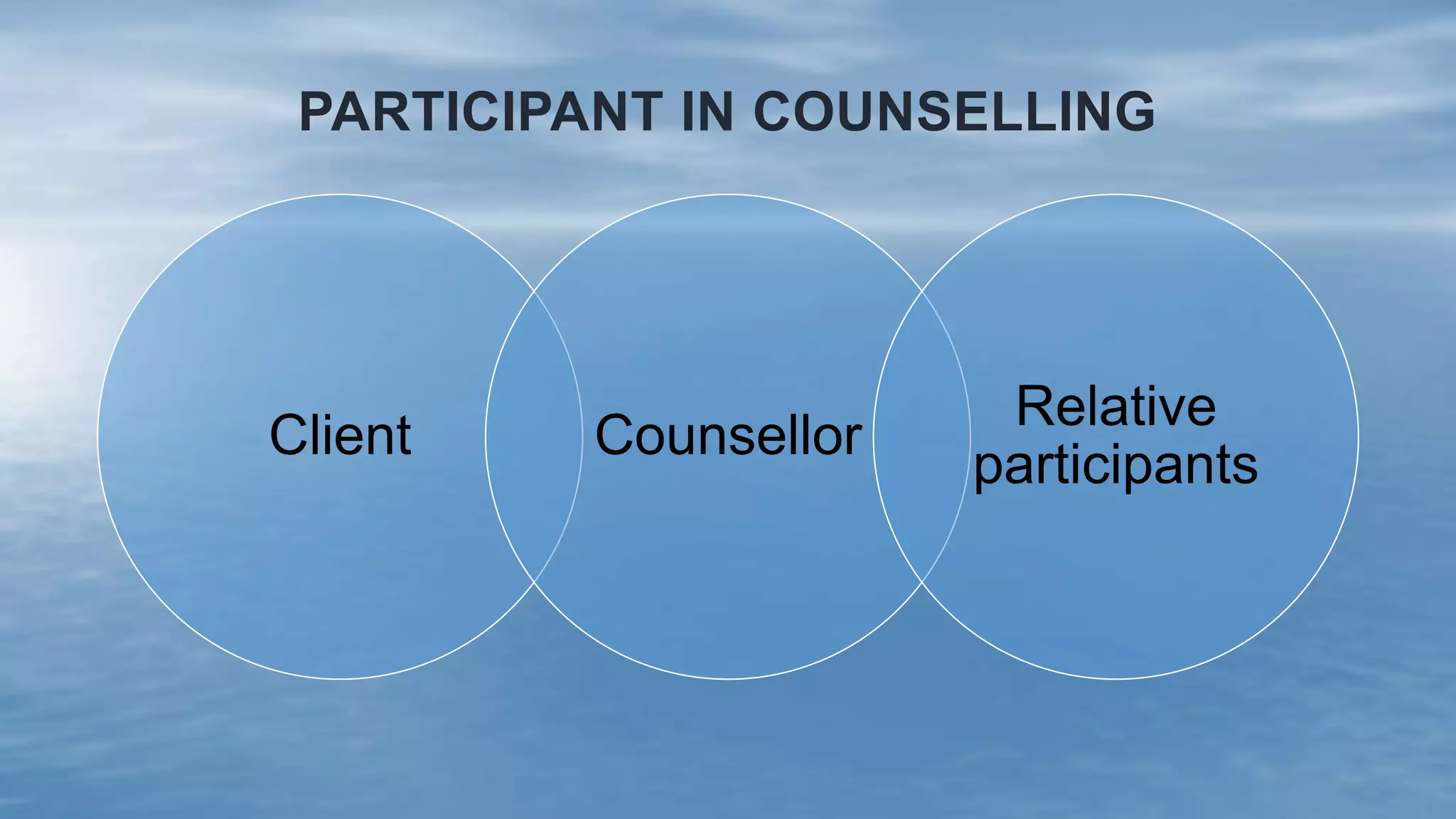
PARTICIPANT IN COUNSELLING
Client Counsellor
Relative
participants
ADVANTAGE OF COUNSELLING
Helps in problem-
solving
Boosts Employee
morale
Resolves personal and
professional issues
Enhance self-esteem
DISADVANTAGE OF COUNSELLING
Turning blind eye to a problem
Disagreement about existence of the problem
Disagreement over performance standards
Negative attitude
Expensive
COACHING
• Coaching: is a form of development in which a person
called a coach supports a learner or client in achieving a
specific personal or professional goal by providing training
and guidance. The learner is sometimes called a coachee.
NEED FOR COACHING
To help you find direction
To keep you focused on
what's important
To save you time and
unnecessary stress
To increase your confidence
and get you re-motivated
To understand yourself better
and identify blind spots
PROCESS OF COACHING
Set developmental goals
Identify developmental resources and strategies
Implement strategies
Observe and document developmental behavior
Give feedback
ADVANTAGE OF COACHING
Increases
motivation
Cost-
effective
Helps
individuals
attain their
full
potential
Improving
retention
Fostering
a positive
work
culture
DISADVANTAGE OF COACHING
performance management

performance management