Performance Management:
Are We There Yet?
David Ammons & Ellen Liston
NCLGBA Conference 2014
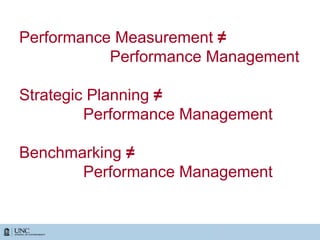
Performance Measurement ≠
Performance Management
Strategic Planning ≠
Performance Management
Benchmarking ≠
Performance Management
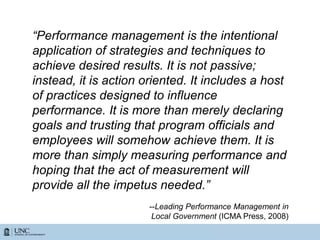
“Performance management is the intentional
application of strategies and techniques to
achieve desired results. It is not passive;
instead, it is action oriented. It includes a host
of practices designed to influence
performance. It is more than merely declaring
goals and trusting that program officials and
employees will somehow achieve them. It is
more than simply measuring performance and
hoping that the act of measurement will
provide all the impetus needed.”
--Leading Performance Management in
Local Government (ICMA Press, 2008)
Without active leadership,
systems intended to influence
performance—such as
performance measurement,
performance budgeting, or
performance pay—are merely
passive systems of rules,
deadlines, and reports.
Fundamentally,
performance
management entails the
use of performance
feedback to influence
operations.
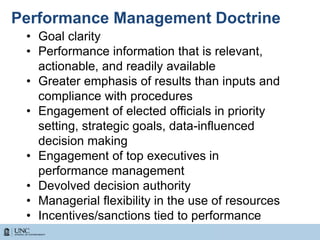
Performance Management Doctrine
• Goal clarity
• Performance information that is relevant,
actionable, and readily available
• Greater emphasis of results than inputs and
compliance with procedures
• Engagement of elected officials in priority
setting, strategic goals, data-influenced
decision making
• Engagement of top executives in
performance management
• Devolved decision authority
• Managerial flexibility in the use of resources
• Incentives/sanctions tied to performance
Performance Management Mantra
“Make Managers Manage…”
and
“…Let Managers Manage”
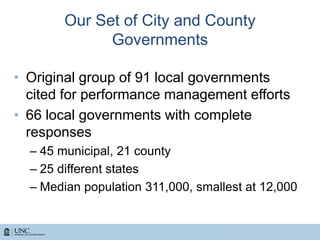
Our Set of City and County
Governments
• Original group of 91 local governments
cited for performance management efforts
• 66 local governments with complete
responses
– 45 municipal, 21 county
– 25 different states
– Median population 311,000, smallest at 12,000
Our Findings
Cities & Counties having a reputation for performance
management tended…
• to have more extensive sets of measures, and to include
more measures of quality, efficiency & outcomes;
• to do strategic planning, with some linking their strategic
goals to their performance management efforts;
• to grant significant discretion to departmental officials but to
withhold significant discretion from operating supervisors;
• to have senior managers engaged in regular reviews of
operating performance and, perhaps more often than
prescribed by performance management doctrine,
intervening in operating decisions;
• to be no more likely than cities and counties in general to
have performance-based incentives or sanctions.
• Linking strategic goals and performance management
significantly increases the likelihood of receiving
anticipated performance management benefits.
However, an “unlinked” strategic plan brings no
apparent performance management benefits.
• Organizations whose senior managers routinely
review the performance of operating units enjoy
significantly greater performance management
benefits.
• Some evidence that the combination of executive
engagement in performance management and
devolved authority does make a positive difference in
reported achievement.
Key Elements of Effective
Performance Management
• Establishing a performance culture
• Sharpening performance perceptions
• Establishing performance expectations
• Identifying causes of performance
deficiencies and prescribing corrective
actions
• Motivating improvement
• Incorporating meaningful performance data
into management and policy decision
processes
A Few Questions to Ponder
1.Who is the primary audience for your
performance information? Secondary
audience(s)?
2.Are you ever frustrated by lack of
performance data use? Where is your
frustration directed?
3.Which is more impressive in your
organization—the “trappings,” the
processes, or the products of performance
management?
Performance Management
at the City of Coral Springs, Florida
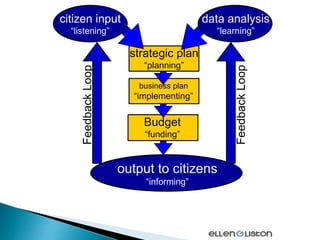
strategic plan
“planning”
data analysis
“learning”
citizen input
“listening”
output to citizens
“informing”
Budget
“funding”
business plan
“implementing”
FeedbackLoop
FeedbackLoop
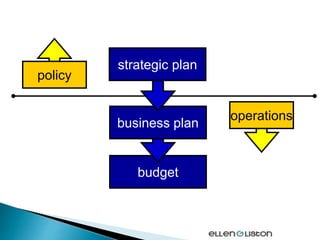
budget
business plan
strategic plan
policy
operations
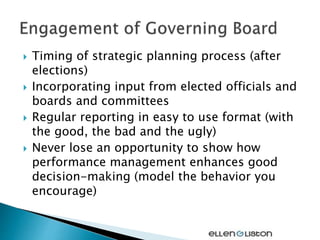
 Timing of strategic planning process (after
elections)
 Incorporating input from elected officials and
boards and committees
 Regular reporting in easy to use format (with
the good, the bad and the ugly)
 Never lose an opportunity to show how
performance management enhances good
decision-making (model the behavior you
encourage)
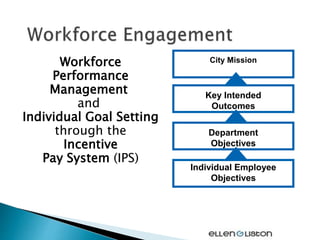
Workforce
Performance
Management
and
Individual Goal Setting
through the
Incentive
Pay System (IPS)
City Mission
Key Intended
Outcomes
Department
Objectives
Individual Employee
Objectives
. . . And What Gets Talked
About Gets Measured
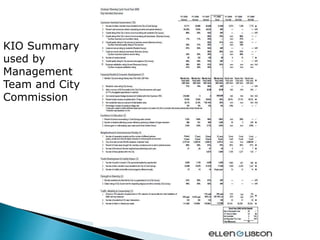
KIO Summary
used by
Management
Team and City
Commission
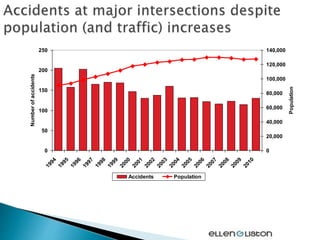
0
50
100
150
200
250
1994
1995
1996
1997
1998
1999
2000
2001
2002
2003
2004
2005
2006
2007
2008
2009
2010
Numberofaccidents
0
20,000
40,000
60,000
80,000
100,000
120,000
140,000
Population
Accidents Population
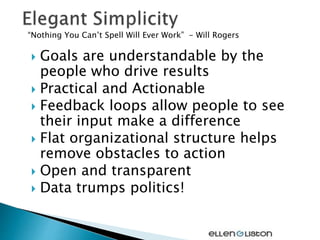
 Goals are understandable by the
people who drive results
 Practical and Actionable
 Feedback loops allow people to see
their input make a difference
 Flat organizational structure helps
remove obstacles to action
 Open and transparent
 Data trumps politics!
“Nothing You Can’t Spell Will Ever Work” - Will Rogers
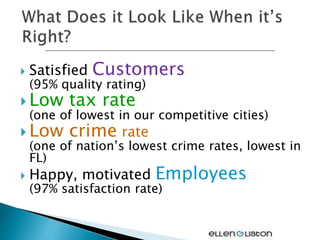
 Satisfied Customers
(95% quality rating)
 Low tax rate
(one of lowest in our competitive cities)
 Low crime rate
(one of nation’s lowest crime rates, lowest in
FL)
 Happy, motivated Employees
(97% satisfaction rate)
25

Performance Management Presentation Handout - Summer 2014 NCLGBA Conference

  • 1.
    Performance Management: Are WeThere Yet? David Ammons & Ellen Liston NCLGBA Conference 2014
  • 2.
    Performance Measurement ≠ PerformanceManagement Strategic Planning ≠ Performance Management Benchmarking ≠ Performance Management
  • 3.
    “Performance management isthe intentional application of strategies and techniques to achieve desired results. It is not passive; instead, it is action oriented. It includes a host of practices designed to influence performance. It is more than merely declaring goals and trusting that program officials and employees will somehow achieve them. It is more than simply measuring performance and hoping that the act of measurement will provide all the impetus needed.” --Leading Performance Management in Local Government (ICMA Press, 2008)
  • 4.
    Without active leadership, systemsintended to influence performance—such as performance measurement, performance budgeting, or performance pay—are merely passive systems of rules, deadlines, and reports.
  • 5.
    Fundamentally, performance management entails the useof performance feedback to influence operations.
  • 6.
    Performance Management Doctrine •Goal clarity • Performance information that is relevant, actionable, and readily available • Greater emphasis of results than inputs and compliance with procedures • Engagement of elected officials in priority setting, strategic goals, data-influenced decision making • Engagement of top executives in performance management • Devolved decision authority • Managerial flexibility in the use of resources • Incentives/sanctions tied to performance
  • 7.
    Performance Management Mantra “MakeManagers Manage…” and “…Let Managers Manage”
  • 8.
    Our Set ofCity and County Governments • Original group of 91 local governments cited for performance management efforts • 66 local governments with complete responses – 45 municipal, 21 county – 25 different states – Median population 311,000, smallest at 12,000
  • 9.
    Our Findings Cities &Counties having a reputation for performance management tended… • to have more extensive sets of measures, and to include more measures of quality, efficiency & outcomes; • to do strategic planning, with some linking their strategic goals to their performance management efforts; • to grant significant discretion to departmental officials but to withhold significant discretion from operating supervisors; • to have senior managers engaged in regular reviews of operating performance and, perhaps more often than prescribed by performance management doctrine, intervening in operating decisions; • to be no more likely than cities and counties in general to have performance-based incentives or sanctions.
  • 10.
    • Linking strategicgoals and performance management significantly increases the likelihood of receiving anticipated performance management benefits. However, an “unlinked” strategic plan brings no apparent performance management benefits. • Organizations whose senior managers routinely review the performance of operating units enjoy significantly greater performance management benefits. • Some evidence that the combination of executive engagement in performance management and devolved authority does make a positive difference in reported achievement.
  • 11.
    Key Elements ofEffective Performance Management • Establishing a performance culture • Sharpening performance perceptions • Establishing performance expectations • Identifying causes of performance deficiencies and prescribing corrective actions • Motivating improvement • Incorporating meaningful performance data into management and policy decision processes
  • 12.
    A Few Questionsto Ponder 1.Who is the primary audience for your performance information? Secondary audience(s)? 2.Are you ever frustrated by lack of performance data use? Where is your frustration directed? 3.Which is more impressive in your organization—the “trappings,” the processes, or the products of performance management?
  • 13.
    Performance Management at theCity of Coral Springs, Florida
  • 15.
    strategic plan “planning” data analysis “learning” citizeninput “listening” output to citizens “informing” Budget “funding” business plan “implementing” FeedbackLoop FeedbackLoop
  • 16.
  • 17.
     Timing ofstrategic planning process (after elections)  Incorporating input from elected officials and boards and committees  Regular reporting in easy to use format (with the good, the bad and the ugly)  Never lose an opportunity to show how performance management enhances good decision-making (model the behavior you encourage)
  • 18.
    Workforce Performance Management and Individual Goal Setting throughthe Incentive Pay System (IPS) City Mission Key Intended Outcomes Department Objectives Individual Employee Objectives
  • 19.
    . . .And What Gets Talked About Gets Measured
  • 20.
  • 22.
  • 23.
     Goals areunderstandable by the people who drive results  Practical and Actionable  Feedback loops allow people to see their input make a difference  Flat organizational structure helps remove obstacles to action  Open and transparent  Data trumps politics! “Nothing You Can’t Spell Will Ever Work” - Will Rogers
  • 24.
     Satisfied Customers (95%quality rating)  Low tax rate (one of lowest in our competitive cities)  Low crime rate (one of nation’s lowest crime rates, lowest in FL)  Happy, motivated Employees (97% satisfaction rate)
  • 25.