Perennialism
PREPARED BY HAMZA YOUSAF
DEPARTMENT OF EDUCATION, UNIVERSITY OF KOTLI, AJ&K
Introduction
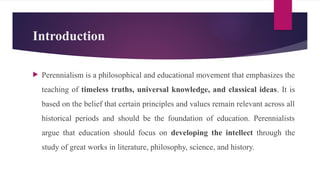
 Perennialism is a philosophical and educational movement that emphasizes the
teaching of timeless truths, universal knowledge, and classical ideas. It is
based on the belief that certain principles and values remain relevant across all
historical periods and should be the foundation of education. Perennialists
argue that education should focus on developing the intellect through the
study of great works in literature, philosophy, science, and history.
Historical Background and Development
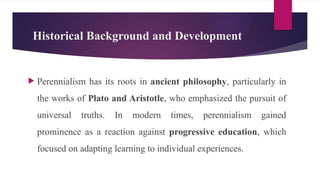
 Perennialism has its roots in ancient philosophy, particularly in
the works of Plato and Aristotle, who emphasized the pursuit of
universal truths. In modern times, perennialism gained
prominence as a reaction against progressive education, which
focused on adapting learning to individual experiences.
Key Figures in Perennialism
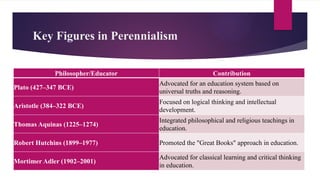
Philosopher/Educator Contribution
Plato (427–347 BCE)
Advocated for an education system based on
universal truths and reasoning.
Aristotle (384–322 BCE)
Focused on logical thinking and intellectual
development.
Thomas Aquinas (1225–1274)
Integrated philosophical and religious teachings in
education.
Robert Hutchins (1899–1977) Promoted the "Great Books" approach in education.
Mortimer Adler (1902–2001)
Advocated for classical learning and critical thinking
in education.
Perennialism
 Universal and Timeless Knowledge: Truths discovered by past scholars and
philosophers remain relevant today.
 Focus on Rational Thinking: Education should cultivate logical reasoning and
intellectual development.
 Emphasis on Classic Works: Great books and classical literature contain wisdom
that is essential for human understanding.
 Teacher-Centered Education: Teachers are the primary source of knowledge and
should guide students toward intellectual growth.
 Moral and Ethical Development: Education should instill virtues like honesty,
integrity, and discipline.
Perennialism in Education
 Focus on Classical Texts: Students study works of Plato, Aristotle, Shakespeare,
Dante, and Newton.
 Liberal Arts Curriculum: Subjects like philosophy, literature, history,
mathematics, and science are emphasized.
 Structured Learning: Follows a strict, formal approach to education rather than
an adaptive, student-centered model.
 Developing Critical Thinking: Encourages students to engage in deep
intellectual discussions.
Examples of Perennialist Education
 Great Books Programs: Schools that base their curriculum on classic
philosophical and literary works.
 Liberal Arts Education: Colleges that focus on developing critical thinking
through humanities and sciences.
 Traditional Religious Education: Schools that emphasize moral and ethical
learning through religious teachings.
Criticism of Perennialism
 Too Rigid and Traditional: Critics argue that it does not adapt to modern
needs and technological advancements.
 Ignores Student Interests: Focuses more on classical knowledge rather than
students' personal development.
 Limited Practical Application: Some believe that its emphasis on abstract
thinking neglects job-related skills.
 Resistance to Change: It is often seen as opposing new educational methods
and societal progress.
Perennialism vs. Other Educational Philosophies
Aspect Perennialism Essentialism Reconstructionism
Focus
Universal truths and
classical knowledge
Core academic
knowledge
Social reform
through education
Curriculum
Great Books,
philosophy,
humanities
Essential subjects
like math, science,
history
Contemporary social
issues
Teaching Method
Teacher-centered,
lectures, discussions
Structured,
discipline-focused
Activism and real-
world projects
Goal of Education
Intellectual and
moral development
Mastery of
fundamental
knowledge
Social change and
justice
Perennialism (Philosophy), Types and Educational Implications.pptx

Perennialism (Philosophy), Types and Educational Implications.pptx

  • 1.
    Perennialism PREPARED BY HAMZAYOUSAF DEPARTMENT OF EDUCATION, UNIVERSITY OF KOTLI, AJ&K
  • 2.
    Introduction  Perennialism isa philosophical and educational movement that emphasizes the teaching of timeless truths, universal knowledge, and classical ideas. It is based on the belief that certain principles and values remain relevant across all historical periods and should be the foundation of education. Perennialists argue that education should focus on developing the intellect through the study of great works in literature, philosophy, science, and history.
  • 3.
    Historical Background andDevelopment  Perennialism has its roots in ancient philosophy, particularly in the works of Plato and Aristotle, who emphasized the pursuit of universal truths. In modern times, perennialism gained prominence as a reaction against progressive education, which focused on adapting learning to individual experiences.
  • 4.
    Key Figures inPerennialism Philosopher/Educator Contribution Plato (427–347 BCE) Advocated for an education system based on universal truths and reasoning. Aristotle (384–322 BCE) Focused on logical thinking and intellectual development. Thomas Aquinas (1225–1274) Integrated philosophical and religious teachings in education. Robert Hutchins (1899–1977) Promoted the "Great Books" approach in education. Mortimer Adler (1902–2001) Advocated for classical learning and critical thinking in education.
  • 5.
    Perennialism  Universal andTimeless Knowledge: Truths discovered by past scholars and philosophers remain relevant today.  Focus on Rational Thinking: Education should cultivate logical reasoning and intellectual development.  Emphasis on Classic Works: Great books and classical literature contain wisdom that is essential for human understanding.  Teacher-Centered Education: Teachers are the primary source of knowledge and should guide students toward intellectual growth.  Moral and Ethical Development: Education should instill virtues like honesty, integrity, and discipline.
  • 6.
    Perennialism in Education Focus on Classical Texts: Students study works of Plato, Aristotle, Shakespeare, Dante, and Newton.  Liberal Arts Curriculum: Subjects like philosophy, literature, history, mathematics, and science are emphasized.  Structured Learning: Follows a strict, formal approach to education rather than an adaptive, student-centered model.  Developing Critical Thinking: Encourages students to engage in deep intellectual discussions.
  • 7.
    Examples of PerennialistEducation  Great Books Programs: Schools that base their curriculum on classic philosophical and literary works.  Liberal Arts Education: Colleges that focus on developing critical thinking through humanities and sciences.  Traditional Religious Education: Schools that emphasize moral and ethical learning through religious teachings.
  • 8.
    Criticism of Perennialism Too Rigid and Traditional: Critics argue that it does not adapt to modern needs and technological advancements.  Ignores Student Interests: Focuses more on classical knowledge rather than students' personal development.  Limited Practical Application: Some believe that its emphasis on abstract thinking neglects job-related skills.  Resistance to Change: It is often seen as opposing new educational methods and societal progress.
  • 9.
    Perennialism vs. OtherEducational Philosophies Aspect Perennialism Essentialism Reconstructionism Focus Universal truths and classical knowledge Core academic knowledge Social reform through education Curriculum Great Books, philosophy, humanities Essential subjects like math, science, history Contemporary social issues Teaching Method Teacher-centered, lectures, discussions Structured, discipline-focused Activism and real- world projects Goal of Education Intellectual and moral development Mastery of fundamental knowledge Social change and justice