
PEPSICO
A GLOBAL BRAND
By
Suryadev Maity
Reg No : - 12397104
• PepsiCo entered India in 1989
• top five markets in terms of growth of the soft drinks market
PEPSICO IN INDIA
• Industry : Food and Beverage
• Established : 1898 by Caleb Bradham
• Marketed : 200+ country
• Brand : 22
• Revenue :US$66.4 billion (2013)
• Net income :US$6.7 billion (2013)
• Employees :300,000 (2013)
• Key people :Indra Nooyi (Chairperson & CEO)
Acquisitions and divestments
• Between the late-1970s and the mid-1990s, PepsiCo expanded
via acquisition of businesses outside of its core focus of packaged
food and beverage brands.
• PepsiCo also previously owned several other brands that it later
sold so it could focus on its primary snack food and beverage
lines. Brands formerly owned by PepsiCo include: Pizza Hut, Taco
Bell, KFC, Hot 'n Now, East Side Mario's, D'Angelo Sandwich
Shops, Chevys Fresh Mex, California Pizza Kitchen, Stolichnaya (via
licensed agreement), Wilson Sporting Goods and North American
Van Lines.
• purchased the orange juice company Tropicana Products in 1998
• merged with Quaker Oats Company in 2001, adding with it
the Gatorade sports drink line.
• 2009, acquire the two largest bottlers of its products in North
America: Pepsi Bottling Group and PepsiAmericas.
• The Coca-Cola Company has historically been considered
PepsiCo's primary competitor in the beverage market.
Competition
• snack food market - Kraft Foods
• soda market - RC ColaCola , Turka , Kola RealInca Kola , Zam
Zam Cola , Mecca-Cola , Virgin Cola , Parsi Cola , Qibla Cola ,
Evoca Cola , Corsica Cola , Breizh Cola , Afri Cola
Products and brands
• PepsiCo's product mix as of 2012 (based on worldwide net
revenue) consists of 63 percent foods, and 37 percent
beverages. On a worldwide basis, the company's current
products lines include several hundred brands that in 2009
were estimated to have generated approximately $108 billion
in cumulative annual retail sales.
• The primary identifier of a food and beverage industry main
brand is annual sales over $1 billion. As of 2013, 22 PepsiCo
brands met that mark: Pepsi, Mountain
Dew, Lay's, Gatorade, Tropicana, 7 Up, Doritos, Lipton
Teas, Quaker Foods, Cheetos, Mirinda, Ruffles, Aquafina, Pepsi
Max, Tostitos, Sierra Mist, Fritos, and Walkers.
Areas of business
The structure of PepsiCo's global operations has shifted multiple
times in its history as a result of international expansion, and as
of 2010 it is separated into four main divisions:
• PepsiCo Americas Foods,
• PepsiCo Americas Beverages,
• PepsiCo Europe,
• PepsiCo Asia,
• Middle East and Africa
As of 2009, 71 percent of the company's net revenues came
from North and South America, 16 percent from Europe and 13
percent from Asia, the Middle East and Africa. Approximately
300,000 people are employed by PepsiCo worldwide as of 2013.
PepsiCo Asia, Middle East & Africa
• This operating division of PepsiCo covers Asia, the Middle East
and Africa. In addition to the production and sales of several
worldwide Pepsi-Cola, Quaker Foods and Frito-Lay beverage and
food product lines (including Pepsi and Doritos), this segment of
PepsiCo's business markets regional brands such
as Mirinda, Kurkure and Red Rock Deli, among others.
• While PepsiCo owns its own manufacturing and distribution
facilities in certain parts of these regions, more of this
production is conducted via alternate means such as licensing
(which it does with Aquafina), contract manufacturing, joint
ventures and affiliate operations. PepsiCo's businesses in these
regions, as of 2009, contributed 13 percent to the company's net
revenueworldwide. In August 2012, PepsiCo signed an
agreement with a local Myanmar distributor to sell its softdrinks
after a 15-year break to re-enter the country.
Advertising
Brand Image of Pepsi
 Pepsi is a brand that every youngster relates to.
 But this definitely doesn’t mean that other age groups are not it’s user’s.
 Thus Pepsi’s brand image is it’s hip, cool, lively and refreshing attitude.
Advertising Strategy of Pepsi
 Pepsi’s target audience are mostly teens and young adults and their
advertising reflects this in every possible way.
 The company changes its advertising strategy and image to reflect the
target's interests.
 Pepsi makes sure that the advertisements reflect to the target audience’s
interests and nostalgia.
 The advertising strategy includes cool, hip promos to attract more of the
target audience.
 The advertising is mostly creative and has different elements like music and
sports other than bollywood.
 Pepsi.com also plays an important role in advertising and attracts target
audience by giving access to options like downloads, gaming, music mixing
applications etc..
Generation Y- Market Influence
 Huge market – 80 million people
 Spending power – 600 million annually
 Many Geb Yers do household grocery shopping
 90% parents say kids influence what they buy
 Many work and have their own money to spend
 They have proven to be brand loyal
How to reach Generation Y
 Creates promotion tailored to their needs and interests.
 Gen Yers like entertainment and music
 They like to laugh, but not at another's expense
 To attract the teen market radio and television should be used
 They are internet savvy What does Generation Y like?
 Free stuffs and discounts
 Contests/drawings
 Music
 Club cards
 Team sporting events
 They are into clothes and the latest
styles
 Teen friendly retail stores and
internet site
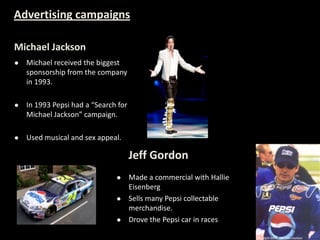
Michael Jackson
 Michael received the biggest
sponsorship from the company
in 1993.
 In 1993 Pepsi had a “Search for
Michael Jackson” campaign.
 Used musical and sex appeal.
Advertising campaigns
Jeff Gordon
 Made a commercial with Hallie
Eisenberg
 Sells many Pepsi collectable
merchandise.
 Drove the Pepsi car in races
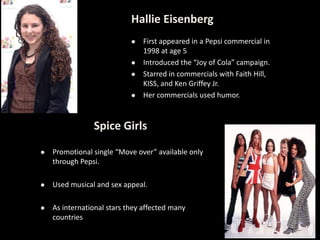
Hallie Eisenberg
 First appeared in a Pepsi commercial in
1998 at age 5
 Introduced the “Joy of Cola” campaign.
 Starred in commercials with Faith Hill,
KISS, and Ken Griffey Jr.
 Her commercials used humor.
Spice Girls
 Promotional single “Move over” available only
through Pepsi.
 Used musical and sex appeal.
 As international stars they affected many
countries
Pepsico a global brand

Pepsico a global brand

  • 1.
    PEPSICO A GLOBAL BRAND By SuryadevMaity Reg No : - 12397104
  • 2.
    • PepsiCo enteredIndia in 1989 • top five markets in terms of growth of the soft drinks market PEPSICO IN INDIA • Industry : Food and Beverage • Established : 1898 by Caleb Bradham • Marketed : 200+ country • Brand : 22 • Revenue :US$66.4 billion (2013) • Net income :US$6.7 billion (2013) • Employees :300,000 (2013) • Key people :Indra Nooyi (Chairperson & CEO)
  • 3.
    Acquisitions and divestments •Between the late-1970s and the mid-1990s, PepsiCo expanded via acquisition of businesses outside of its core focus of packaged food and beverage brands. • PepsiCo also previously owned several other brands that it later sold so it could focus on its primary snack food and beverage lines. Brands formerly owned by PepsiCo include: Pizza Hut, Taco Bell, KFC, Hot 'n Now, East Side Mario's, D'Angelo Sandwich Shops, Chevys Fresh Mex, California Pizza Kitchen, Stolichnaya (via licensed agreement), Wilson Sporting Goods and North American Van Lines. • purchased the orange juice company Tropicana Products in 1998 • merged with Quaker Oats Company in 2001, adding with it the Gatorade sports drink line. • 2009, acquire the two largest bottlers of its products in North America: Pepsi Bottling Group and PepsiAmericas.
  • 4.
    • The Coca-ColaCompany has historically been considered PepsiCo's primary competitor in the beverage market. Competition • snack food market - Kraft Foods • soda market - RC ColaCola , Turka , Kola RealInca Kola , Zam Zam Cola , Mecca-Cola , Virgin Cola , Parsi Cola , Qibla Cola , Evoca Cola , Corsica Cola , Breizh Cola , Afri Cola
  • 5.
    Products and brands •PepsiCo's product mix as of 2012 (based on worldwide net revenue) consists of 63 percent foods, and 37 percent beverages. On a worldwide basis, the company's current products lines include several hundred brands that in 2009 were estimated to have generated approximately $108 billion in cumulative annual retail sales. • The primary identifier of a food and beverage industry main brand is annual sales over $1 billion. As of 2013, 22 PepsiCo brands met that mark: Pepsi, Mountain Dew, Lay's, Gatorade, Tropicana, 7 Up, Doritos, Lipton Teas, Quaker Foods, Cheetos, Mirinda, Ruffles, Aquafina, Pepsi Max, Tostitos, Sierra Mist, Fritos, and Walkers.
  • 6.
    Areas of business Thestructure of PepsiCo's global operations has shifted multiple times in its history as a result of international expansion, and as of 2010 it is separated into four main divisions: • PepsiCo Americas Foods, • PepsiCo Americas Beverages, • PepsiCo Europe, • PepsiCo Asia, • Middle East and Africa As of 2009, 71 percent of the company's net revenues came from North and South America, 16 percent from Europe and 13 percent from Asia, the Middle East and Africa. Approximately 300,000 people are employed by PepsiCo worldwide as of 2013.
  • 7.
    PepsiCo Asia, MiddleEast & Africa • This operating division of PepsiCo covers Asia, the Middle East and Africa. In addition to the production and sales of several worldwide Pepsi-Cola, Quaker Foods and Frito-Lay beverage and food product lines (including Pepsi and Doritos), this segment of PepsiCo's business markets regional brands such as Mirinda, Kurkure and Red Rock Deli, among others. • While PepsiCo owns its own manufacturing and distribution facilities in certain parts of these regions, more of this production is conducted via alternate means such as licensing (which it does with Aquafina), contract manufacturing, joint ventures and affiliate operations. PepsiCo's businesses in these regions, as of 2009, contributed 13 percent to the company's net revenueworldwide. In August 2012, PepsiCo signed an agreement with a local Myanmar distributor to sell its softdrinks after a 15-year break to re-enter the country.
  • 8.
    Advertising Brand Image ofPepsi  Pepsi is a brand that every youngster relates to.  But this definitely doesn’t mean that other age groups are not it’s user’s.  Thus Pepsi’s brand image is it’s hip, cool, lively and refreshing attitude.
  • 9.
    Advertising Strategy ofPepsi  Pepsi’s target audience are mostly teens and young adults and their advertising reflects this in every possible way.  The company changes its advertising strategy and image to reflect the target's interests.  Pepsi makes sure that the advertisements reflect to the target audience’s interests and nostalgia.  The advertising strategy includes cool, hip promos to attract more of the target audience.  The advertising is mostly creative and has different elements like music and sports other than bollywood.  Pepsi.com also plays an important role in advertising and attracts target audience by giving access to options like downloads, gaming, music mixing applications etc..
  • 10.
    Generation Y- MarketInfluence  Huge market – 80 million people  Spending power – 600 million annually  Many Geb Yers do household grocery shopping  90% parents say kids influence what they buy  Many work and have their own money to spend  They have proven to be brand loyal
  • 11.
    How to reachGeneration Y  Creates promotion tailored to their needs and interests.  Gen Yers like entertainment and music  They like to laugh, but not at another's expense  To attract the teen market radio and television should be used  They are internet savvy What does Generation Y like?  Free stuffs and discounts  Contests/drawings  Music  Club cards  Team sporting events  They are into clothes and the latest styles  Teen friendly retail stores and internet site
  • 12.
    Michael Jackson  Michaelreceived the biggest sponsorship from the company in 1993.  In 1993 Pepsi had a “Search for Michael Jackson” campaign.  Used musical and sex appeal. Advertising campaigns Jeff Gordon  Made a commercial with Hallie Eisenberg  Sells many Pepsi collectable merchandise.  Drove the Pepsi car in races
  • 13.
    Hallie Eisenberg  Firstappeared in a Pepsi commercial in 1998 at age 5  Introduced the “Joy of Cola” campaign.  Starred in commercials with Faith Hill, KISS, and Ken Griffey Jr.  Her commercials used humor. Spice Girls  Promotional single “Move over” available only through Pepsi.  Used musical and sex appeal.  As international stars they affected many countries