Building Africa’sdigital future
Lessons Learnt from Peering
26 August 2015
An overview of Liquid Telecom
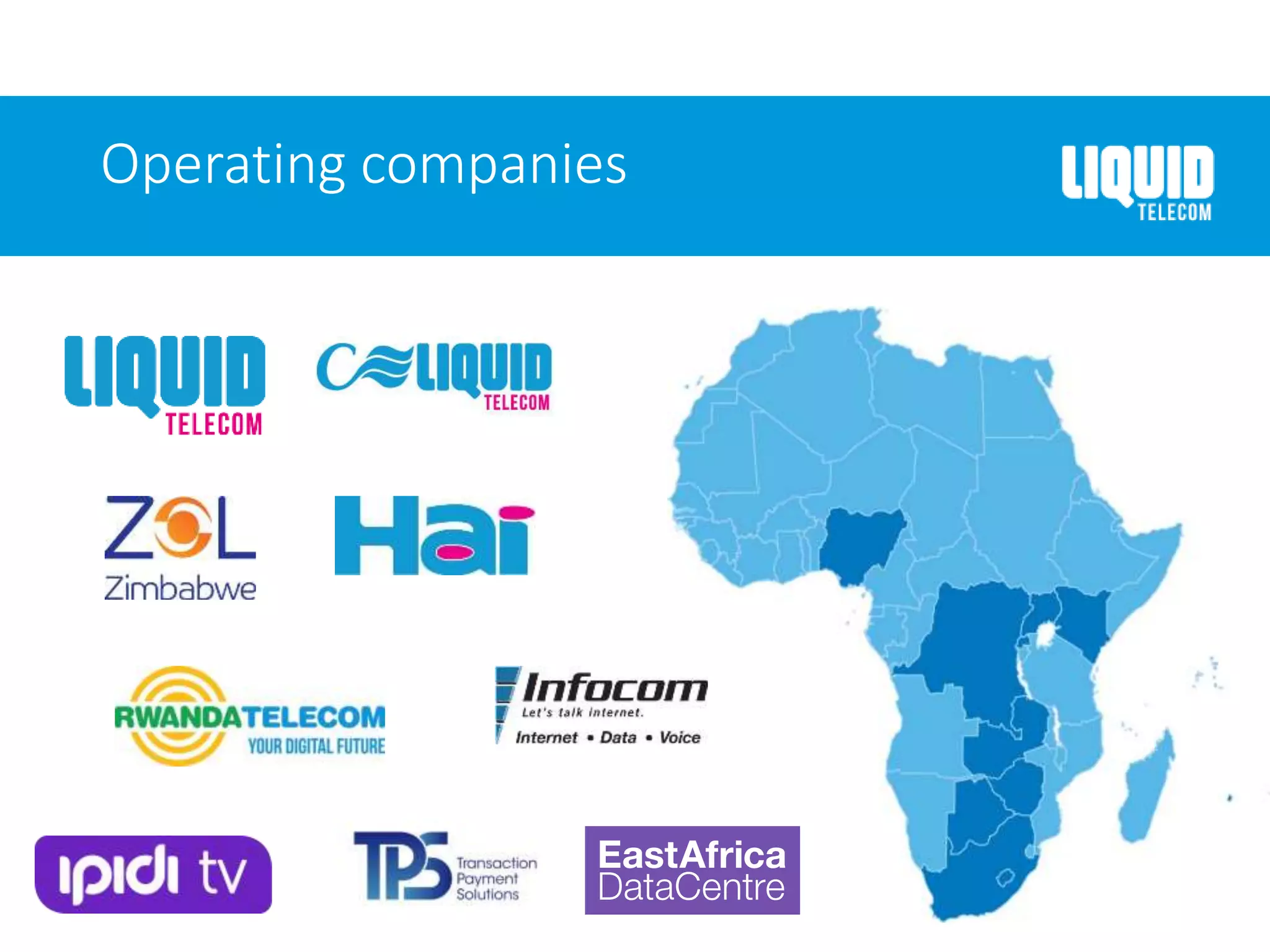
Operating companies
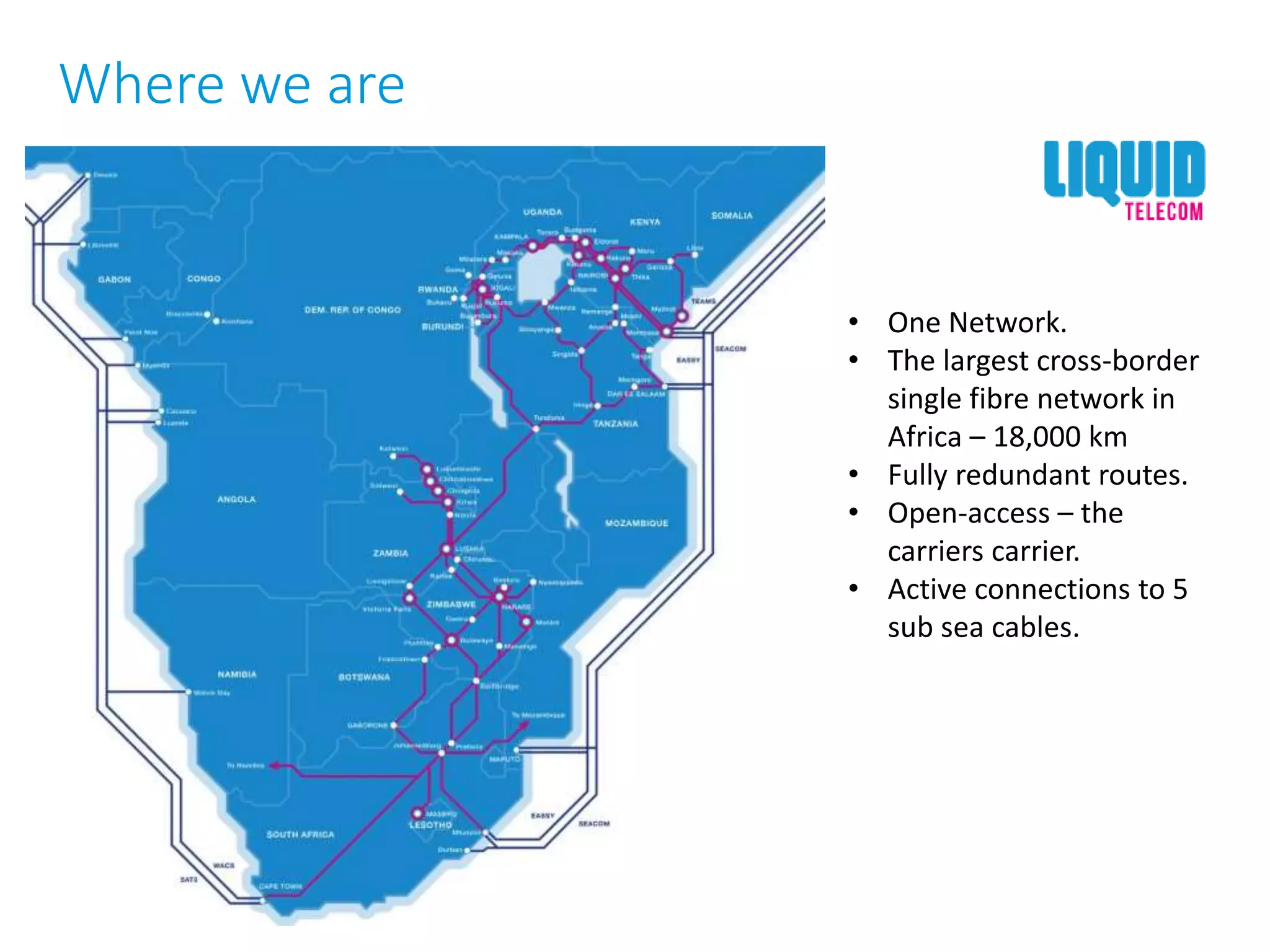
• One Network.
• The largest cross-border
single fibre network in
Africa – 18,000 km
• Fully redundant routes.
• Open-access – the
carriers carrier.
• Active connections to 5
sub sea cables.
Where we are
Peering Points
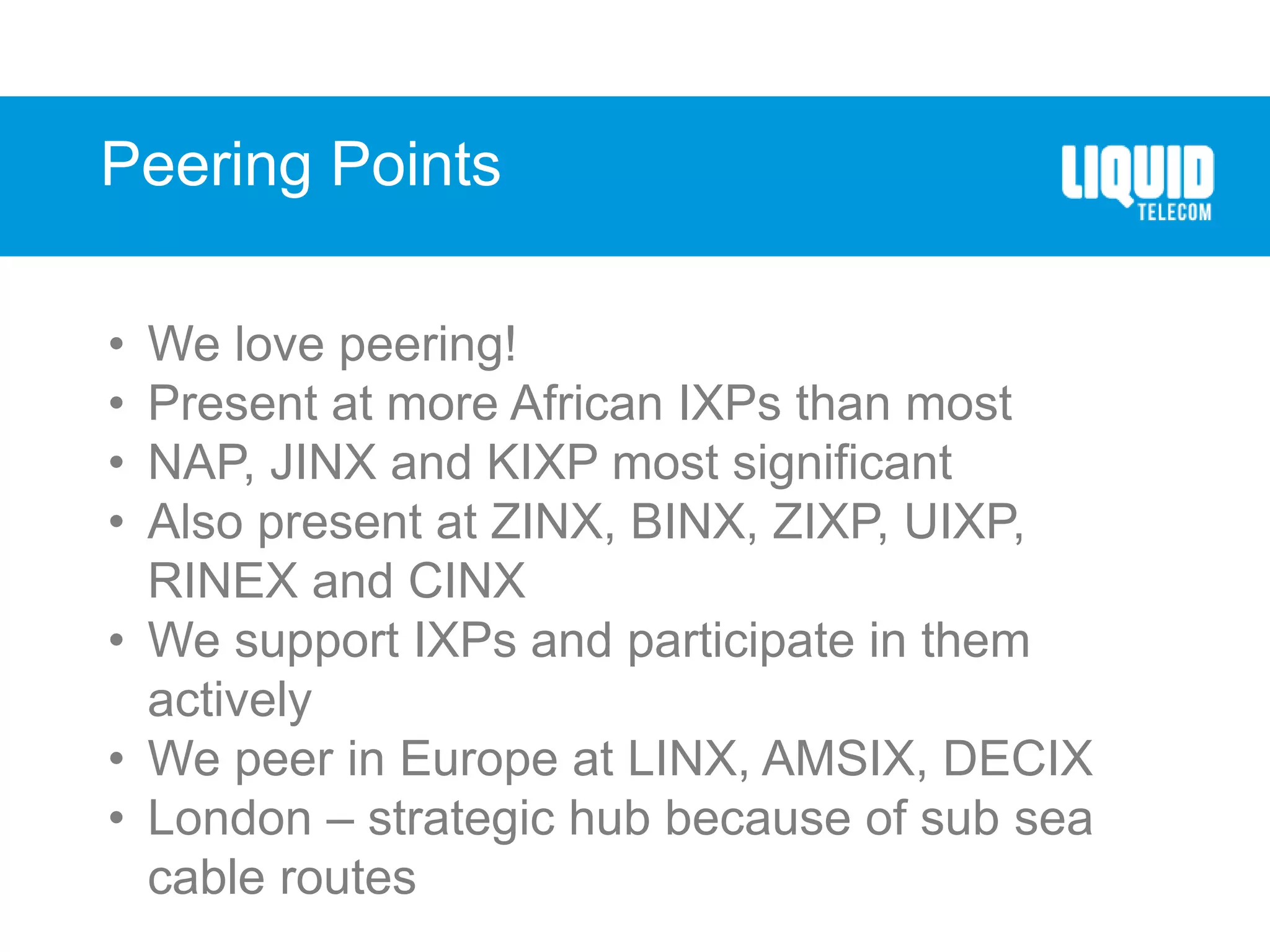
• We love peering!
• Present at more African IXPs than most
• NAP, JINX and KIXP most significant
• Also present at ZINX, BINX, ZIXP, UIXP,
RINEX and CINX
• We support IXPs and participate in them
actively
• We peer in Europe at LINX, AMSIX, DECIX
• London – strategic hub because of sub sea
cable routes
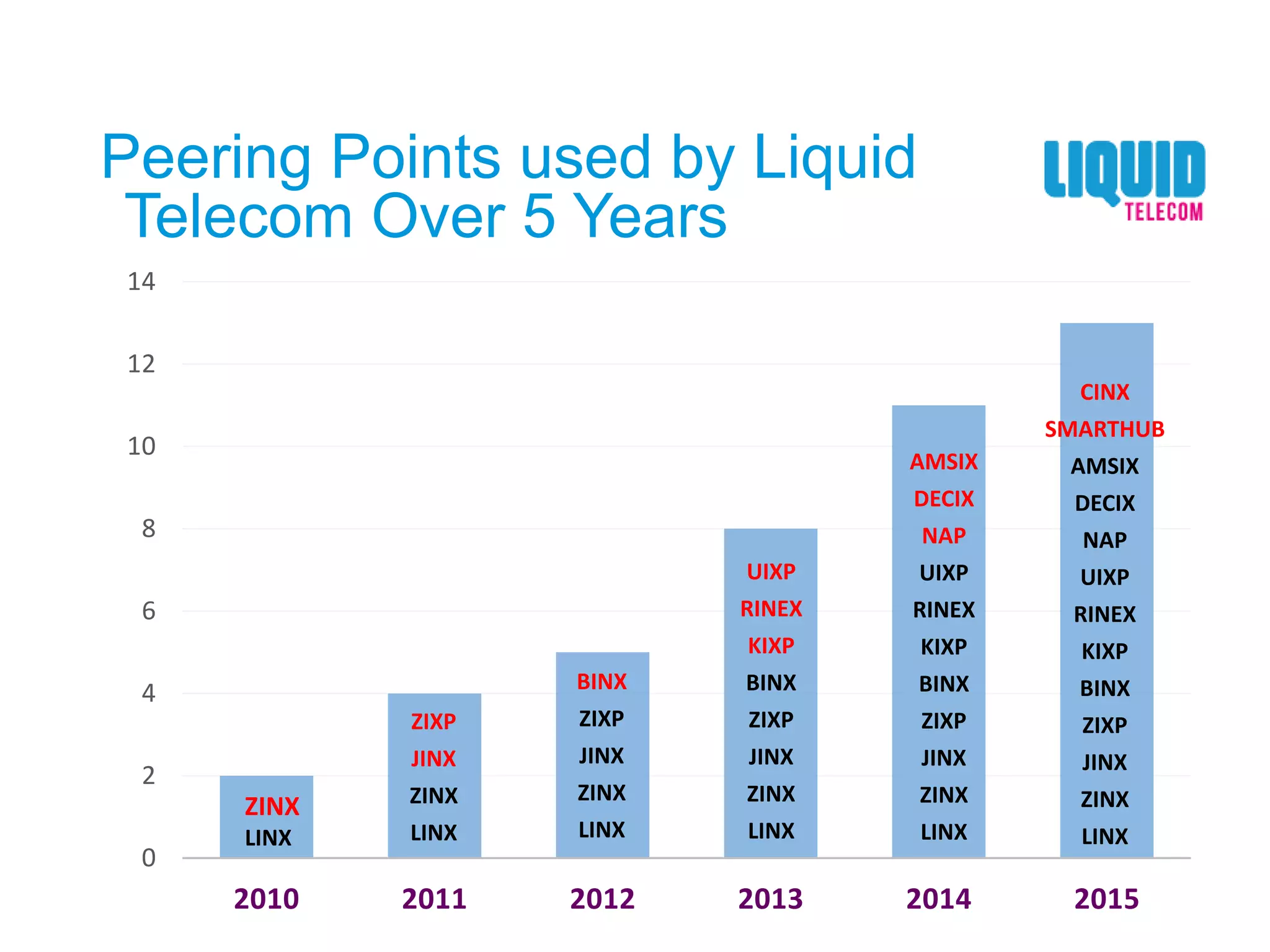
Peering Points used by Liquid
Telecom Over 5 Years
0
2
4
6
8
10
12
14
2010 2011 2012 2013 2014 2015
ZINX
LINX
ZIXP
JINX
ZINX
LINX
BINX
ZIXP
JINX
ZINX
LINX
AMSIX
DECIX
NAP
UIXP
RINEX
KIXP
BINX
ZIXP
JINX
ZINX
LINX
UIXP
RINEX
KIXP
BINX
ZIXP
JINX
ZINX
LINX
CINX
SMARTHUB
AMSIX
DECIX
NAP
UIXP
RINEX
KIXP
BINX
ZIXP
JINX
ZINX
LINX
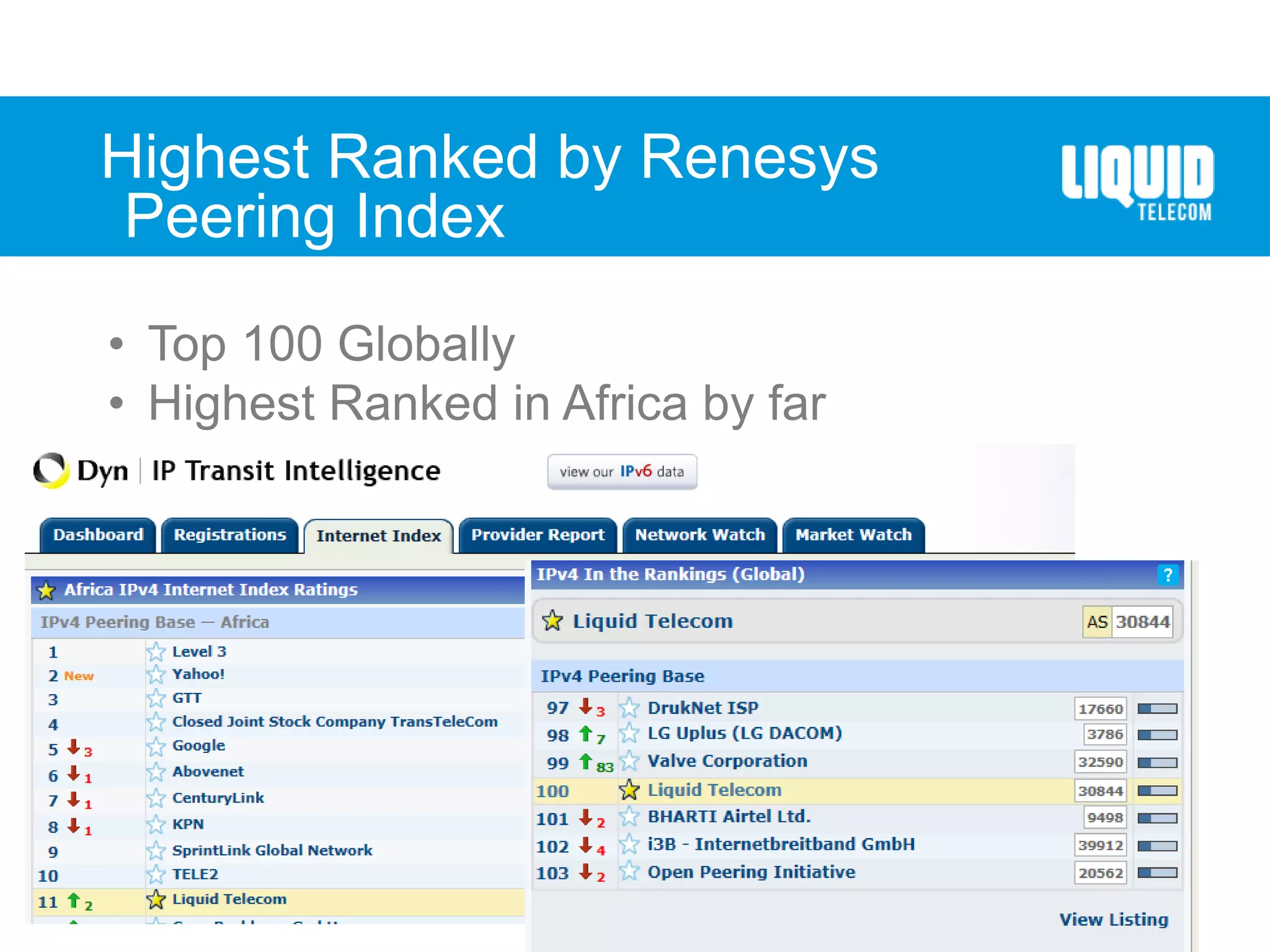
Highest Ranked by Renesys
Peering Index
• Top 100 Globally
• Highest Ranked in Africa by far
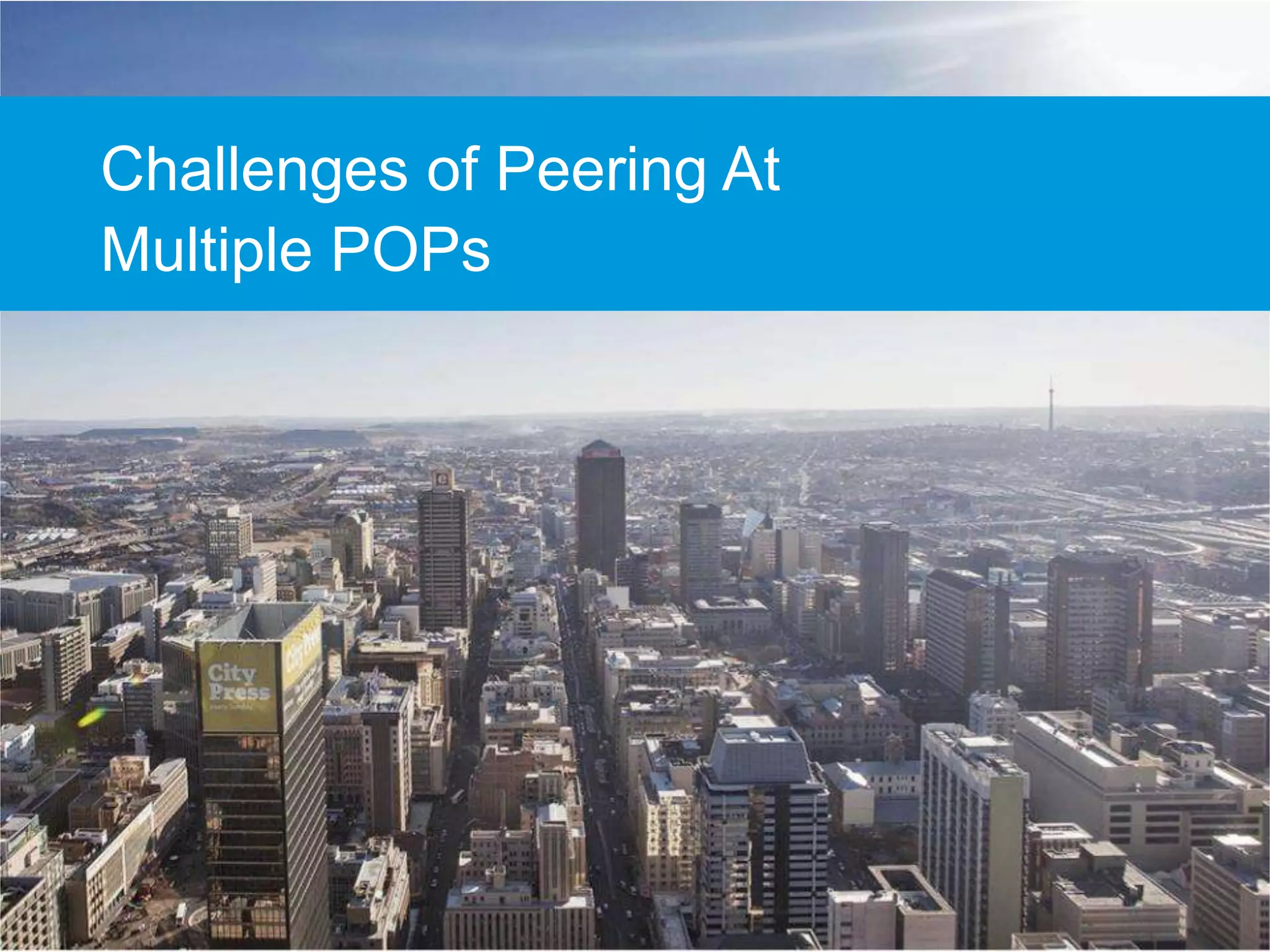
Challenges of Peering At
Multiple POPs
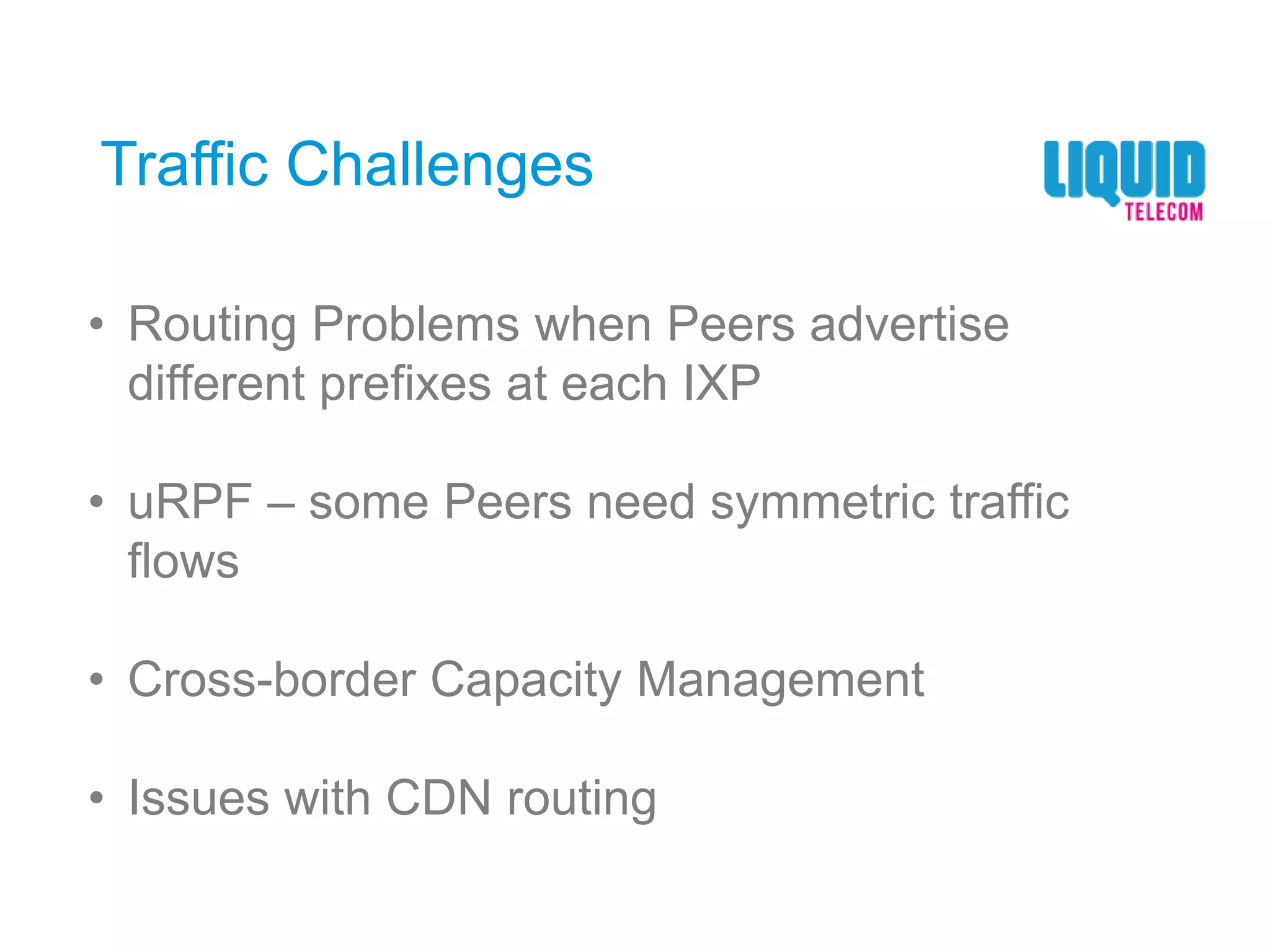
Traffic Challenges
• Routing Problems when Peers advertise
different prefixes at each IXP
• uRPF – some Peers need symmetric traffic
flows
• Cross-border Capacity Management
• Issues with CDN routing
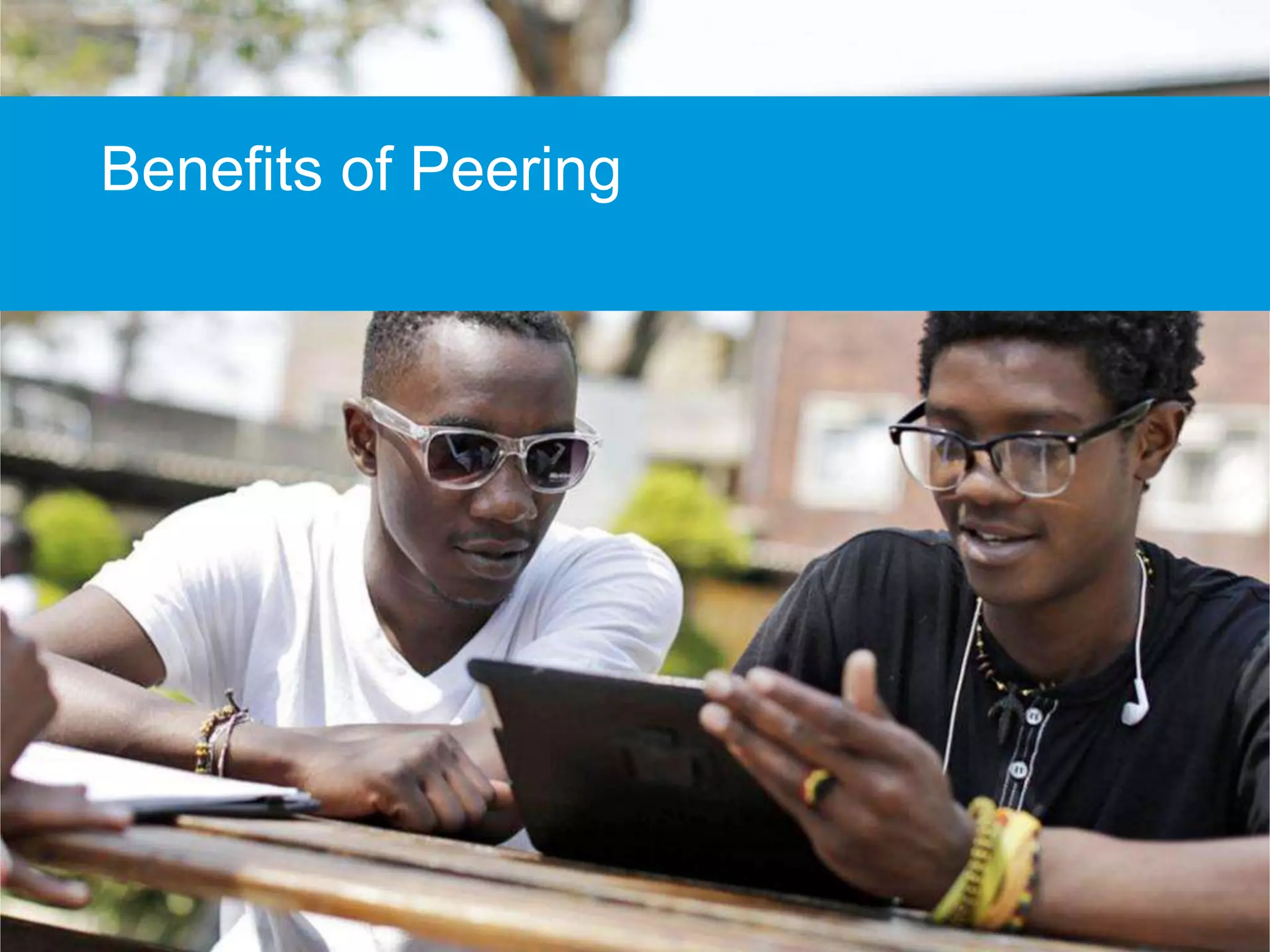
Benefits of Peering
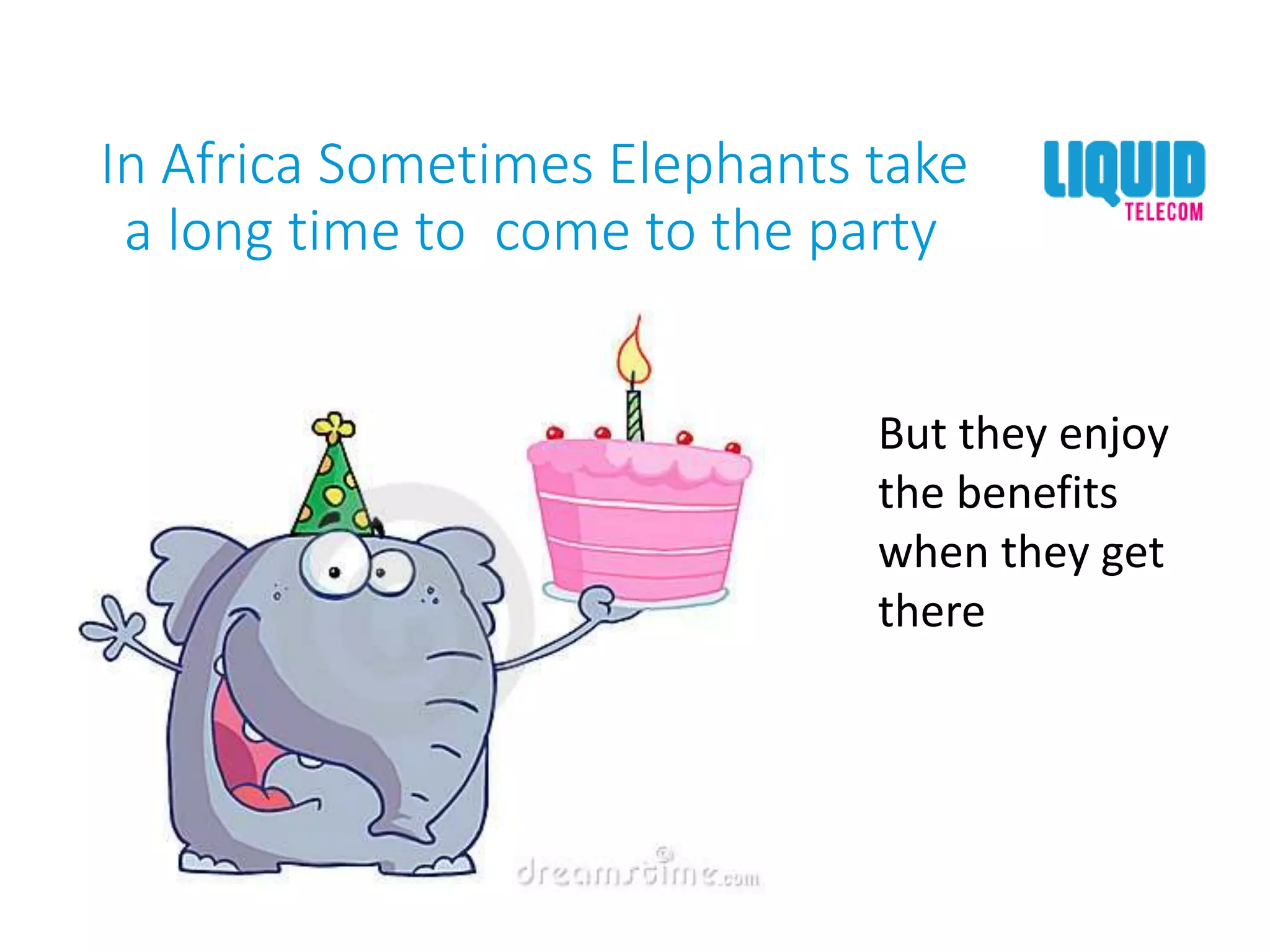
In Africa Sometimes Elephants take
a long time to come to the party
But they enjoy
the benefits
when they get
there
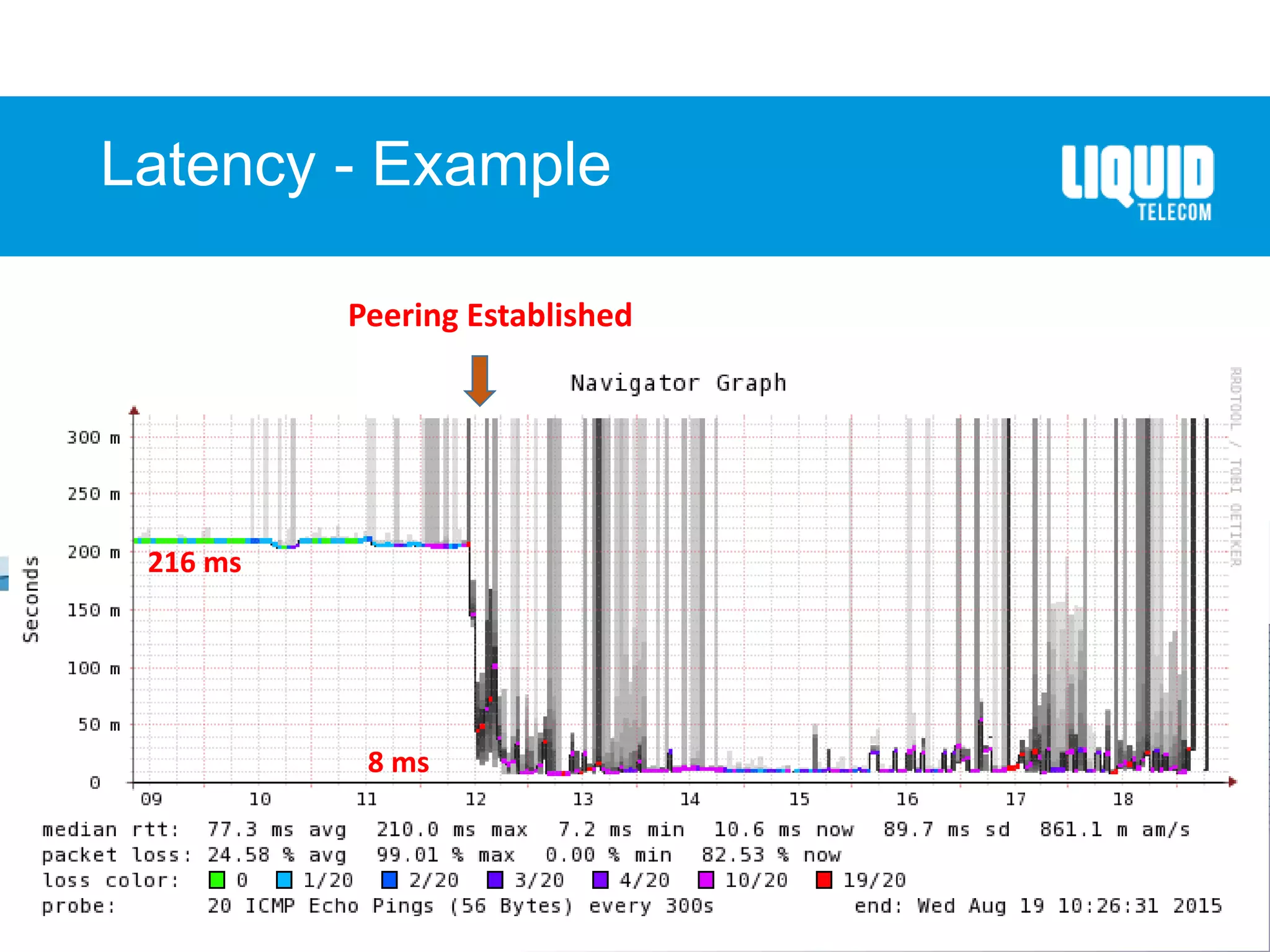
Latency - Example
Peering Established
216 ms
8 ms
Lessons Learnt Along the Way
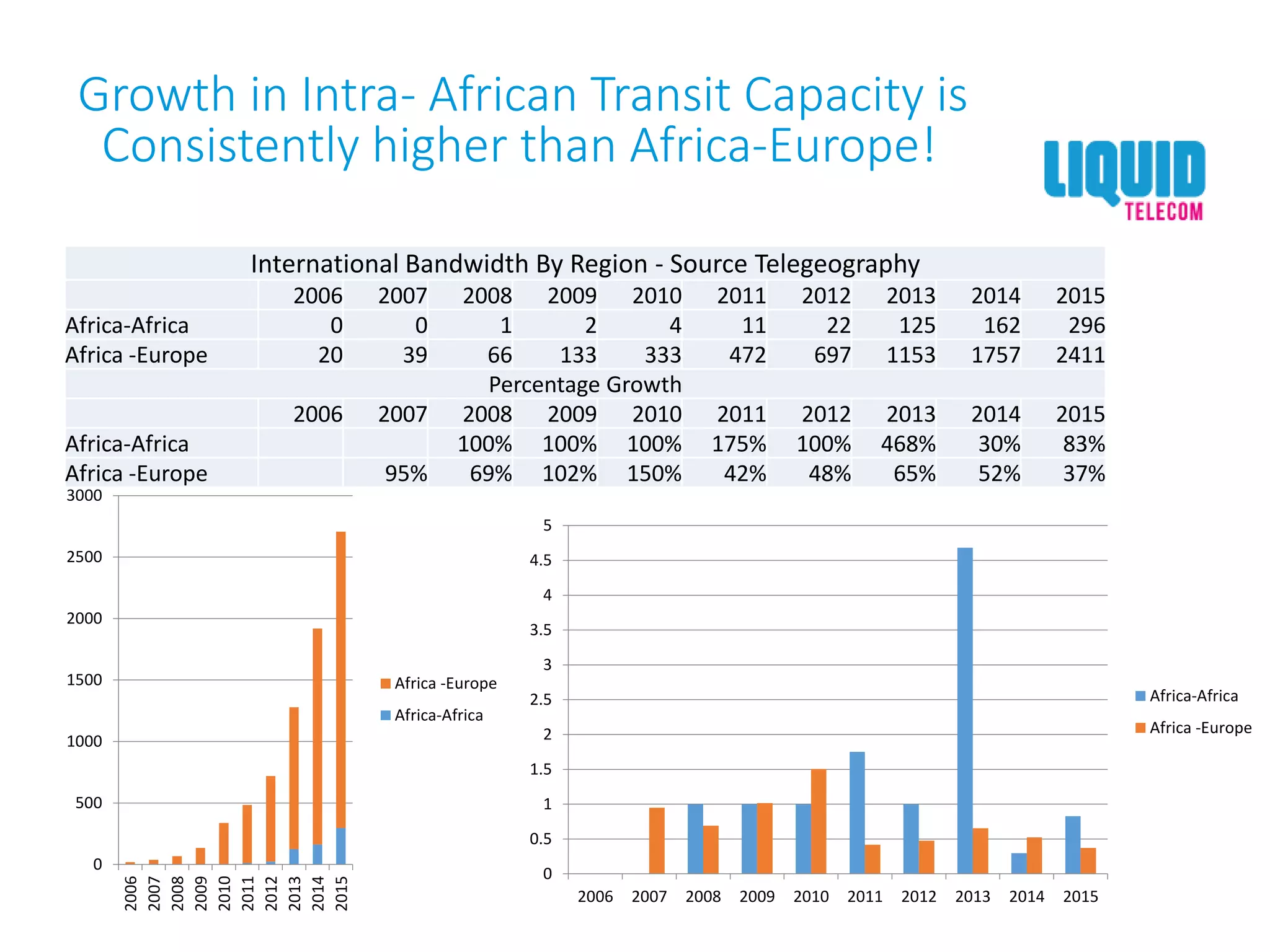
Growth in Intra- African Transit Capacity is
Consistently higher than Africa-Europe!
International Bandwidth By Region - Source Telegeography
2006 2007 2008 2009 2010 2011 2012 2013 2014 2015
Africa-Africa 0 0 1 2 4 11 22 125 162 296
Africa -Europe 20 39 66 133 333 472 697 1153 1757 2411
Percentage Growth
2006 2007 2008 2009 2010 2011 2012 2013 2014 2015
Africa-Africa 100% 100% 100% 175% 100% 468% 30% 83%
Africa -Europe 95% 69% 102% 150% 42% 48% 65% 52% 37%
0
500
1000
1500
2000
2500
3000
2006
2007
2008
2009
2010
2011
2012
2013
2014
2015
Africa -Europe
Africa-Africa
0
0.5
1
1.5
2
2.5
3
3.5
4
4.5
5
2006 2007 2008 2009 2010 2011 2012 2013 2014 2015
Africa-Africa
Africa -Europe
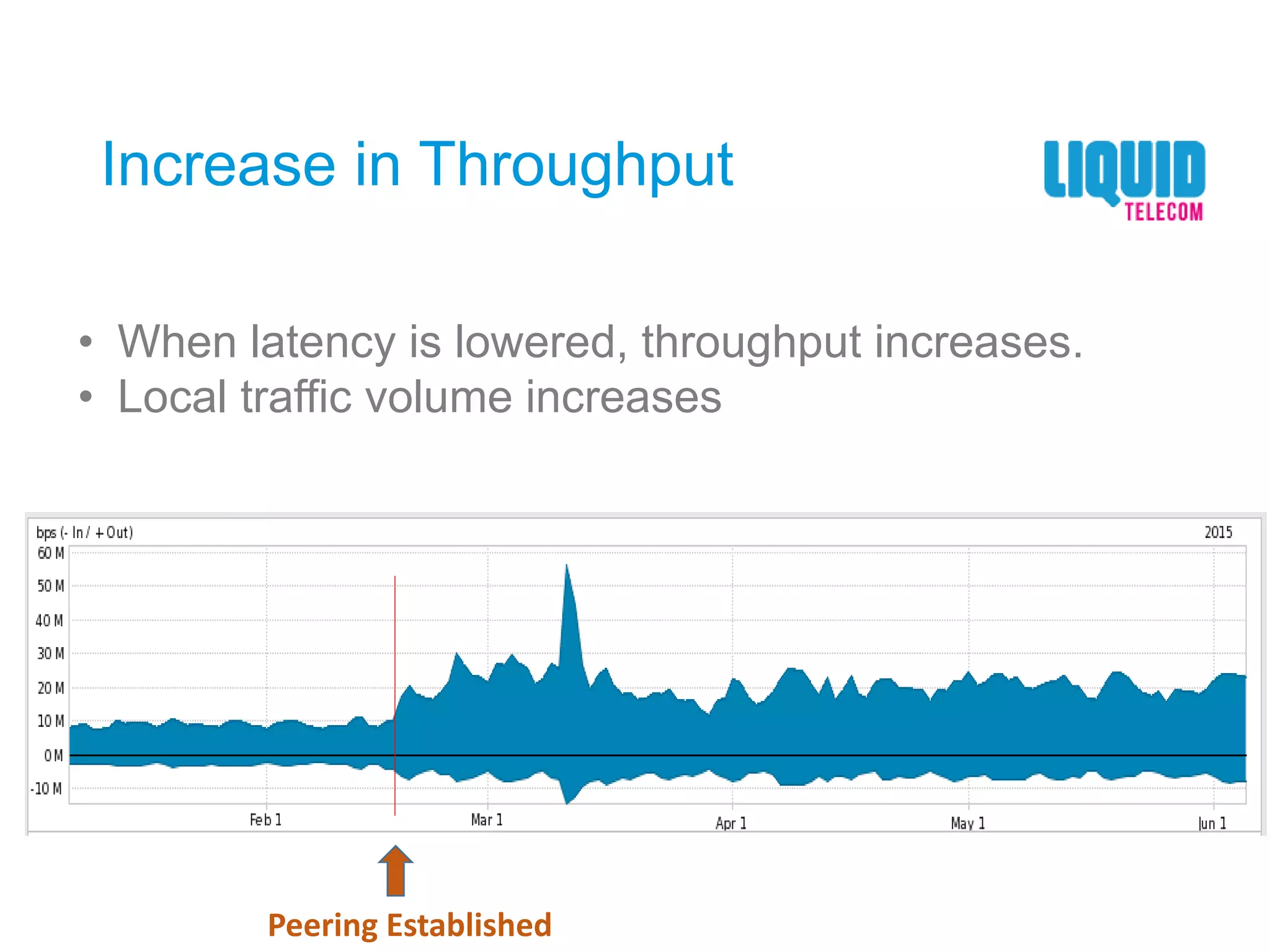
Increase in Throughput
• When latency is lowered, throughput increases.
• Local traffic volume increases
Peering Established
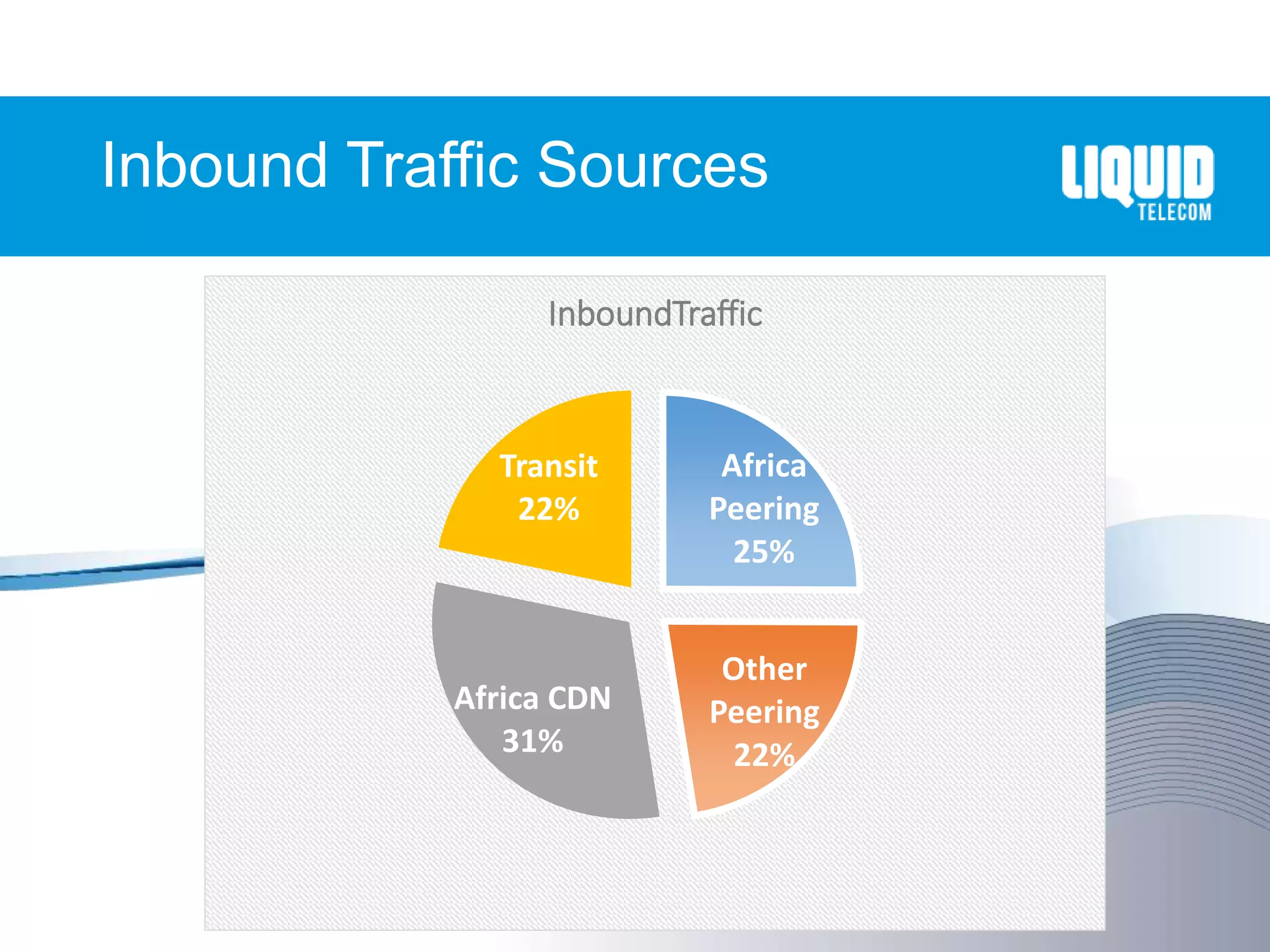
Inbound Traffic Sources
Africa
Peering
25%
Other
Peering
22%
Africa CDN
31%
Transit
22%
InboundTraffic
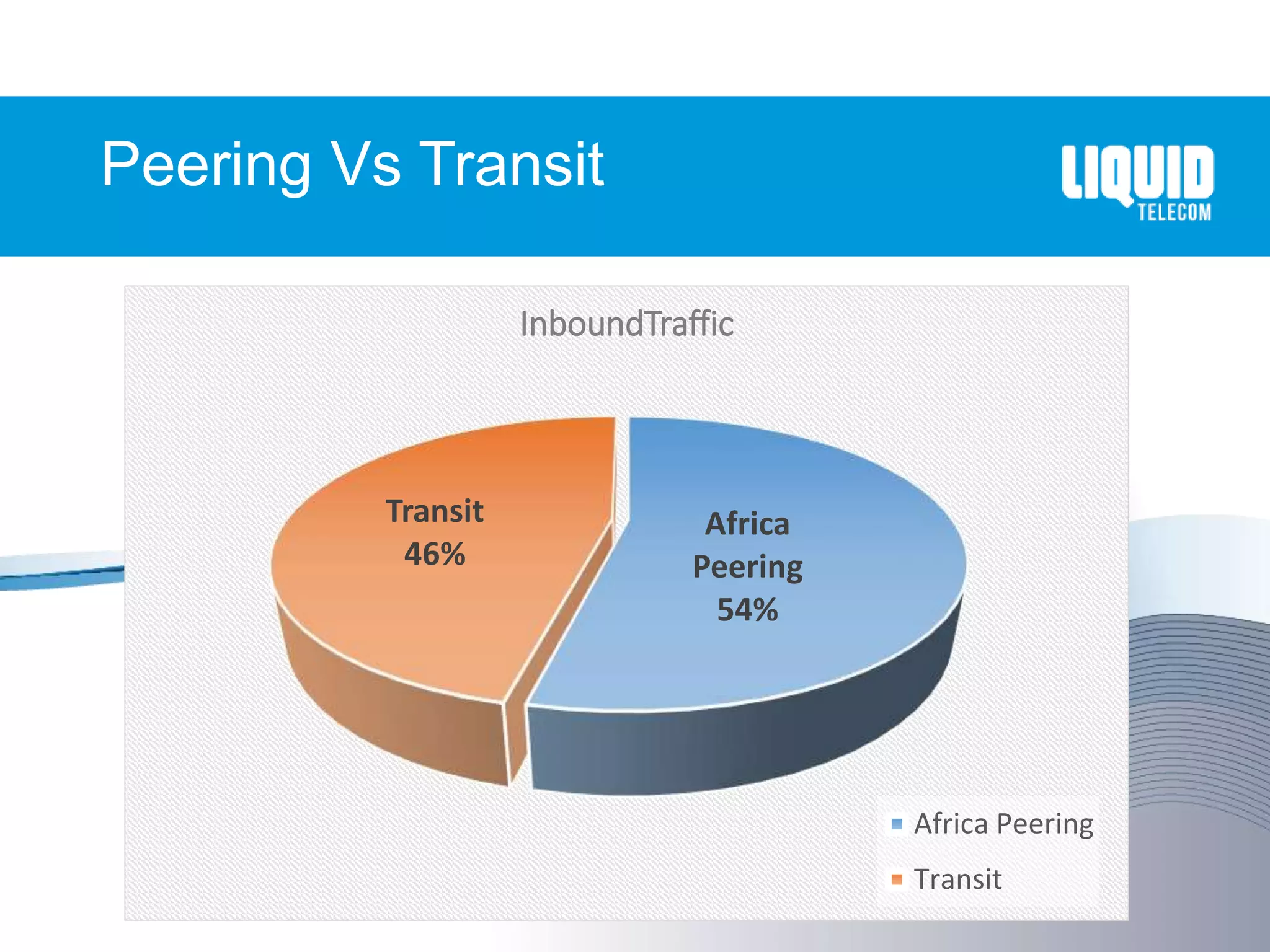
Peering Vs Transit
Africa
Peering
54%
Transit
46%
InboundTraffic
Africa Peering
Transit
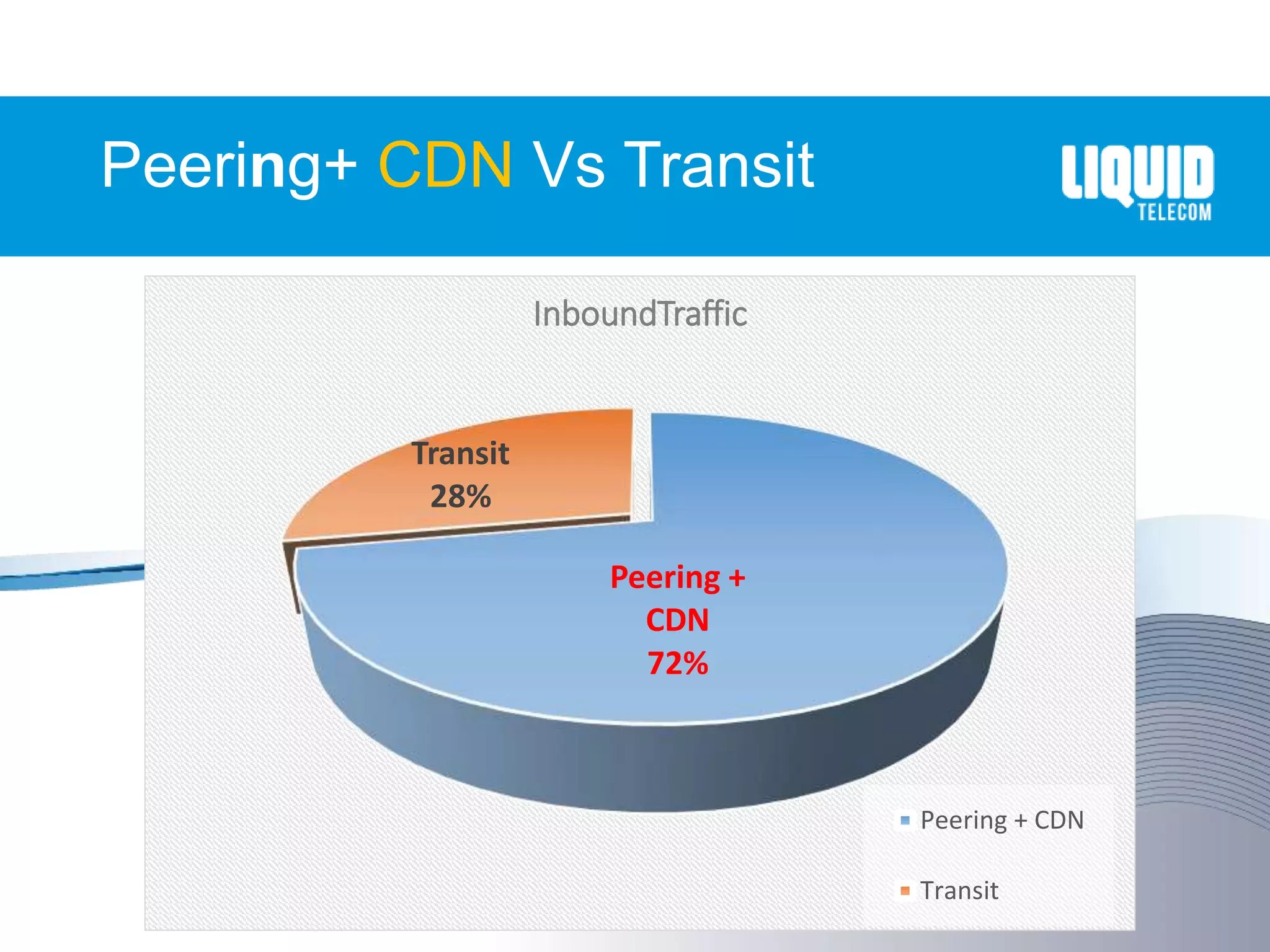
Peering+ CDN Vs Transit
Peering +
CDN
72%
Transit
28%
InboundTraffic
Peering + CDN
Transit
Traffic Balance
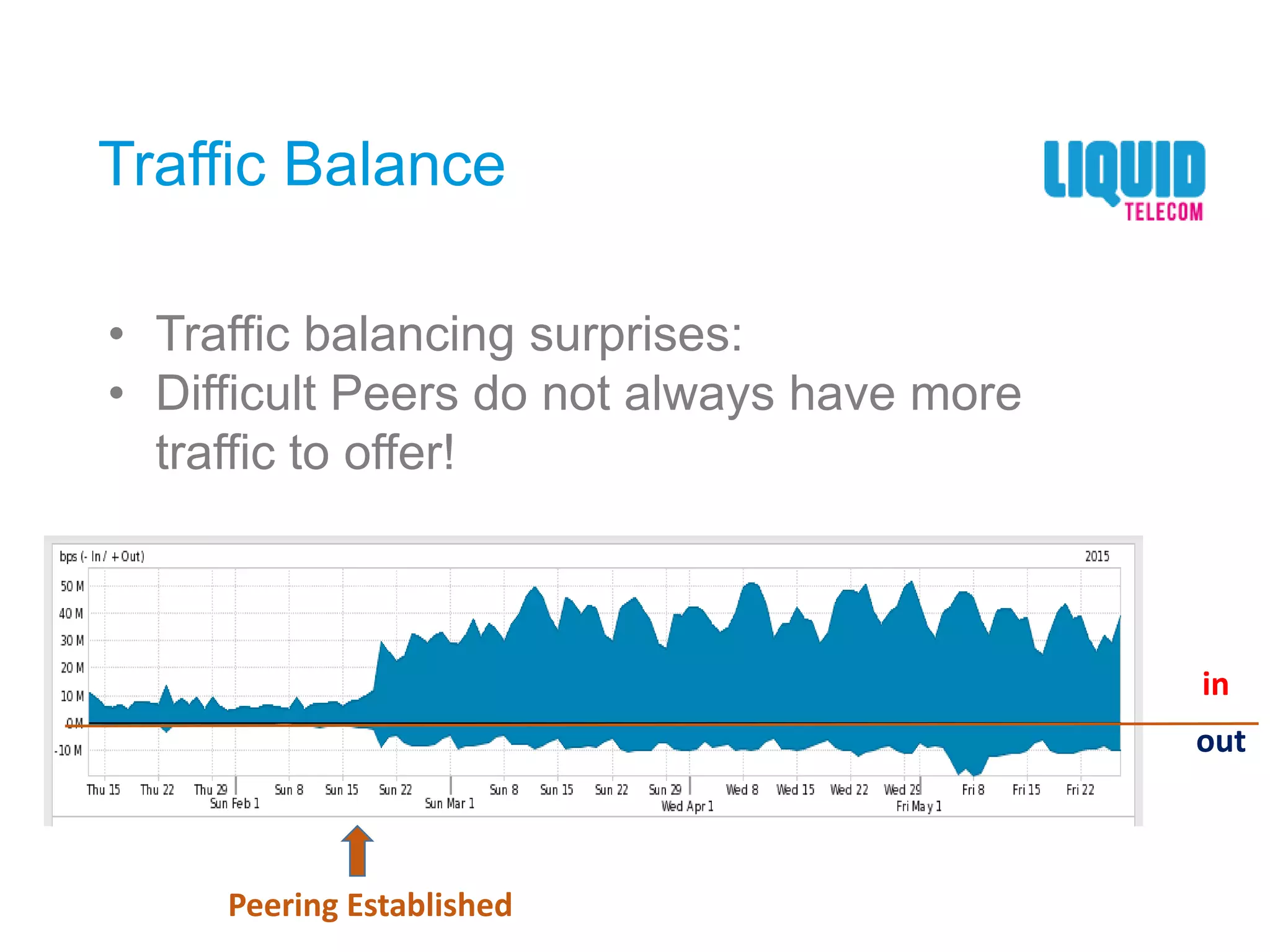
• Traffic balancing surprises:
• Difficult Peers do not always have more
traffic to offer!
in
out
Peering Established
Customers Bypass Peering
• Some customers are using VPN to access
content they are restricted from – so
bypassing peering
• Lack of enforcement on Intellectual Property
Laws - hindrance to those interested in
streaming business
Thank You,
Peer On …

Peering Lessons – 5 year Service Provider Journey

  • 1.
    Building Africa’sdigital future LessonsLearnt from Peering 26 August 2015
  • 2.
    An overview ofLiquid Telecom
  • 3.
  • 4.
    • One Network. •The largest cross-border single fibre network in Africa – 18,000 km • Fully redundant routes. • Open-access – the carriers carrier. • Active connections to 5 sub sea cables. Where we are
  • 5.
    Peering Points • Welove peering! • Present at more African IXPs than most • NAP, JINX and KIXP most significant • Also present at ZINX, BINX, ZIXP, UIXP, RINEX and CINX • We support IXPs and participate in them actively • We peer in Europe at LINX, AMSIX, DECIX • London – strategic hub because of sub sea cable routes
  • 6.
    Peering Points usedby Liquid Telecom Over 5 Years 0 2 4 6 8 10 12 14 2010 2011 2012 2013 2014 2015 ZINX LINX ZIXP JINX ZINX LINX BINX ZIXP JINX ZINX LINX AMSIX DECIX NAP UIXP RINEX KIXP BINX ZIXP JINX ZINX LINX UIXP RINEX KIXP BINX ZIXP JINX ZINX LINX CINX SMARTHUB AMSIX DECIX NAP UIXP RINEX KIXP BINX ZIXP JINX ZINX LINX
  • 7.
    Highest Ranked byRenesys Peering Index • Top 100 Globally • Highest Ranked in Africa by far
  • 8.
    Challenges of PeeringAt Multiple POPs
  • 9.
    Traffic Challenges • RoutingProblems when Peers advertise different prefixes at each IXP • uRPF – some Peers need symmetric traffic flows • Cross-border Capacity Management • Issues with CDN routing
  • 10.
  • 11.
    In Africa SometimesElephants take a long time to come to the party But they enjoy the benefits when they get there
  • 12.
    Latency - Example PeeringEstablished 216 ms 8 ms
  • 13.
  • 14.
    Growth in Intra-African Transit Capacity is Consistently higher than Africa-Europe! International Bandwidth By Region - Source Telegeography 2006 2007 2008 2009 2010 2011 2012 2013 2014 2015 Africa-Africa 0 0 1 2 4 11 22 125 162 296 Africa -Europe 20 39 66 133 333 472 697 1153 1757 2411 Percentage Growth 2006 2007 2008 2009 2010 2011 2012 2013 2014 2015 Africa-Africa 100% 100% 100% 175% 100% 468% 30% 83% Africa -Europe 95% 69% 102% 150% 42% 48% 65% 52% 37% 0 500 1000 1500 2000 2500 3000 2006 2007 2008 2009 2010 2011 2012 2013 2014 2015 Africa -Europe Africa-Africa 0 0.5 1 1.5 2 2.5 3 3.5 4 4.5 5 2006 2007 2008 2009 2010 2011 2012 2013 2014 2015 Africa-Africa Africa -Europe
  • 15.
    Increase in Throughput •When latency is lowered, throughput increases. • Local traffic volume increases Peering Established
  • 16.
  • 17.
  • 18.
    Peering+ CDN VsTransit Peering + CDN 72% Transit 28% InboundTraffic Peering + CDN Transit
  • 19.
    Traffic Balance • Trafficbalancing surprises: • Difficult Peers do not always have more traffic to offer! in out Peering Established
  • 20.
    Customers Bypass Peering •Some customers are using VPN to access content they are restricted from – so bypassing peering • Lack of enforcement on Intellectual Property Laws - hindrance to those interested in streaming business
  • 21.

Editor's Notes

  • #3 Liquid Telecom is the leading independent data, voice and IP provider in eastern, central and southern Africa. It supplies fibre optic, satellite and international carrier services to Africa’s largest mobile network operators, ISPs and businesses of all sizes. It also provides payment solutions to financial institutions and retailers, as well as award winning data storage and communication solutions to businesses across Africa and beyond. Put simply, we connect people.
  • #4 Liquid Telecom is the leading independent data, voice and IP provider in eastern, central and southern Africa. It supplies fibre optic, satellite and international carrier services to Africa’s largest mobile network operators, ISPs and businesses of all sizes. It also provides payment solutions to financial institutions and retailers, as well as award winning data storage and communication solutions to businesses across Africa and beyond. Put simply, we connect people.
  • #5 Liquid Telecom is the leading independent data, voice and IP provider in eastern, central and southern Africa. It supplies fibre optic, satellite and international carrier services to Africa’s largest mobile network operators, ISPs and businesses of all sizes. It also provides payment solutions to financial institutions and retailers, as well as award winning data storage and communication solutions to businesses across Africa and beyond. Put simply, we connect people.
  • #6 How much traffic are we doing at KIXP? NAP 1.3G Jinx 0. LINX?
  • #8 How much traffic are we doing at KIXP? NAP 1.3G Jinx 0. LINX?
  • #10 Routing issues. Some peers advertise more specific prefixes at some Ixs. Some we end up exchanging traffic in URPF: unicast reverse path forwarding Unicast Reverse Path Forwarding (URPF) helps to mitigate problems that are caused by malformed or forged IP source addresses that are passing through a router. Loose URPF checks the packet and forwards it if there is a route entry for the source IP of the incoming packet in the router FIB. Capacity management – when you peer at different IXs, make sure you have enough capacity for traffic – EG, if you have a Peerig in SA, and non in East Africa – then the KE – SA link has to be up to scratch. Also enough capacity at the IX CDN routing – t Not possible to have CDN in each country – they are regional. Cross boarder links have to be big enough to carry content network.
  • #11 Obvious benefit is lowering of latency. A more recent graph from a peering this month
  • #13 Peering with Telone in August 2015 Harare – Johnesburg – London London – Maputo Harare = 216 ms Now only 8ms
  • #16 Traffic volumes increases significantly after peering
  • #17 Check with Ben…. Three years ago, we had 20% local content in our infrastructure, this year, we have 50%, a 10 percent increase every year We can get to 80% by 2020. Video and streaming with increase. http://www.internetsociety.org/afpif-2015/news/liquid-telecom-makes-major-strides-local-content
  • #18 E-government service in Kenya Three years ago, we had 20% local content in our infrastructure, this year, we have 50%, a 10 percent increase every year We can get to 80% by 2020. Video and streaming with increase. http://www.internetsociety.org/afpif-2015/news/liquid-telecom-makes-major-strides-local-content
  • #19 E-government service in Kenya Graph shows Peering IN Africa + CDN Three years ago, we had 20% local content in our infrastructure, this year, we have 50%, a 10 percent increase every year We can get to 80% by 2020. Video and streaming with increase. http://www.internetsociety.org/afpif-2015/news/liquid-telecom-makes-major-strides-local-content
  • #20 Telkom traffic More traffic from Telkom into Liquid Telecom They need us more than we need them Usually big ISPs only want to peer if there is enough volume. They are quick to want to sell ‘local transit’ One method is to ask for temporary peering for say 3- 6 months make sure you record interface and flow traffic if peering via IXP.
  • #21 “Netflix doesn’t offer services in Kenya, but it doesn’t mean that Kenyans cannot access services. Some people are using Virtual Private Network (VPN) services to access content on Netflix, this shows there is demand for video services, which will drive up the demand for higher capacity,” Roberts identified piracy and lack of enforcement of Intellectual Property laws as a major hindrance for companies interested in investing in streaming services; whether local or international “If you can get the latest Hollywood movies at a cost of a dollar in downtown Nairobi, it becomes hard to convince one to pay five dollars to stream the same movie, this points to a weak IP law enforcement, which can kill business,” said Roberts