
A
Transformative
Response to
Major Societal
Challenges
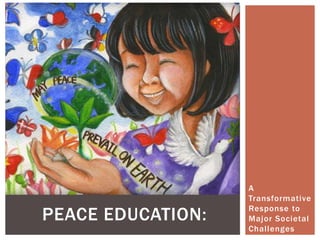
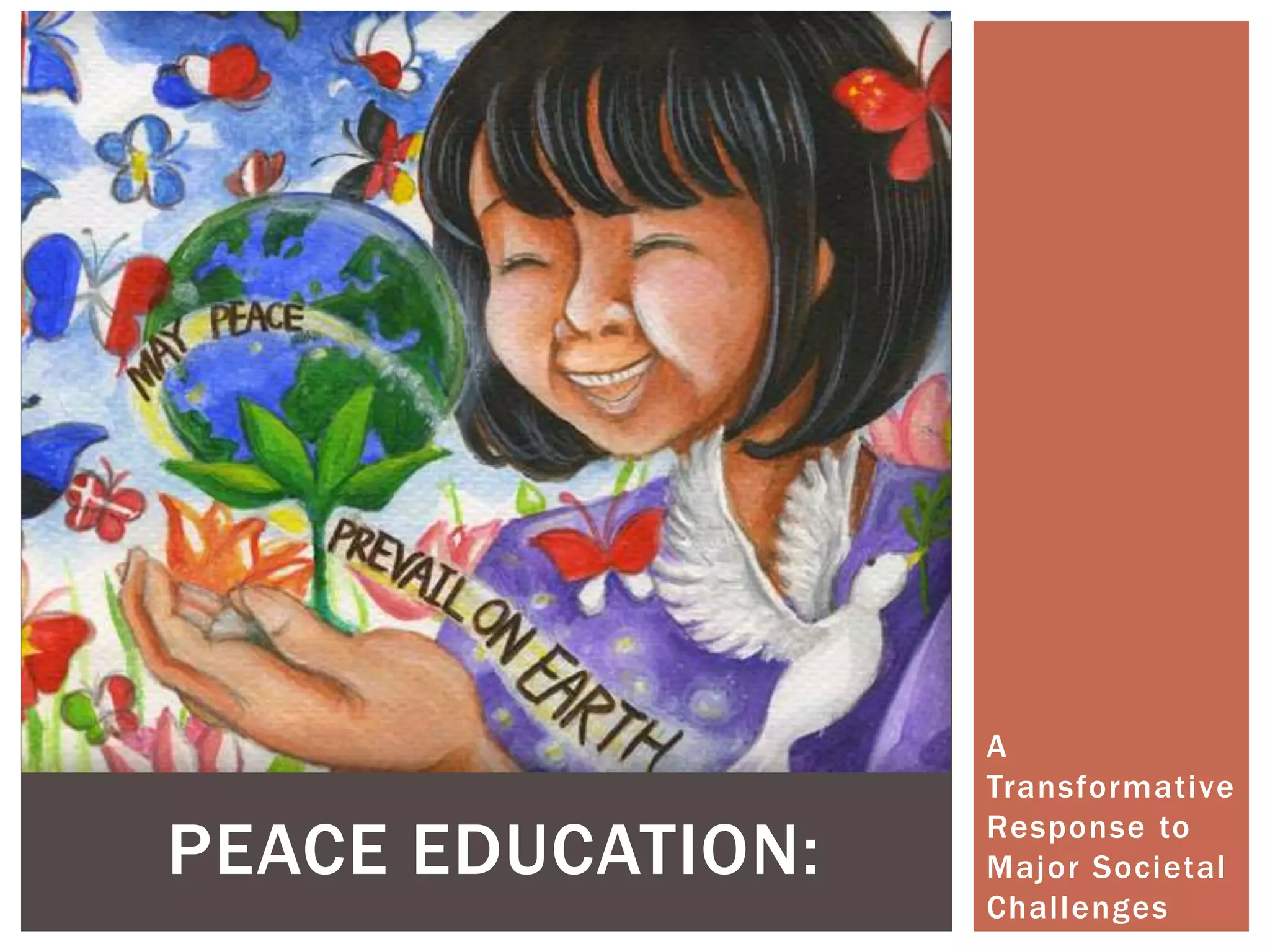
PEACE EDUCATION:
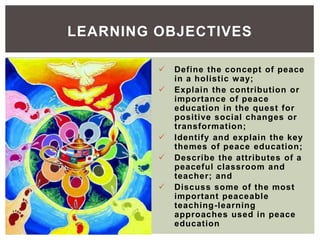
 Define the concept of peace
in a holistic way;
 Explain the contribution or
importance of peace
education in the quest for
positive social changes or
transformation;
 Identify and explain the key
themes of peace education;
 Describe the attributes of a
peaceful classroom and
teacher; and
 Discuss some of the most
important peaceable
teaching-learning
approaches used in peace
education
LEARNING OBJECTIVES
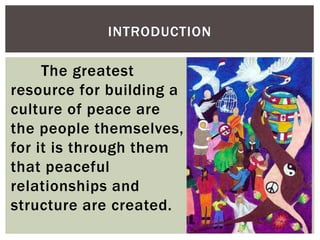
The greatest
resource for building a
culture of peace are
the people themselves,
for it is through them
that peaceful
relationships and
structure are created.
INTRODUCTION
INTRODUCTION
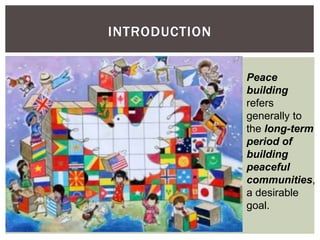
Peace
building
refers
generally to
the long-term
period of
building
peaceful
communities,
a desirable
goal.
INTRODUCTION
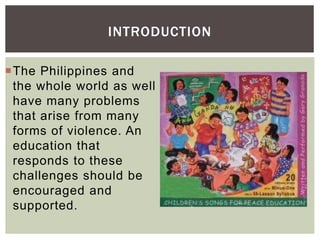
The Philippines and
the whole world as well
have many problems
that arise from many
forms of violence. An
education that
responds to these
challenges should be
encouraged and
supported.
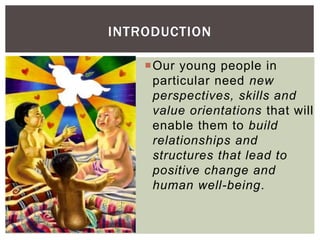
Our young people in
particular need new
perspectives, skills and
value orientations that will
enable them to build
relationships and
structures that lead to
positive change and
human well-being.
INTRODUCTION
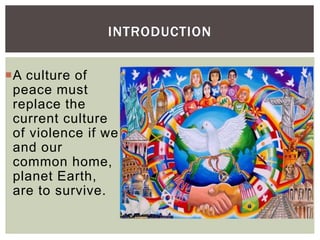
A culture of
peace must
replace the
current culture
of violence if we
and our
common home,
planet Earth,
are to survive.
INTRODUCTION
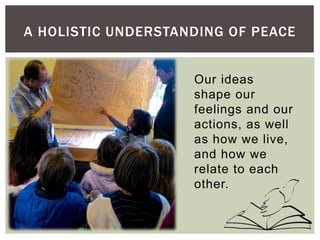
Our ideas
shape our
feelings and our
actions, as well
as how we live,
and how we
relate to each
other.
A HOLISTIC UNDERSTANDING OF PEACE
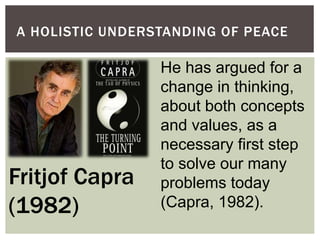
He has argued for a
change in thinking,
about both concepts
and values, as a
necessary first step
to solve our many
problems today
(Capra, 1982).
Fritjof Capra
(1982)
A HOLISTIC UNDERSTANDING OF PEACE
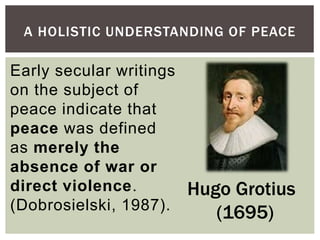
Hugo Grotius
(1695)
Early secular writings
on the subject of
peace indicate that
peace was defined
as merely the
absence of war or
direct violence.
(Dobrosielski, 1987).
A HOLISTIC UNDERSTANDING OF PEACE
The simplest and most
widespread understanding of
peace was that of absence of death
and destruction as a result of war
and physical/direct violence.
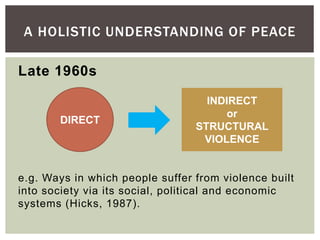
Late 1960s
e.g. Ways in which people suffer from violence built
into society via its social, political and economic
systems (Hicks, 1987).
A HOLISTIC UNDERSTANDING OF PEACE
INDIRECT
or
STRUCTURAL
VIOLENCE
DIRECT
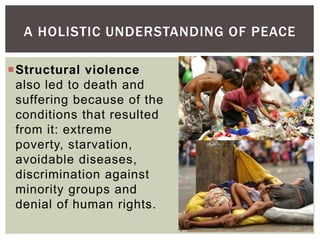
Structural violence
also led to death and
suffering because of the
conditions that resulted
from it: extreme
poverty, starvation,
avoidable diseases,
discrimination against
minority groups and
denial of human rights.
A HOLISTIC UNDERSTANDING OF PEACE
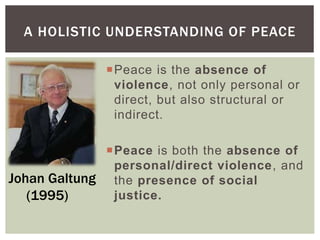
Peace is the absence of
violence, not only personal or
direct, but also structural or
indirect.
Peace is both the absence of
personal/direct violence, and
the presence of social
justice.
Johan Galtung
(1995)
DEFINING PEACE
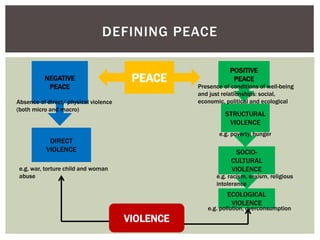
PEACE
POSITIVE
PEACE
SOCIO-
CULTURAL
VIOLENCE
STRUCTURAL
VIOLENCE
NEGATIVE
PEACE
ECOLOGICAL
VIOLENCE
VIOLENCE
DIRECT
VIOLENCE
Absence of direct/ physical violence
(both micro and macro)
e.g. war, torture child and woman
abuse
Presence of conditions of well-being
and just relationships: social,
economic, political and ecological
e.g. poverty, hunger
e.g. racism, sexism, religious
intolerance
e.g. pollution, overconsumption
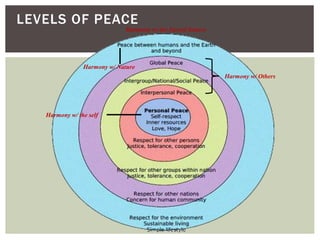
LEVELS OF PEACE
Harmony w/ the self
Harmony w/ Others
Harmony w/ the Sacred Source
Harmony w/ Nature
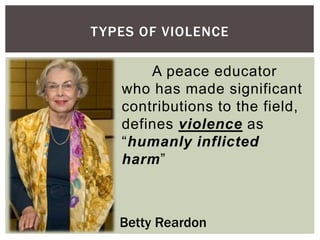
A peace educator
who has made significant
contributions to the field,
defines violence as
“humanly inflicted
harm”
TYPES OF VIOLENCE
Betty Reardon
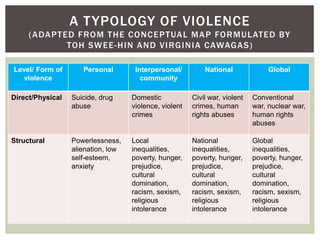
A TYPOLOGY OF VIOLENCE
(ADAPTED FROM THE CONCEPTUAL MAP FORMULATED BY
TOH SWEE-HIN AND VIRGINIA CAWAGAS)
Level/ Form of
violence
Personal Interpersonal/
community
National Global
Direct/Physical Suicide, drug
abuse
Domestic
violence, violent
crimes
Civil war, violent
crimes, human
rights abuses
Conventional
war, nuclear war,
human rights
abuses
Structural Powerlessness,
alienation, low
self-esteem,
anxiety
Local
inequalities,
poverty, hunger,
prejudice,
cultural
domination,
racism, sexism,
religious
intolerance
National
inequalities,
poverty, hunger,
prejudice,
cultural
domination,
racism, sexism,
religious
intolerance
Global
inequalities,
poverty, hunger,
prejudice,
cultural
domination,
racism, sexism,
religious
intolerance
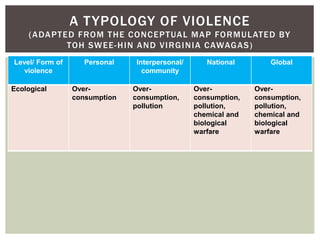
Ecological Over-
consumption
Over-
consumption,
pollution
Over-
consumption,
pollution,
chemical and
biological
warfare
Over-
consumption,
pollution,
chemical and
biological
warfare
Level/ Form of
violence
Personal Interpersonal/
community
National Global
A TYPOLOGY OF VIOLENCE
(ADAPTED FROM THE CONCEPTUAL MAP FORMULATED BY
TOH SWEE-HIN AND VIRGINIA CAWAGAS)
Peace Education

Peace Education

  • 1.
  • 2.
     Define theconcept of peace in a holistic way;  Explain the contribution or importance of peace education in the quest for positive social changes or transformation;  Identify and explain the key themes of peace education;  Describe the attributes of a peaceful classroom and teacher; and  Discuss some of the most important peaceable teaching-learning approaches used in peace education LEARNING OBJECTIVES
  • 3.
    The greatest resource forbuilding a culture of peace are the people themselves, for it is through them that peaceful relationships and structure are created. INTRODUCTION
  • 4.
    INTRODUCTION Peace building refers generally to the long-term periodof building peaceful communities, a desirable goal.
  • 5.
    INTRODUCTION The Philippines and thewhole world as well have many problems that arise from many forms of violence. An education that responds to these challenges should be encouraged and supported.
  • 6.
    Our young peoplein particular need new perspectives, skills and value orientations that will enable them to build relationships and structures that lead to positive change and human well-being. INTRODUCTION
  • 7.
    A culture of peacemust replace the current culture of violence if we and our common home, planet Earth, are to survive. INTRODUCTION
  • 8.
    Our ideas shape our feelingsand our actions, as well as how we live, and how we relate to each other. A HOLISTIC UNDERSTANDING OF PEACE
  • 9.
    A HOLISTIC UNDERSTANDINGOF PEACE He has argued for a change in thinking, about both concepts and values, as a necessary first step to solve our many problems today (Capra, 1982). Fritjof Capra (1982)
  • 10.
    A HOLISTIC UNDERSTANDINGOF PEACE Hugo Grotius (1695) Early secular writings on the subject of peace indicate that peace was defined as merely the absence of war or direct violence. (Dobrosielski, 1987).
  • 11.
    A HOLISTIC UNDERSTANDINGOF PEACE The simplest and most widespread understanding of peace was that of absence of death and destruction as a result of war and physical/direct violence.
  • 12.
    Late 1960s e.g. Waysin which people suffer from violence built into society via its social, political and economic systems (Hicks, 1987). A HOLISTIC UNDERSTANDING OF PEACE INDIRECT or STRUCTURAL VIOLENCE DIRECT
  • 13.
    Structural violence also ledto death and suffering because of the conditions that resulted from it: extreme poverty, starvation, avoidable diseases, discrimination against minority groups and denial of human rights. A HOLISTIC UNDERSTANDING OF PEACE
  • 14.
    A HOLISTIC UNDERSTANDINGOF PEACE Peace is the absence of violence, not only personal or direct, but also structural or indirect. Peace is both the absence of personal/direct violence, and the presence of social justice. Johan Galtung (1995)
  • 15.
    DEFINING PEACE PEACE POSITIVE PEACE SOCIO- CULTURAL VIOLENCE STRUCTURAL VIOLENCE NEGATIVE PEACE ECOLOGICAL VIOLENCE VIOLENCE DIRECT VIOLENCE Absence ofdirect/ physical violence (both micro and macro) e.g. war, torture child and woman abuse Presence of conditions of well-being and just relationships: social, economic, political and ecological e.g. poverty, hunger e.g. racism, sexism, religious intolerance e.g. pollution, overconsumption
  • 16.
    LEVELS OF PEACE Harmonyw/ the self Harmony w/ Others Harmony w/ the Sacred Source Harmony w/ Nature
  • 17.
    A peace educator whohas made significant contributions to the field, defines violence as “humanly inflicted harm” TYPES OF VIOLENCE Betty Reardon
  • 18.
    A TYPOLOGY OFVIOLENCE (ADAPTED FROM THE CONCEPTUAL MAP FORMULATED BY TOH SWEE-HIN AND VIRGINIA CAWAGAS) Level/ Form of violence Personal Interpersonal/ community National Global Direct/Physical Suicide, drug abuse Domestic violence, violent crimes Civil war, violent crimes, human rights abuses Conventional war, nuclear war, human rights abuses Structural Powerlessness, alienation, low self-esteem, anxiety Local inequalities, poverty, hunger, prejudice, cultural domination, racism, sexism, religious intolerance National inequalities, poverty, hunger, prejudice, cultural domination, racism, sexism, religious intolerance Global inequalities, poverty, hunger, prejudice, cultural domination, racism, sexism, religious intolerance
  • 19.
    Ecological Over- consumption Over- consumption, pollution Over- consumption, pollution, chemical and biological warfare Over- consumption, pollution, chemicaland biological warfare Level/ Form of violence Personal Interpersonal/ community National Global A TYPOLOGY OF VIOLENCE (ADAPTED FROM THE CONCEPTUAL MAP FORMULATED BY TOH SWEE-HIN AND VIRGINIA CAWAGAS)