PDHPE RATIONALE
TAURAROA AREA SCHOOL
SO WHAT IS PDHPE
 PDHPE : Personal Development, Health and Physical Education
 It is currently one of the six key learning areas that make up the NSW
primary school curriculum.
 It has an objective to treat physical education from an holistic perspective,
thus it incorporates students educational development in areas of nutrition,
physical education, behavioral development, emotional and mental
development.
WHY IS IT IMPORTANT?
 PDHPE encourages students to understand and value themselves as well as respect
others
 Promotes physical activity, not just sports but daily activity like walking, playing.
 Places an emphasis on students making decisions, promoting them to be effective
and responsible young people.
It achieves this through promoting physical, social, cognitive, behavioral and
developmental patterns.
Achieves this by teaching children how to form interpersonal relationships and
maintain them, education around making good personal health choices. Education
about safety, leading an active lifestyle and how to accomplish that goal.
 Movement patterns and coordinated actions of the body are skills that enable
children to be active and healthy.
WHAT DOES PDHPE INVOLVE?
PDHPE aims to develop children's skills in the key areas of.
 Making communicating and action upon health decisions
 Moving competently and with confidence
 Encouraging the formation of positive interpersonal relationships.
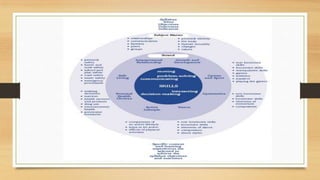
 Five key skills to achieve this are: communication skills, problems solving
skills, moving skills, interacting skills and decision making skills.
WHAT’S INVOLVED cont.
• PDHPE has a main aim of developing children’s knowledge and understanding ways to enhance
personal and community health and wellbeing.
• The composition, performance and appraisal of human movement.
• 8 key strands:
• Interpersonal relationships
• Personal health choices
• Dance
• Gymnastics
• Games and Sport
• Growth and development
• Active lifestyle
• Safe Living
WHAT’S INVOLVED cont.
• PDHPE aims to develop a students appreciation of the benefits of leading a
healthy and socially just life.
• Six Key Values:
• Enjoy a sense of belonging
• Willingness to participate in regular physical activity
• Commit to realizing their full potential
• Respecting the rights of others who may hold differing beliefs, attitudes or values
than their own
• Refer to a sense of their own self worth and dignity
• Increasingly accept responsibility for both personal and community health.
Pdhpe rationale

Pdhpe rationale

  • 1.
  • 2.
    SO WHAT ISPDHPE  PDHPE : Personal Development, Health and Physical Education  It is currently one of the six key learning areas that make up the NSW primary school curriculum.  It has an objective to treat physical education from an holistic perspective, thus it incorporates students educational development in areas of nutrition, physical education, behavioral development, emotional and mental development.
  • 3.
    WHY IS ITIMPORTANT?  PDHPE encourages students to understand and value themselves as well as respect others  Promotes physical activity, not just sports but daily activity like walking, playing.  Places an emphasis on students making decisions, promoting them to be effective and responsible young people. It achieves this through promoting physical, social, cognitive, behavioral and developmental patterns. Achieves this by teaching children how to form interpersonal relationships and maintain them, education around making good personal health choices. Education about safety, leading an active lifestyle and how to accomplish that goal.  Movement patterns and coordinated actions of the body are skills that enable children to be active and healthy.
  • 4.
    WHAT DOES PDHPEINVOLVE? PDHPE aims to develop children's skills in the key areas of.  Making communicating and action upon health decisions  Moving competently and with confidence  Encouraging the formation of positive interpersonal relationships.  Five key skills to achieve this are: communication skills, problems solving skills, moving skills, interacting skills and decision making skills.
  • 5.
    WHAT’S INVOLVED cont. •PDHPE has a main aim of developing children’s knowledge and understanding ways to enhance personal and community health and wellbeing. • The composition, performance and appraisal of human movement. • 8 key strands: • Interpersonal relationships • Personal health choices • Dance • Gymnastics • Games and Sport • Growth and development • Active lifestyle • Safe Living
  • 6.
    WHAT’S INVOLVED cont. •PDHPE aims to develop a students appreciation of the benefits of leading a healthy and socially just life. • Six Key Values: • Enjoy a sense of belonging • Willingness to participate in regular physical activity • Commit to realizing their full potential • Respecting the rights of others who may hold differing beliefs, attitudes or values than their own • Refer to a sense of their own self worth and dignity • Increasingly accept responsibility for both personal and community health.