Types of Network
Network Fundamental
A network of computer is composed of?
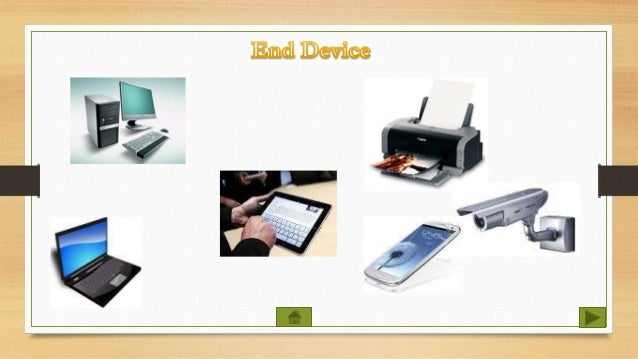
• End Device
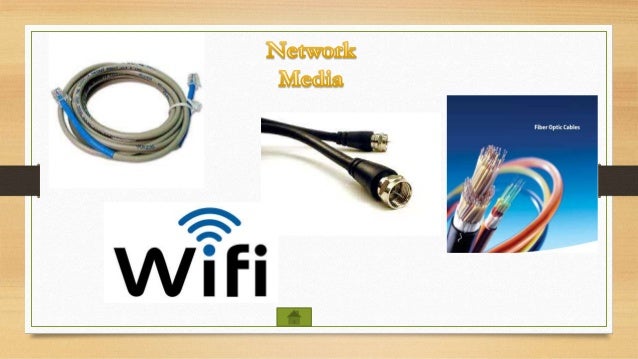
• Network Media
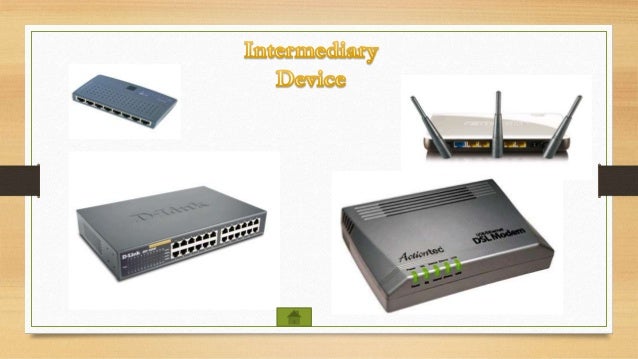
• Intermediary Device
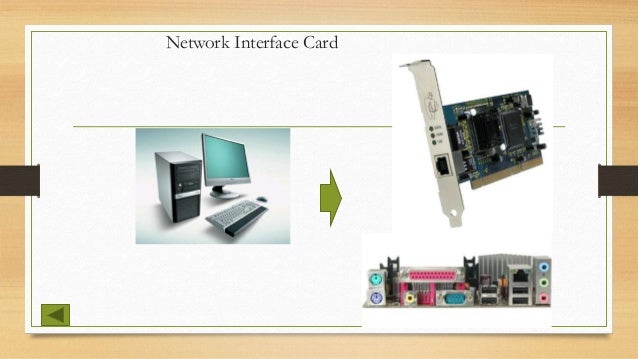
Network Interface Card
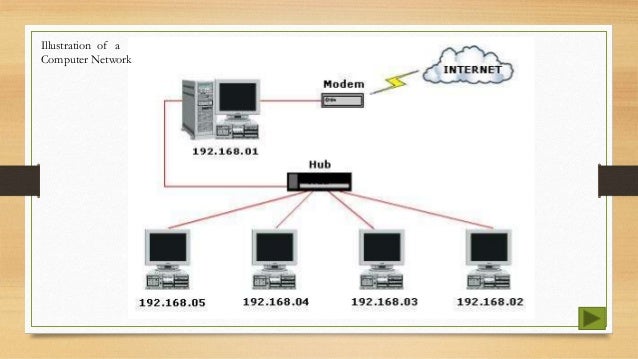
Illustration of a
Computer Network
How many computers can we be able to connect to a
network?
Types of Network According to Geographical
Size
PAN (Personal Area Network)
LAN (Local Area Network)
CAN (Campus Area Network)
MAN (Metropolitan Area Network)
WAN (Wide Area Network)
WLAN (Wireless Local Area Network)
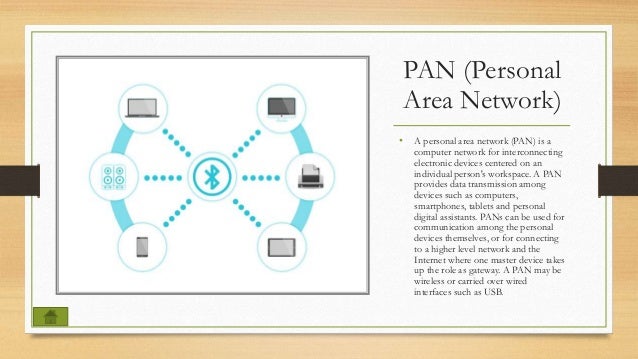
PAN (Personal
Area Network)
• A personal area network (PAN) is a
computer network for interconnecting
electronic devices centered on an
individual person's workspace. A PAN
provides data transmission among
devices such as computers,
smartphones, tablets and personal
digital assistants. PANs can be used for
communication among the personal
devices themselves, or for connecting
to a higher level network and the
Internet where one master device takes
up the role as gateway. A PAN may be
wireless or carried over wired
interfaces such as USB.
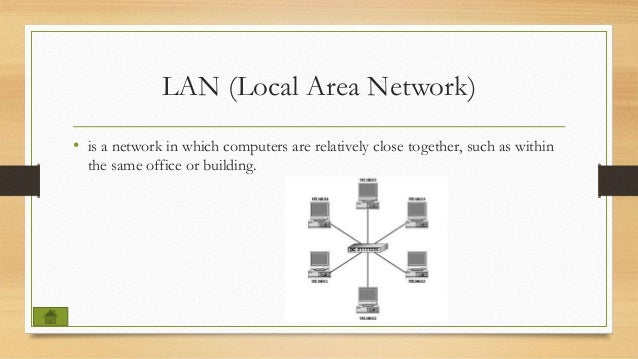
LAN (Local Area Network)
• is a network in which computers are relatively close together, such as within
the same office or building.
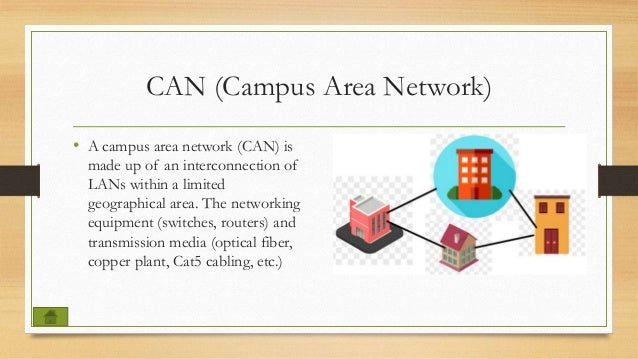
CAN (Campus Area Network)
• A campus area network (CAN) is
made up of an interconnection of
LANs within a limited
geographical area. The networking
equipment (switches, routers) and
transmission media (optical fiber,
copper plant, Cat5 cabling, etc.)
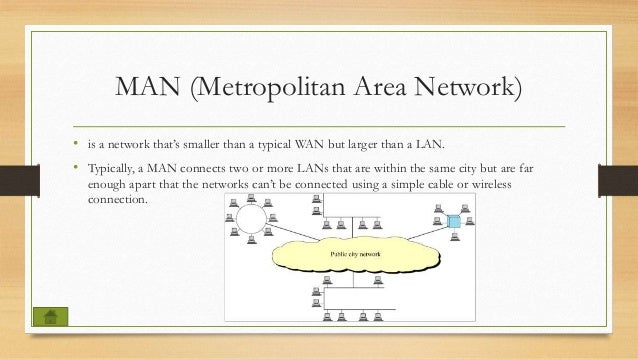
MAN (Metropolitan Area Network)
• is a network that’s smaller than a typical WAN but larger than a LAN.
• Typically, a MAN connects two or more LANs that are within the same city but are far
enough apart that the networks can’t be connected using a simple cable or wireless
connection.
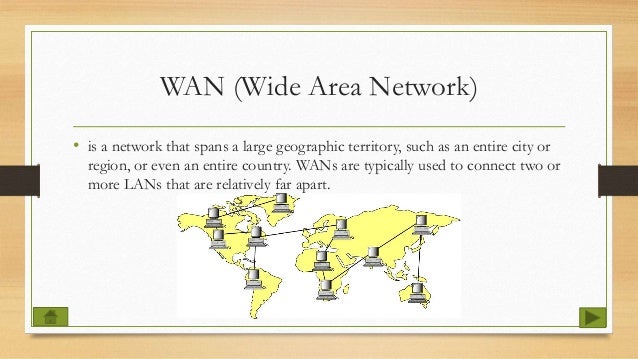
WAN (Wide Area Network)
• is a network that spans a large geographic territory, such as an entire city or
region, or even an entire country. WANs are typically used to connect two or
more LANs that are relatively far apart.
Internet
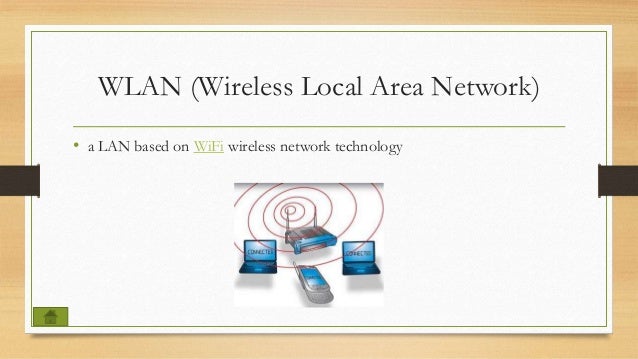
WLAN (Wireless Local Area Network)
• a LAN based on WiFi wireless network technology
Review
1. What are the types of network?
2. What does LAN stands for?
3. What does MAN Stands for?
4. What does WAN Stands for?
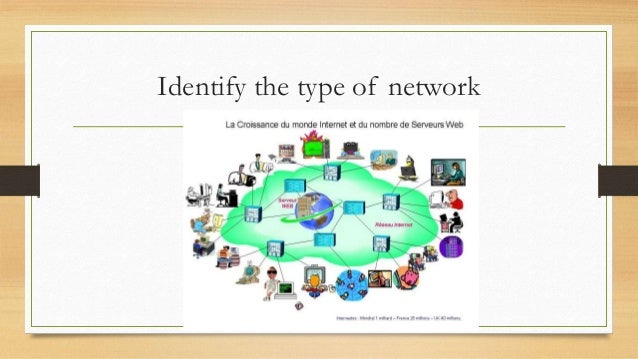
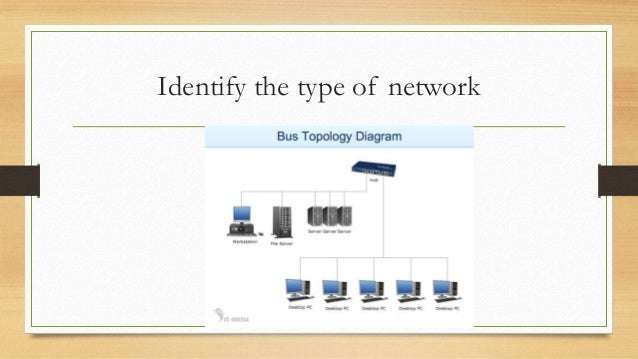
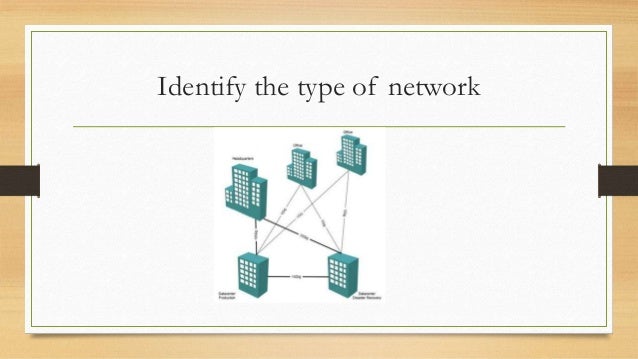
Identify the type of network

PC 106 Slide 2

  • 1.
  • 2.
    A network ofcomputer is composed of? • End Device • Network Media • Intermediary Device
  • 4.
  • 7.
  • 8.
    How many computerscan we be able to connect to a network?
  • 9.
    Types of NetworkAccording to Geographical Size PAN (Personal Area Network) LAN (Local Area Network) CAN (Campus Area Network) MAN (Metropolitan Area Network) WAN (Wide Area Network) WLAN (Wireless Local Area Network)
  • 10.
    PAN (Personal Area Network) •A personal area network (PAN) is a computer network for interconnecting electronic devices centered on an individual person's workspace. A PAN provides data transmission among devices such as computers, smartphones, tablets and personal digital assistants. PANs can be used for communication among the personal devices themselves, or for connecting to a higher level network and the Internet where one master device takes up the role as gateway. A PAN may be wireless or carried over wired interfaces such as USB.
  • 11.
    LAN (Local AreaNetwork) • is a network in which computers are relatively close together, such as within the same office or building.
  • 12.
    CAN (Campus AreaNetwork) • A campus area network (CAN) is made up of an interconnection of LANs within a limited geographical area. The networking equipment (switches, routers) and transmission media (optical fiber, copper plant, Cat5 cabling, etc.)
  • 13.
    MAN (Metropolitan AreaNetwork) • is a network that’s smaller than a typical WAN but larger than a LAN. • Typically, a MAN connects two or more LANs that are within the same city but are far enough apart that the networks can’t be connected using a simple cable or wireless connection.
  • 14.
    WAN (Wide AreaNetwork) • is a network that spans a large geographic territory, such as an entire city or region, or even an entire country. WANs are typically used to connect two or more LANs that are relatively far apart.
  • 15.
  • 16.
    WLAN (Wireless LocalArea Network) • a LAN based on WiFi wireless network technology
  • 17.
    Review 1. What arethe types of network? 2. What does LAN stands for? 3. What does MAN Stands for? 4. What does WAN Stands for?
  • 18.
  • 19.
  • 20.