Promoting individual excellence and
the Personal Excellence Pathway
(PEP)
Ehab Saoud Abd El-Moneim, DrMed MD, MRCPCh
Associate Professor, Taibah University
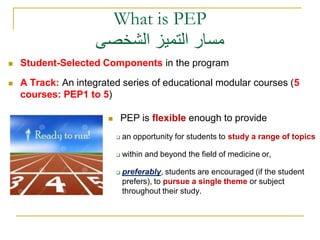
What is PEP
‫الشخصى‬ ‫التميز‬ ‫مسار‬
 Student-Selected Components in the program
 A Track: An integrated series of educational modular courses (5
courses: PEP1 to 5)
 PEP is flexible enough to provide
 an opportunity for students to study a range of topics
 within and beyond the field of medicine or,
 preferably, students are encouraged (if the student
prefers), to pursue a single theme or subject
throughout their study.
PEP Identifiers
 Vocation: (individual's development of talents and
abilities in the choice and enjoyment of a career)
 Search for self gifts and talents oriented toward the
coming professional carrier and explore options to
which a student might be specially drawn.
 Context-based learning: (CBL)
 The use of real-life and fictitious examples in order to learn
through the actual, practical experience with a subject rather than
just its mere theoretical parts.
Broad Aims of all PEPs
 Adopt an active approach to learning based on curiosity and
exploration of knowledge
 Develop communication in an educational context
 Develop communication in an information technology context
 Consider the problems that arise from learning an “expert
language”
 Continue to communicate with lay people
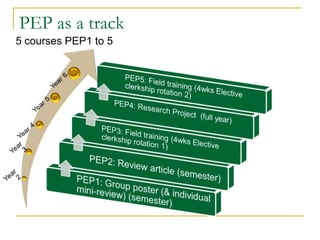
PEP as a track
5 courses PEP1 to 5
 ILOs
 Application of transferable skills (as: verbal and written communication,
library and online resources, and computer software) to present and
manipulate medical and scientific information.
 Team-work skills
 Search strategy to search the scientific literature
 Appraise the quality of the evidence
 Compare evidence from different scientific perspectives
 Explain how evidence can be applied in clinical practice
 The design and production of an engaging poster
PEP1
Group poster (& individual mini-review)
 Delivery (final shape of delivery is still underway):
 How topics are chosen
 How supervisors are chosen
 What are the supporting activities needed
 Poster fair and poster presentations
 Assessment policy
PEP1
Group poster (& individual mini-review)
 Projects related to certain program domains as
 Behavioral and social sciences in medicine
 Ethical regulations
 Students presentations related to module and cases
Other program components to promote
individual excellence
Dr. Reem Qabshawi Dr.Nadir Makki
Consultant family medicine psychiatrist
Assistant professor
Taibah University
Behavioral and social science
project
During the 21st century, the study of behavioral
and social science is growing.
During our BSS project we
introduce students to behavior-based
knowledge and we emphasize on the
importance of
changing the behavior of individuals, groups,
and societies
Our objectives during the BSS
project allows the students
To :
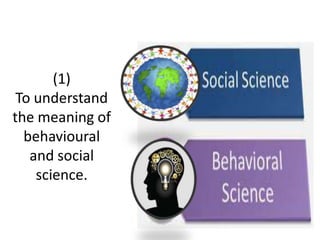
(1)
To understand
the meaning of
behavioural
and social
science.
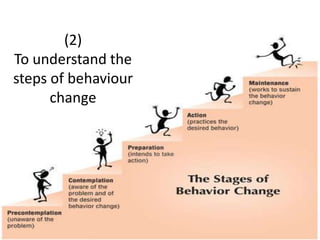
(2)
To understand the
steps of behaviour
change
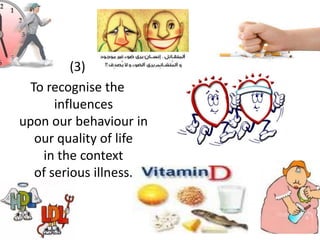
(3)
To recognise the
influences
upon our behaviour in
our quality of life
in the context
of serious illness.
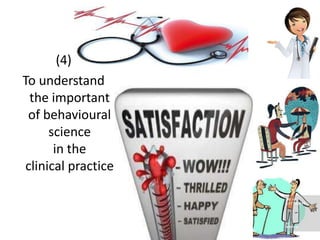
(4)
To understand
the important
of behavioural
science
in the
clinical practice
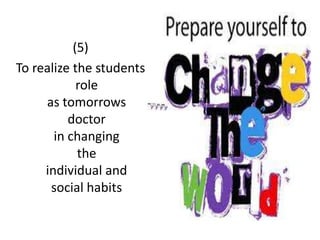
(5)
To realize the students
role
as tomorrows
doctor
in changing
the
individual and
social habits
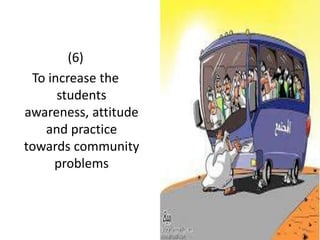
(6)
To increase the
students
awareness, attitude
and practice
towards community
problems
The project step by step
1) Each group choose a community or individual
behavior that was introduced in the problems of the
foundation course
2) They work together as
a team over 6 weeks
3) They collected the
needed data and
information
They write down their
notes about the
problem and ways of
salutation and behavior
change
4) They present
their work which
was evaluated by 2
staff members
Marks of the projects
was included in the
continuous
assessment part
Examples of the students
projects
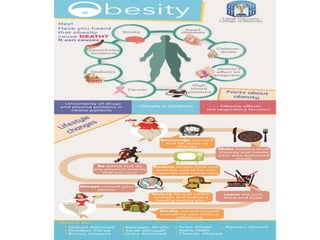
OBESITY AND BEHAVIORAL TREATMENT
Definition:
It is a complex disorder involving an excessive
amount of body fat. Obesity isn't just a
cosmetic concern. It increases your risk of
diseases and health problems such as heart
disease, diabetes and high blood pressure.
Abdullah Essa – Abdulmanan alem – Turki albouq – alhosam alsinani – Abdullah alhojaili-Ahmed aljohani -
mohammed Qarh - bandar alfohidi – mohammed bakheet – Ali alshareef
Causes:
•Lack of Energy Balance
•A lack of energy balance most often causes
overweight and obesity. Energy balance means
that your energy IN equals your energy OUT.
•An Inactive Lifestyle
•Many people aren't very physically active. One
reason for this is that many people spend
hours in front of TVs and computers doing
work, schoolwork, and leisure activities. In
fact, more than 2 hours a day of regular TV
viewing time has been linked to overweight
and obesity.
•Genes and Family History
•Studies of identical twins who have been
raised apart show that genes have a strong
influence on a person's weight. Overweight
and obesity tend to run in families. Your
chances of being overweight are greater if one
or both of your parents are overweight or
obese.
•Smoking
•Some people gain weight when they stop
smoking. One reason is that food often tastes
and smells better after quitting smoking.
Treatment:
•For Adults
•Try to lose 5 to 10 percent of your current
weight over 6 months. This will lower your
risk for coronary heart disease (CHD) and other
conditions.
•For Children and Teens
•If your child is overweight or at risk for
overweight or obesity, the goal is to maintain
his or her current weight and to focus on
eating healthy and being physically active.
This should be part of a family effort to make
lifestyle changes.
•Lifestyle Changes
•Lifestyle changes can help you and your
family achieve long-term weight-loss success.
Example of lifestyle changes include:
•Following a healthy eating plan
•Learning how to adopt healthy lifestyle habits
•Over time, these changes will become part of
your everyday life.
World obesityprevalence among males (left) and females (right).[168]
•World obesity prevalence among males (up) and
females (down)
•The darker the higher.
• References:
1-http://www.nhlbi.nih.gov/health/health-
topics/topics/obe/causes.html
2- Wikipedia
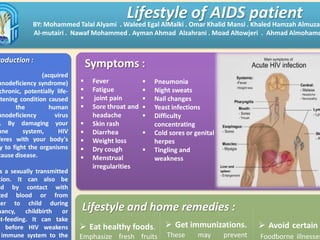
Lifestyle and home remedies :
 Eat healthy foods.
Emphasize fresh fruits
roduction :
(acquired
unodeficiency syndrome)
chronic, potentially life-
atening condition caused
the human
unodeficiency virus
. By damaging your
une system, HIV
feres with your body's
y to fight the organisms
cause disease.
s a sexually transmitted
tion. It can also be
ad by contact with
ted blood or from
her to child during
nancy, childbirth or
st-feeding. It can take
before HIV weakens
immune system to the
Lifestyle of AIDS patientBY: Mohammed Talal Alyami . Waleed Egal AlMalki . Omar Khalid Mansi . Khaled Hamzah Almuzai
Al-mutairi . Nawaf Mohammed . Ayman Ahmad Alzahrani . Moad Altowjeri . Ahmad Almohamd
Symptoms :
 Fever
 Fatigue
 joint pain
 Sore throat and
headache
 Skin rash
 Diarrhea
 Weight loss
 Dry cough
 Menstrual
irregularities
 Pneumonia
 Night sweats
 Nail changes
 Yeast infections
 Difficulty
concentrating
 Cold sores or genital
herpes
 Tingling and
weakness
 Avoid certain
Foodborne illnesses
 Get immunizations.
These may prevent
PBL - Personal Excellence Pathway PEP

PBL - Personal Excellence Pathway PEP

  • 1.
    Promoting individual excellenceand the Personal Excellence Pathway (PEP) Ehab Saoud Abd El-Moneim, DrMed MD, MRCPCh Associate Professor, Taibah University
  • 2.
    What is PEP ‫الشخصى‬‫التميز‬ ‫مسار‬  Student-Selected Components in the program  A Track: An integrated series of educational modular courses (5 courses: PEP1 to 5)  PEP is flexible enough to provide  an opportunity for students to study a range of topics  within and beyond the field of medicine or,  preferably, students are encouraged (if the student prefers), to pursue a single theme or subject throughout their study.
  • 3.
    PEP Identifiers  Vocation:(individual's development of talents and abilities in the choice and enjoyment of a career)  Search for self gifts and talents oriented toward the coming professional carrier and explore options to which a student might be specially drawn.  Context-based learning: (CBL)  The use of real-life and fictitious examples in order to learn through the actual, practical experience with a subject rather than just its mere theoretical parts.
  • 4.
    Broad Aims ofall PEPs  Adopt an active approach to learning based on curiosity and exploration of knowledge  Develop communication in an educational context  Develop communication in an information technology context  Consider the problems that arise from learning an “expert language”  Continue to communicate with lay people
  • 5.
    PEP as atrack 5 courses PEP1 to 5
  • 6.
     ILOs  Applicationof transferable skills (as: verbal and written communication, library and online resources, and computer software) to present and manipulate medical and scientific information.  Team-work skills  Search strategy to search the scientific literature  Appraise the quality of the evidence  Compare evidence from different scientific perspectives  Explain how evidence can be applied in clinical practice  The design and production of an engaging poster PEP1 Group poster (& individual mini-review)
  • 7.
     Delivery (finalshape of delivery is still underway):  How topics are chosen  How supervisors are chosen  What are the supporting activities needed  Poster fair and poster presentations  Assessment policy PEP1 Group poster (& individual mini-review)
  • 8.
     Projects relatedto certain program domains as  Behavioral and social sciences in medicine  Ethical regulations  Students presentations related to module and cases Other program components to promote individual excellence
  • 9.
    Dr. Reem QabshawiDr.Nadir Makki Consultant family medicine psychiatrist Assistant professor Taibah University Behavioral and social science project
  • 10.
    During the 21stcentury, the study of behavioral and social science is growing. During our BSS project we introduce students to behavior-based knowledge and we emphasize on the importance of changing the behavior of individuals, groups, and societies
  • 11.
    Our objectives duringthe BSS project allows the students To :
  • 12.
    (1) To understand the meaningof behavioural and social science.
  • 13.
    (2) To understand the stepsof behaviour change
  • 14.
    (3) To recognise the influences uponour behaviour in our quality of life in the context of serious illness.
  • 15.
    (4) To understand the important ofbehavioural science in the clinical practice
  • 16.
    (5) To realize thestudents role as tomorrows doctor in changing the individual and social habits
  • 17.
    (6) To increase the students awareness,attitude and practice towards community problems
  • 18.
    The project stepby step 1) Each group choose a community or individual behavior that was introduced in the problems of the foundation course
  • 19.
    2) They worktogether as a team over 6 weeks
  • 20.
    3) They collectedthe needed data and information They write down their notes about the problem and ways of salutation and behavior change
  • 21.
    4) They present theirwork which was evaluated by 2 staff members Marks of the projects was included in the continuous assessment part
  • 22.
    Examples of thestudents projects
  • 29.
    OBESITY AND BEHAVIORALTREATMENT Definition: It is a complex disorder involving an excessive amount of body fat. Obesity isn't just a cosmetic concern. It increases your risk of diseases and health problems such as heart disease, diabetes and high blood pressure. Abdullah Essa – Abdulmanan alem – Turki albouq – alhosam alsinani – Abdullah alhojaili-Ahmed aljohani - mohammed Qarh - bandar alfohidi – mohammed bakheet – Ali alshareef Causes: •Lack of Energy Balance •A lack of energy balance most often causes overweight and obesity. Energy balance means that your energy IN equals your energy OUT. •An Inactive Lifestyle •Many people aren't very physically active. One reason for this is that many people spend hours in front of TVs and computers doing work, schoolwork, and leisure activities. In fact, more than 2 hours a day of regular TV viewing time has been linked to overweight and obesity. •Genes and Family History •Studies of identical twins who have been raised apart show that genes have a strong influence on a person's weight. Overweight and obesity tend to run in families. Your chances of being overweight are greater if one or both of your parents are overweight or obese. •Smoking •Some people gain weight when they stop smoking. One reason is that food often tastes and smells better after quitting smoking. Treatment: •For Adults •Try to lose 5 to 10 percent of your current weight over 6 months. This will lower your risk for coronary heart disease (CHD) and other conditions. •For Children and Teens •If your child is overweight or at risk for overweight or obesity, the goal is to maintain his or her current weight and to focus on eating healthy and being physically active. This should be part of a family effort to make lifestyle changes. •Lifestyle Changes •Lifestyle changes can help you and your family achieve long-term weight-loss success. Example of lifestyle changes include: •Following a healthy eating plan •Learning how to adopt healthy lifestyle habits •Over time, these changes will become part of your everyday life. World obesityprevalence among males (left) and females (right).[168] •World obesity prevalence among males (up) and females (down) •The darker the higher. • References: 1-http://www.nhlbi.nih.gov/health/health- topics/topics/obe/causes.html 2- Wikipedia
  • 30.
    Lifestyle and homeremedies :  Eat healthy foods. Emphasize fresh fruits roduction : (acquired unodeficiency syndrome) chronic, potentially life- atening condition caused the human unodeficiency virus . By damaging your une system, HIV feres with your body's y to fight the organisms cause disease. s a sexually transmitted tion. It can also be ad by contact with ted blood or from her to child during nancy, childbirth or st-feeding. It can take before HIV weakens immune system to the Lifestyle of AIDS patientBY: Mohammed Talal Alyami . Waleed Egal AlMalki . Omar Khalid Mansi . Khaled Hamzah Almuzai Al-mutairi . Nawaf Mohammed . Ayman Ahmad Alzahrani . Moad Altowjeri . Ahmad Almohamd Symptoms :  Fever  Fatigue  joint pain  Sore throat and headache  Skin rash  Diarrhea  Weight loss  Dry cough  Menstrual irregularities  Pneumonia  Night sweats  Nail changes  Yeast infections  Difficulty concentrating  Cold sores or genital herpes  Tingling and weakness  Avoid certain Foodborne illnesses  Get immunizations. These may prevent